
Choosing the right mobile ship loader for a port
Choosing the right mobile ship loader for a port depends on vessel size, quay conditions, required capacity, cargo type, and how many berths or hatches you need to serve.
Quick Answer
Choosing the right mobile ship loader for a port depends on vessel size, quay conditions, required capacity, cargo type, and how many berths or hatches you need to serve. The guide below covers specifications, selection factors, and related equipment.
Choosing the right mobile ship loader for a port depends on vessel size, quay conditions, required capacity, cargo type, and how many berths or hatches you need to serve. A well-matched machine shortens vessel turnaround time, lowers demurrage risk, and avoids buying more mobility—or more infrastructure—than the terminal actually needs.
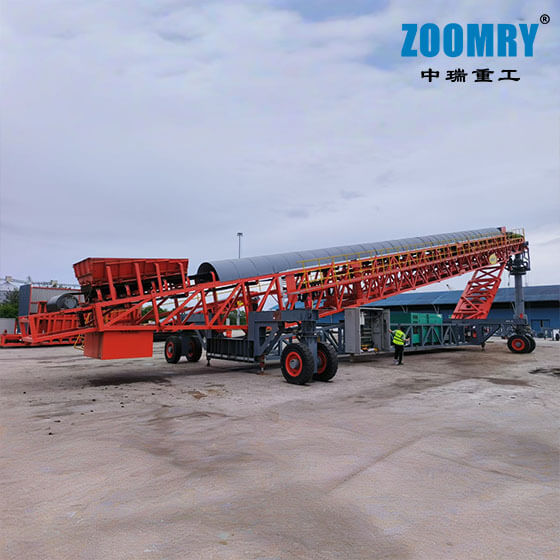
Start With the Operating Conditions
Before comparing models, define the real working envelope. Most selection mistakes come from focusing on peak capacity alone while ignoring quay surface, vessel mix, and berth layout.
Vessel range: Barge, Handysize, Handymax, Panamax, or Capesize — this drives boom length and loading height.
Target capacity: Typical continuous rates for mobile ship loaders fall between 100 and 3,500 t/h depending on material and configuration.
Quay surface: Paved quay favors wheeled or all-travel units; soft or temporary docks may need tracked undercarriages.
Number of berths / hatches: Single-berth terminals and multi-berth terminals need different mobility levels.
Material: Coal, iron ore, grain, fertilizer, aggregates, and PKE/PKS differ in density, dust, abrasion, and sealing requirements.
Choose the Mobility Configuration
Mobile ship loaders are usually offered in three practical configurations. The conveying capacity can be similar; the undercarriage and travel mode are what change the operating model.
| Configuration | Mobility | Best For | Limitations |
|---|---|---|---|
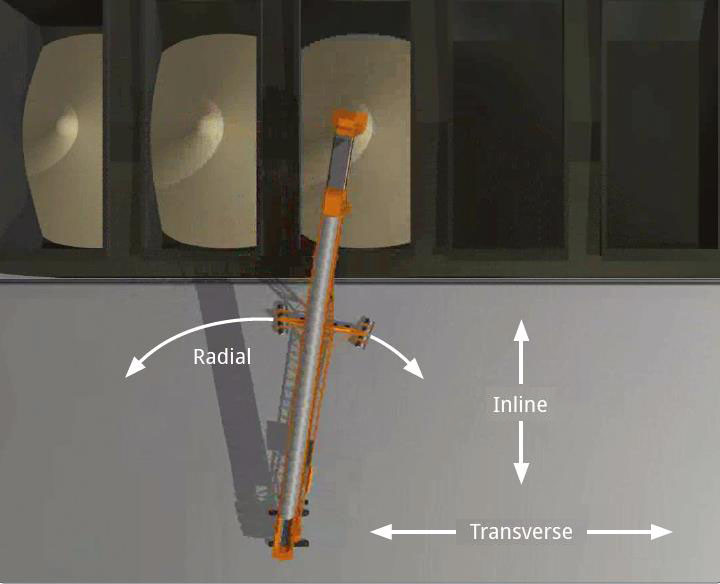
| Wheel (radial / standard mobile) | Towed or limited self-propelled moves on paved quay | Single primary berth, moderate repositioning | Less efficient for frequent multi-berth travel |
| Tracked (crawler) | Self-propelled on soft or uneven ground | Temporary docks, unpaved quays, mining ports | Slower travel, higher wear on paved surfaces |
| All-travel wheel | Full self-propelled travel along the quay | Multi-berth terminals, multi-hatch loading without shifting the ship | Needs a suitable paved quay; higher capital cost |
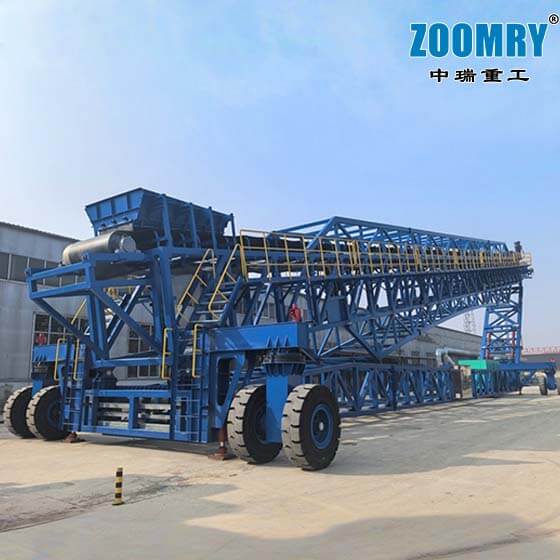
Match Boom Length and Vessel Class
Boom length and discharge height must cover the hatch positions and freeboard of your design vessels. As a practical reference for ZOOMRY ZRSL-type mobile ship loaders:
| Typical Model Range | Approx. Boom Length | Typical Vessel Class |
|---|---|---|
| ZRSL-33 / 40 | 33–40 m | Barge to Handysize |
| ZRSL-45 / 52 | 45–52 m | Handymax to Panamax |
| ZRSL-58 / 67 | 58–67 m | Panamax to Capesize |
Always confirm loading height, outreach, and slew range against the actual vessel drawings and tidal range at the berth. Capacity is project-specific and depends on bulk density, particle size, moisture, belt width, and feed arrangement.
Capacity Is Not the Only Number That Matters
A higher nameplate t/h rating does not automatically mean faster ship loading. Effective performance also depends on:
Feed consistency: Truck unloaders, hopper feeders, or yard conveyors must keep the loader supplied.
Hatch changing time: All-travel or long-reach radial designs reduce time lost between hatches.
Dust and environmental limits: Sealed chutes, cascade discharge, and suppression systems can affect net throughput.
Power option: Diesel, electric, or dual-power affects where the machine can operate and operating cost.
Material and Environmental Requirements
Different cargoes change the mechanical and environmental specification:
Coal and ore: Abrasion, impact at transfer points, and high capacity dominate the design.
Grain and fertilizer: Sealing, gentle handling, and contamination control become critical.
PKE / PKS and biomass: Low bulk density, dust, and corrosion-resistant detailing are common requirements.
Coastal climate: Salt-air protection, paint systems, and stainless or coated contact parts extend service life.
Integration With the Rest of the Terminal
A mobile ship loader rarely works alone. Selection should include the upstream and downstream chain:
Truck unloader or hopper feeder for direct road-to-ship flow
Yard belt conveyors or grasshopper conveyors for stockpile-to-berth transfer
Telescopic or cascade chutes for controlled discharge into the hatch
Dust extraction or suppression to meet local emission limits
When these items are sized together, the terminal avoids bottlenecks that make a high-capacity loader underperform.
Practical Selection Checklist
Vessel mix and max DWT
Required average and peak loading rate
Quay length, pavement strength, and slope
Single-berth vs multi-berth operation
Material bulk density, lump size, and dust behavior
Power availability on the quay
Local environmental and noise limits
Crew skill level and maintenance support
Budget for one flexible machine vs multiple simpler units
Frequently Asked Questions
Is a mobile ship loader better than a fixed shiploader?
For terminals that need flexibility, multi-berth coverage, or lower civil infrastructure cost, a mobile ship loader is often the better choice. Fixed shiploaders can still be right for dedicated high-volume single-berth export lines with stable long-term demand.
Do I always need an all-travel mobile shiploader?
No. If one berth handles most vessels and repositioning is infrequent, a standard wheeled or tracked mobile ship loader is usually enough. All-travel units pay off when the loader must move along a long quay or serve multiple hatches without shifting the ship.
What capacity do ports usually specify?
Many bulk terminals specify mobile ship loaders in the 500–3,000 t/h range. The correct figure depends on vessel size, cargo, and how much idle time you can accept during hatch changes and feeding interruptions.
Can one mobile ship loader handle different materials?
Yes, if belt width, chute design, cleaning systems, and sealing are specified for the full material range. Quick-change or easy-clean modules help when the terminal switches between cargoes such as coal, grain, or fertilizer.
Related Products
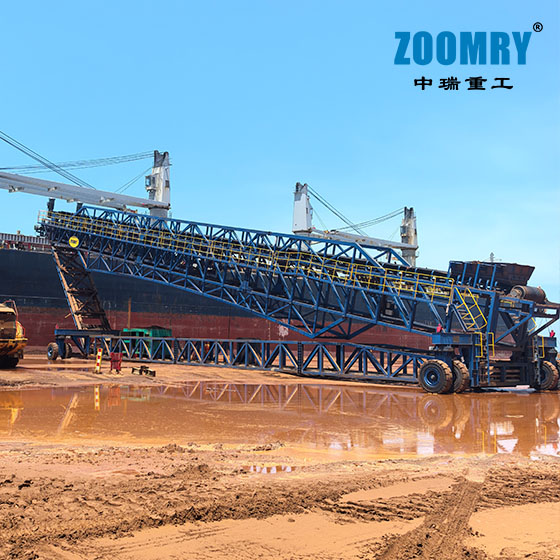
Industry Applications
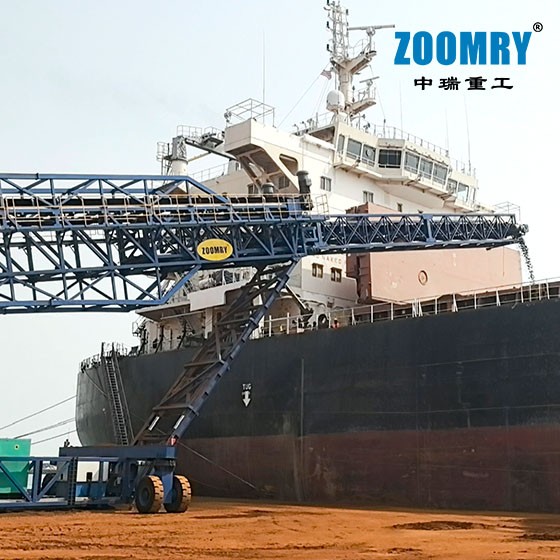
Explore This Topic: Ship Loaders & Port Loading
Port loading equipment: mobile and fixed shiploaders, telescopic bulk loaders, chutes, dust control and cost factors.
- Crawler Truck Unloader – Quayside Truck-to-Vessel Loading System for Ports — Product
- Bulk Material Handling Equipment Types Guide — Conveyor, Stacker, Shiploader & Unloader — Guide
- ZOOMRY EPC Case Studies: 9.6km Conveyor & 35% Faster Port Loading — Guide
- Fertilizer Shiploader | Radial Telescopic Ship Loading — Product
- 2025 Mainstream Bulk Material Handling Equipment for Ports - Mobile Ship Loaders — Guide
Let's build it together
Need a custom bulk handling solution?
Talk to our engineers about conveyors, stackers, ship loaders and turnkey EPC systems.