
Crawler Truck Unloader Maintenance: Daily & Periodic Guide
Their maintenance costs directly affect equipment availability and total cost of ownership. Daily Maintenance Checks Daily checks are performed before and after operation.
Quick Answer
Regular maintenance is the most effective way to protect crawler-type truck unloader investment and maintain production availability. A structured program combining daily checks, periodic inspections, and seasonal adjustments helps reduce unplanned downtime and extend equipment life. Further down: worked configurations, common pitfalls, and related ZOOMRY systems.
Crawler-type truck unloaders are high-value mobile receiving systems used in mining, port, and stockyard operations. Their maintenance costs directly affect equipment availability and total cost of ownership. A structured maintenance program — covering daily checks, periodic inspections, and seasonal adjustments — helps extend service life and reduce unplanned downtime.
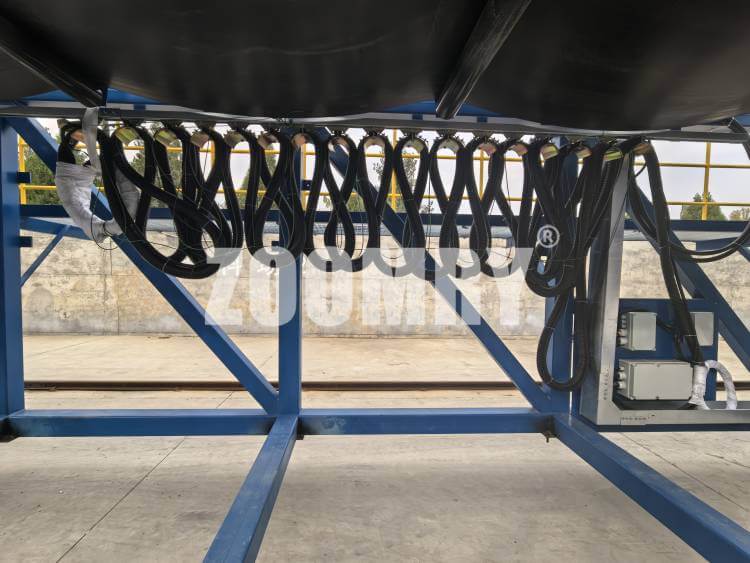
Core Structure and Maintenance Focus
Crawler-type truck unloaders combine mobility with high load capacity. The main structures requiring regular attention include:
- Travel system — hydraulic-driven crawler assembly with carrier rollers and drive sprockets
- Discharge boom — steel structure with hydraulic cylinders requiring stress and fatigue inspection
- Power unit — diesel engine or electric motor as the core power source
- Control system — PLC and sensor network for equipment monitoring
Maintenance frequency and inspection intervals should follow the equipment manual and site operating conditions. Key areas include hydraulic oil cleanliness, structural weld condition, and track tension adjustment.
Daily Maintenance Checks
Daily checks are performed before and after operation. These checks help identify early signs of wear and prevent minor issues from becoming major failures.
- Check hydraulic oil level and condition
- Remove debris from track plates and undercarriage
- Grease lubrication points according to the equipment manual
- Test emergency stop and brake function
- Visually inspect structural weld areas and hinge points
- Review fault code history on the control display
- Clean radiator and cooling fins
- Check electrical connections and sealing
Periodic Professional Maintenance
In-depth maintenance should be scheduled according to operating hours and site conditions. Typical items include:
| Item | Inspection Focus |
|---|---|
| Hydraulic system | Oil contamination level, filter condition, pump performance |
| Steel structure | Weld crack inspection, deformation at high-stress areas |
| Electrical system | Insulation resistance, connector integrity, sensor calibration |
| Track system | Pin and bushing wear, sprocket condition, track tension |
| Discharge boom | Cylinder seal condition, hinge point lubrication, alignment |
Seasonal Maintenance
Different operating environments require seasonal adjustments:
- High-temperature environments — increase air filter service frequency and verify hydraulic oil viscosity for elevated temperatures
- Coastal or high-salt environments — inspect protective coatings and consider additional corrosion protection for electrical enclosures
- Cold-climate operation — verify engine preheating function and hydraulic oil low-temperature performance
Spare Parts Management
An effective spare parts strategy helps minimize downtime when repairs are needed. Parts are typically categorized by criticality:
- Critical components — hydraulic pumps, control modules; maintain a safety stock based on lead time
- Wear parts — scraper chains, screens, track components; keep in regular inventory
- Standard parts — seals, bolts, filters; supply as needed
- Custom components — non-standard parts; confirm availability and lead time before ordering
Maintenance Planning
A practical maintenance plan should be built around the equipment's actual operating pattern rather than a fixed calendar schedule. Factors to consider include:
- Daily operating hours and duty cycle
- Material characteristics — abrasiveness, moisture, and dust generation
- Site conditions — temperature range, humidity, and salt exposure
- Availability of maintenance personnel and tools
- Manufacturer-recommended service intervals
Regular maintenance is the most effective way to protect crawler-type truck unloader investment and maintain production availability. A structured program combining daily checks, periodic inspections, and seasonal adjustments helps reduce unplanned downtime and extend equipment life. For configuration-specific maintenance guidance, see tracked truck unloader specifications or truck unloader options.
Related Products
Industry Applications

Explore This Topic: Truck Unloaders & Hopper Feeders
Truck receiving and feeding: drive-over hoppers, apron and belt feeders, discharge feeders and bulk bag unloading.
- What Is a Truck Unloader? Drive-Over Hopper Systems — Topic hub
- Bulk Material Handling Made Simple: Mobile Truck Unloader + Hopper Feeder Combo — Guide
- Can a Mobile Truck Unloader Handle Grain, Sand, and Aggregates? — Guide
- 2025 Top 5 Truck Unloaders Globally, Zoomry Delivers High Efficiency and Reliability — Guide
- Mobile Truck Unloader + Hopper System: Streamline Truck-to-Silo Operations — Guide
- Truck Unloader + Hopper Feeder: Designing a Continuous Receiving Station — Guide
Let's build it together
Need a custom bulk handling solution?
Talk to our engineers about conveyors, stackers, ship loaders and turnkey EPC systems.