
Material then passes to the feeder belt, which draws material from the hopper and transfers it to the discharge conveyor or directly to the next process stage.
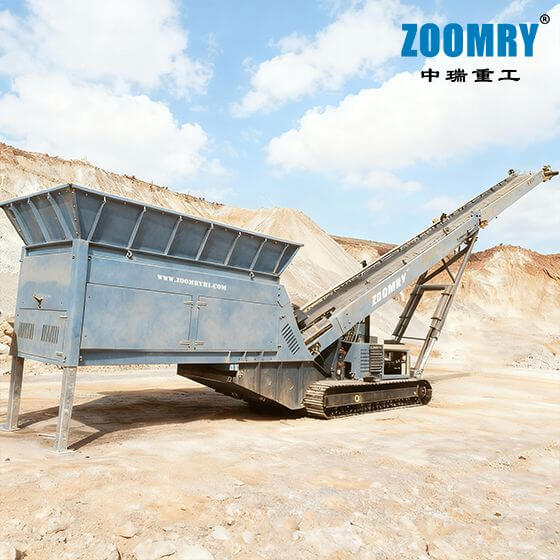
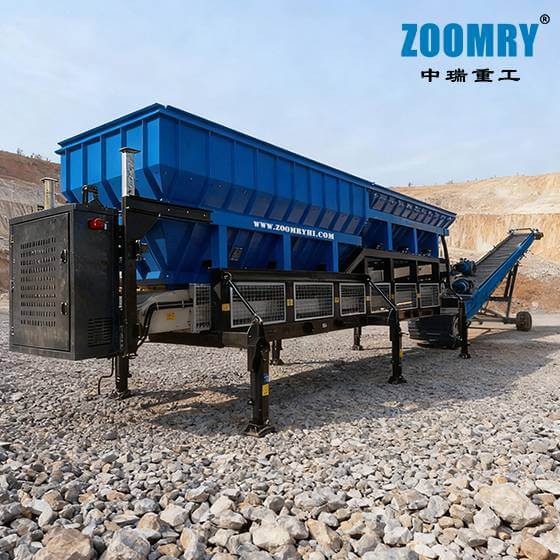
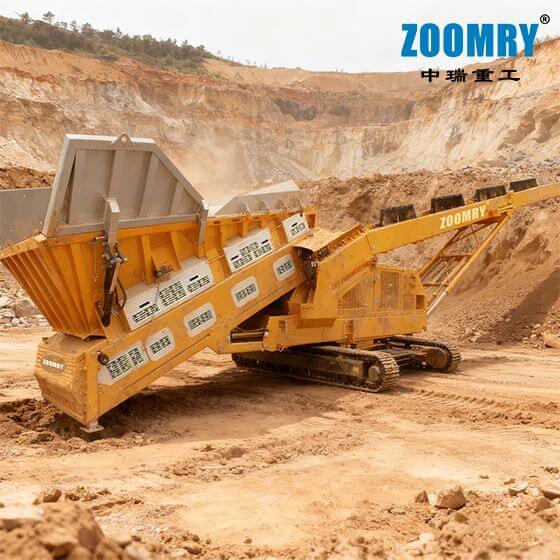
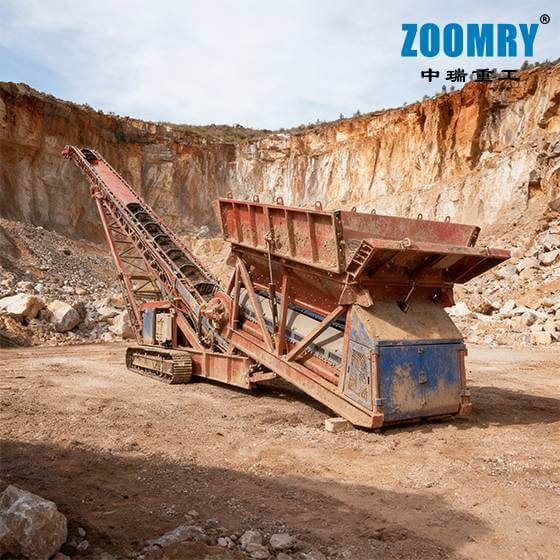
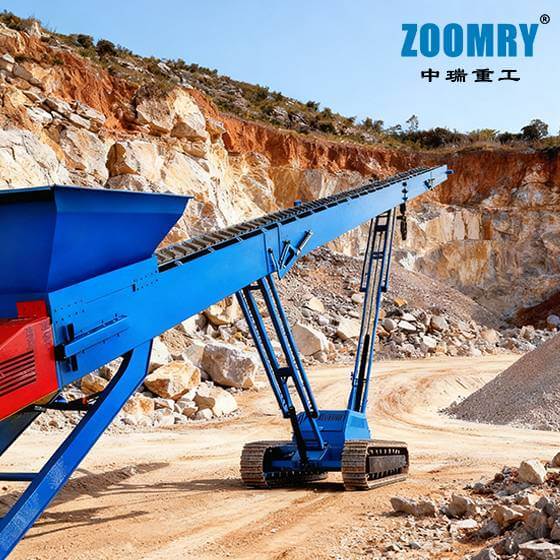
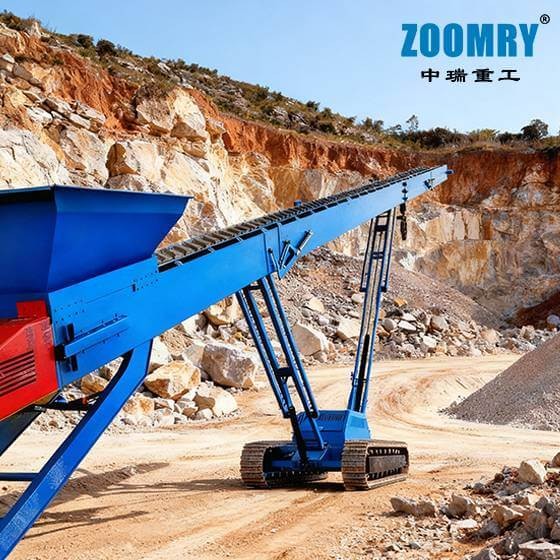
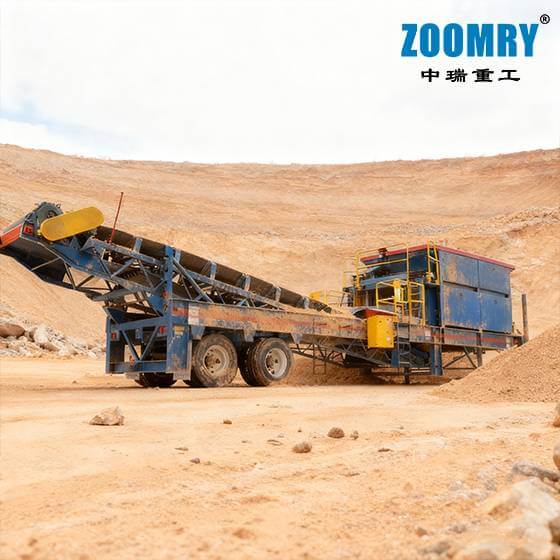
The ZOOMRY portable feed conveyor is a hopper-fed material handling unit designed to receive bulk material and deliver it at a controlled rate to the next stage of the process. It is commonly positioned between a truck or wheel-loader loading point and a crusher, screen, transfer conveyor, or stockpile. By combining a receiving hopper, feeder section, and discharge conveyor in one road-transportable layout, the unit helps simplify temporary or relocatable feeding operations in mining, quarry, aggregate, and industrial material-handling applications.
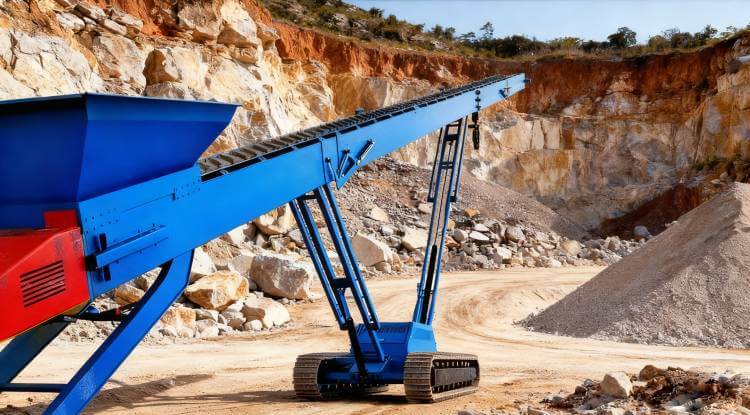
ZOOMRY portable hopper-fed conveyor for controlled bulk material receiving and discharge.
Material is loaded into the receiving hopper by a wheel loader, truck, or upstream conveyor. The hopper provides temporary buffer capacity when loading is intermittent, helping to reduce sudden changes in the material flow delivered to downstream equipment. Material then passes to the feeder belt, which draws material from the hopper and transfers it to the discharge conveyor or directly to the next process stage.
Where oversize rock, debris, or unwanted material must be removed before processing, an optional scalping grizzly can be installed above the hopper. The grizzly opening is selected around the required separation size and the operating limits of the downstream crusher, screen, or conveyor. Feed rate, feeder dimensions, hopper volume, and discharge arrangement are specified according to material characteristics and project throughput requirements.
The receiving hopper accepts bulk material discharged by loading equipment and provides buffer capacity before the material enters the feeder. Hopper capacity is selected according to the loading cycle, wheel-loader bucket size, truck unloading method, required operating continuity, and available installation area. ZOOMRY feed conveyor configurations are available with hopper capacities up to 20 cu yd (15.3 m³).
A scalping grizzly can be used when the feed contains oversize material that should be separated before reaching downstream equipment. This arrangement can help protect crusher inlets, screening decks, feeder belts, and transfer points from material outside the intended size range. Grizzly configuration and opening size should be determined according to the material and downstream process requirements.
The feeder belt draws material from the hopper and controls delivery to the discharge point. Belt width, feeder length, belt speed, and drive arrangement are selected around the required capacity, bulk density, maximum lump size, moisture condition, and material flow behavior. Reference feeder widths range from 30 to 42 in. (762 to 1,067 mm), depending on the selected series and configuration.
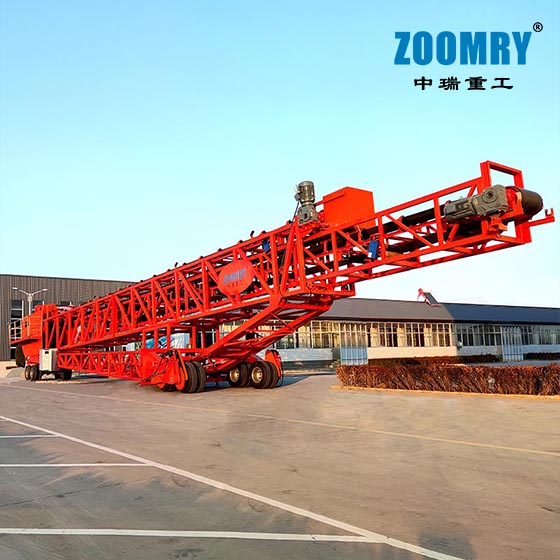
The discharge conveyor transfers material from the feeder section to a crusher, screen, stockpile, or downstream conveyor. Conveyor length and discharge height are configured to match the site layout and required transfer point. For portable projects, the overall arrangement can be designed around road transport, on-site setup, and the available loading and discharge space.
Each feed conveyor is configured around the operating conditions of the project rather than supplied as a one-size-fits-all unit. The final arrangement may vary according to the material source, loading equipment, downstream process, mobility target, and transport restrictions.
Suitable for projects that require relocation between work areas, quarry faces, temporary processing plants, or multiple sites.
Hopper volume and feeder dimensions are selected for the incoming loading cycle, required buffer capacity, and target feed rate.
An optional scalping grizzly can separate oversize material before it enters the feeder and downstream processing line.
Discharge height and conveyor arrangement can be matched to crushers, screens, transfer conveyors, stockpiles, and loading areas.
The portable feed conveyor is suitable for operations that require controlled material receiving, buffering, and delivery before the next stage of handling or processing. It can be used as a mobile feed point for crushing and screening circuits or as a flexible transfer unit in a wider conveyor system.
A feed conveyor and a standard belt conveyor can both move bulk material, but they serve different functions in a material handling line. A portable feed conveyor is designed around the receiving point, where material arrives in intermittent loads from trucks or loaders. A standard conveyor is generally designed for continuous transfer between defined process points.
| Feature | Portable Feed Conveyor | Standard Belt Conveyor |
|---|---|---|
| Primary Function | Material receiving, buffering, and controlled feeding | Continuous transfer between process points |
| Receiving Section | Integrated hopper with feeder arrangement | Usually requires a separate hopper, chute, or transfer point |
| Material Loading | Typically loaded by wheel loader, truck, or upstream conveyor | Typically loaded from a controlled transfer point |
| Mobility | Road-transportable layout available | Depends on fixed, semi-mobile, or mobile conveyor design |
| Typical Use | Crusher feeding, screening circuits, and controlled receiving | Transfer between crushing, screening, stockpiling, or loading stages |
The following information provides a general reference for ZOOMRY portable feed conveyor configurations. Final model selection should be based on the actual material properties, maximum lump size, required capacity, loading method, discharge requirements, transport conditions, and local site restrictions.
| Series | Typical Use | Hopper Capacity | Typical Capacity | Configuration Note |
|---|---|---|---|---|
| Series 12 | Small quarry, sand, and gravel operations | 10 cu yd (7.6 m³) | 450–600 TPH | Compact road-transportable layout |
| Series 900 | Medium-capacity aggregate, mining, and coal handling | 12–20 cu yd (9.2–15.3 m³) | 450–900 TPH | Multiple hopper and feeder size options |
| Series 1400 | Aggregate and mineral transfer lines | 20 cu yd (15.3 m³) | 500–750 TPH | Integrated belt conveyor option |
Selection note: Typical capacity is affected by material bulk density, particle size distribution, maximum lump size, moisture content, feeder speed, loading conditions, and final system design.
The following dimensions and capacity ranges are provided as a general reference. For a project-specific recommendation, please provide the material type, bulk density, maximum lump size, moisture condition, required capacity, loading method, discharge destination, site layout, and transport requirements.
| Model | Hopper Capacity | Belt Feeder | Belt Conveyor | Typical Capacity | ||||
|---|---|---|---|---|---|---|---|---|
| cu yd | m³ | in. × ft | mm × m | in. × ft | mm × m | TPH | MTPH | |
| Series 12 | 10 | 7.6 | 30 × 8–36 × 8 | 762 × 2.4–914 × 2.4 | 30 × 60–36 × 70 | 762 × 18.3–914 × 21.3 | 450–600 | 409–545 |
| Series 900 | 12–20 | 9.2–15.3 | 30 × 14–42 × 18 | 762 × 4.3–1,067 × 5.5 | – | – | 450–900 | 409–818 |
| Series 1400 | 20 | 15.3 | 36 × 16–42 × 16 | 914 × 4.9–1,067 × 4.9 | 30 × 60–36 × 80 | 762 × 18.3–914 × 24.4 | 500–750 | 455–682 |
Note: For technical drawings or a customized configuration—including hopper dimensions, feeder type, belt width, conveyor length, discharge height, and control requirements—please contact the ZOOMRY engineering team.
A portable feed conveyor is a hopper-fed conveying unit designed to receive bulk material from loading equipment and deliver it at a controlled rate to downstream process equipment. It combines a receiving hopper, feeder section, and discharge conveyor in a layout intended for relocation and road transport, subject to final machine dimensions and applicable transport regulations.
A scalping grizzly is useful when the incoming material contains oversize rock, debris, or other material that should be removed before it enters a feeder, crusher, screen, or conveyor. The grizzly opening should be selected according to the desired separation size and the operating requirements of downstream equipment.
Yes. A portable feed conveyor can be configured to discharge material to a primary crusher, screening machine, or transfer conveyor. The final discharge height, conveyor arrangement, material flow rate, and interface requirements should be confirmed during project selection.
The equipment configuration should be selected around the material. Wet, sticky, abrasive, or large-lump materials may require changes to the hopper geometry, liner selection, discharge opening, feeder type, or drive arrangement. These operating conditions should be provided during the engineering review.
Please provide material type, bulk density, maximum lump size, moisture condition, required capacity, loading equipment, hopper loading method, discharge destination, installation area, and transport requirements. These inputs help determine the suitable hopper capacity, feeder dimensions, belt width, conveyor length, and project configuration.
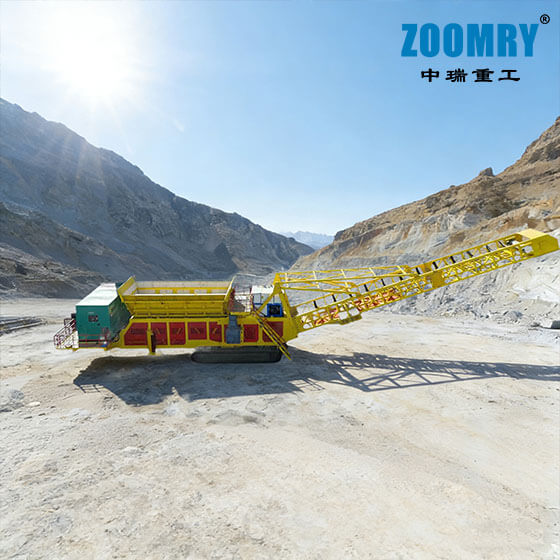

Compare adjacent models, sizes and duty classes in this category before requesting a quotation.
Browse all Hopper Feeder models or the complete product range.
Share your material type, bulk density, maximum lump size, required capacity, loading method, discharge requirement, and site layout. ZOOMRY engineers will recommend a suitable portable hopper-fed conveyor configuration for your operation.
Get a Quote →