
Advantages of Impact Rollers – Buffer Idler Benefits for Belt Conveyors | ZOOMRY
Impact rollers (also known as buffer idlers) are installed at the loading zone of a belt conveyor to absorb the shock of falling material and protect the belt from impact damage.
Quick Answer
Impact rollers (also known as buffer idlers) are installed at the loading zone of a belt conveyor to absorb the shock of falling material and protect the belt from impact damage. Below: the technical details, selection criteria, and related ZOOMRY equipment.
Impact rollers (also known as buffer idlers) are installed at the loading zone of a belt conveyor to absorb the shock of falling material and protect the belt from impact damage. They are a specialized type of conveyor idler designed for the most demanding section of any conveyor system. As a professional bulk material handling solution provider, ZOOMRY manufactures impact rollers with corrosion-resistant polymer materials for mining, coal washing, and chemical plant applications. This guide explains the key advantages of impact rollers and how they extend conveyor belt service life.
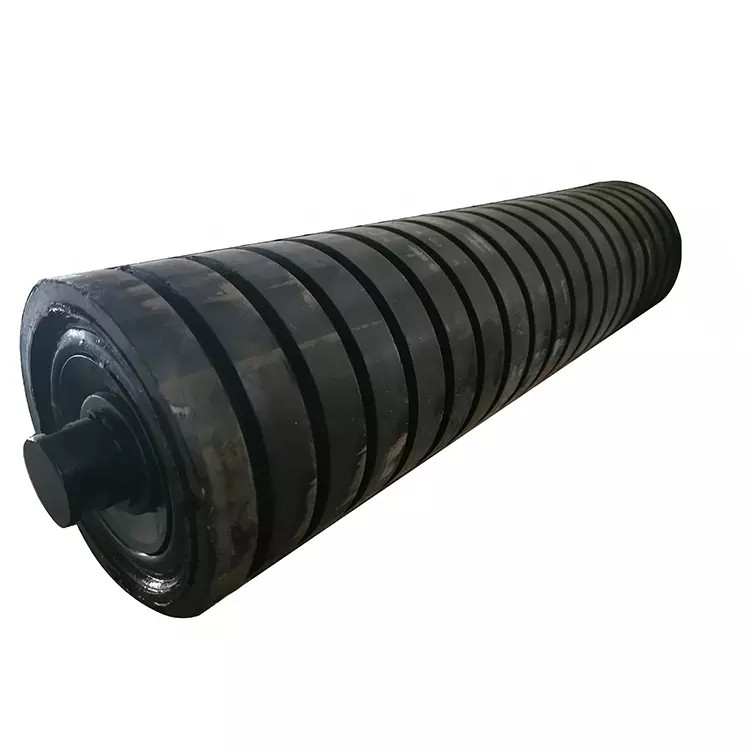
What is a Buffer Idler (Impact Roller)?
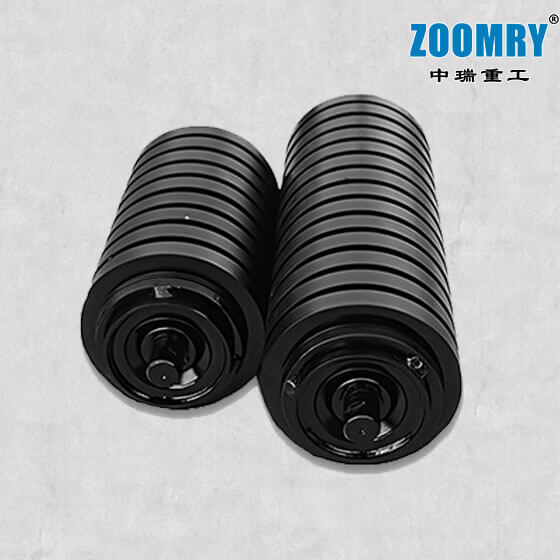
Buffer idlers are specially designed rollers installed under the receiving section of the conveyor where material falls onto the belt. Unlike standard conveyor rollers, impact rollers feature rubber disc rings or a thick polymer coating that absorbs and dissipates impact energy. The spacing between buffer rollers is typically 100–600 mm — much closer than standard idler spacing — to provide continuous impact protection across the entire loading zone.
Key Advantages of Impact Rollers
1. Superior Corrosion Resistance
ZOOMRY impact rollers use special polymer materials for both the roller body and seals — providing complete corrosion immunity. In corrosive environments such as coal washing plants, coking plants, and chemical processing facilities, the service life of polymer impact rollers reaches more than 5 times that of ordinary steel rollers. They are also flame-retardant and anti-static, making them suitable for underground coal mining applications where safety is paramount.
2. Lightweight Design with Low Rotational Inertia
The polymer material used in impact rollers has a specific gravity approximately one-seventh that of steel. A complete impact roller weighs about half as much as an equivalent steel roller. This lightweight construction provides several benefits:
- Lower rotational inertia — the roller starts and stops more responsively with the belt, reducing belt-roller friction
- Easier handling during installation and replacement — reduces maintenance labor
- Reduced structural load on the conveyor frame
3. Excellent Wear Resistance with Self-Lubrication
The special polymer material used for the roller body has mechanical properties comparable to bronze — offering excellent wear resistance with inherent self-lubricating characteristics. This means the roller surface will not damage or abrade the conveyor belt, even under heavy impact conditions. Unlike steel rollers that can develop sharp edges when worn, polymer rollers maintain a smooth contact surface throughout their service life.
4. Extended Belt Life Through Impact Absorption
The primary function of impact rollers is to protect the conveyor belt from the repeated shock of material impact at the loading point. Without adequate impact protection, the belt carcass can suffer internal ply separation, cover gouging, and premature splice failure. Impact rollers absorb and distribute impact forces, significantly extending belt life — especially when handling heavy, sharp, or abrasive materials like iron ore, copper concentrate, or crushed aggregates.
Installation Best Practices for Impact Rollers
Proper installation is critical to maximizing the benefits of impact rollers:
- Increase roller density: Space buffer rollers at 100–600 mm intervals — significantly closer than standard idler spacing of 1,000–1,500 mm
- Regular inspection: Check impact rollers frequently and replace damaged rollers immediately — a single failed impact roller exposes the belt to concentrated impact damage
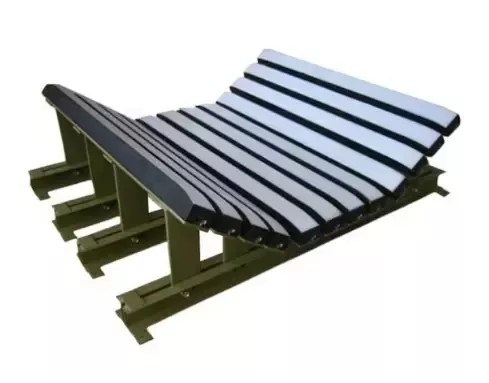
- For high-drop applications: Install a conveyor impact bed in addition to or instead of impact rollers when material drop height exceeds 3 meters
- Quality checks: When selecting impact rollers, verify radial runout, rotational sensitivity, axial movement limits, dustproof/waterproof sealing, and impact resistance ratings
Impact Rollers vs Impact Beds — Which to Choose?
| Factor | Impact Rollers | Impact Bed |
|---|---|---|
| Best For | Moderate impact, mobile conveyors, retrofit installations | Heavy impact, high drop heights (>3m), permanent installations |
| Impact Absorption | Individual roller cushioning | Full-surface continuous support |
| Maintenance | Individual roller replacement | Replace UHMW bars as a set |
| Belt Wear | Low — polymer rollers are belt-friendly | Minimal — UHMW surface is self-lubricating |
Related Equipment
Industry Solutions
Explore This Topic: Conveyor Rollers, Idlers & Pulleys
Component-level guides for selecting, classifying and replacing conveyor rollers, idlers, pulleys and belt-cleaning parts.
- Mining Conveyor Rollers Guide — Heavy-Duty Idlers — Topic hub
- PSV 1.20F14.114N Return and Carry Roller: Specification and Replacement Guide — Guide
- CEMA E Equal Impact Troughing Idlers – Extra Heavy-Duty Symmetrical Loading Zone Protection | 20 — Product
- CEMA D V-Return Idlers – Heavy-Duty Self-Centering Return Rollers | 5″ & 6″ Diameter — Product
- CEMA C V-Return Idlers: Medium-Duty Self-Centering Return Solution, 4″ & 5″ — Product
- CEMA B Equal Troughing Idlers: Light-Duty Symmetrical Three-Roller Carrying Solution, 20°/35°/45 — Product
Let's build it together
Need a custom bulk handling solution?
Talk to our engineers about conveyors, stackers, ship loaders and turnkey EPC systems.