
Port Dust Control for Ship Loaders, Conveyors, and Truck Unloaders | ZOOMRY
Dust is one of the most visible operating problems at bulk ports. Good dust control is not only about compliance. Water spray helps, but it is rarely enough on its own.
Quick Answer
Dust is one of the most visible operating problems at bulk ports. Coal, ore, grain, fertilizer, and biomass all generate dust during truck unloading, conveying, stockpiling, and ship loading. Good dust control is not only about compliance. Below: the technical details, selection criteria, and related ZOOMRY equipment.
Dust is one of the most visible operating problems at bulk ports. Coal, ore, grain, fertilizer, and biomass all generate dust during truck unloading, conveying, stockpiling, and ship loading. Good dust control is not only about compliance. It also protects equipment, improves visibility, and reduces material loss across the terminal.
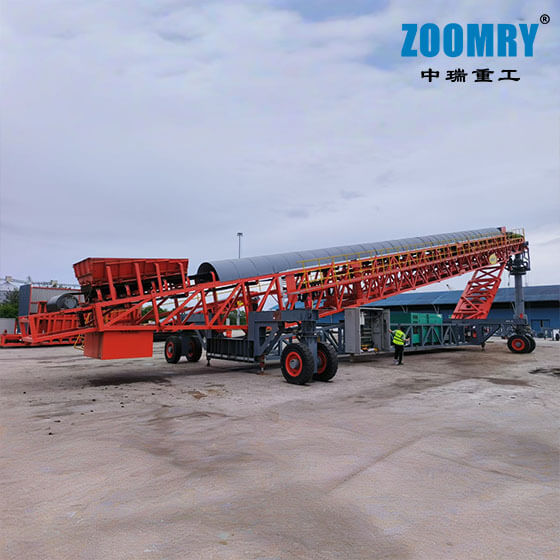
Where Dust Is Generated in a Port
Most terminal dust comes from a few repeat points in the material flow:
Truck dumping into hoppers or feeders
Transfer points between conveyors
Open stockpile stacking and reclaiming
Ship loader discharge into vessel hatches
Belt return strands and chute leakage
If dust control is applied only at the shiploader chute while truck unloading and transfer points remain open, emissions simply move to another part of the terminal.
1. Control Dust at Truck Unloading
Truck unloading is often the first major release point. Practical measures include:
Enclosed or partially enclosed receiving hoppers
Rubber seals and flexible curtains at the dump pocket
Water spray or dry-fog systems timed with dumping
Belt feeders that avoid uncontrolled free fall
A well-designed truck unloader reduces open dumping and shortens the time material is exposed to wind.
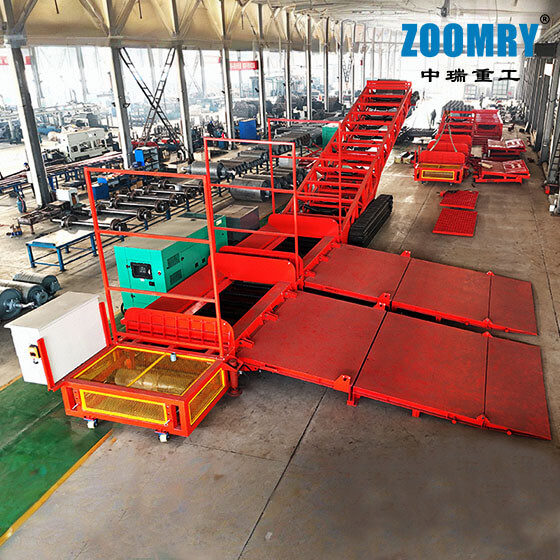
2. Reduce Transfer Point Emissions
Every conveyor transfer can create dust if the chute is poorly sealed or the drop height is too high. Better practice includes:
Sealed chute work with practical inspection access
Skirt boards and sealing at loading zones
Correct chute angles to limit impact and turbulence
Belt cleaners to reduce carryback on the return side
Carryback is easy to underestimate. Material that sticks to the belt and later drops off becomes yard dust, cleanup labor, and a secondary emission source.
3. Improve Ship Loader Discharge
At the hatch, dust control depends largely on how material enters the hold:
Telescopic or cascade chutes to reduce free-fall height
Sealed chute connections where practical
Controlled trim instead of high open discharge
Spray systems for cargoes that tolerate moisture
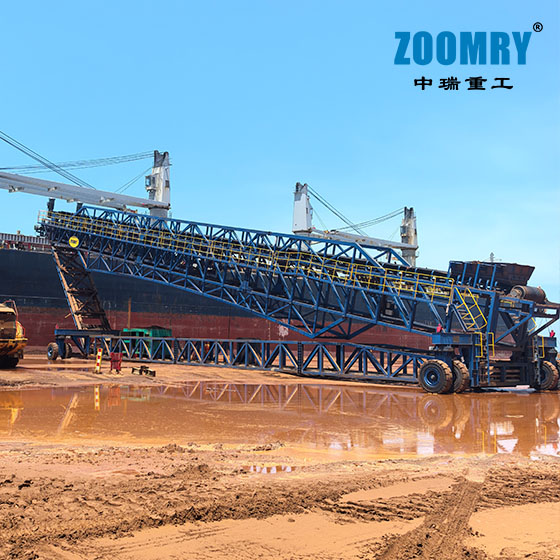
For ports handling multiple cargoes, chute design should allow cleaning between products so dust control does not create contamination problems. More on flexible loading systems: mobile ship loader.
4. Choose the Right Suppression Method
| Method | Best For | Notes |
|---|---|---|
| Water spray | Coal, aggregate, ore | Simple and common; avoid excess moisture |
| Dry fog / mist | Finer dust, sensitive areas | Less wetting of product |
| Enclosure and sealing | Transfer points, hoppers | Often the most reliable first step |
| Extraction / filtration | Indoor or semi-enclosed terminals | Higher CAPEX, strong containment |
| Pipe or enclosed conveyors | Long dusty routes | Reduces emissions along the corridor |
5. Match Controls to Cargo Type
Coal and ore: abrasion-resistant chutes, spray at dump and transfer points
Grain: sealing and gentle handling; moisture control is critical
Fertilizer: corrosion-resistant materials and easy cleaning access
PKE/PKS and biomass: containment plus careful spray use to avoid product issues
Practical Checklist for Ports
Map every dump, transfer, stack, and load point
Fix open chute leaks before adding more spray systems
Set spray interlocks so nozzles run only during material flow
Maintain belt cleaners and skirts as part of dust control, not optional extras
Review wind direction and stockpile layout
Train operators to avoid high free-fall discharge into hatches
Frequently Asked Questions
Is water spray enough for port dust control?
Water spray helps, but it is rarely enough on its own. Sealing transfer points, controlling free fall, and reducing carryback usually deliver a larger and more stable improvement.
Which point should be upgraded first?
Start with the largest open release point. At many terminals that is truck dumping or a major conveyor transfer, not only the ship loader discharge.
Do enclosed conveyors eliminate the need for sprays?
Enclosed or pipe conveyors greatly reduce corridor emissions, but loading zones, hoppers, and final hatch discharge may still need local sealing or suppression.
Can one system handle multiple cargoes?
Yes, if chute access, cleaning procedures, and suppression settings are designed for product changeovers. This is especially important for fertilizer, grain, and biomass terminals.
Related Products

Industry Applications
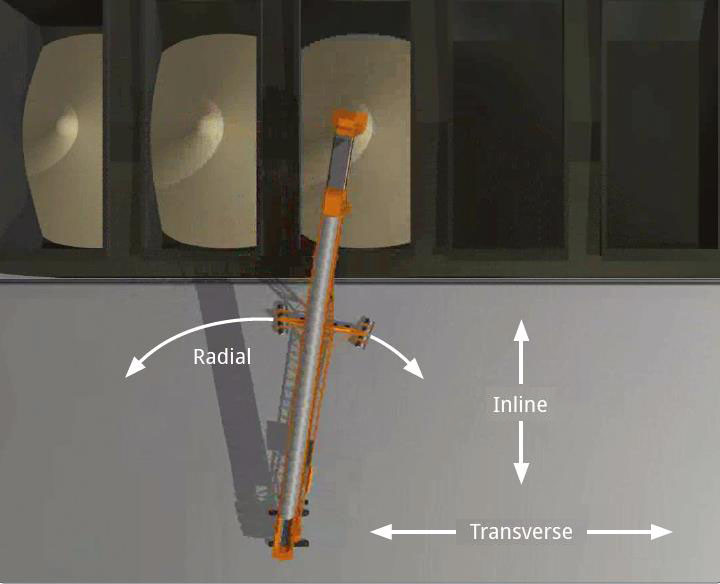
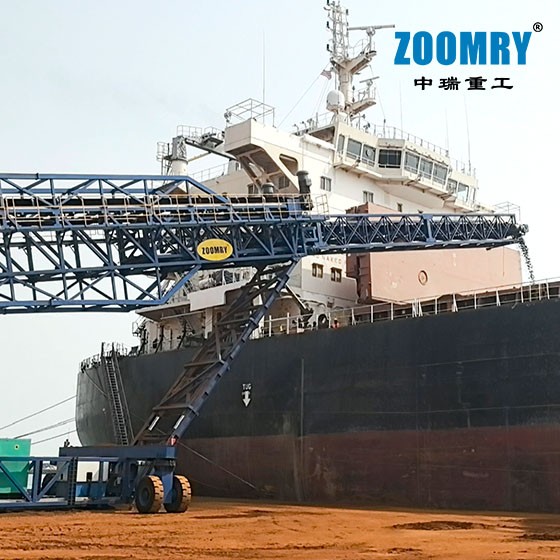
Explore This Topic: Ship Loaders & Port Loading
Port loading equipment: mobile and fixed shiploaders, telescopic bulk loaders, chutes, dust control and cost factors.
- From Mining to Ports and Agriculture: How Mobile Shiploader Manufacturers Adapt to Diverse Indus — Guide
- 8400 T/H Radial Shiploader for Bulk Material Handling - Zoomry Mobile Shiploader Manufacturer — Guide
- Case Study: 35% Truck Turnaround Reduction at a Southeast Asia Port — Guide
- Overland Conveyors for Civil Engineering | Bulk Material Transport — Industry solution
- Ship loader wind anchoring fails? Winter operation sluggish? How to solve safety and operational — Guide
Let's build it together
Need a custom bulk handling solution?
Talk to our engineers about conveyors, stackers, ship loaders and turnkey EPC systems.