
The Difference Between Mining and Ordinary Belt Conveyors – Comparison Guide | ZOOMRY
As a professional bulk material handling solution provider, ZOOMRY designs complete mining conveyor systems with heavy-duty construction.
Quick Answer
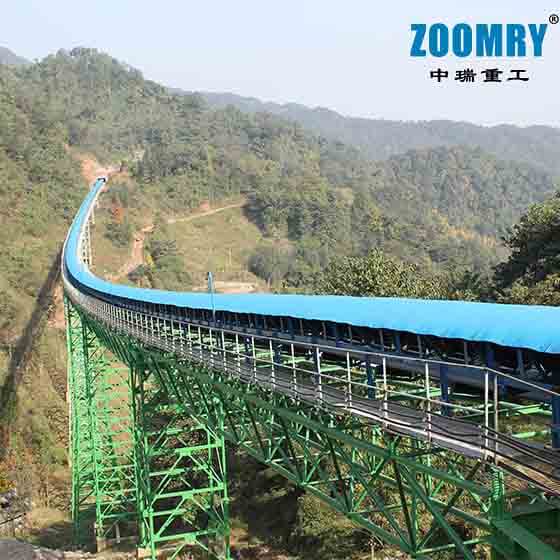
Belt conveyors are widely used across many industries — grain, foundry, chemical, and food processing. However, mining belt conveyors are specifically engineered for the demanding conditions of coal, iron ore, copper, gold, aluminum, and mineral production and transport. The rest of the page compares operating principle, wear behaviour, and cost of ownership.
Belt conveyors are widely used across many industries — grain, foundry, chemical, and food processing. However, mining belt conveyors are specifically engineered for the demanding conditions of coal, iron ore, copper, gold, aluminum, and mineral production and transport. As a professional bulk material handling solution provider, ZOOMRY designs complete mining conveyor systems with heavy-duty construction. This guide compares the key differences between mining and ordinary belt conveyors.
Key Differences Between Mining and Ordinary Belt Conveyors
| # | Characteristic | Mining Belt Conveyor | Ordinary Belt Conveyor |
|---|---|---|---|
| 1 | Structure | Compact, stable foundation, lightweight yet robust frame designed for heavy ore impact | Standard industrial frame — suitable for lighter, less abrasive materials |
| 2 | Conveying Capacity & Speed | Strong capacity, long operating length, high speed — handles up to 17,000 m³/h on long distance systems | Moderate capacity and speed — typically under 500 m length |
| 3 | Terrain Adaptability | Handles uphill, downhill slopes, corners, and complex transport environments — curved belt conveyors navigate 180° turns | Limited to straight or slightly inclined paths |
| 4 | Incline & Height Limits | Specific requirements for maximum inclination angle, length, and lifting height — large inclination conveyors handle up to 90° | Standard incline limits — typically under 20° |
| 5 | Environmental Tolerance | Material temperature ≤60°C, operates at -20°C low temperature, withstands humid underground conditions. Multi-unit configurations for complex systems. Flame-retardant belts for underground safety. | Indoor or mild outdoor conditions — limited temperature and humidity range |
Why Mining Belt Conveyors Require Higher Quality Standards
There is no doubt that mining belt conveyors demand higher quality than ordinary conveyors. The combination of abrasive ores, heavy loads, extreme temperatures, humidity, and 24/7 operation requires:
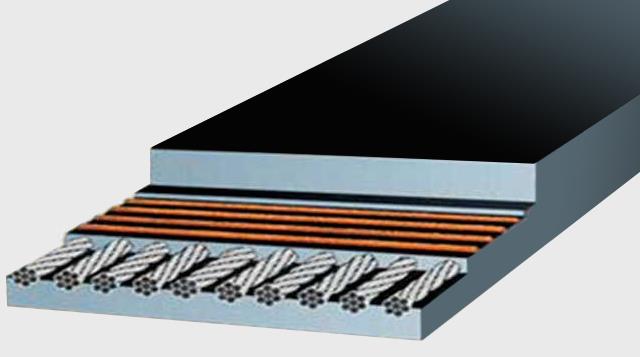
- Higher belt strength: Steel cord belts with tensile strength up to 4,000 N/mm vs fabric belts for ordinary applications
- Heavy-duty components: Reinforced rollers and pulleys with 50,000+ hour service life vs standard components
- Advanced safety systems: Belt arrestors, fire-resistant belts, and ATEX-compliant drives for underground operations
- Modular redundancy: Multi-unit configurations allow continued operation during partial maintenance — critical for mines where downtime costs exceed $100,000 per hour
Related Equipment
Industry Solutions
Explore This Topic: Belt Conveyor Systems
Foundations of belt conveying: system components, layouts, drive methods, types, cleaning and maintenance.
- Belt Conveyor Systems — Topic hub
- Top 5 Conveyor System Companies in the World—Zoomry — Guide
- Conveyor Belt Sweeper – Complete Belt Cleaning System QSY/QSE/QSV Series — Product
- Belt Conveyor Motor and Reducer Sizing: Power, Torque and Soft Start — Guide
- Heavy-Duty Drive Pulley – Conveyor Head Pulley Selection & Lagging Options — Product
- How to Choose a Mining Rubber Conveyor Belt – 8 Key Selection Criteria — Guide
Let's build it together
Need a custom bulk handling solution?
Talk to our engineers about conveyors, stackers, ship loaders and turnkey EPC systems.