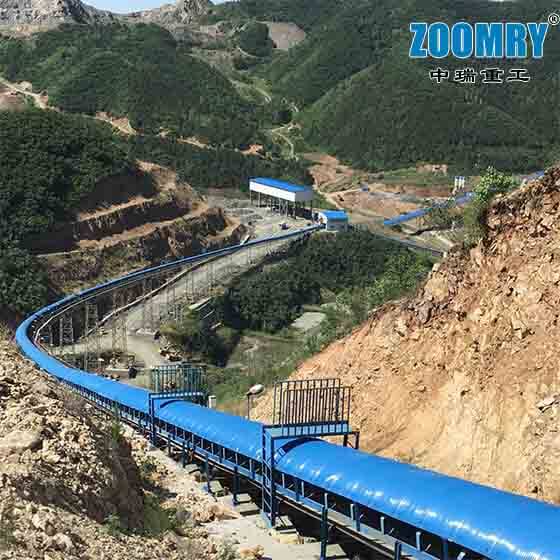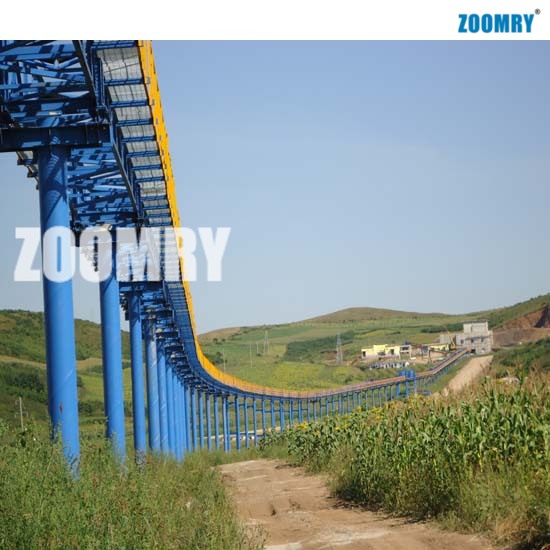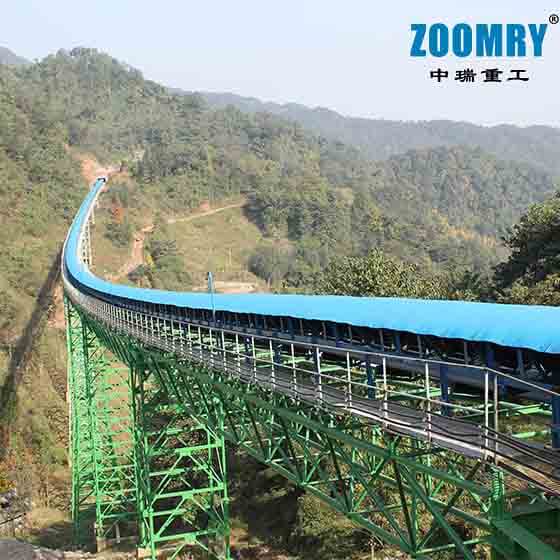

Follows natural terrain through horizontal and vertical curves, avoiding obstacles and buildings. Belt widths 800–2,400 mm, capacities up to 17,000 m³/h, belt speeds up to 6.5 m/s.
A long distance belt conveyor — also called an overland conveyor — is engineered to transport bulk materials over extended distances in a single continuous flight, following the natural contours of the terrain through a combination of horizontal and vertical curves. This design eliminates the need for multiple transfer points, significantly reducing infrastructure costs and operational complexity.
The system integrates advanced drive technologies (including multiple drive stations), high-strength steel cord belts, and precisely engineered idler arrangements to maintain stable belt tracking over long distances. The conveyor can be installed following ground undulations and can navigate around obstacles and buildings through curved turns, with a single conveyor length reaching 15 km or more.
Long-distance curved belt conveyors are widely used in mines, ports, cement plants, sand and gravel aggregates, container terminals, and various raw material factories, serving as a cost-effective and environmentally friendly alternative to conventional multiple belt conveyor systems or road transportation.
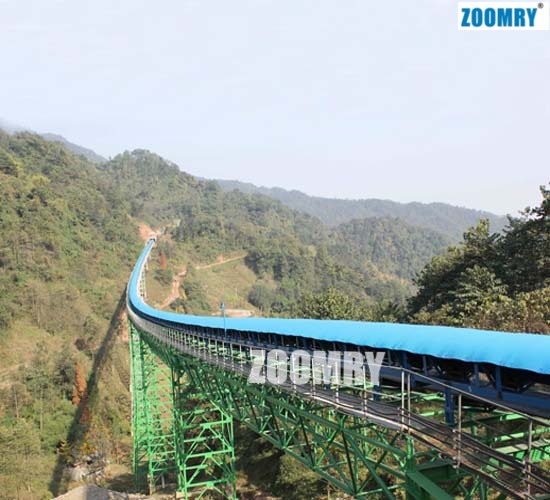
Extended single-flight length
A single long-distance belt conveyor can extend 15 km or more, reducing the number of transfer points and associated dust control, maintenance, and power consumption requirements.
Curve navigation
The system follows natural terrain through horizontal curves (typically 300 × belt width radius) and vertical curves, avoiding obstacles, buildings, and roads, which simplifies project approval and later operation management.
Environmental benefits
Long-distance conveyor transport produces no dust pollution (when enclosed or covered) and minimal noise. The power source is clean electric energy, with no air pollution or exhaust gas emissions — significantly more environmentally friendly than truck haulage.
Energy efficiency
Belt conveyors are inherently more energy-efficient than truck transport, consuming less energy per ton-kilometer while providing continuous, reliable material flow.
Safety & resource optimization
The conveyor does not occupy local transportation resources, avoids various safety hazards associated with truck traffic, and reduces labor requirements for material handling.
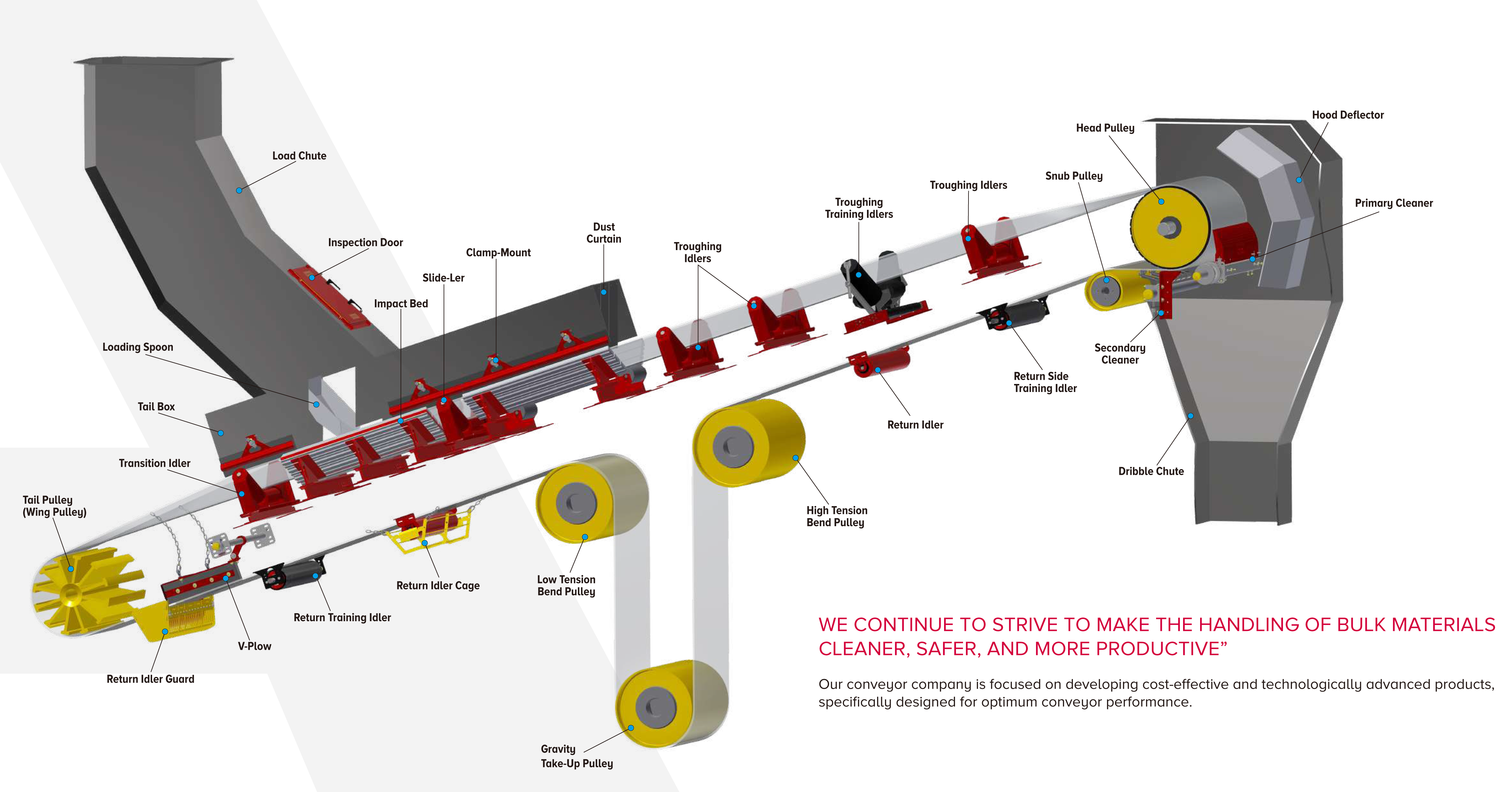
Belt Width & Pulley Diameter Reference
| Width (mm) | Max Roller Diameter (mm) | Max Drive Pulley Diameter (mm) | Max Reversing Pulley Diameter (mm) |
| 400 | 89 | 400 | 315 |
| 500 | 89 | 500 | 400 |
| 650 | 108 | 630 | 500 |
| 800 | 133 | 1250 | 1000 |
| 1000 | 159 | 1250 | 1000 |
| 1200 | 159 | 1600 | 1250 |
| 1400 | 159 | 1600 | 1250 |
| 1600 | 194 | 1600 | 1250 |
| 1800 | 194 | 1600 | 1250 |
| 2000 | 194 | 1800 | 1400 |
| 2200 | 194 | 1800 | 1400 |
| 2400 | 219 | 1800 | 1400 |
Conveying Capacity Reference — Belt Speed 0.8 – 2.0 m/s (m³/h)
| Width (mm) | 0.8 m/s | 1.0 m/s | 1.3 m/s | 1.6 m/s | 2.0 m/s |
| 400 | 41 | 51 | 64 | 82 | 103 |
| 500 | 69 | 87 | 108 | 139 | 174 |
| 650 | 127 | 159 | 198 | 254 | 318 |
| 800 | 199 | 248 | 310 | 398 | 497 |
| 1000 | 324 | 405 | 507 | 649 | 811 |
| 1200 | — | 594 | 742 | 951 | 1188 |
| 1400 | — | 825 | 1032 | 1321 | 1651 |
| 1600 | — | — | — | — | 2185 |
| 1800 | — | — | — | — | 2795 |
| 2000 | — | — | — | — | 3467 |
| 2200 | — | — | — | — | — |
| 2400 | — | — | — | — | — |
Conveying Capacity Reference — Belt Speed 2.5 – 6.5 m/s (m³/h)
| Width (mm) | 2.5 m/s | 3.2 m/s | 4.0 m/s | 5.0 m/s | 6.5 m/s |
| 400 | — | — | — | — | — |
| 500 | 217 | — | — | — | — |
| 650 | 397 | — | — | — | — |
| 800 | 621 | 786 | — | — | — |
| 1000 | 1014 | 1278 | 1622 | — | — |
| 1200 | 1485 | 1872 | 2377 | 2971 | — |
| 1400 | 2064 | 2601 | 3303 | 4129 | — |
| 1600 | 2732 | 3442 | 4371 | 5464 | — |
| 1800 | 3493 | 4402 | 5590 | 6987 | 9083 |
| 2000 | 4334 | 5461 | 6935 | 8668 | 11277 |
| 2200 | — | 6841 | 8687 | 10859 | 14120 |
| 2400 | — | 8286 | 10522 | 13152 | 17104 |
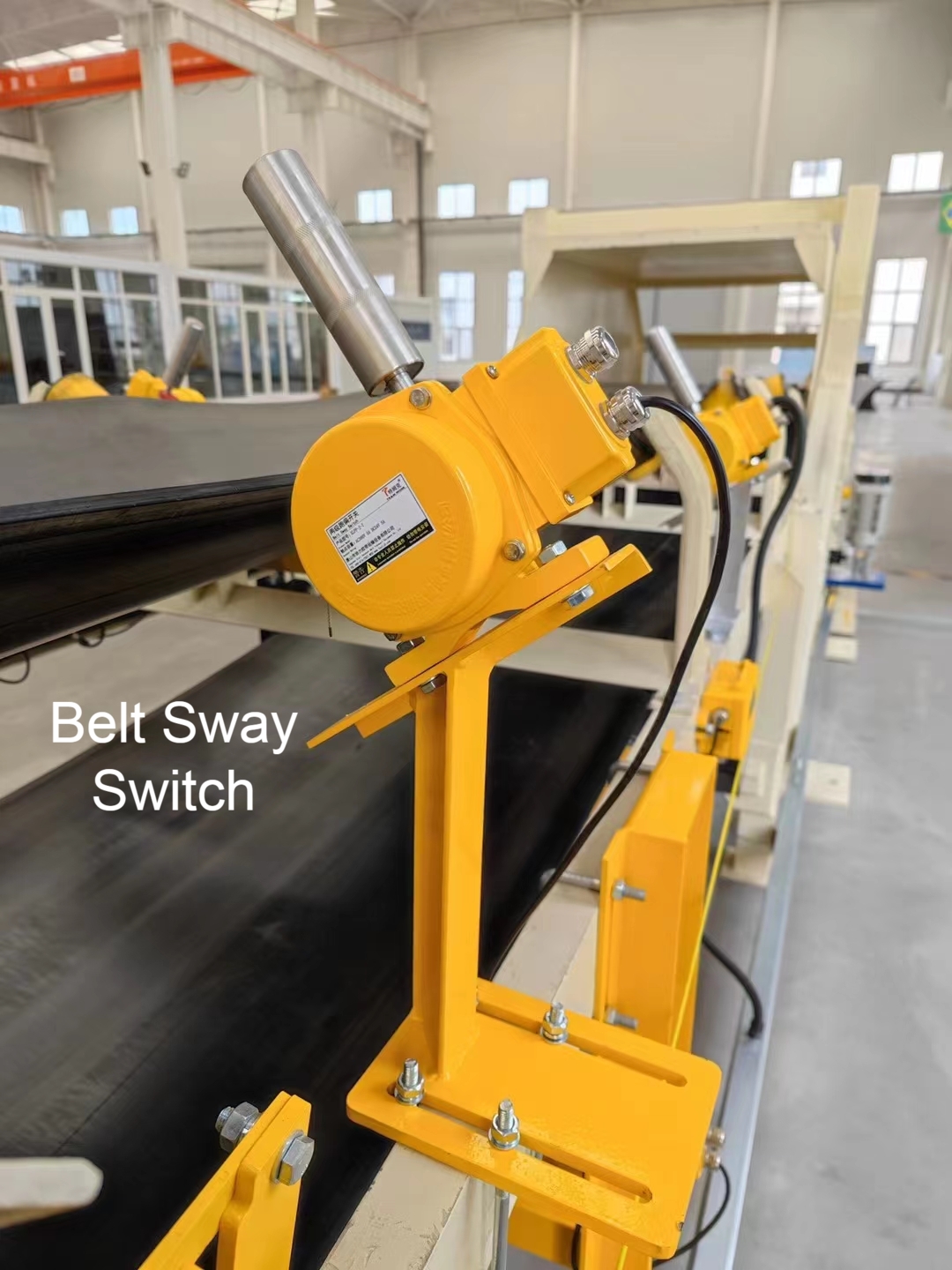
Belt Sway Switch
Detects belt deviation and triggers an alarm or system shutdown. Installed in pairs to prevent edge damage and safety hazards.
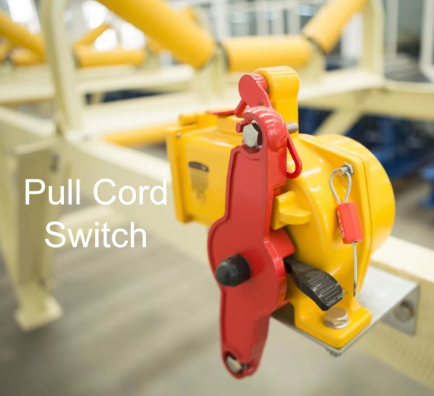
Pull Cord Switch
Emergency stop device activated by pulling a wire rope. Arranged along the entire conveyor length — available in single-sided or double-sided configurations.
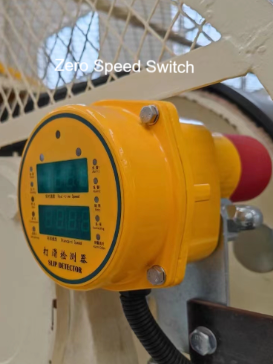
Zero Speed Switch
Monitors belt or drum speed to detect slippage caused by overload, insufficient tension, or worn drive roller lagging.
ZOOMRY specializes in long-distance overland conveyor systems, with extensive experience in EPC (Engineering, Procurement, and Construction) as well as management and operation projects in China and overseas markets. ZOOMRY holds ISO 9001 quality certification, ISO 14001 environmental certification, CE certification for the European market, and EAC certification for Russia. Our commitment is to help customers lower production costs, increase productivity, and lessen environmental impacts through reliable, efficient conveyor solutions.
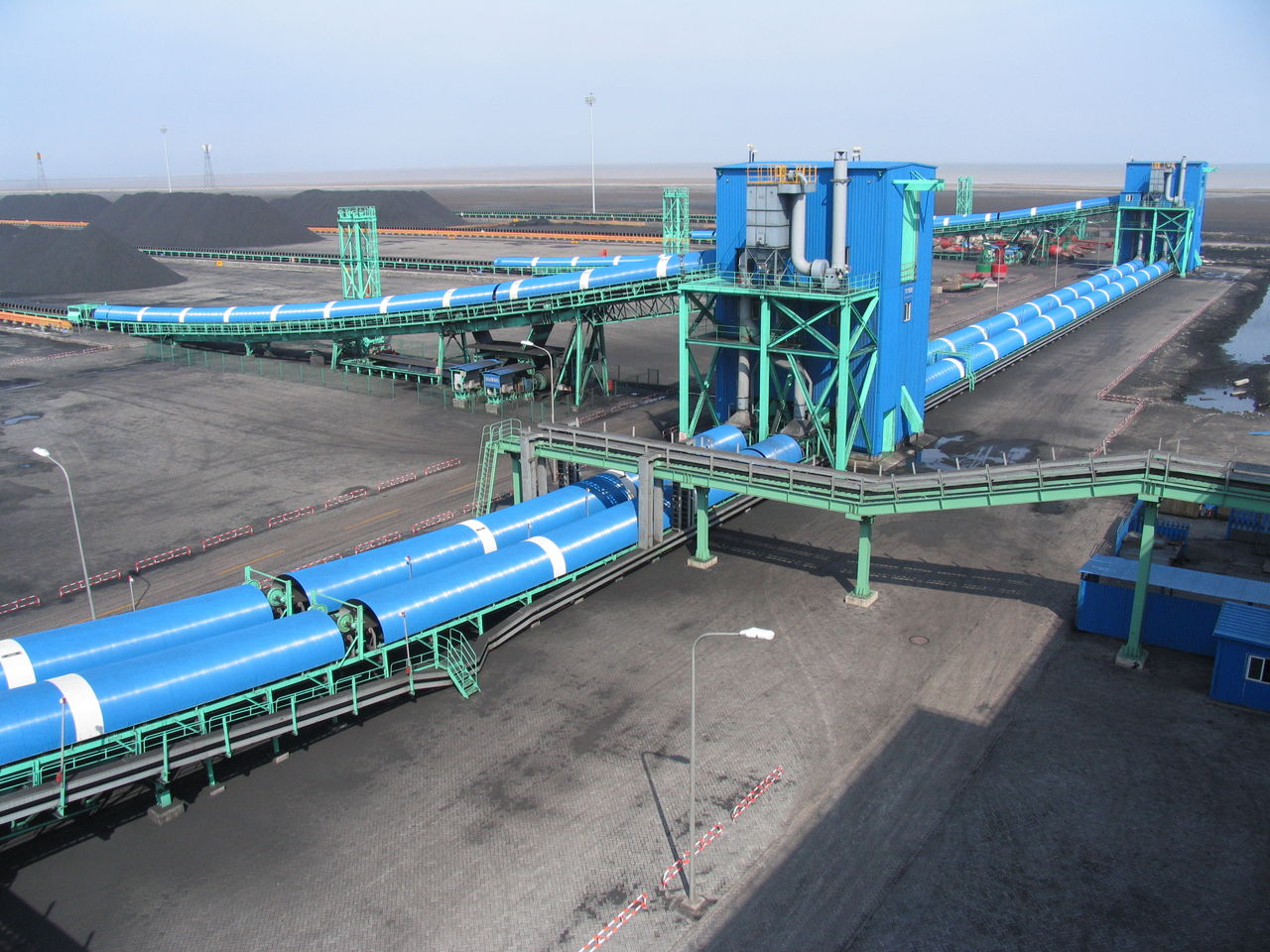
Material: Coal | Capacity: 2 × 5,000 t/d | Angle: 31° | Belt width: 1,000 mm
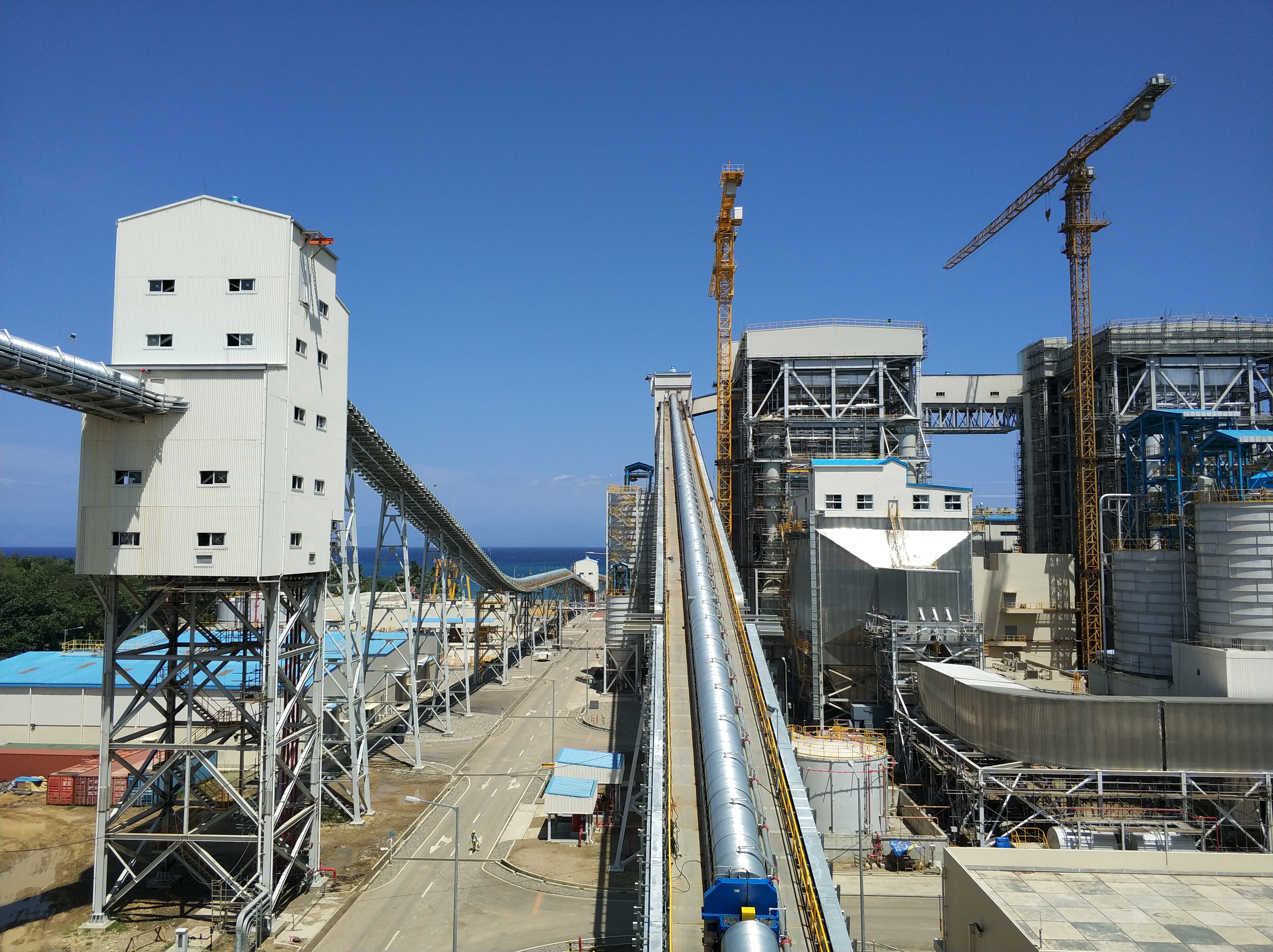
System: Belt conveyor system | Capacity: 4 × 1,800 t/h | Belt width: 1,200 mm
Yes. Long distance overland conveyors are designed to follow natural ground undulations through both horizontal and vertical curves. The minimum horizontal curve radius is typically 300 times the belt width, allowing the system to avoid obstacles, buildings, and roads while maintaining efficient material flow.
Long distance conveyors typically employ multiple drive stations along the conveyor length, using electric motors with gearboxes or direct drive systems. Drive configurations include head drive, tail drive, and intermediate booster drives, selected based on length, lift, and power requirements.
A single long distance belt conveyor can reach 15 km or more, depending on terrain, material characteristics, and drive configuration. For longer systems, booster drives and intermediate tensioning stations can be added to extend the effective length while maintaining stable operation.
Long distance conveyors offer several advantages: (1) lower energy consumption per ton-kilometer, (2) no dust or exhaust emissions, (3) reduced road traffic and safety risks, (4) continuous operation with minimal labor, and (5) lower long-term operating costs compared to truck fleets.
Long distance conveyors handle a wide range of bulk materials including coal, iron ore, limestone, aggregates, cement clinker, gypsum, and grain. The system can be customized with covers or enclosures for dusty materials to meet environmental requirements.
ZOOMRY offers comprehensive after-sales support including installation guidance, complete engineering drawings and documentation, on-site technical assistance by dispatched engineers, and a 2-year warranty on the machine with 50,000-hour warranty on rollers. Global service coverage extends to Europe, the Americas, Southeast Asia, and South Africa.
For long-distance belt conveyor installations, on-site belt vulcanizing is often required to ensure a seamless, durable splice. ZOOMRY supplies vulcanizing machines and offers on-site technical support. See our conveyor belt vulcanizing page for a detailed step-by-step guide.
Compare adjacent models, sizes and duty classes in this category before requesting a quotation.
Browse all Curved belt conveyor models or the complete product range.
Contact ZOOMRY for tailored overland conveyor solutions — long-distance, curved, and high-capacity systems for mining, ports, and industrial plants worldwide.
Contact Us Today