
Classifications of Shipping Equipment – 4 Types of Ship Loaders Explained | ZOOMRY
Compare loading rates, flexibility, cost, and best applications for each type. Complete guide to ship loading equipment for bulk material handling at ports and terminals.
Quick Answer
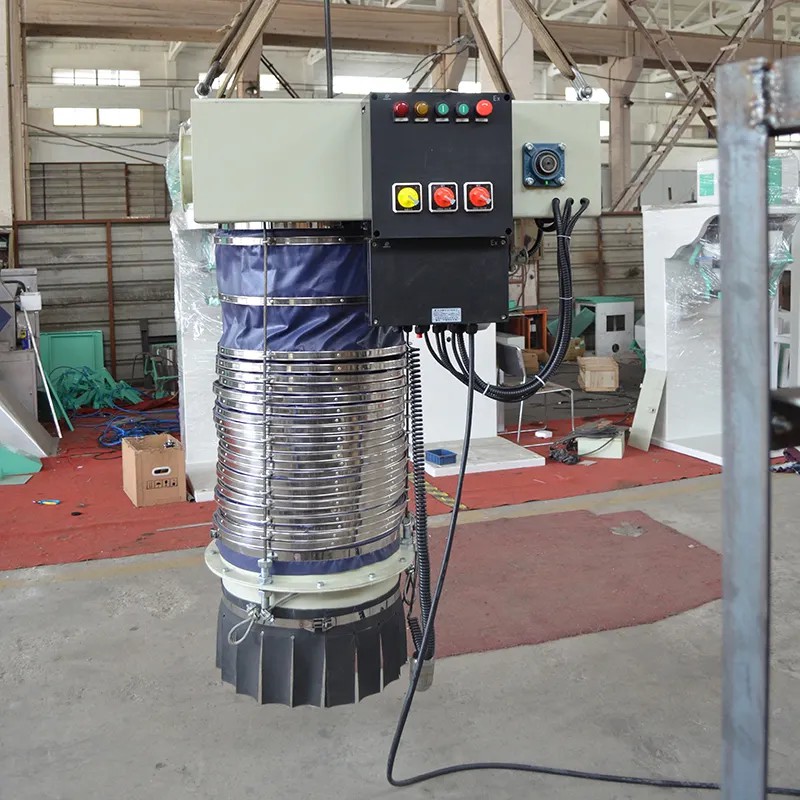
A ship loading machine is used for loading and unloading bulk materials at terminals. It consists of a boom belt conveyor, transition belt conveyor, telescopic chute, tail car, walking mechanism, gantry, tower, pitching device, and slewing device. The sections below describe each type and the duty it is designed for.
With the globalization of trade, shipping equipment has become vital for loading and unloading bulk materials in short timeframes. As a professional bulk material handling solution provider, ZOOMRY supplies a complete range of ship loading equipment for ports and terminals worldwide. This guide covers the four main classifications of shipping equipment — their features, advantages, and best applications.
What is Ship Loading Equipment?
A ship loading machine is used for loading and unloading bulk materials at terminals. It consists of a boom belt conveyor, transition belt conveyor, telescopic chute, tail car, walking mechanism, gantry, tower, pitching device, and slewing device. Large-scale port bulk handling equipment plays a critical role in energy, power, metallurgy, and port industries. Ship loaders operate continuously — requiring supporting equipment to provide a steady material flow.
Four Classifications of Shipping Equipment
1. Radial Telescopic Shiploaders
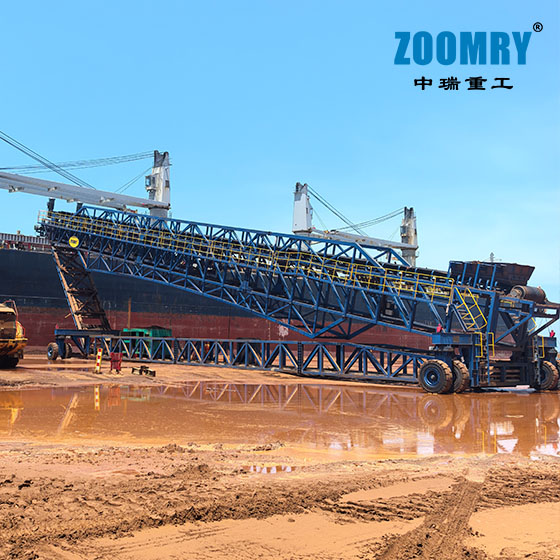
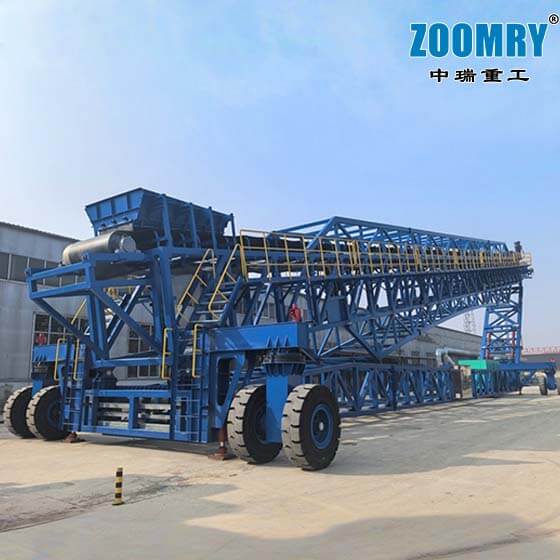
Radial telescopic shiploaders move freely with high flexibility — reducing operator workforce requirements. A single operator can convey material to multiple hatches from one feed position, with fully enclosed conveying throughout. This reduces hatch changeover time and increases productivity.
| Key Advantages | Specifications |
|---|---|
| Closed conveying reduces dust pollution | Loading rates up to 3,000 t/h |
| Flexible spread length up to 190 feet | Drive-wheel base for mobility when not in use |
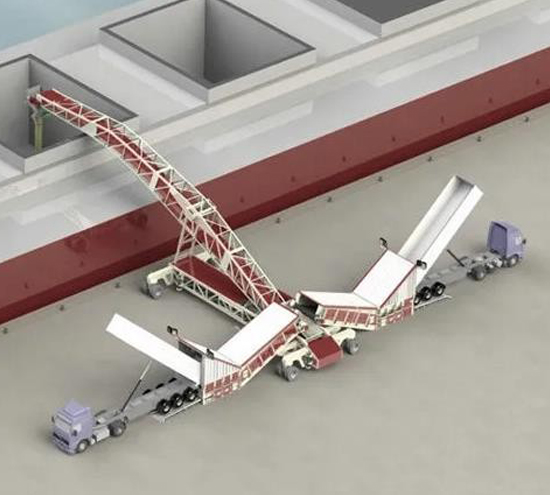
2. Truck Unloaders
Truck unloaders load material directly from dump trucks onto conveyors feeding the vessel — eliminating material re-handling at the quayside. This direct approach reduces loading time, maximizes productivity, and minimizes labor and maintenance costs. For specialized port operations, crawler truck unloaders provide self-propelled quayside mobility.
| Key Advantages | Specifications |
|---|---|
| Low investment and low site requirements | Loading rates up to 1,500 t/h |
| Suitable for all truck loading/unloading applications | Radial boom length option for cabin leveling flexibility |
3. Direct Feed Shiploaders
Direct feed ship loaders allow operators to load directly from wheel loaders to vessels at ports or inland waterway terminals — avoiding duplicate material handling. Only one unit handles loading and unloading, reducing loading times and maximizing productivity. Tracked ship loaders offer crawler mobility for unpaved quaysides.
| Key Advantages | Specifications |
|---|---|
| Up to 75% reduction in fuel costs | Loading rates up to 1,500 t/h |
| High flexibility, low running costs, easy maintenance | Low input and low site requirements |
4. Rail-Mounted Telescopic Shiploaders
Rail-mounted telescopic shiploaders feature telescopic functionality with tracks as the complete movement route — suitable for loading and unloading all types of material vessels. The rail system provides stable, linear quayside travel for serving multiple vessel hatches along the dock.
| Key Advantages | Specifications |
|---|---|
| Strong loading capacity | Loading rates up to 3,000 t/h |
| Hydraulic lifting and telescopic device — freely adjustable loading point | Radio remote control — single operator operation |
| Sealed transport reduces environmental pollution | Small footprint with rail-based movement |
Classification Comparison at a Glance
| Type | Max Capacity | Mobility | Best For |
|---|---|---|---|
| Radial Telescopic | 3,000 t/h | Free wheeled movement | Multi-hatch loading from single feed, high flexibility |
| Truck Unloader | 1,500 t/h | Wheeled or tracked | Direct truck-to-vessel, low investment |
| Direct Feed | 1,500 t/h | Self-propelled | Wheel loader to vessel, fuel savings up to 75% |
| Rail-Mounted Telescopic | 3,000 t/h | Rail track guided | Stable linear quayside travel, high capacity |
Related Equipment
Explore This Topic: Ship Loaders & Port Loading
Port loading equipment: mobile and fixed shiploaders, telescopic bulk loaders, chutes, dust control and cost factors.
- Mobile Truck Unloader for Construction Sites: Durable, Portable, and Reliable — Guide
- Port Case Study: Collaborative Operation of Truck Unloaders and Mobile Shiploaders — Guide
- Crawler Truck Unloader – Quayside Truck-to-Vessel Loading System for Ports — Product
- Bulk Material Handling Equipment Types Guide — Conveyor, Stacker, Shiploader & Unloader — Guide
- ZOOMRY EPC Case Studies: 9.6km Conveyor & 35% Faster Port Loading — Guide
Let's build it together
Need a custom bulk handling solution?
Talk to our engineers about conveyors, stackers, ship loaders and turnkey EPC systems.