
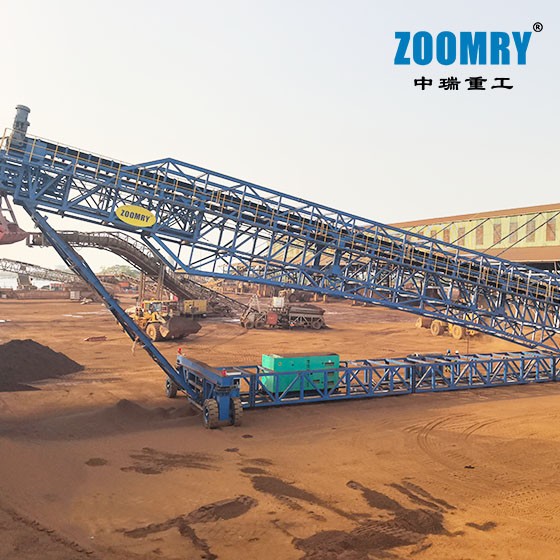
Standard projects handle 100–3,000 t/h with boom lengths up to 58 m; selected configurations reach 3,500 t/h and 65 m for ports and terminals.
ZOOMRY radial telescopic ship loaders are bulk-material loading systems for ports and terminals, inland waterways, mining export facilities, and industrial loading berths. The combined radial slewing, telescopic boom, and luffing functions are designed to extend loading coverage across vessel hatches from a selected feed position, helping reduce machine repositioning during the loading cycle.
Project configurations can be engineered for coal, ore, aggregates, grain, fertilizer, biomass, wood chips, pellets, cement clinker, and other suitable bulk materials. Selected designs provide loading capacities from approximately 100 to 3,000 t/h and telescopic boom lengths up to approximately 58 m. Final loading rate, hatch coverage, mobility arrangement, chute design, dust-control system, and operating envelope are confirmed according to vessel geometry, berth layout, material characteristics, environmental requirements, and terminal operating conditions.
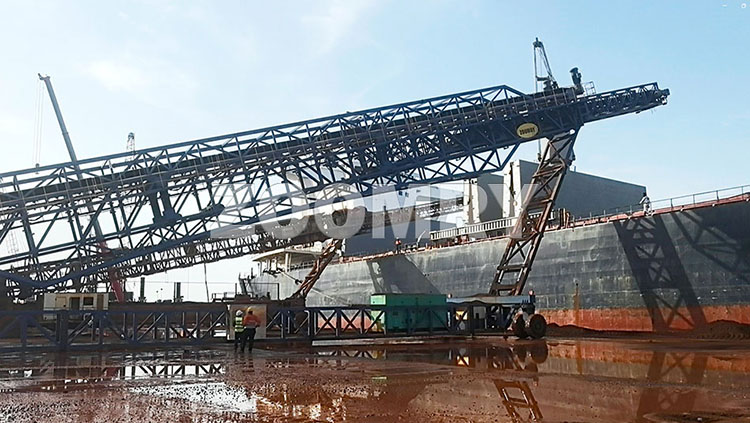
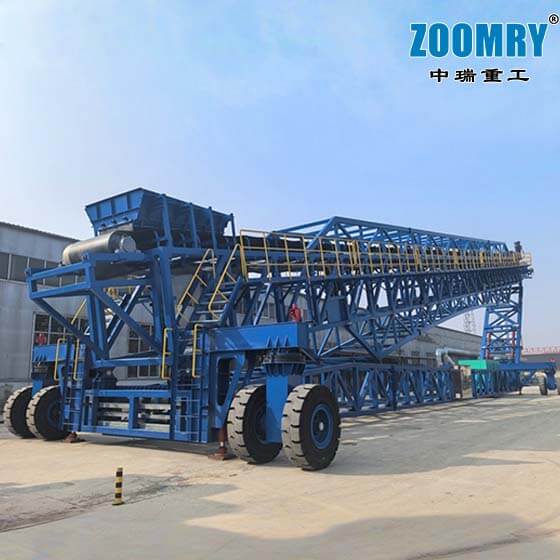
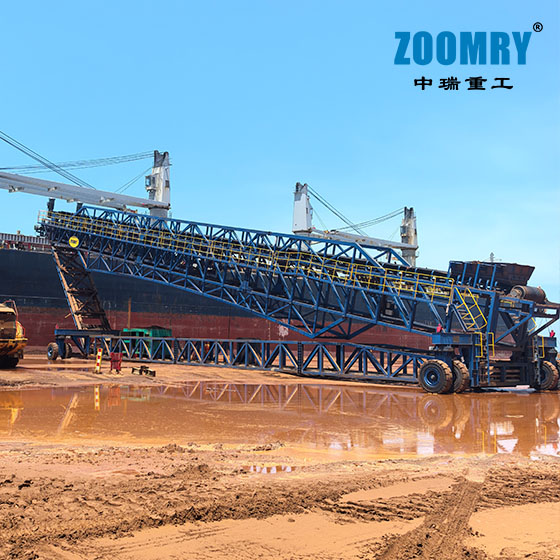
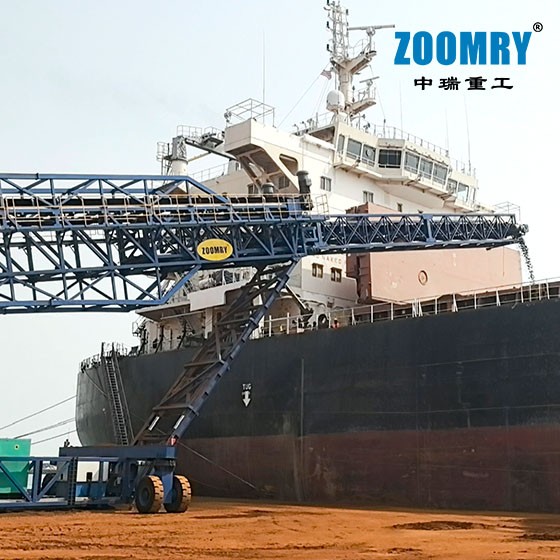
ZOOMRY Radial Telescopic Ship Loader — bulk-material vessel loading at a port terminal
The following values show the typical engineering range for ZOOMRY radial telescopic shiploader projects. Final equipment specifications are confirmed according to vessel dimensions, berth layout, material bulk density, particle size, loading rate, dust-control requirements, and destination regulations.
| Rated Loading Capacity | Approximately 100–3,000 t/h, depending on material characteristics and project configuration |
|---|---|
| Telescopic Boom Length | Up to approximately 58 m for selected project configurations |
| Typical Vessel Range | Barges, coaster vessels, Handysize, Handymax, and selected Panamax applications, subject to berth and hatch geometry |
| Mobility Arrangement | Fixed, rail-mounted, wheel-mounted, tracked, or project-specific terminal arrangement |
| Loading Functions | Radial slewing, telescoping, luffing, and selected hatch-trimming arrangements according to the required loading envelope |
| Material Types | Coal, ore, aggregates, grain, fertilizer, biomass, wood chips, pellets, cement clinker, sulfur, and other suitable bulk materials |
| Chute Options | Telescopic chute, cascade chute, sealed discharge chute, rubber sock chute, or project-specific loading-chute arrangement |
| Dust and Spill Control | Enclosed transfer points, skirts, covers, dust extraction, water suppression, and selected containment arrangements |
| Power and Control | Power source, control system, automation level, remote-control functions, terminal interlocks, and communication interfaces selected by project |
| Marine Protection | Marine coating systems, corrosion-resistant materials, and protection level selected for the terminal environment |
Actual loading capacity, vessel coverage, boom length, mobility arrangement, power configuration, chute design, dust-control equipment, transport dimensions, and certification requirements are confirmed during detailed engineering.
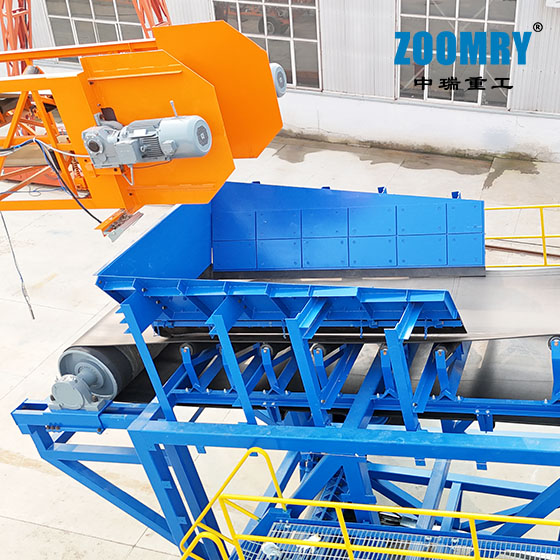
Bulk material is received from an upstream belt conveyor, hopper feeder, truck-unloading system, mobile link conveyor, or other terminal equipment. It travels along the shiploader boom and is discharged through a selected chute arrangement into the vessel hold. The telescopic boom changes the effective discharge reach, while radial slewing and luffing help position the discharge point across the available loading envelope.
This arrangement can support hatch trimming and reduce the frequency of moving the complete machine or vessel during loading. The number of vessel hatches accessible from a single feed position depends on vessel dimensions, hatch spacing, berth geometry, required boom reach, and the final radial operating range. Chute selection is matched to material flow, dust-control requirements, allowable free-fall distance, and the vessel-loading plan.
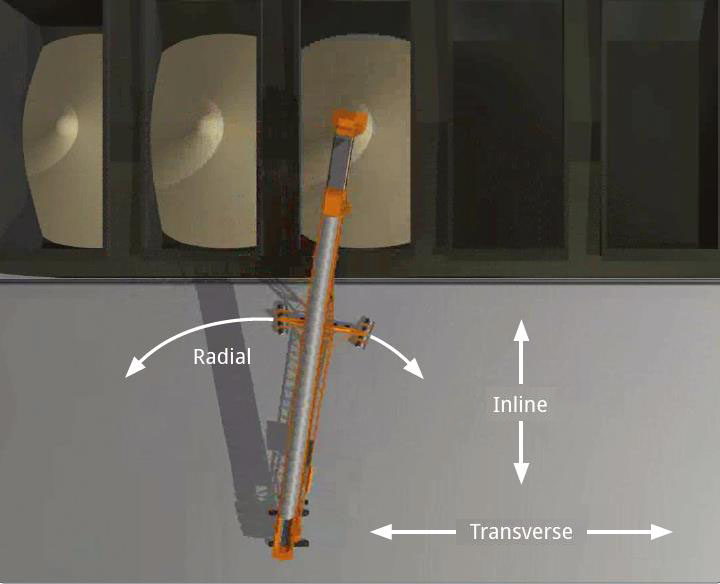
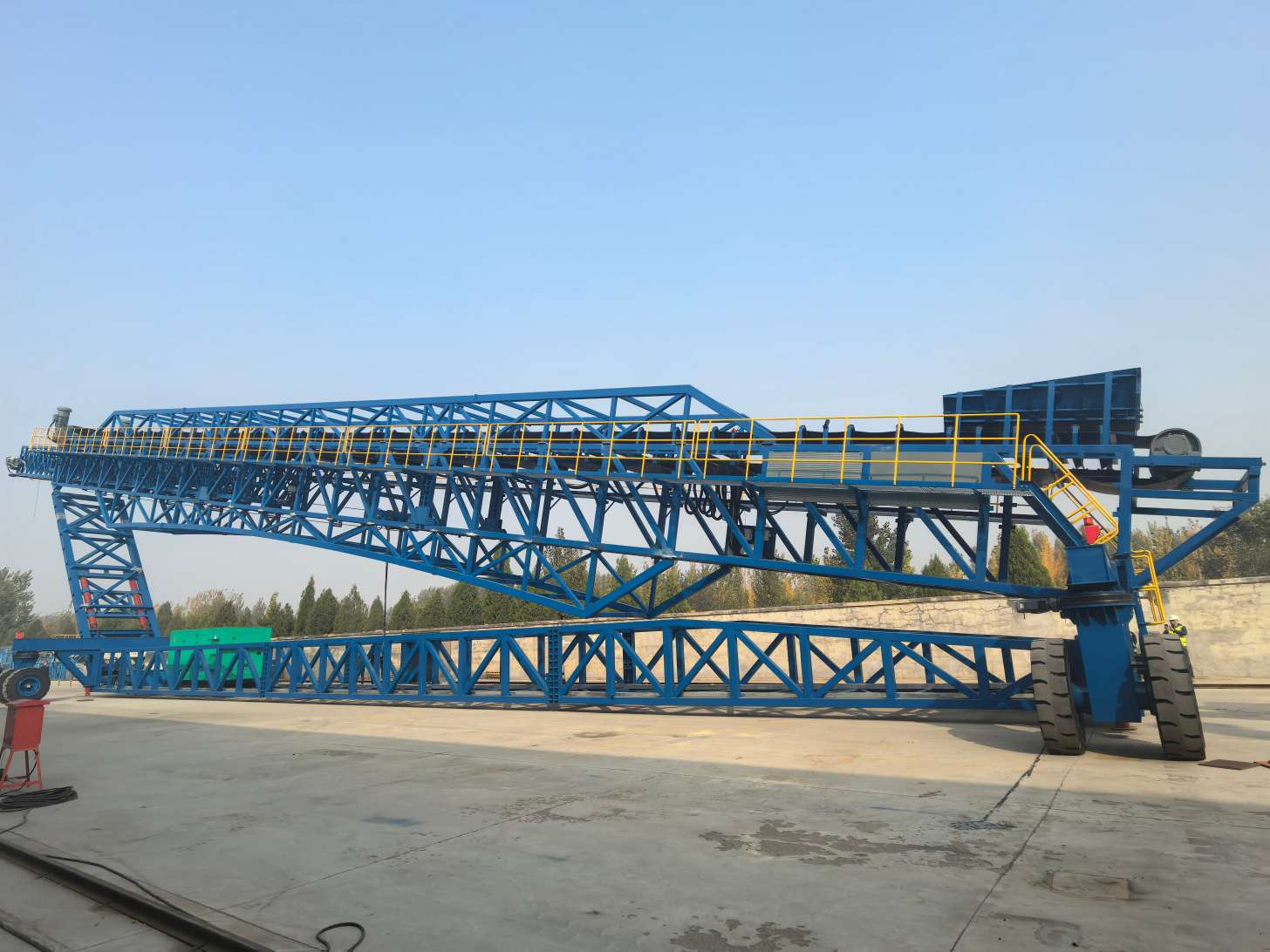
ZOOMRY Radial Telescopic Ship Loader — project-specific mobility and boom configuration
Radial, Telescopic, and Luffing Movement — Combined motion functions help extend the loading envelope across vessel hatches and support controlled trimming of the material pile inside the hold. Final working range is determined by the boom length, vessel geometry, berth arrangement, and selected machine configuration.
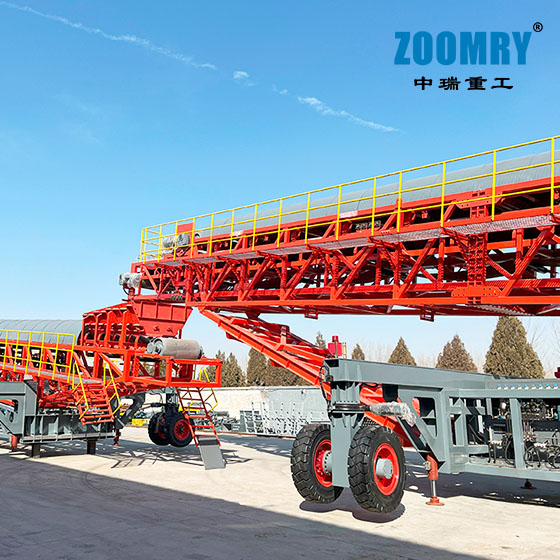
Project-Specific Mobility — Fixed, rail-mounted, wheel-mounted, tracked, and other terminal mobility arrangements may be evaluated according to quay conditions, travel route, berth layout, and required operating flexibility.
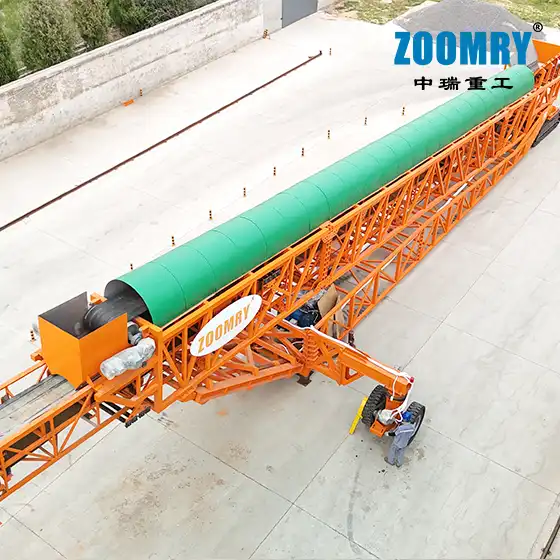
Configured Loading Chute System — Telescopic, cascade, sealed, sock, and selected trimmer-chute arrangements can be matched to the material, vessel hold, required loading pattern, and environmental-control objectives.
Dust and Spill-Control Options — Enclosed transfer points, skirts, covers, loading chutes, dust extraction, water suppression, and containment features can be selected to help manage dust and spillage in accordance with terminal requirements.
Marine-Environment Protection — Coating systems, corrosion-resistant materials, protected electrical components, and maintenance-access features can be specified for coastal, high-humidity, and high-salinity terminal environments.
Integrated Terminal Controls — Radio remote control, PLC automation, communication interfaces, generator or shore-power integration, and terminal interlocks may be selected according to the required operating and safety scope.
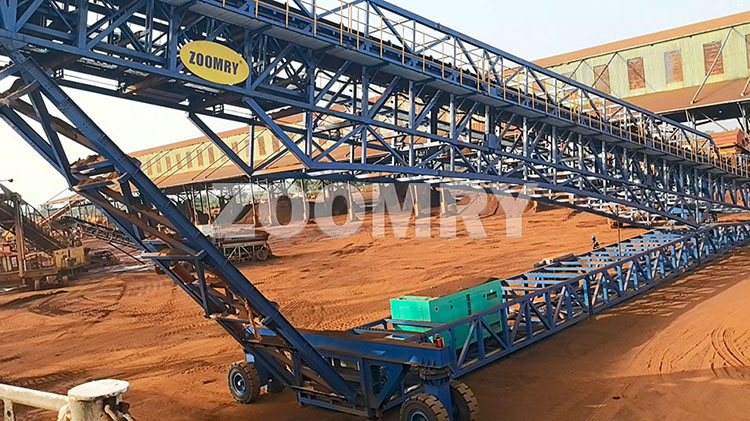
ZOOMRY Radial Telescopic Ship Loader — boom, chute, and selected dust-control configuration
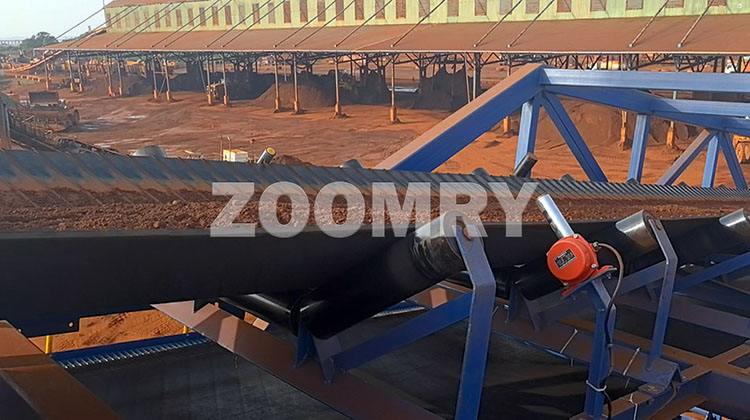
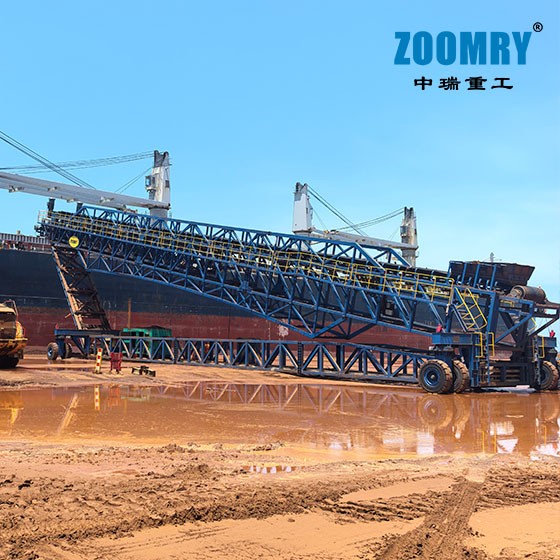
ZOOMRY Radial Telescopic Ship Loader — project-specific mobility, cover, chute, and marine-protection options
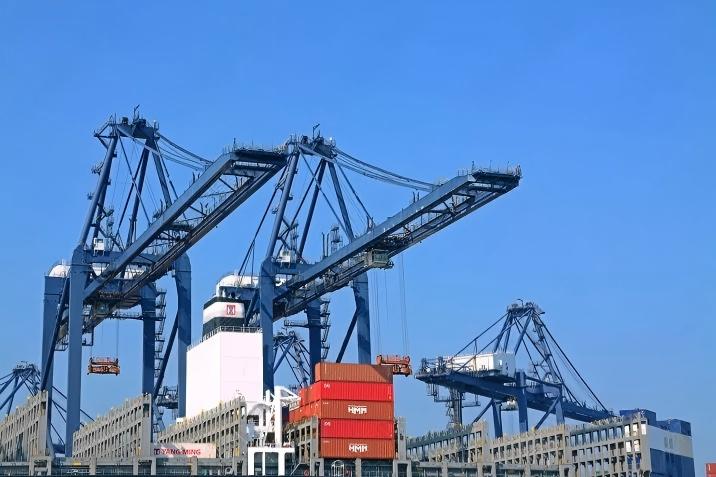
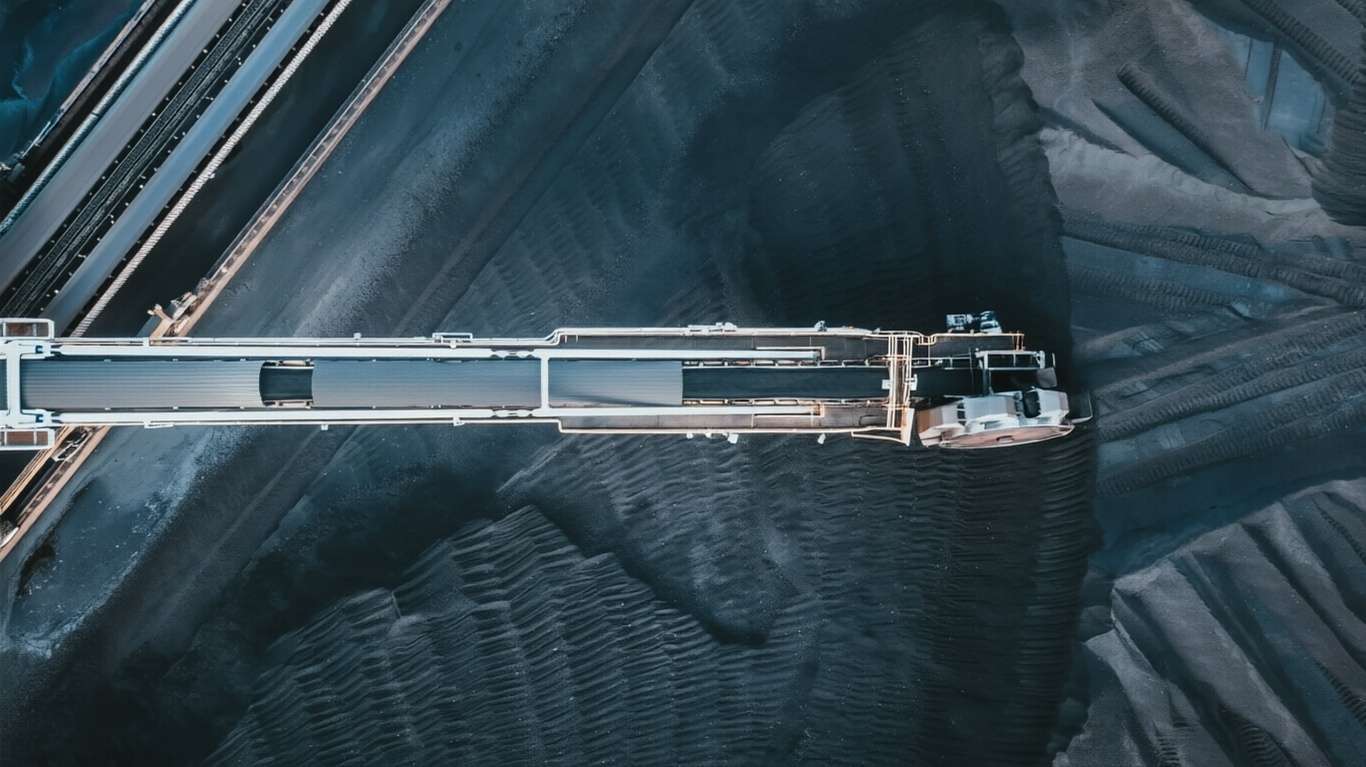
Compare adjacent models, sizes and duty classes in this category before requesting a quotation.
Browse all Mobile Ship Loader models or the complete product range.
Share your berth layout, vessel range, material data, required loading capacity, and environmental-control requirements. ZOOMRY engineers will recommend a suitable shiploader configuration.
Request a Shiploader Proposal →Selected designs provide loading capacities from approximately 100 to 3,000 t/h with telescopic boom lengths up to approximately 58 m, so one machine can cover barge through Panamax berths depending on the configuration.
The boom slews radially around the feed point, so the discharge can be moved across the hatch and along the vessel without travelling the undercarriage. That is what allows several hatches to be trimmed from one position.
No — boom length, mobility, chute type and dust-control equipment are configured per project, because berth geometry, tidal range and vessel mix differ between terminals. The published capacity and boom figures are the envelope, not a catalogue model.