
Conveyor Pulley Types: Drive, Bend, Snub & Take-Up Pulleys Explained (2026)
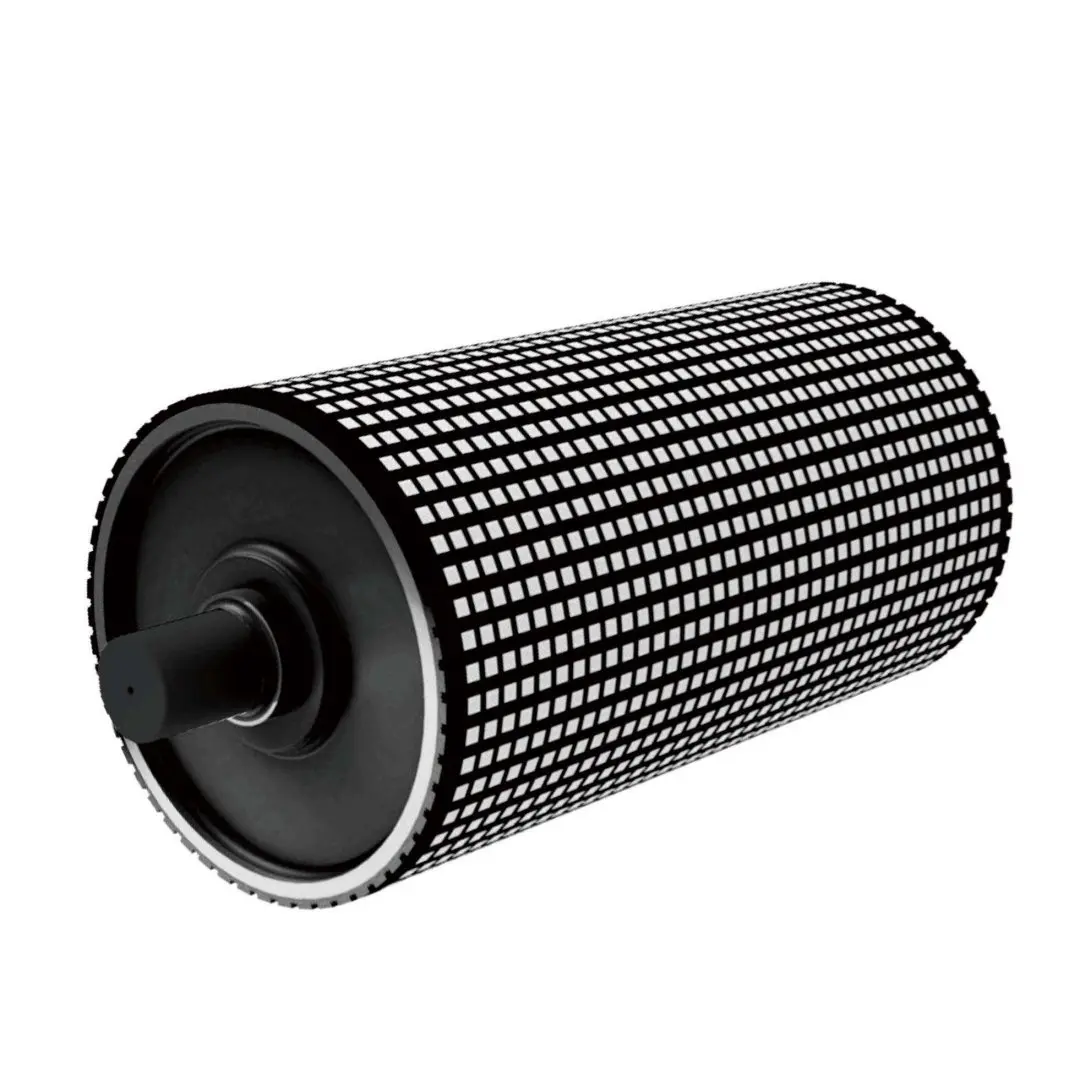
A conveyor pulley is a cylindrical rotating component that supports and drives the conveyor belt. Pulleys are mounted at the head, tail, and intermediate points of the conveyor.
Quick Answer
A belt conveyor uses five main pulley types: drive pulley (transmits power), tail pulley (returns the belt), bend pulley (changes belt direction), snub pulley (increases wrap angle), and take-up pulley (maintains belt tension). ZOOMRY manufactures all five types in diameters from 200 to 1,800 mm, for belt widths from 400 to 2,800 mm, with rubber, ceramic, or diamond-grooved lagging.
What Is a Conveyor Pulley?
A conveyor pulley is a cylindrical rotating component that supports and drives the conveyor belt. Pulleys are mounted at the head, tail, and intermediate points of the conveyor. Each pulley has a specific function: driving the belt, changing its direction, increasing wrap angle, or maintaining tension.
ZOOMRY conveyor pulleys are manufactured from 16Mn steel shells and 45#/40Cr shafts, with CNC four-roll rounding for ovality below 1.5 mm, and ultrasonic flaw detection. Service life exceeds 50,000 hours.
Five Main Conveyor Pulley Types
| Pulley Type | Function | Position |
|---|---|---|
| Drive Pulley | Transmits motor torque to the belt | Head end |
| Tail Pulley | Returns the belt at the tail end | Tail end |
| Bend Pulley | Changes belt direction | Intermediate |
| Snub Pulley | Increases wrap angle on drive pulley | Near drive pulley |
| Take-Up Pulley | Maintains belt tension | Gravity or screw take-up |
1. Drive Pulley (Head Pulley)
The drive pulley is the powered pulley that transmits motor torque to the belt. It is located at the head end of the conveyor and is usually the largest pulley in the system. The drive pulley may be lagged with rubber, ceramic, or diamond-grooved rubber to increase friction and prevent belt slip.
ZOOMRY drive pulley specifications:
Belt width: 500–2,800 mm
Diameter: 200–1,800 mm
Shell material: 16Mn steel
Shaft material: 45# or 40Cr steel
Lagging: rubber, ceramic, or diamond-grooved
Service life: over 50,000 hours
2. Tail Pulley
The tail pulley is located at the tail end of the conveyor and returns the belt. It may be smooth or lagged, depending on whether it also drives or just returns the belt. The tail pulley is often smaller than the drive pulley.
ZOOMRY tail pulley specifications:
Belt width: 400–2,400 mm
Diameter: 200–1,400 mm
Surface: smooth or rubber-lagged
3. Bend Pulley
A bend pulley changes the direction of the belt without driving it. Bend pulleys are used at transfer points, on inclined sections, and in take-up systems. They are typically smaller than the drive pulley and may be smooth or lagged.
ZOOMRY bend pulley specifications:
Belt width: 400–2,400 mm
Diameter: 200–1,400 mm
Surface: smooth or rubber-lagged
4. Snub Pulley
A snub pulley increases the wrap angle of the belt around the drive pulley. By increasing wrap angle, the snub pulley increases friction and reduces the risk of belt slip — especially useful on high-tension or high-capacity conveyors. Snub pulleys are usually smaller than the drive pulley and positioned close to it.
ZOOMRY snub pulley specifications:
Belt width: 500–2,800 mm
Diameter: 200–1,800 mm
Lagging: rubber or ceramic
5. Take-Up Pulley
A take-up pulley maintains the correct belt tension during operation. It compensates for belt stretch and ensures the belt stays in contact with the drive pulley. Take-up pulleys are used in both gravity take-up and screw take-up systems.
ZOOMRY take-up pulley specifications:
Belt width: 500–2,800 mm
Diameter: 200–1,800 mm
Type: gravity take-up or screw take-up
Pulley Lagging Types
| Lagging Type | Friction Coefficient | Best For |
|---|---|---|
| Plain Rubber | 0.25–0.30 | Standard dry conditions |
| Diamond-Grooved Rubber | 0.30–0.35 | Wet or muddy conditions |
| Ceramic | ≥ 0.45 | Abrasive, wet, high-tension |
| Replaceable | 0.30–0.45 | On-site re-lagging without removing belt |
Ceramic lagging offers up to 2× the friction of non-lagged pulleys and lasts 3–5× longer in abrasive conditions.
Conveyor Pulley Comparison
| Pulley Type | Drives Belt? | Changes Direction? | Adjusts Tension? |
|---|---|---|---|
| Drive Pulley | Yes | Yes (180°) | No |
| Tail Pulley | No | Yes (180°) | No |
| Bend Pulley | No | Yes (partial) | No |
| Snub Pulley | No | Yes (partial) | No |
| Take-Up Pulley | No | Yes (partial) | Yes |
How to Choose a Conveyor Pulley
Belt width: Larger belt widths require larger pulley diameters to reduce belt stress.
Belt tension: Higher tension requires larger drive pulley diameter and stronger lagging.
Environment: Abrasive or wet environments favor ceramic lagging; dry environments favor rubber.
Maintenance: Replaceable lagging allows on-site re-lagging without removing the belt.
Belt type: Steel cord belts require larger pulley diameters than fabric belts.
Project Data
Project 1: Hubei 8,617 m Curved Conveyor
Belt width: 1,200 mm
Capacity: 2,500 t/h
Pulley types: drive, bend, snub, take-up
Lagging: ceramic for drive pulley
Project 2: Hebei 3,300 m Iron Ore Conveyor
Belt width: 1,400 mm
Capacity: 2,000 t/h
Belt type: ST3150 steel cord
Drive pulley: 1,600 mm diameter, ceramic lagged
Project 3: Shandong 1,568 m Pipe Conveyor
Pipe diameter: 400 mm
Capacity: 1,800 t/h
Pulley types: drive, bend, take-up
Service life: over 50,000 hours
Frequently Asked Questions
What are the main types of conveyor pulleys?
The five main types are drive pulley (transmits power), tail pulley (returns the belt), bend pulley (changes belt direction), snub pulley (increases wrap angle), and take-up pulley (maintains belt tension).
What is the difference between a bend pulley and a snub pulley?
A bend pulley changes the direction of the belt. A snub pulley increases the wrap angle of the belt around the drive pulley, increasing friction and reducing slip. Bend pulleys are used at transfer points; snub pulleys are positioned near the drive pulley.
What is the difference between a drive pulley and a tail pulley?
The drive pulley is powered by the motor and transmits torque to the belt. The tail pulley is not powered; it returns the belt at the tail end of the conveyor.
What is pulley lagging and why is it important?
Pulley lagging is a rubber, ceramic, or diamond-grooved coating applied to the pulley surface to increase friction between the pulley and the belt. Lagging prevents belt slip, improves traction, and extends pulley life. Ceramic lagging offers the highest friction coefficient (≥ 0.45).
What is the typical service life of a ZOOMRY conveyor pulley?
ZOOMRY conveyor pulleys are manufactured from 16Mn steel shells and 45#/40Cr shafts, with CNC four-roll rounding and ultrasonic flaw detection. Service life exceeds 50,000 hours.
Related Products


Industry Applications

Explore This Topic: Belt Conveyor Systems
Foundations of belt conveying: system components, layouts, drive methods, types, cleaning and maintenance.
- Belt Conveyor Motor and Reducer Sizing: Power, Torque and Soft Start — Guide
- Heavy-Duty Drive Pulley – Conveyor Head Pulley Selection & Lagging Options — Product
- How to Choose a Mining Rubber Conveyor Belt – 8 Key Selection Criteria — Guide
- How to Choose a Conveyor Belt – Types, Materials & Selection Guide — Guide
- Mobile Stacking Conveyors for Heap Leach Pads: Layout and Lift Planning — Guide
Let's build it together
Need a custom bulk handling solution?
Talk to our engineers about conveyors, stackers, ship loaders and turnkey EPC systems.