
How to Choose a Conveyor Belt – Types, Materials & Selection Guide | ZOOMRY
Choosing the right conveyor belt directly impacts operational efficiency and total cost of ownership.
Quick Answer
A conveyor belt is a crucial component in industries ranging from mining and coal to chemicals, food processing, and electronics. Choosing the right conveyor belt directly impacts operational efficiency and total cost of ownership. The sections below set out each step with the settings and safety checks to record.
How to Choose a Conveyor Belt – Types, Materials & Selection Guide
A conveyor belt is a crucial component in industries ranging from mining and coal to chemicals, food processing, and electronics. Choosing the right conveyor belt directly impacts operational efficiency and total cost of ownership. As a professional bulk material handling solution provider, ZOOMRY offers 11 types of conveyor belts for diverse applications. This guide walks through belt types, materials, structures, and the five key factors to consider when making your selection.
Types of Conveyor Belts and Their Applications
Long Distance Conveyor Belt
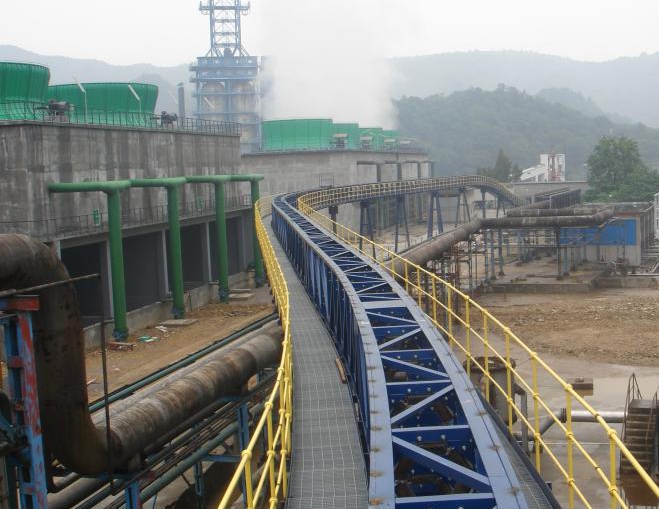
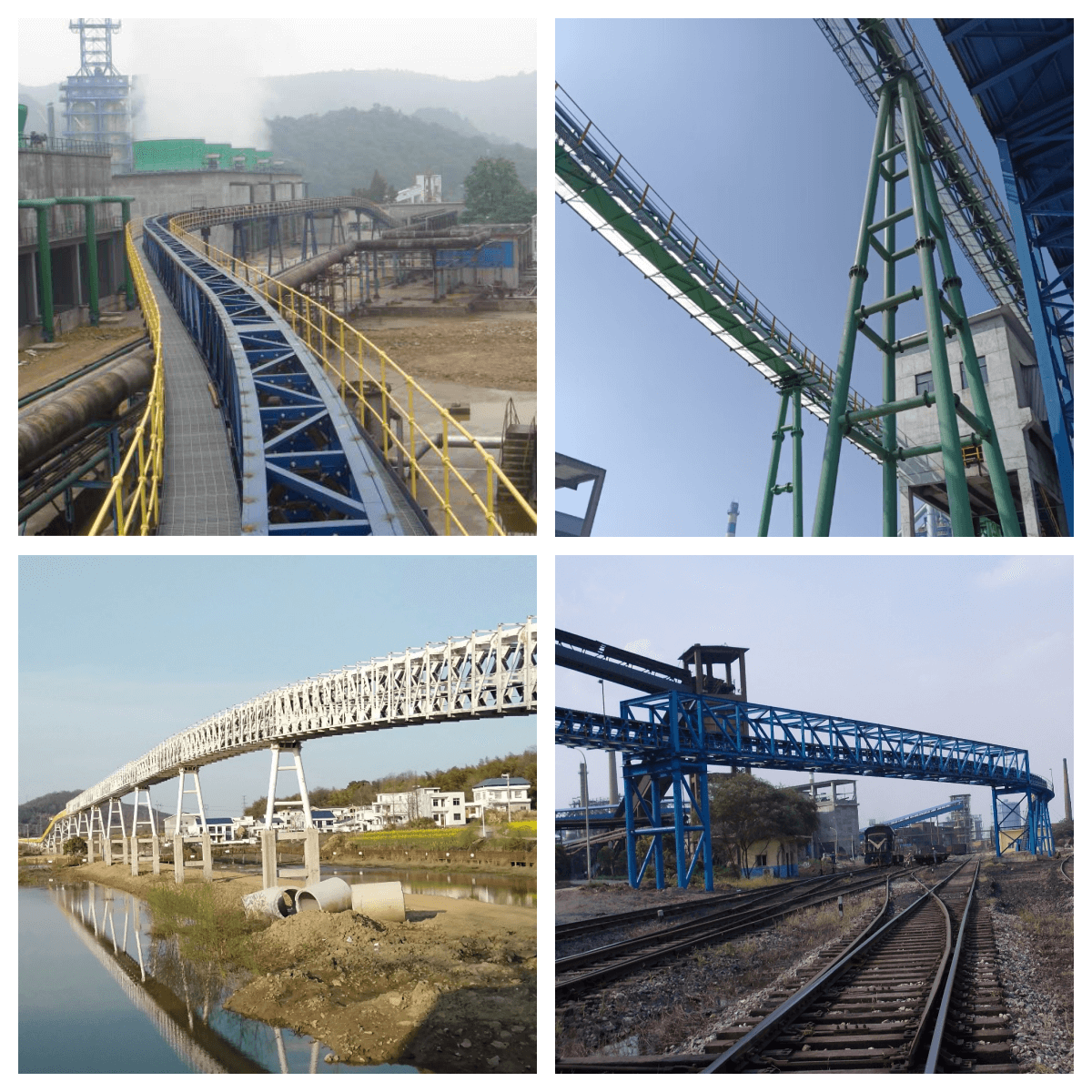
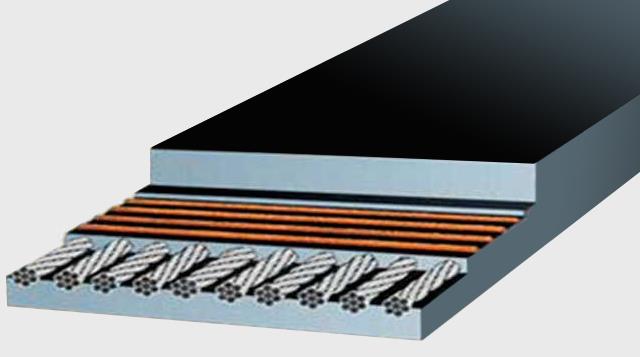
Long-distance conveyor belts are designed for high-capacity transport over extended distances — commonly in mines, ports, and power plants. They require high tensile strength and low elongation. ZOOMRY's steel cord belts (ST630–ST4000) offer strengths up to 4,000 N/mm for single flights exceeding 15 km.
Pipe Conveyor Belt
Pipe conveyor belts feature an enclosed tubular design that prevents material spillage and dust emissions. Ideal for cement plants, chemical facilities, and grain handling where environmental protection and contamination prevention are critical. The belt forms a sealed tube during transport, protecting both the material and surrounding environment.
Large Inclination Conveyor Belt
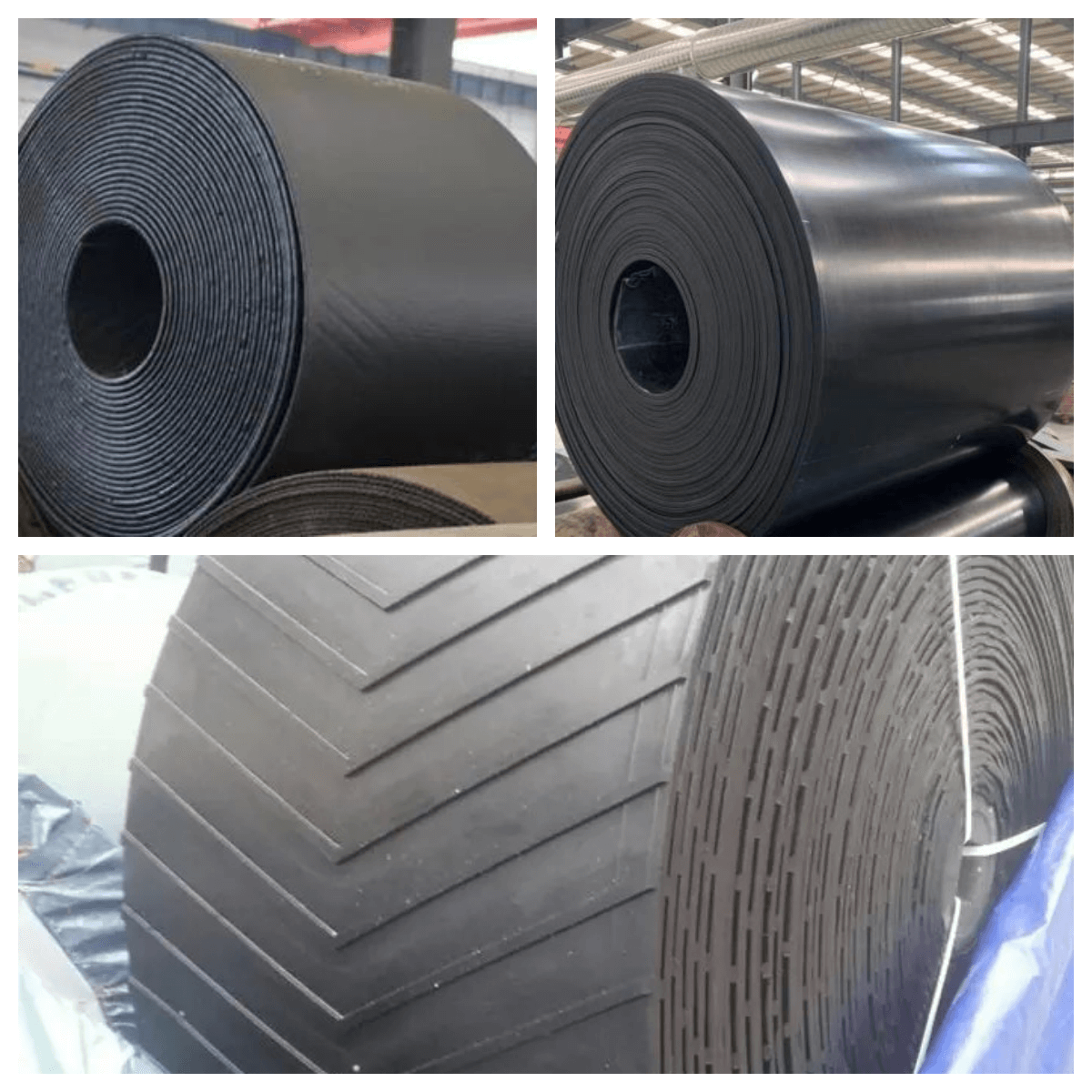
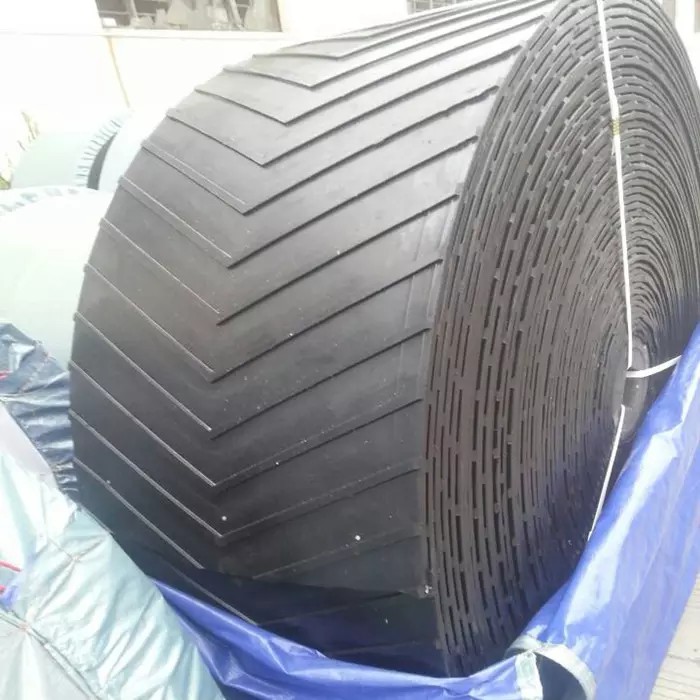
Large inclination conveyor belts handle steep angles beyond standard belt limits. Patterned belts with chevron profiles and concave chevron belts prevent material rollback on inclines up to 45°. For extreme angles, ZOOMRY's large inclination conveyors with corrugated sidewalls handle up to 90°.
Troughed Conveyor Belt
Troughed conveyor belts are the most common type — easy to install and maintain. The trough shape, formed by conveyor idlers, increases capacity and prevents spillage. Widely used in logistics, warehousing, production line transfer, and aggregate processing.
How to Choose the Right Conveyor Belt
By Material
| Belt Material | Best For | Key Features |
|---|---|---|
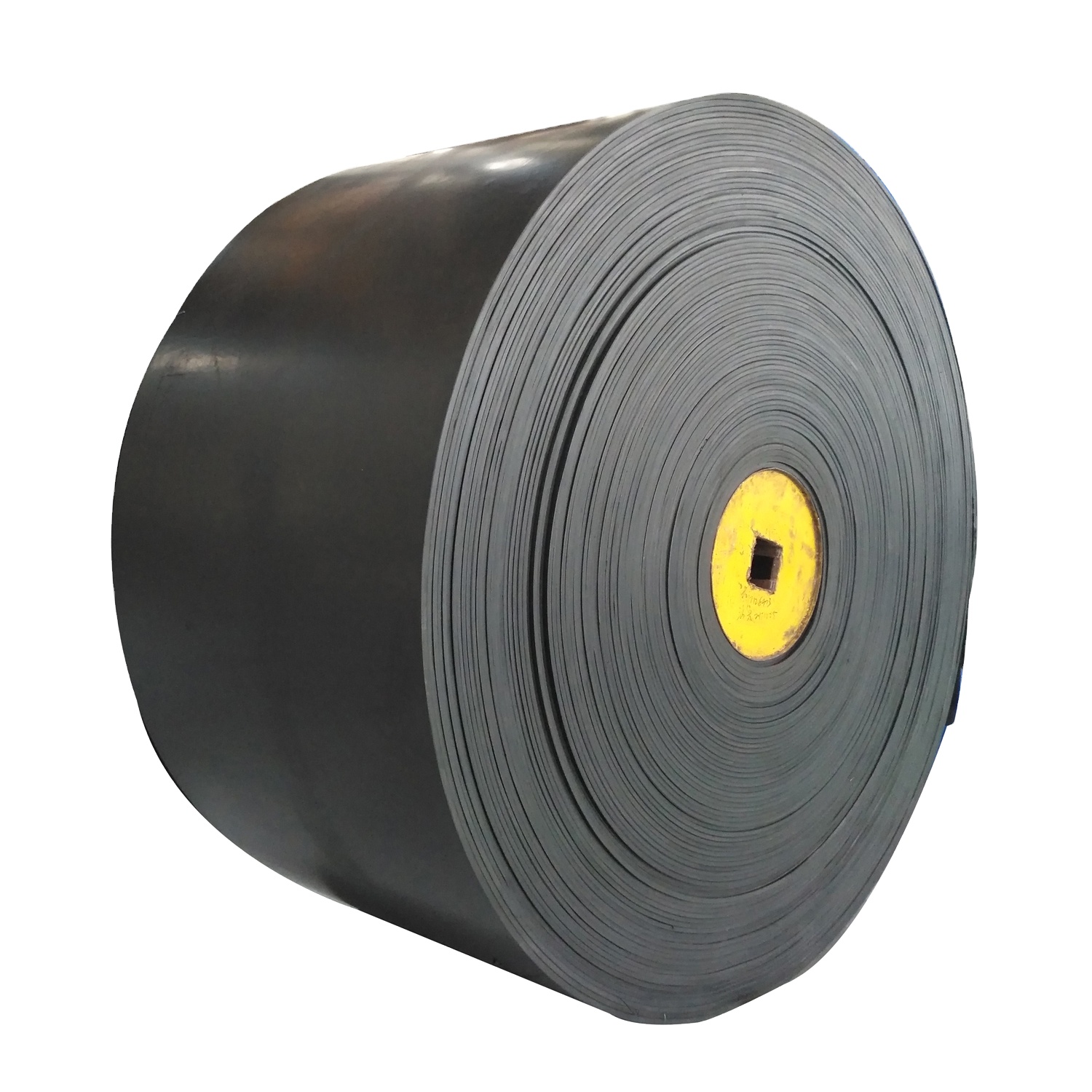
| Rubber Conveyor Belt | Mining, coal, ports, heavy industry | Wear-resistant, impact-resistant, elastic. Available in cold-resistant, heat-resistant, flame-retardant grades. |
| PVC / PU Conveyor Belt | Food processing, electronics, packaging | PVC: cost-effective general use. PU: superior wear, oil resistance, easy cleaning — FDA/EU food-grade certified. |
| Steel Cord Belt | Long-distance, high-capacity, high-tension | Extreme tensile strength (up to 4,000 N/mm), ultra-low elongation, long service life. |
| Nylon (NN) Belt | Medium-short distance, high impact | High strength, excellent elasticity and impact resistance. Mining, building materials, metallurgy. |
| Polyester (EP) Belt | Medium-long distance, high load | Lightweight, high modulus, heat-resistant, dimensionally stable, minimal strength loss when wet. |
By Structure
| Structure Type | Description | Common Use |
|---|---|---|
| Flat Belt | Smooth surface for horizontal or low-incline conveying | Logistics sorting, warehousing, packaging lines |
| Wavy Edge (Cleated) Belt | Corrugated sidewalls prevent material rollback at high angles | Coal, mining, building materials — vertical conveying |
| Pipe Conveyor Belt | Forms a closed tube — fully encloses material | Environmentally sensitive, long-distance, curved paths |
| Patterned (Chevron) Belt | Raised patterns increase friction for inclined conveying | Inclined conveying up to 45° — grain, aggregates, mining |
By Application
| Application Type | Best For | ZOOMRY Solution |
|---|---|---|
| General-Purpose | Routine conveying of bulk materials without special requirements | Fabric belts |
| Heavy-Duty | Heavy, sharp, highly abrasive materials like ore and coal | Steel cord belts |
| Food-Grade | Food processing, beverages, bakery, meat — FDA/HACCP compliant | PVC/PU food-grade belts |
| Chemical-Resistant | Oils, chemicals, corrosive substances | NBR/EPDM cover grades — fertilizer and chemical applications |
| Flame Retardant / Anti-Static | Underground coal mines, explosive atmospheres | Solid woven PVC/PVG / Fire resistant belts |
| Heat / Cold Resistant | Extreme temperatures — metallurgy, cement, frozen food | Heat resistant T1/T2/T3 |
Five Key Factors for Conveyor Belt Selection
- Material Characteristics: Type, particle size, moisture content, temperature, abrasiveness, stickiness, corrosiveness, and hygiene requirements.
- Conveying Parameters: Capacity (tonnage), belt speed, conveying distance, lift/drop height, and incline angle.
- Operating Environment: Temperature, humidity, chemical exposure, dust, explosion risks, and outdoor weather conditions.
- Equipment Parameters: Pulley diameter, idler spacing, tensioning method, and drive configuration.
- Special Requirements: Flame retardancy, anti-static properties, magnetic properties, food-grade certification, precise positioning.
Related Equipment
Industry Solutions
Explore This Topic: Belt Conveyor Systems
Foundations of belt conveying: system components, layouts, drive methods, types, cleaning and maintenance.
- Belt Conveyor Systems — Topic hub
- Detailed Explanation of Industrial Conveyor Belts – Types, Selection & Applications — Guide
- Four Common Methods for Conveyor Belt Joints – Splicing Guide — Guide
- Hebei Yuantong Mining – 3,300m Long-Distance Belt Conveyor — Case study
- How to Choose the Industrial Conveyor System – Types, Applications & Selection Guide — Guide
- How to Choose the Right Conveyor System – Product & Process Selection Guide — Guide
Let's build it together
Need a custom bulk handling solution?
Talk to our engineers about conveyors, stackers, ship loaders and turnkey EPC systems.