
Type Standards of Conveyor Idlers – Classification, Quality & Selection Guide | ZOOMRY
Covers material types (steel vs plastic), sealing standards, radial runout limits, and 5 quality criteria for selecting reliable idlers in mining, cement, and port conveyor systems.
Quick Answer
The conveyor idler is a critical component of any belt conveyor system — accounting for approximately 35% of total conveyor cost and generating over 70% of system resistance. Idlers support the belt, reduce running resistance, and maintain belt alignment to ensure smooth operation. The guide below covers specifications, selection factors, and related equipment.
Type Standards of Conveyor Idlers – Classification, Quality & Selection Guide
The conveyor idler is a critical component of any belt conveyor system — accounting for approximately 35% of total conveyor cost and generating over 70% of system resistance. Idlers support the belt, reduce running resistance, and maintain belt alignment to ensure smooth operation. As a professional bulk material handling solution provider, ZOOMRY manufactures a complete range of conveyor idlers to CEMA B, C, D, and E standards for mining, cement, and port applications. This guide explains idler classification by function and material, industry standards, and the five quality criteria for selecting reliable idlers.
Idler Classification by Function
Conveyor idlers are classified into four main types based on their function in the conveyor system:
| Idler Type | Function | Installation Location |
|---|---|---|
| Self-Aligning Idler | Corrects belt deviation and mistracking. Rotary groove-shaped on the carry side; parallel type on the return side. | Carry and return sections — spaced at intervals along the conveyor |
| Buffer (Impact) Idler | Absorbs impact at loading points, reducing belt damage from material drop. Rubber disc rings on rollers cushion the impact. | Tail end / loading zone — impact rollers |
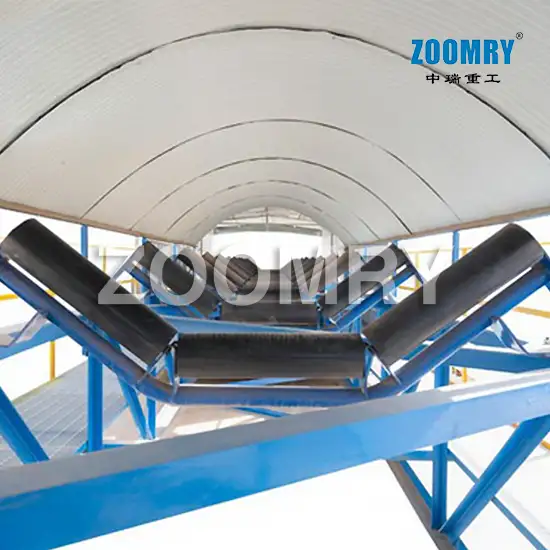
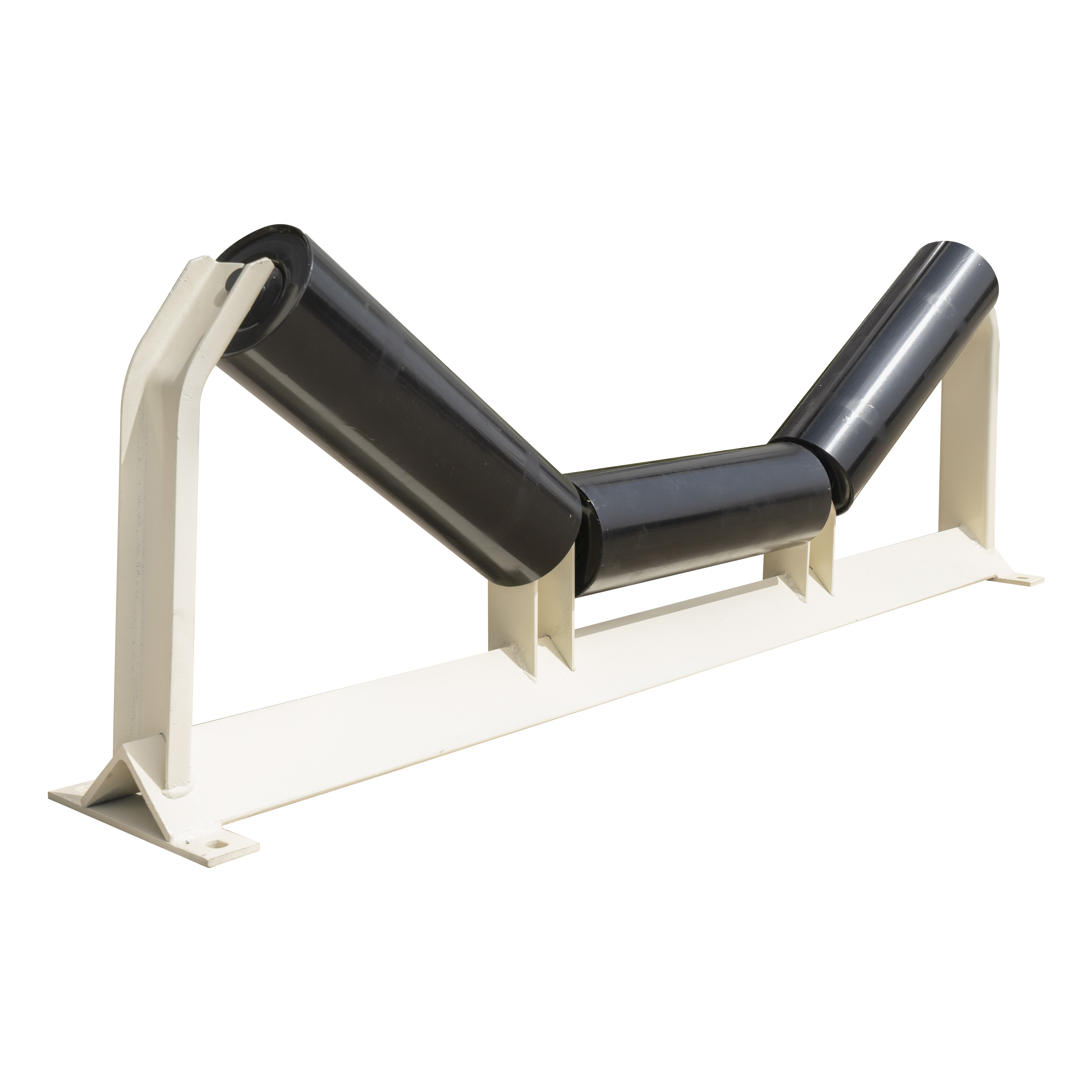
| Troughing Idler | Forms the belt into a trough shape to increase capacity and prevent spillage. Typically 3-roll configuration with 30° trough angle standard. | Carry side — troughing carrying idlers |
| Parallel (Flat) Idler | Supports the belt on the return side. Single long roller mounted horizontally. | Return side — return rollers |
Idler Classification by Material
Idler rollers are manufactured from two primary material types, each suited to different operating environments:
| Material | Characteristics | Best For |
|---|---|---|
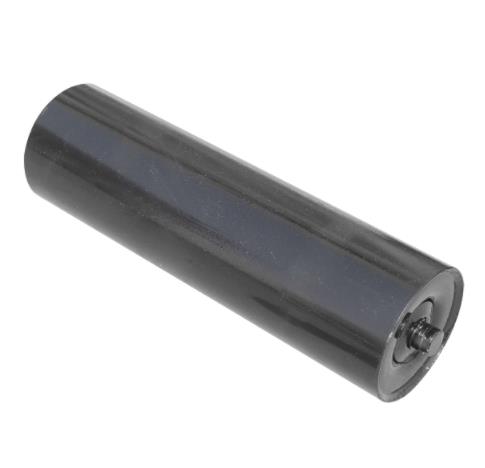
| Steel Roller | High strength and durability. Available with anti-corrosion coatings. Precision bearings with low rotation resistance (≤2N). | General industrial use — conveyor rollers |
| HDPE / Plastic Roller | Non-corrosive, lightweight, non-magnetic, anti-static. Reduces belt wear by over 30%. Service life 40,000+ hours. | Corrosive environments — HDPE rollers |
Bearing housing materials include cast iron, steel stamping, and phenolic plastic — selected based on load requirements and environmental conditions.
Idler Quality Standards — Key Technical Parameters
Radial Runout
Excessive radial runout causes belt vibration, material spillage, and environmental pollution. At higher belt speeds, the effect is amplified. China's national standard specifies a maximum radial runout of 0.7 mm, while the Japanese JIS standard is stricter at 0.5 mm. ZOOMRY idlers are manufactured to meet or exceed both standards.
Rotational Flexibility
Idler flexibility directly impacts system power consumption. High rotation resistance forces the conveyor drive to work harder — increasing energy costs, belt tension, and the risk of motor burnout. In severe cases, seized idlers can generate enough friction heat to ignite the belt. Select idlers with a rotation resistance coefficient below 0.020. ZOOMRY rollers achieve ≤2N rotation resistance through precision bearings and optimized sealing.
Axial Movement
Excessive axial movement in idlers accelerates bearing wear and can cause belt deviation. Control axial movement within 0.5–0.7 mm for optimal performance. This requires precision manufacturing tolerances in the bearing housing and shaft assembly.
Five Quality Criteria for Judging Idler Performance
| # | Quality Criterion | Why It Matters | ZOOMRY Standard |
|---|---|---|---|
| 1 | Dustproof Performance | Prevents dust ingress into bearing — primary cause of premature failure | Axial labyrinth seal + contact seal |
| 2 | Waterproof Performance | Protects bearing from moisture, wash-down, and humidity | IP66-rated sealing available |
| 3 | Axial Bearing Performance | Controls axial movement to prevent belt deviation and bearing wear | Axial movement ≤ 0.5–0.7 mm |
| 4 | Impact Resistance | Withstands material drop impact at loading points | Impact rollers with rubber rings |
| 5 | Service Life | Directly impacts total cost of ownership — idlers account for 35% of conveyor cost | 50,000+ hours (steel) / 40,000+ hours (HDPE) |
Related Equipment
Industry Solutions

Explore This Topic: Conveyor Rollers, Idlers & Pulleys
Component-level guides for selecting, classifying and replacing conveyor rollers, idlers, pulleys and belt-cleaning parts.
- Mining Conveyor Rollers Guide — Heavy-Duty Idlers — Topic hub
- PSV 1.20F14.114N Return and Carry Roller: Specification and Replacement Guide — Guide
- CEMA B Flat Idlers: Light-Duty Horizontal Belt Support Rollers, 4″ & 5″ — Product
- Conveyor Rollers – High-Sealing Idlers for Belt Conveyor Systems | 40,000+ Hours — Product
- CEMA B Unequal Impact Troughing Idlers: Light-Duty L1/L2 Loading Zone Protection, 20°/35° | ZOOM — Product
- CEMA E Flat Idlers – Extra Heavy-Duty Return Rollers | 5″ & 6″ Diameter — Product
Let's build it together
Need a custom bulk handling solution?
Talk to our engineers about conveyors, stackers, ship loaders and turnkey EPC systems.