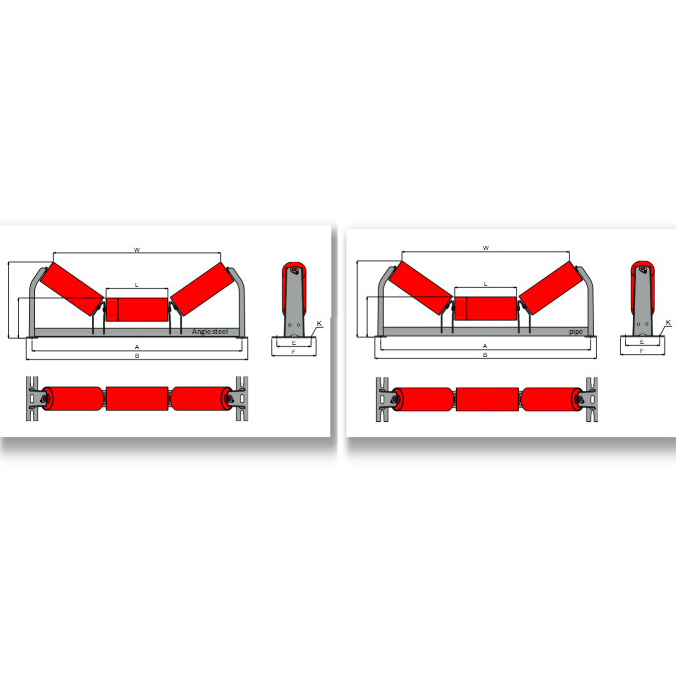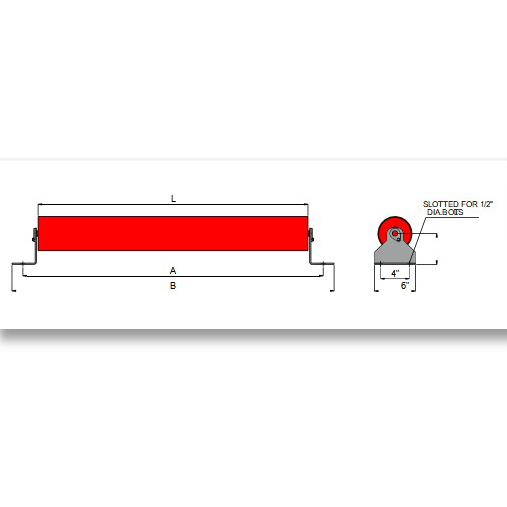

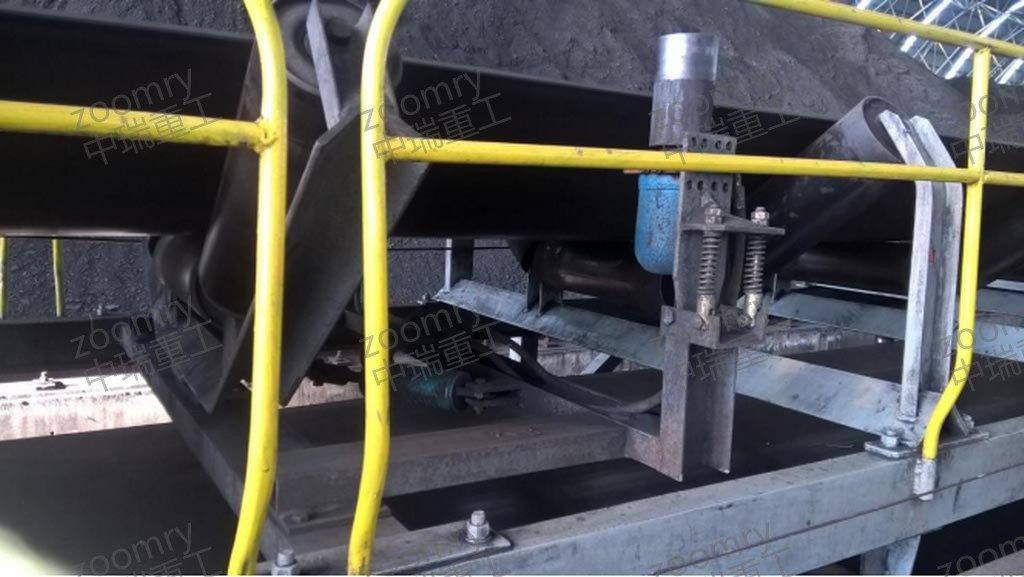
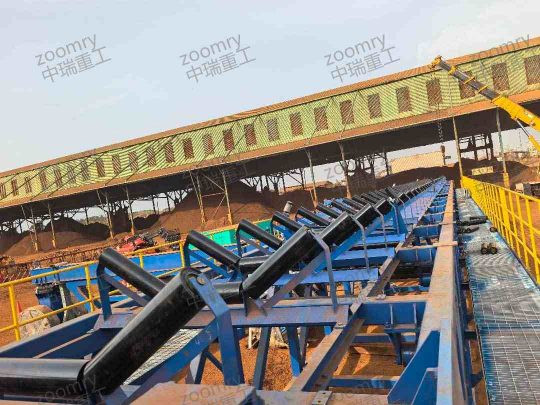
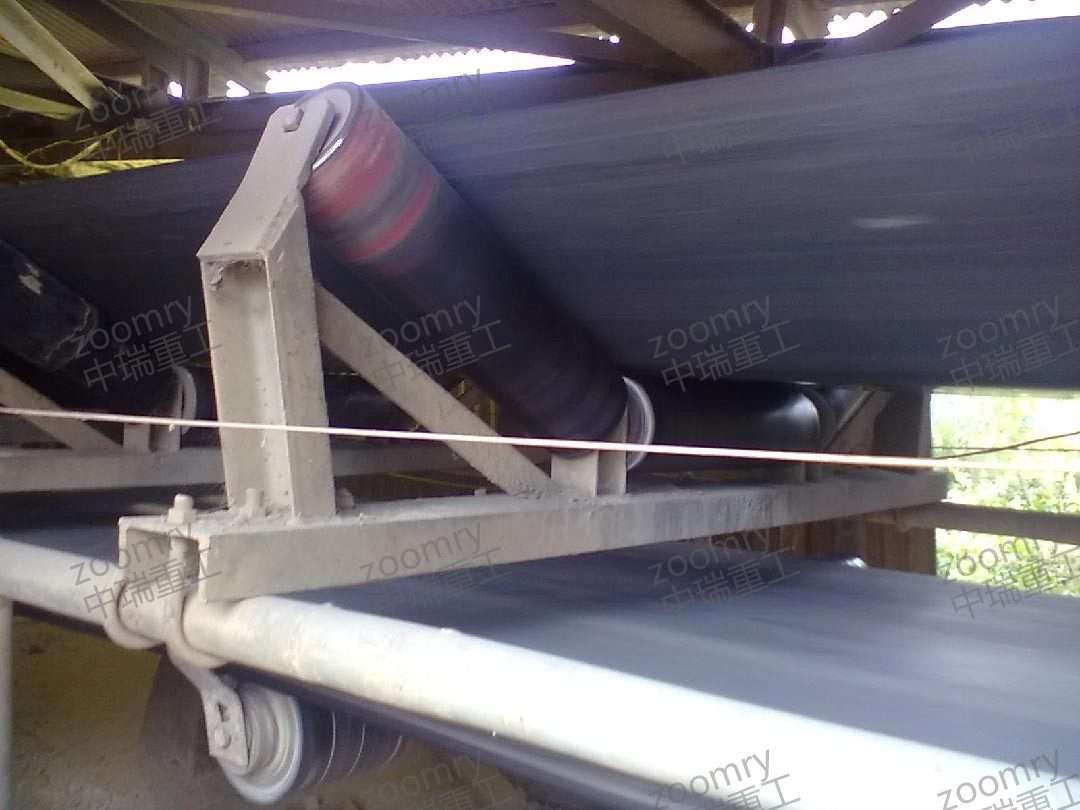
CEMA B unequal impact troughing idlers feature offset L1/L2 roller geometry with rubber cushion rings for light-duty loading zone protection on conveyors up to 48″ belt width.
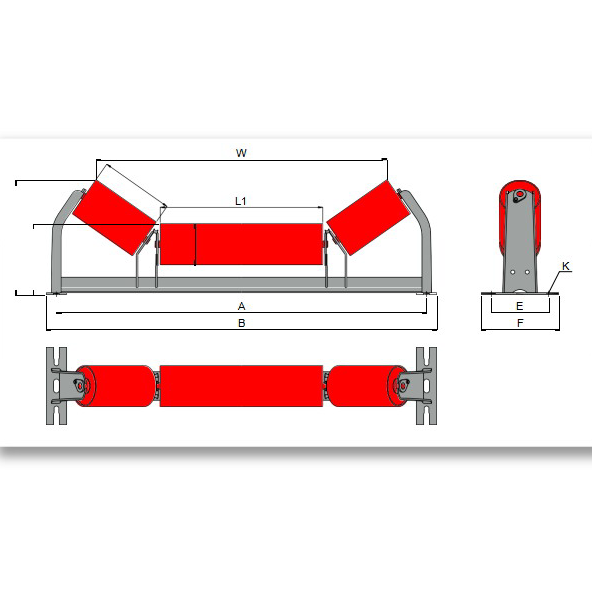
ZOOMRY CEMA B unequal impact troughing idlers combine an offset L1/L2 roller geometry with rubber cushion rings for light-duty loading zone belt support. Designed for selected CEMA B conveyor applications up to 48-inch belt width, these impact troughing idlers use a longer center roller (L1) with shorter wing rollers (L2) to provide a project-specific carrying-side support arrangement at transfer and loading zones. Available in 20° and 35° trough angles with 4-inch and 5-inch impact-rated rollers and labyrinth sealing options.
Unlike an equal impact idler with three equal-length rollers, the unequal configuration uses different center and wing roller lengths to suit selected belt profiles, frame arrangements, loading conditions, or retrofit dimensions. Rubber cushion rings on the rollers compress under falling material and help reduce localized impact on the belt at suitable light-duty loading zones in aggregate, coal, cement, and mineral processing applications.
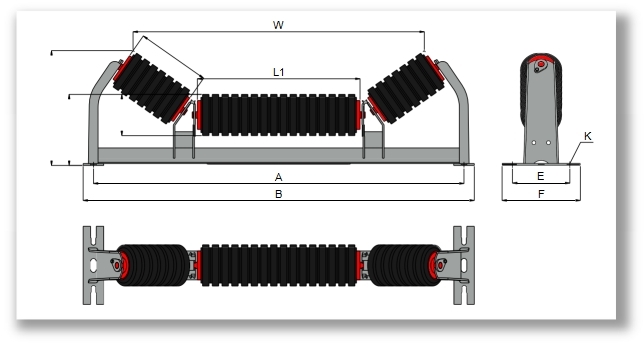
At conveyor loading zones, the center of the belt carries the heaviest material burden and receives the highest impact force from falling material. An equal-length roller design distributes support uniformly — but in certain frame arrangements, retrofit situations, or specific loading patterns, an offset L1/L2 configuration may be required to match existing conveyor geometry.
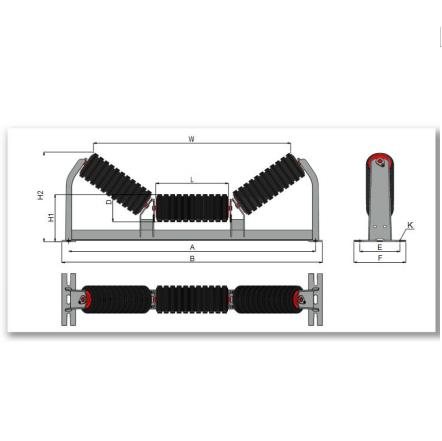
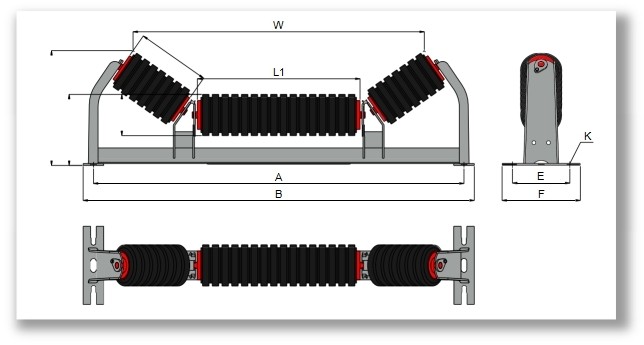
The CEMA B unequal impact troughing idler uses a longer center roller (L1) with shorter wing rollers (L2). This support arrangement is selected for specific frame geometry and loading conditions — not as a belt tracking correction device. The rubber cushion rings on each roller compress under falling material, helping reduce localized belt contact stress at suitable loading zones in mining and quarry conveyor applications.
Offset L1/L2 Roller Geometry — Longer center roller (L1) with shorter wing rollers (L2) provides a support arrangement selected for specific frame geometry, loading conditions, or retrofit dimensions.
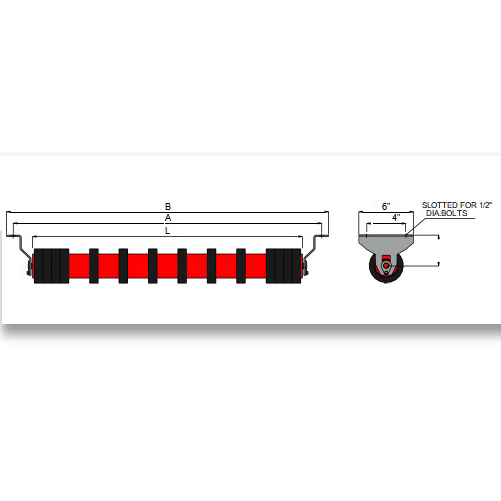
Rubber Cushion Rings — Rubber rings on the rollers provide cushioning at suitable loading zones, helping reduce localized material impact and belt contact stress compared with standard steel carrying rollers.
CEMA B Light-Duty Rating — 4-inch and 5-inch impact-rated rollers for belt widths up to 48 inches — suitable for light-duty crusher discharge in aggregate and sand processing operations.
Two Trough Angles — Available in 20° and 35° to match standard CEMA B carrying idler geometry, ensuring compatible belt transition into loading zones.
Advanced Labyrinth Sealing — Multi-stage seals protect bearings from fine dust and moisture, delivering extended service life under normal operating conditions.
| Feature | CEMA B Unequal Impact (B10) | CEMA B Equal Impact (B8) |
|---|---|---|
| Roller Configuration | L1 (long center) + L2 (short wings) | 3 equal-length rollers |
| Support Geometry | Offset L1/L2 roller lengths for selected loading-zone and frame requirements | Symmetrical three equal-length roller arrangement |
| Trough Angles | 20° and 35° | 20°, 35°, and 45° |
| Best For | Frame-specific layouts, retrofit dimensions, non-standard loading arrangements | Standard centered loading arrangements |
ZOOMRY CEMA B unequal impact troughing idlers are manufactured with 4-inch and 5-inch impact-rated roller configurations for belt widths from 18 to 48 inches at 20° and 35° trough angles. Suitable for light-duty CEMA B loading zones in mining, coal, cement, and aggregate conveyors:
| 4" Roller | 5" Roller | |||||||||||||
|---|---|---|---|---|---|---|---|---|---|---|---|---|---|---|
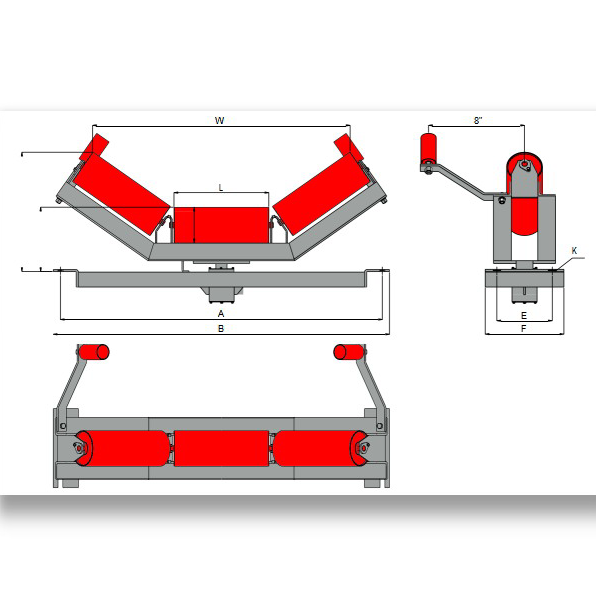
| Angle | BW | A | B | L1 | L2 | H1 | H2 | W | H1 | H2 | W | E | F | K |
| 20° | 18 | 27 | 29 | 11 1/2 | 4 1/2 | 6 1/2 | 8 5/8 | 21 1/4 | 7 | 9 1/16 | 20 7/8 | 6 | 8 | 1/2 |
| 24 | 33 | 35 | 15 7/16 | 5 7/16 | 6 1/2 | 8 5/8 | 27 1/4 | 7 | 9 1/16 | 26 15/16 | 6 | 8 | 1/2 | |
| 30 | 39 | 41 | 21 3/8 | 5 7/16 | 6 1/2 | 8 5/8 | 33 1/8 | 7 | 9 1/16 | 32 7/8 | 6 | 8 | 1/2 | |
| 36 | 45 | 47 | 27 3/8 | 5 7/16 | 6 1/2 | 8 5/8 | 39 1/8 | 7 | 9 1/16 | 38 7/8 | 6 | 8 | 1/2 | |
| 42 | 51 | 53 | 33 3/8 | 5 7/16 | 7 | 9 1/16 | 45 1/8 | 7 1/2 | 9 9/16 | 44 7/8 | 7 1/2 | 9 1/2 | 5/8 | |
| 48 | 57 | 59 | 39 3/8 | 5 7/16 | 7 | 9 1/16 | 51 1/8 | 7 1/2 | 9 9/16 | 50 7/8 | 7 1/2 | 9 1/2 | 5/8 | |
| 35° | 18 | 27 | 29 | 10 7/16 | 5 3/8 | 6 1/2 | 10 3/16 | 19 1/8 | 7 | 10 9/16 | 18 11/16 | 6 | 8 | 1/2 |
| 24 | 33 | 35 | 13 1/4 | 6 3/4 | 6 1/2 | 10 3/16 | 24 7/8 | 7 | 10 9/16 | 24 7/16 | 6 | 8 | 1/2 | |
| 30 | 39 | 41 | 15 7/16 | 8 15/16 | 6 1/2 | 11 1/2 | 30 3/4 | 7 | 11 7/8 | 30 3/16 | 6 | 8 | 1/2 | |
| 36 | 45 | 47 | 21 3/8 | 8 15/16 | 6 1/2 | 11 1/2 | 36 5/8 | 7 | 11 7/8 | 36 1/16 | 6 | 8 | 1/2 | |
| 42 | 51 | 53 | 21 3/8 | 11 1/8 | 7 | 13 1/4 | 40 3/4 | 7 1/2 | 13 5/8 | 40 3/16 | 7 1/2 | 9 1/2 | 5/8 | |
| 48 | 57 | 59 | 27 3/8 | 11 1/8 | 7 | 13 1/4 | 46 3/4 | 7 1/2 | 13 5/8 | 46 3/16 | 7 1/2 | 9 1/2 | 5/8 | |
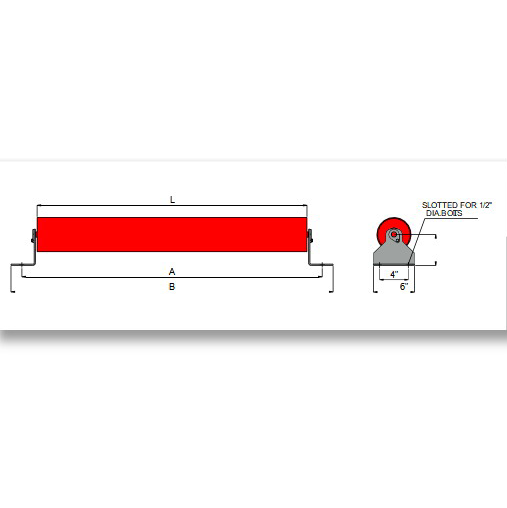
Dimensions shown are based on the listed CEMA B configuration reference. Final roller diameter, roller length, frame geometry, rubber ring arrangement, mounting dimensions, and loading-zone suitability should be confirmed against the conveyor drawing and operating duty.

Tell us your material lump size, drop height, and frame dimensions — our engineers will confirm whether unequal or equal impact idler geometry fits your loading-zone requirements.
Request Impact Idler Recommendation →The practical differences from the CEMA B Equal Impact (B8) are: roller configuration — L1 (long center) + L2 (short wings) instead of 3 equal-length rollers; support geometry — Offset L1/L2 roller lengths for selected loading-zone and frame requirements instead of Symmetrical three equal-length roller arrangement; trough angles — 20° and 35° instead of 20°, 35°, and 45°.
The CEMA B Unequal Impact Troughing Idlers is specified for Frame-specific layouts, retrofit dimensions, non-standard loading arrangements. The CEMA B Equal Impact (B8) is specified for Standard centered loading arrangements.
CEMA B Light-Duty Rating — 4-inch and 5-inch impact-rated rollers for belt widths up to 48 inches — suitable for light-duty crusher discharge in aggregate and sand processing operations.
This model, CEMA B Unequal Impact Troughing Idlers, sits in the CEMA B class — the medium-light duty tier of the CEMA idler range. That class is intended for light-to-medium load and moderate belt speeds, and it is most often specified for general aggregate, grain and light industrial conveyors.
Within that class, this Unequal Impact Troughing variant uses offset impact rollers for a non-centred loading zone, which makes it suited to transfer points where the material stream lands off the belt centre. Compared with other forms in the same CEMA B family, the difference is in how the rollers support and steer the belt rather than in the duty rating itself.
Selecting between CEMA classes and forms starts from the calculated idler load, belt width, speed and material density. Verify the assembly against CEMA and the project technical agreement before fabrication. For abrasive material, plan wear-part replacement together with the maintenance schedule.
Full CEMA Idler Catalog for all CEMA B, C, D and E idler variants.
Compare adjacent models, sizes and duty classes in this category before requesting a quotation.
Browse all Conveyor Idler models or the complete product range.