
Four Common Methods for Conveyor Belt Joints – Splicing Guide | ZOOMRY
This guide compares the four most common conveyor belt joint methods — their advantages, disadvantages, and best use cases. Can damage pulleys and belt cleaners.
Quick Answer
Belt buckles — including butterfly buckles, wolf tooth buckles, pin buckles, and zipper buckles — are manually attached to both belt ends and secured with wire or hinge pins to form a continuous loop. Further down: worked configurations, common pitfalls, and related ZOOMRY systems.
Conveyor belt joints are critical connection points that directly impact system continuity, strength, and service life. As a professional bulk material handling solution provider, ZOOMRY supplies complete belt conveyor systems for mining, cement, and industrial applications. This guide compares the four most common conveyor belt joint methods — their advantages, disadvantages, and best use cases.
1. Conveyor Belt Cold Bonding Method
Cold bonding uses adhesives to join belt ends. This method is more efficient and economical than mechanical joints and should deliver good results — however, from practical experience, process conditions are difficult to control, and adhesive quality significantly affects joint strength, making results inconsistent.
| Aspect | Details |
|---|---|
| Advantages | More efficient and economical than mechanical joints; no heat or heavy equipment required. |
| Disadvantages | Difficult to control process conditions; adhesive quality greatly influences joint strength; not very stable — requires temperature/humidity control and skilled application. |
| Best For | Small-to-medium conveyors, space-constrained sites, quick repairs when hot vulcanizing equipment is unavailable. |
2. Conveyor Belt Hot Vulcanization Joint Method
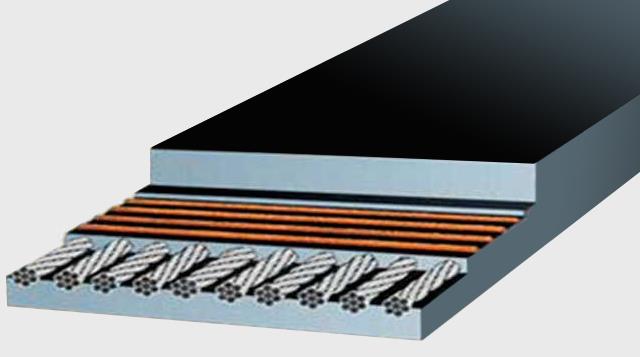
Hot vulcanization splicing has proven to be the most ideal joint method through years of practical application. It bonds belt ends by applying heat and pressure to induce molecular cross-linking, achieving joint strength approaching the original belt strength. For steel cord belts, hot vulcanized finger splicing is strongly recommended for maximum reliability in long distance conveyor systems.
| Aspect | Details |
|---|---|
| Advantages | Highest joint strength (approaches or equals belt strength), very stable, long splice life, smooth running, and easy to master with proper training. |
| Disadvantages | Troublesome process requiring skilled technicians and specialized hot vulcanizing equipment; higher cost; longer joint time (typically 6-12 hours for steel cord belts). |
| Best For | Large, heavy-duty, high-speed, long-distance mining conveyors; steel cord belts; permanent installations where maximum reliability is required. |
3. Belt Buckle Joint Method (Mechanical Fasteners)
Belt buckles — including butterfly buckles, wolf tooth buckles, pin buckles, and zipper buckles — are manually attached to both belt ends and secured with wire or hinge pins to form a continuous loop. This is the simplest and most economical method, but not recommended for permanent or high-tension applications.
| Aspect | Details |
|---|---|
| Advantages | Cheap, easy to use, quick installation — no specialized equipment or heat required. |
| Disadvantages | Easy to disengage, causes material leakage, pollutes the environment, affects appearance, unstable connection, and reduces conveying equipment service life. Can damage pulleys and belt cleaners. |
| Best For | Temporary setups, emergency repairs, low-tension applications, situations requiring frequent belt changes. |
4. Rubber Clamp Joint Method (Joint Sleeve)
Rubber clamp joints — also known as conveyor belt joint sleeves — insert the belt's tensile layer into a rubber groove sleeve and fasten with screws. Available in adhesive and non-adhesive types, this method is priced higher than belt buckles but offers superior performance. It provides a stable connection with no material leakage and can be stored for immediate use without affecting downtime schedules.
| Aspect | Details |
|---|---|
| Advantages | Easy to operate, convenient to store, ready for immediate use, stable connection, no material leakage. |
| Disadvantages | Higher price than belt buckles; not suitable for high-tension or high-speed applications. |
| Best For | Medium-duty applications requiring quick installation with better reliability than mechanical fasteners — quarry and industrial conveyors. |
Joint Method Comparison Summary
| Joint Method | Strength | Cost | Installation Time | Stability | Best Application |
|---|---|---|---|---|---|
| Cold Bonding | 70–90% | $$ | 2–4 hours | Unstable | Small-medium conveyors, quick repairs |
| Hot Vulcanization | ≈100% | $$$ | 6–12 hours | Very Stable | Large, heavy-duty, long-distance conveyors |
| Belt Buckle | 50–70% | $ | <1 hour | Unstable | Temporary, low-tension, emergency repairs |
| Rubber Clamp | 80–90% | $$ | 1–2 hours | Stable | Medium-duty, quarry, industrial |
Related Equipment
Explore This Topic: Belt Conveyor Systems
Foundations of belt conveying: system components, layouts, drive methods, types, cleaning and maintenance.
- Luoyang Mine Project Factory Visit - ZOOMRY Belt Conveyor Inspection — Guide
- Mine and Coal Preparation Plant Belt Conveyor System — Case study
- Pipe Conveyor System Design: Pipe Diameter, Fill Factor, and Curve Radius — Guide
- Product Features of Belt Conveyors – Advantages, Flexibility & Applications — Guide
- Q235B vs 20# Steel for Conveyor Components — Material Selection Guide — Guide
Let's build it together
Need a custom bulk handling solution?
Talk to our engineers about conveyors, stackers, ship loaders and turnkey EPC systems.