
Guide to Buying Grasshopper Conveyors – 12 Key Factors & Benefits | ZOOMRY
This guide covers 12 essential factors to evaluate when buying a grasshopper conveyor for your material handling operation.
Quick Answer
Grasshopper conveyors — also known as mobile transfer conveyors or jump conveyors — are versatile, flexible material handling solutions used across industries to efficiently move bulk materials where fixed conveyors are impractical. Below: technical definitions, sizing logic, and how to specify the equipment.
Grasshopper conveyors — also known as mobile transfer conveyors or jump conveyors — are versatile, flexible material handling solutions used across industries to efficiently move bulk materials where fixed conveyors are impractical. As a professional bulk material handling solution provider, ZOOMRY supplies a complete range of grasshopper conveyors for mining, construction, quarry, and agriculture. This guide covers 12 essential factors to evaluate when buying a grasshopper conveyor for your material handling operation.
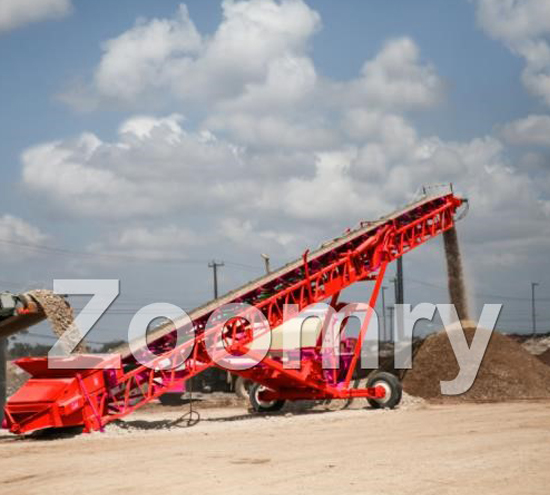
Grasshopper Conveyor — portable link conveyor for flexible material transfer
12 Key Considerations When Buying Grasshopper Conveyors
- Application and Material Type: Determine the specific materials to convey — aggregates, ores, grains, and more. Material characteristics influence belt selection, drive power, and conveyor configuration. For abrasive materials, choose belts with appropriate cover grades.
- Mobility and Flexibility: Grasshopper conveyors are designed for easy movement between locations. Consider self-propelled tracked options (tracked conveyors) for soft ground, or wheeled versions for firm surfaces. Quick setup and relocation are key advantages.
- Length and Reach: Choose a grasshopper conveyor with appropriate length and reach. Longer conveyors cover larger distances; multiple sections can be linked for extended reach. Adjustable length designs offer maximum flexibility.
- Capacity and Throughput: Evaluate conveyor capacity to ensure it handles the required material volume within your desired time frame. ZOOMRY grasshopper conveyors handle various tonnages — match capacity to your production requirements.
- Adjustable Height: Some grasshopper conveyors offer adjustable height settings, allowing matching of conveyor height to loading and unloading points. This is particularly useful when feeding mobile stackers or screening equipment.
- Belt Width and Type: Select appropriate belt width and type based on material size and characteristics. Narrow belts suit fine materials; wider belts handle larger lump sizes. Fabric belts offer flexibility for portable applications.
- Power Source: Grasshopper conveyors can be powered by electricity, diesel engines, or hydraulic systems. Choose based on site power availability — diesel for remote sites, electric for fixed installations with grid access.
- Portability and Transport: Consider ease of transport between sites. Features like foldable sections and transport wheels simplify the process. Jump conveyors are specifically designed for rapid deployment.
- Durability and Construction: Look for robust construction and quality materials — heavy-duty steel frames and wear-resistant belts withstand demanding environments in mining and quarry applications.
- Safety Features: Prioritize safety with emergency stops, safety guards, proper lighting, and belt arrestors for incline sections. Ensure compliance with local safety regulations.
- Maintenance and Serviceability: Choose conveyors with accessible components — easy roller replacement, simple belt tensioning, and quick-connect electrical systems minimize downtime.
- Manufacturer Reputation: Research and choose a reputable manufacturer known for reliable, high-quality grasshopper conveyors. ZOOMRY has 20+ years of experience with in-house manufacturing and comprehensive after-sales support.
Benefits of Grasshopper Conveyors
| # | Benefit | Description |
|---|---|---|
| 1 | Versatility | Used across mining, construction, agriculture, and more — handles diverse materials from aggregates to grains. |
| 2 | Flexibility | Adjustable length, mobility, and multi-material capability provide maximum operational flexibility. |
| 3 | Space Saving | Ideal for limited-space applications where permanent conveyors are impractical — compact footprint with high throughput. |
| 4 | Quick Setup | Rapid deployment at multiple locations — reduces downtime between site relocations. |
| 5 | Cost-Effective | Eliminates need for multiple fixed conveyors and infrastructure — lower capital investment with reduced civil works. |
Related Equipment
Explore This Topic: Portable, Mobile & Grasshopper Conveyors
Relocatable and transfer conveying: portable belts, mobile stackers, grasshopper and jump conveyors in series.
- How to Choose a Grasshopper Conveyor — Topic hub
- Portable vs Mobile vs Grasshopper Conveyor: What Buyers Actually Mean — Guide
- Advantages of Telescopic Conveyors – 5 Key Benefits for Material Handling — Guide
- What Are the Application Scenarios Suitable for Mobile Stacker Conveyors — Guide
- Jump Conveyor – Mobile Transfer Solution for Mining & Aggregate Sites | 200–550 t/h — Product
- Telescopic Conveyor for Truck Loading: Configuration, ROI, and What to Specify — Guide
Related topics: Grasshopper conveyor category · Telescopic conveyor guide
Let's build it together
Need a custom bulk handling solution?
Talk to our engineers about conveyors, stackers, ship loaders and turnkey EPC systems.