
How to Choose the Right Mobile Stacker - Capacity & Selection Guide | ZOOMRY
A good salesperson should ask you all the right questions before recommending a product to find out what you really need from your material handling equipment.
Quick Answer
Today, mobile stackers are widely used in ports, yards, power plants, and other industrial facilities. When selecting stacking equipment, the performance of the equipment should be evaluated based on its energy consumption level, brand reputation, and overall cost-effectiveness. The sections below set out each step with the settings and safety checks to record.
Compact, economical, and versatile, mobile stackers are designed for stacking, retrieval, and horizontal transport of bulk materials in yards, warehouses, and racking systems. Importantly, they can perform these tasks in narrower spaces and tighter layouts than traditional forklifts or trucks, making them ideal for applications where space is at a premium. ZOOMRY's mobile stacker solutions offer flexibility, efficiency, and reliability for mining, port, and industrial operations worldwide.
When considering a replacement for your existing equipment, it is worth keeping an open mind and evaluating whether a different solution — such as a mobile stacker or telescopic stacker — could improve your operational efficiency. A good salesperson should ask you all the right questions before recommending a product to find out what you really need from your material handling equipment.
How to Choose the Right Mobile Stacker
The basic function of a mobile stacker is to stack materials into the yard. With stacking and moving functions combined, it meets user requirements for efficient material transport and stockpile management. In the actual selection process, mobile stackers are suitable for operations with a small number of material stacking yards and limited stacker equipment — such as small bulk ports, power plants, cement plants, chemical plants, and operations with 1-2 yards. A single wheel radial stacker can stack materials to two yards separately, offering flexibility in yard management.
One or two mobile stacker cranes can stack all adjacent yards, though at this point the equipment runs at a higher utilization rate. When the number of yards is higher — for example, three or more yards — each piece of equipment may require a dedicated stacker, making this solution suitable for large bulk port terminal projects.
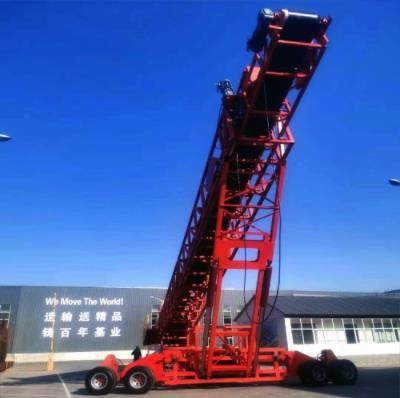
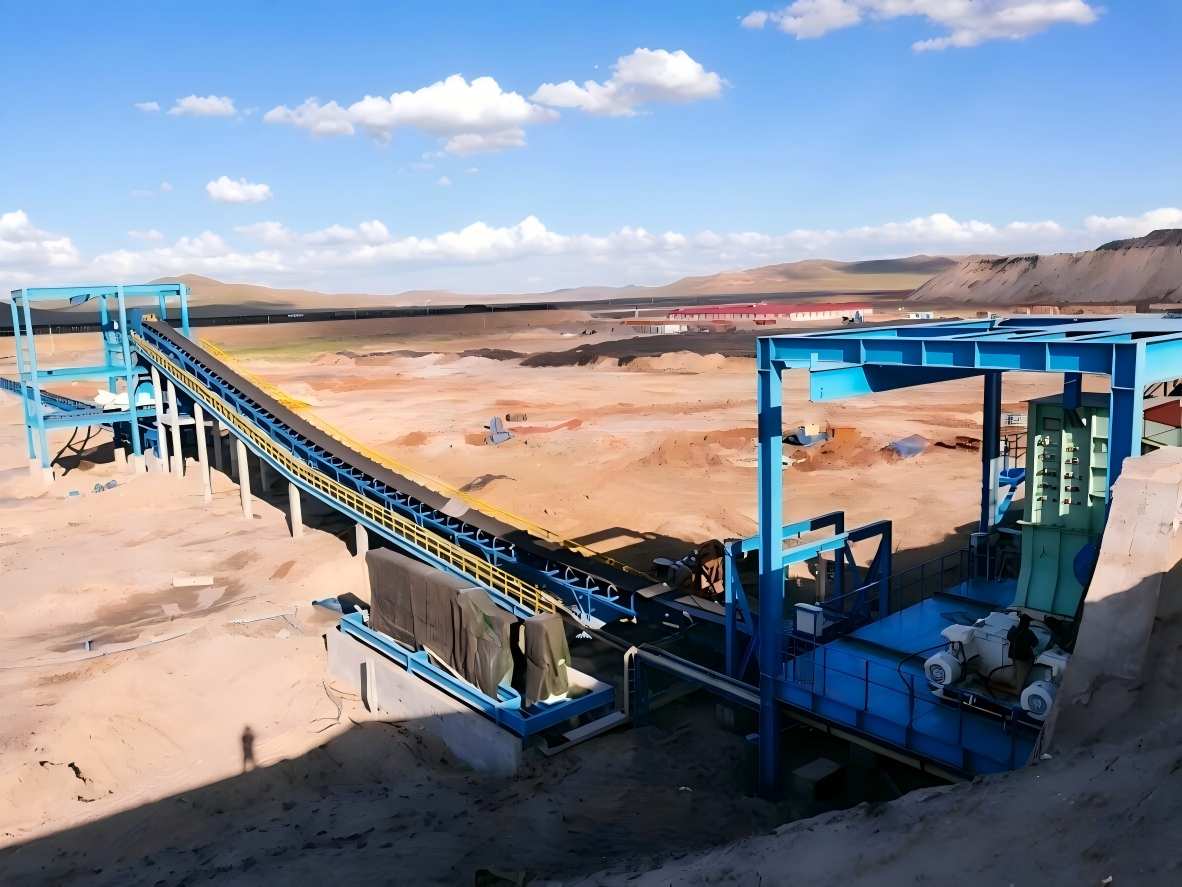
Mobile Stacker in operation
Determining Stacking Capacity Requirements
When selecting a mobile stacker, the choice is based on the required starting or ending conveying capacity of the operation:
- Single Car Tipper: If a single car tipper is used to unload coal, the corresponding stacking capacity should be 1,000-1,250 t/h.
- Double Car Tipper: If a double car tipper is used to unload coal, the corresponding stacking capacity should be 2,000 t/h.
- Multiple Ship Unloaders: If two ship unloaders are used to unload coal, each with a capacity of 850 t/h, the stacking capacity of the mobile stacker should be chosen as 2,000 t/h.
In general, it is recommended that each mobile stacker does not operate more than 16 hours per day — ideally around 10 hours — to allow sufficient time for equipment maintenance and servicing. For other types of material, such as iron ore, the same principles apply.
Applications and Performance Considerations
Today, mobile stackers are widely used in ports, yards, power plants, and other industrial facilities. When selecting stacking equipment, the performance of the equipment should be evaluated based on its energy consumption level, brand reputation, and overall cost-effectiveness. It is important to verify whether there is a positive correlation between the market price of the stacking equipment and its performance.
Using different quality levels of stacking equipment can result in varying numbers of unexpected issues and maintenance requirements — beyond just the differences in stacking capacity. High-quality mobile stacker equipment enables faster, more reliable, and more consistent stacking operations, ultimately improving overall productivity and reducing operating costs.
Whatever type of stacking equipment the customer chooses, it is essential to ensure that the equipment offers good value for money and meets the specific requirements of the application.
View ZOOMRY's mobile stacker EPC project cases to see how we deliver reliable stacking solutions for mining, port, and industrial applications worldwide.
Related Products
Industry Applications
Explore This Topic: Portable, Mobile & Grasshopper Conveyors
Relocatable and transfer conveying: portable belts, mobile stackers, grasshopper and jump conveyors in series.
- How to Choose a Grasshopper Conveyor — Topic hub
- Portable vs Mobile vs Grasshopper Conveyor: What Buyers Actually Mean — Guide
- Mobile Stacker Conveyor with 3500 Tonnes per Hour Capacity, Suitable for Mines and Ports — Guide
- ZOOMRY Wheeled Grasshopper Conveyor – Built for Tough Terrains & Tight Space — Guide
- What Is the Difference Between a Grasshopper Conveyor and a Portable Conveyor? — Guide
- Guide to Buying Grasshopper Conveyors – 12 Key Factors & Benefits — Guide
Let's build it together
Need a custom bulk handling solution?
Talk to our engineers about conveyors, stackers, ship loaders and turnkey EPC systems.