
Safety Instructions for Belt Conveyors – 11 Essential Operation Rules | ZOOMRY
Safe operation of belt conveyors is essential to protect personnel, prevent equipment damage, and maintain continuous production.
Quick Answer
Safe operation of belt conveyors is essential to protect personnel, prevent equipment damage, and maintain continuous production. As a professional bulk material handling solution provider, ZOOMRY engineers complete conveyor systems with integrated safety features for mining, cement, and industrial operations. Further down: configuration options, installation notes, and related systems.
Safe operation of belt conveyors is essential to protect personnel, prevent equipment damage, and maintain continuous production. As a professional bulk material handling solution provider, ZOOMRY engineers complete conveyor systems with integrated safety features for mining, cement, and industrial operations. Follow these 11 essential safety instructions to ensure safe and reliable belt conveyor operation.
11 Essential Safety Instructions
1. Solid Foundation and Clear Work Area
The belt conveyor must be installed on a solid foundation. Wheels should be wedged symmetrically before operation. When multiple conveyors operate in parallel, maintain a passage of more than 1 meter between them. Keep the area around the conveyor clear of accumulations that would hinder work or create trip hazards.
2. Pre-Start Inspection
Before starting, verify: conveyor belt tension is appropriate, belt fasteners are secure, transmission components (bearings, gears, chains) are in good condition, idlers and protective devices are complete, electrical protection is properly grounded, and the belt width matches the drum width consistently. Never operate with missing or damaged safety guards.
3. Start with No Load
Always start the conveyor empty — run with no load first, then add material evenly once normal operation is achieved. Never start the conveyor after loading. Starting under load causes excessive motor current draw, belt stress, and potential drive pulley slippage.
4. Sequential Starting for Series Conveyors
When several conveyors operate in series, start from the unloading end and work backward toward the feed point. Begin loading only after all conveyors are running normally. This prevents material pile-up at transfer points and avoids belt overload.
5. Centered, Low-Impact Feeding
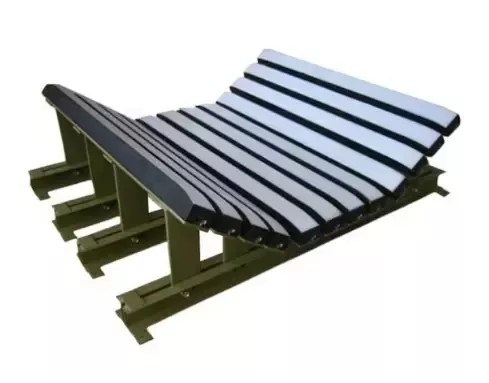
Material feed must be aligned with the center of the conveyor belt and the drop height should be minimized to reduce impact on the belt and rollers. Maintain uniform feeding — uneven loading causes belt deviation and premature component wear. Install impact beds at loading points for heavy or abrasive materials.
6. Real-Time Monitoring During Operation
Monitor machine operation continuously. If the conveyor belt becomes loose, deviates, or shows abnormal vibration — stop immediately for adjustment. Belt mistracking left uncorrected causes edge wear, material spillage, and potential belt damage. Guide rollers help maintain belt alignment.
7. Strictly Prohibited Actions
During operation, never pass under the conveyor belt or cross above it. When the belt slips, never pull it by hand. Cleaning, maintenance, or adjustment is strictly forbidden while the conveyor is running. Always lock out and tag out power before any service work — follow formal lockout/tagout procedures.
8. Protective Devices for Bulk Materials
When conveying bulk materials, install protective devices such as loading plates or fences on both sides of the conveyor belt. These prevent material spillage, protect nearby workers, and contain dust. For inclined conveyors, safety protection devices including emergency pull cords and misalignment switches are mandatory.
9. Discharge Height Adjustment
Adjust the discharge height only when the conveyor is stopped. After adjustment, tighten the connecting nut securely and insert the safety pin. Never adjust discharge height during operation — this risks structural instability and material spillage.
10. Proper Shutdown Sequence
When stopping during transport: stop loading first, then stop the conveyor only after all material on the belt has been discharged. For series conveyors, stop in sequence from the feeding end toward the unloading end. This prevents material accumulation at transfer points during the shutdown sequence.
11. Emergency Power Interruption
If power is interrupted or the conveyor stops unexpectedly, cut off the power supply immediately and remove material from the conveyor belt before restarting. This prevents the conveyor from restarting under load when power returns — which could cause motor overload, belt damage, or safety hazards.
ZOOMRY Commitment to Safety and Quality
ZOOMRY's business integrates consulting design, manufacturing, installation, after-sales service, and operation — with professional teams at every project stage. Our on-site construction supervision team feeds back actual operation data and equipment life information, enabling continuous design improvement. All core conveyor components are manufactured in-house — rollers, pulleys, steel structures — with structure and process refinements accumulated over 20+ years ensuring stable, reliable quality.
Stable operation is the first mission of any conveyor equipment. While quality and service life are unquestionably important, stable operation and convenient maintenance should be the top priority in every conveyor system design.
Related Equipment
Explore This Topic: Belt Conveyor Systems
Foundations of belt conveying: system components, layouts, drive methods, types, cleaning and maintenance.
- What Is the Difference Between a Belt Cleaner and a Belt Scraper? — Guide
- Belt Conveyor Drive Methods: Electric Roller vs Hydraulic Coupling – Which One to Choose? | ZOOM — Guide
- Tail Pulley & Bend Pulley – Belt Conveyor Tail & Bend Pulleys — Product
- Conveyor Rain Cover | Belt Conveyor Protective Cover - Full & 3/4 Styles - ZOOMRY — Product
- Drum Pulley – Integrated Hub Design for Belt Conveyor — Product
Let's build it together
Need a custom bulk handling solution?
Talk to our engineers about conveyors, stackers, ship loaders and turnkey EPC systems.