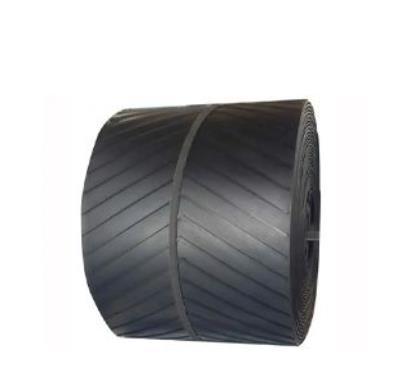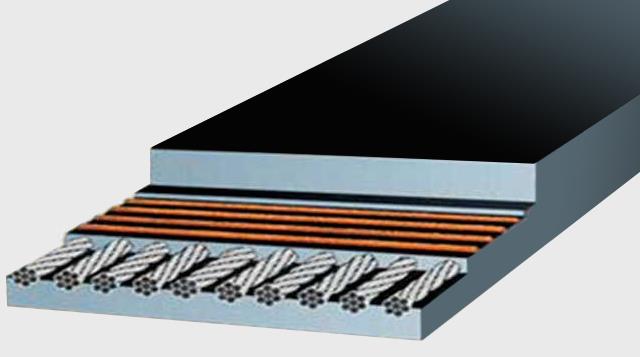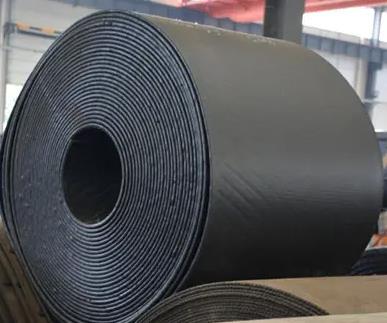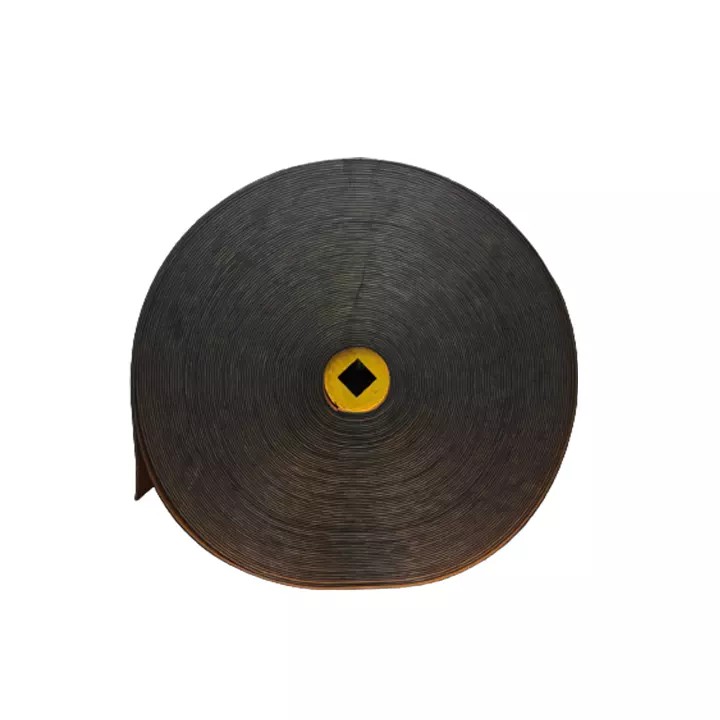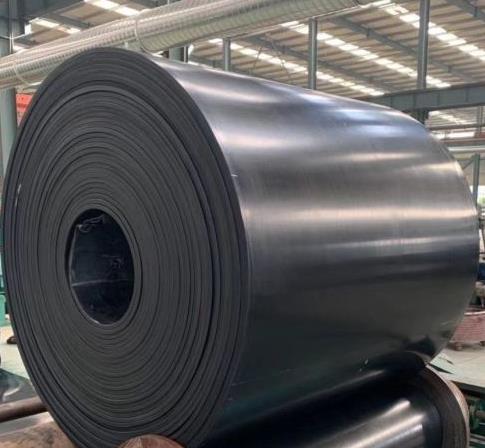

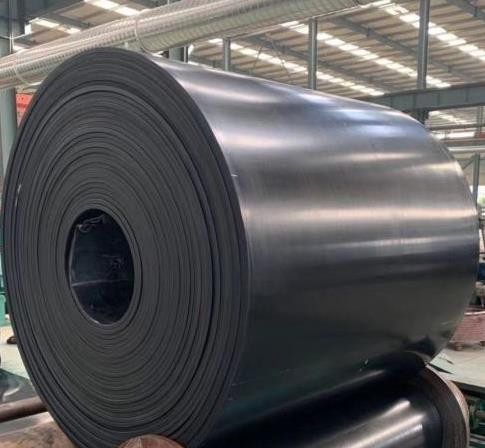
EP conveyor belts feature a polyester (Dacron) warp and polyamide (nylon) weft carcass with low elongation, excellent troughability, and superior water resistance.
ZOOMRY EP conveyor belts feature a polyester (Dacron) warp and polyamide (nylon) weft carcass — delivering excellent troughability, low elongation under load, and superior water resistance. Unlike nylon NN belts, EP belts maintain dimensional stability in humid conditions, resist mold growth, and provide higher tensile strength per ply — making them the most widely used fabric belt type in mining, cement, and port operations worldwide.
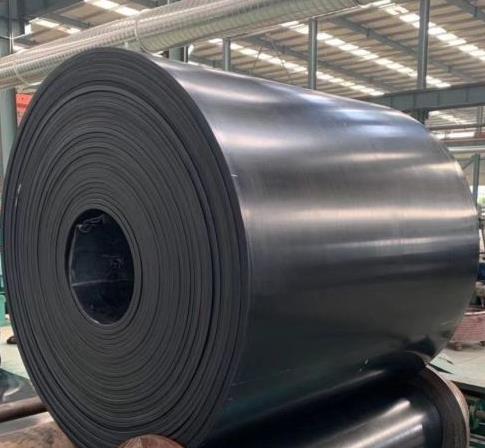
ZOOMRY EP Conveyor Belt — Polyester-Nylon Carcass, Low Elongation, Superior Water Resistance
The key difference lies in the warp fiber. EP belts use polyester (Dacron) in the warp direction, which provides low elongation and high tensile strength — the polyester fibers stretch minimally under sustained tension, maintaining consistent belt length and reducing take-up adjustments. NN belts use nylon in both directions, offering maximum elasticity but higher elongation. For long-distance conveyors, inclined conveyors, and any application where belt stretch must be minimized, EP belts are the superior choice.
Additionally, EP belts resist moisture and mold growth far better than NN belts. Polyester fibers are hydrophobic — they do not absorb water or lose strength when wet — while nylon fibers can absorb up to 4% moisture, causing dimensional changes and carcass degradation in humid environments. For outdoor installations, wet processing plants, and tropical climates, EP belts maintain their mechanical properties throughout their service life.
The following table shows the complete range of EP conveyor belt fabric specifications — from light-duty EP-80 to heavy-duty EP-450 — with corresponding tensile strengths by ply count.
| Fabric Structure | Fabric Specs | Ply Thickness (mm/p) | Strength Series (N/mm) | Cover Thickness (mm) | Width (mm) | Length (m) | ||||||
|---|---|---|---|---|---|---|---|---|---|---|---|---|
| 2Ply | 3Ply | 4Ply | 5Ply | 6Ply | Upper | Lower | ||||||
| Polyester (EP) | Polyamide (P) weft | EP-80 | 0.6 | 160 | 240 | 320 | 400 | 480 | 1.5–12 | 0–4.5 | 400–2500 | ≤300 |
| EP-100 | 0.75 | 200 | 300 | 400 | 500 | 600 | 500–2500 | |||||
| EP-150 | 1 | 300 | 450 | 600 | 750 | 900 | ||||||
| EP-200 | 1.1 | 400 | 600 | 800 | 1000 | 1200 | ||||||
| EP-250 | 1.25 | 500 | 750 | 1000 | 1250 | 1500 | ||||||
| EP-300 | 1.35 | 600 | 900 | 1200 | 1500 | 1800 | ||||||
| EP-350 | 1.45 | - | 1050 | 1400 | 1750 | 2100 | 800–2500 | |||||
| EP-400 | 1.55 | - | - | 1600 | 2000 | 2400 | ||||||
| EP-450 | 1.7 | - | - | 2000 | 2500 | 3000 | 1000–2500 | |||||
Contact ZOOMRY for EP polyester-nylon conveyor belts engineered to your specific tensile strength, ply count, and cover grade requirements.
Contact Us TodayEP belt runs from EP-80 to EP-350 across 2 to 6 plies, in widths from 400 mm to 2,500 mm, with cover thickness from 1.5 mm to 12 mm on the carrying side.
EP fabric has low elongation and good impact resistance at moderate tension, which suits most plant and in-plant conveyors. Nylon stretches more under load, and steel cord is reserved for long routes where tension is high.
More plies raise tensile strength within the same strength series — EP-200 is available in 2 to 6 plies from 400 to 1,200 N/mm — so the ply count is selected against the required working tension and pulley diameter.
Compare adjacent models, sizes and duty classes in this category before requesting a quotation.
Browse all Conveyor Belt models or the complete product range.