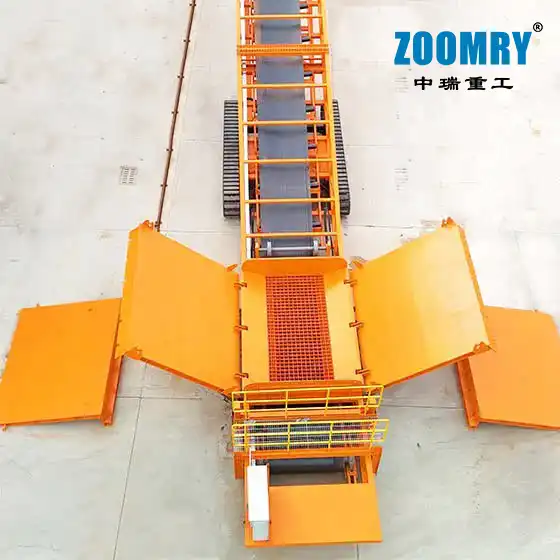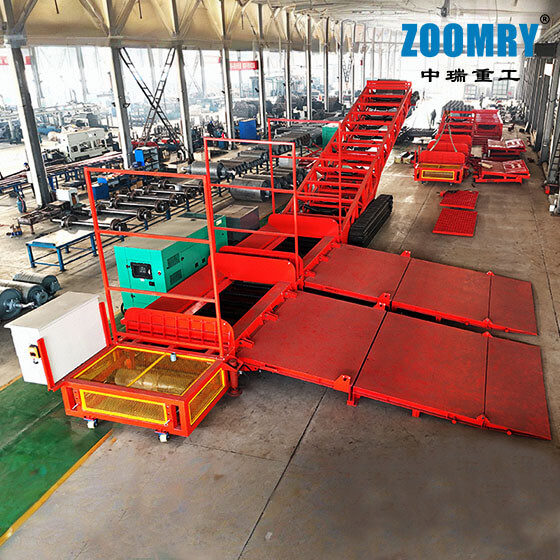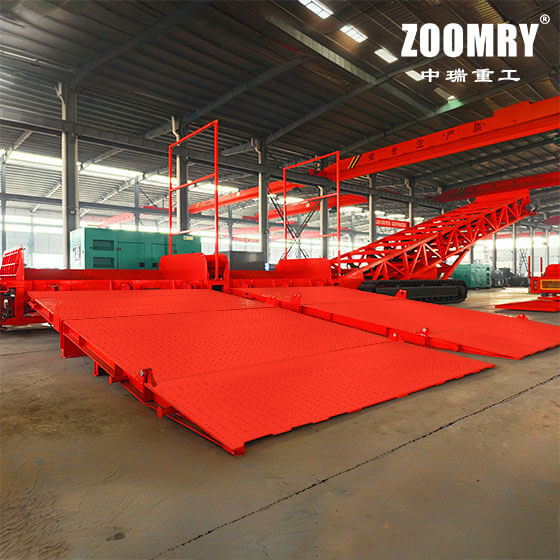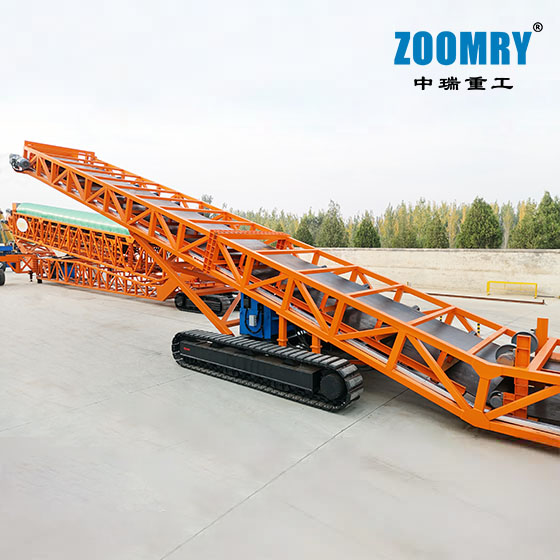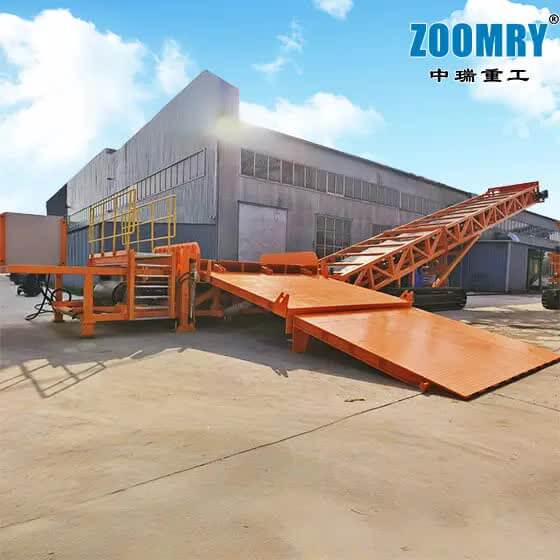

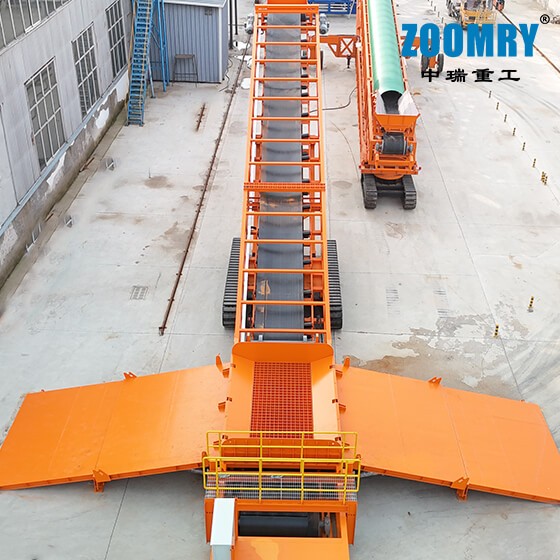
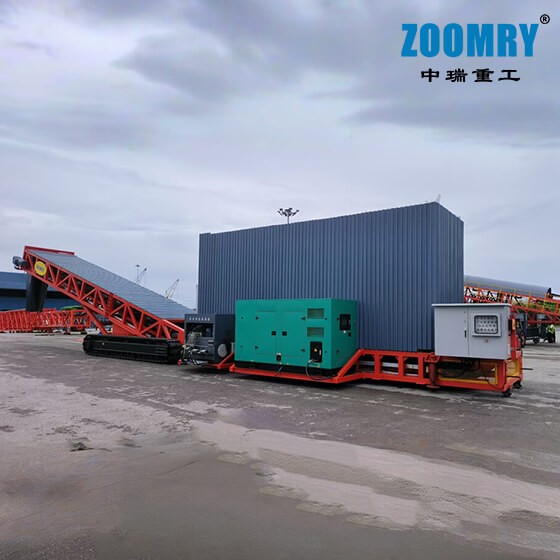
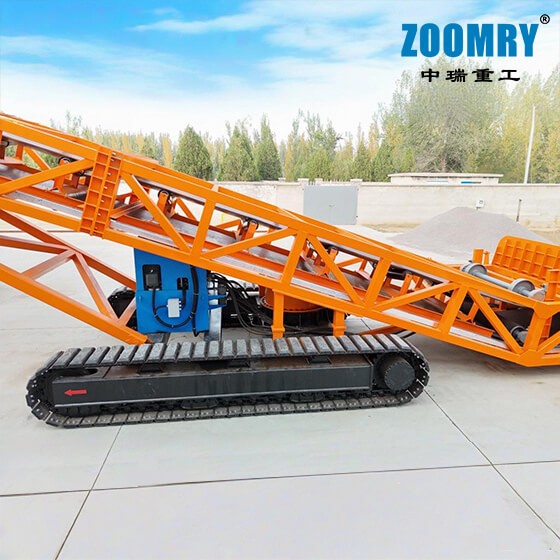
For applications requiring mobility on soft ground, see our tracked truck unloader series. Simultaneously, Truck B reverses onto ramp 2 — no waiting while Truck A unloads.
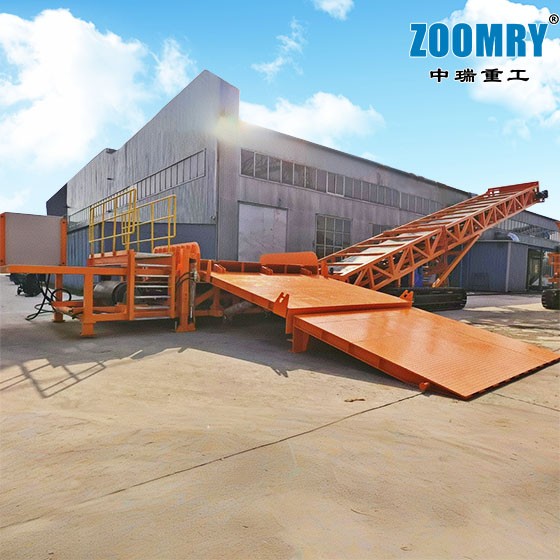
ZOOMRY Truck Unloader – Wheeled Drive-Over System is a drive-over hopper engineered for aggregate quarries, fixed stockyards, and construction material hubs where trucks need to discharge quickly and leave. Dump trucks drive onto the ramp, tip directly into the receiving hopper, and depart — eliminating wheel loader re-handling and reducing per-truck cycle time from 8-10 minutes to under 3 minutes. The wheeled undercarriage enables fast repositioning between stockpile zones without a crane or specialized transport.
Available in 2-ramp and 4-ramp configurations with capacities from 200 to 3,000 TPH and belt widths from 650 to 1,800 mm, this wheeled truck unloader feeds directly into mobile telescopic stackers, belt conveyors, or ship loaders. For applications requiring mobility on soft ground, see our tracked truck unloader series.
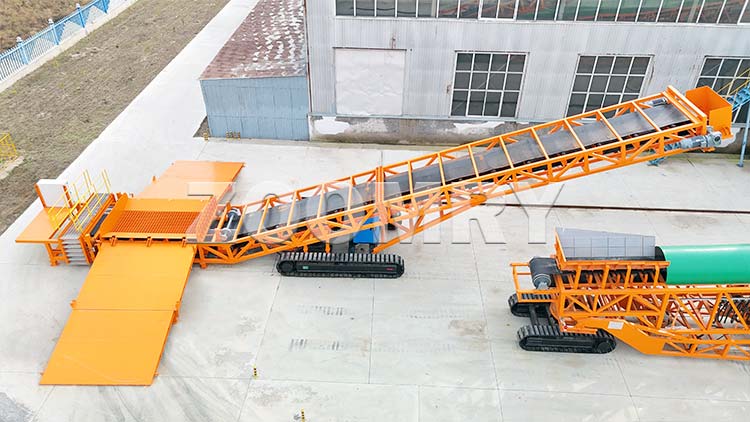
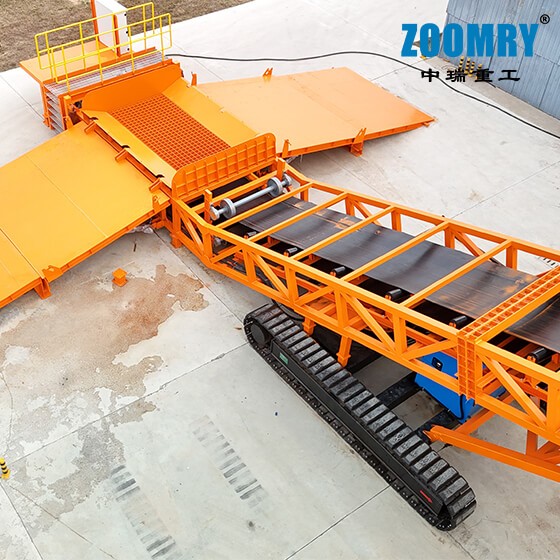
A dump truck reverses onto the drive-over ramp and tips its load directly into the receiving hopper. The hopper's reinforced grid filters oversize material — typically above 250 mm — while the impact bed beneath absorbs the shock of falling aggregate or ore. A belt feeder meters material onto the inclined discharge conveyor at a controlled rate, which transfers it to a mobile stacker for stockpiling or directly into a crusher feed system. The entire dump-and-go cycle takes 2-3 minutes per truck, compared to 8-10 minutes when a wheel loader handles the same volume.
For sites processing 50+ truckloads per day, this time savings alone can eliminate the need for a second loader and reduce fuel consumption by up to 60%. The low-profile hopper design — with width options from 3.5 m to 5.7 m — accommodates both end-dump and side-dump trailers without requiring elevated ramps.
Choosing between 2-ramp and 4-ramp configurations depends on your truck fleet size, site layout, and throughput requirements.
| Factor | 2-Ramp Configuration | 4-Ramp Configuration |
|---|---|---|
| Throughput | Up to 30 trucks/hour | Up to 60 trucks/hour |
| Site Footprint | Compact — single approach lane | Larger — dual approach lanes |
| Truck Queuing | Single queue; wait if busy | Dual queue; one unloads while other positions |
| Best For | Small-medium quarries, tight sites, budget-conscious projects | High-volume quarries, port stockyards, 24/7 operations |
| Investment | Lower initial cost | Higher throughput per dollar invested |
Rule of thumb: If your site handles fewer than 30 trucks per hour or has limited space for approach lanes, a 2-ramp wheeled truck unloader is the right choice. For operations exceeding 30 trucks/hour — common in large aggregate quarries and port terminals — the 4-ramp configuration pays for itself through reduced truck waiting time.
A mid-sized limestone quarry using a ZOOMRY wheeled truck unloader with a 4-ramp configuration processes an average of 2,400 tonnes per 8-hour shift:
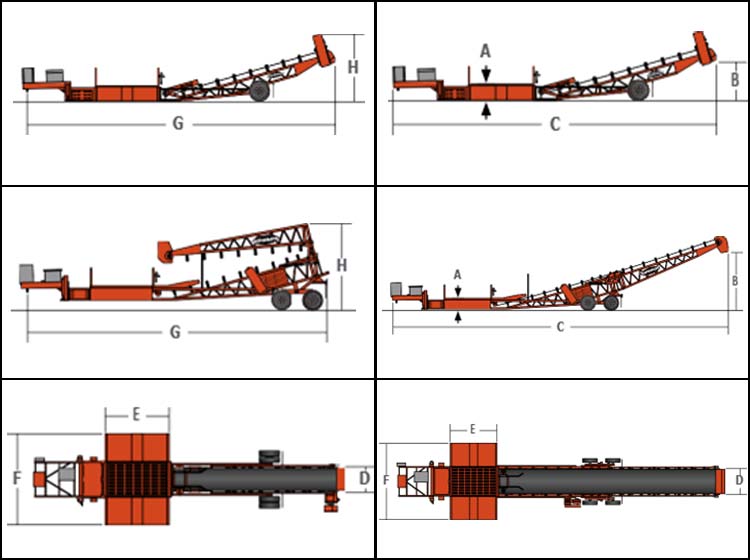
Wheeled Truck Unloader — main structural components and assembly overview
| Feature | Wheeled Truck Unloader (This Model) | Tracked (Crawler) Truck Unloader |
|---|---|---|
| Ground Condition | Firm, level ground — quarry floors, concrete pads | Soft, muddy, uneven terrain — mining sites, unpaved areas |
| Mobility | Towable by site tractor; fast repositioning | Self-propelled crawler tracks; independent mobility |
| Setup Time | Under 15 minutes — tow and deploy jacks | Under 5 minutes — self-deploy via crawlers |
| Operating Cost | Lower — fewer moving parts, lower maintenance | Slightly higher — track maintenance required |
| Best Application | Aggregate quarries, fixed stockyards, concrete plants | Mining sites, port quaysides, temporary operations |
| Related Models | Truck Unloader – Two Ramp Drive-Over Hopper | Tracked Truck Unloader / Crawler Truck Unloader |
A 2-ramp configuration handles up to 30 trucks per hour; a 4-ramp configuration handles up to 60 trucks per hour. Actual throughput depends on truck size, material type, and downstream conveyor capacity. For reference, a mid-sized quarry processing 30-tonne truckloads of limestone at 800 TPH can comfortably handle 25-30 trucks per hour with a 2-ramp setup.
Choose the wheeled truck unloader if your site has firm, level ground and you need to reposition between stockpile zones quickly using a site tractor. Choose the tracked truck unloader if you operate on soft, muddy, or uneven terrain where wheels would bog down — common in open-pit mines and unpaved port yards.
Yes. For wet or sticky materials like clay, damp limestone, or mineral concentrates, we recommend UHMW liners on the hopper walls to reduce sticking, and a belt cleaner at the discharge pulley to prevent carryback. For extremely cohesive materials, a chain plate feeder can replace the belt feeder for positive material extraction.
Routine maintenance includes: conveyor belt tension inspection (weekly), idler bearing lubrication (monthly), hopper grid and liner wear inspection (monthly), hydraulic jack seal check (quarterly), and drive pulley ceramic lagging inspection (annually). The wheeled undercarriage requires minimal maintenance compared to tracked systems — primarily tire pressure and brake checks.


Compare adjacent models, sizes and duty classes in this category before requesting a quotation.
Browse all Truck Unloader models or the complete product range.
Tell us your truck fleet size, material type, and required throughput. Our engineers will recommend the optimal wheeled truck unloader — 2-ramp or 4-ramp — for your aggregate quarry or stockyard operation.
Get a Quote