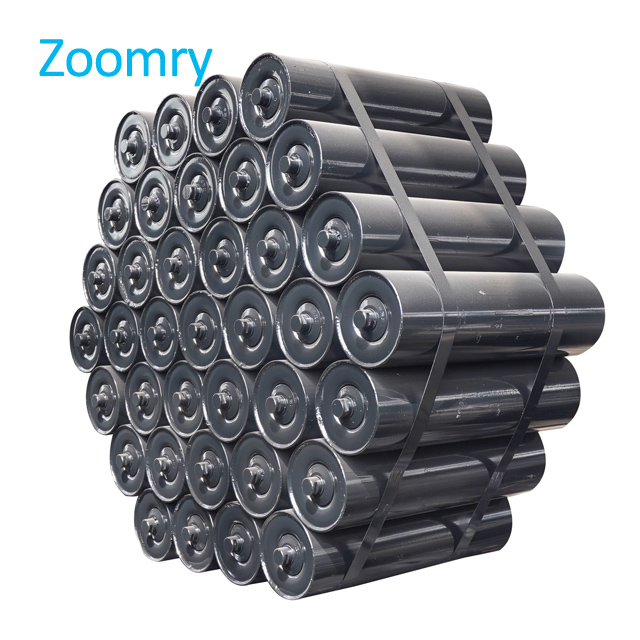
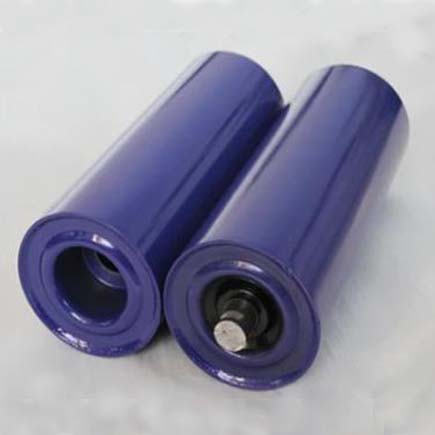
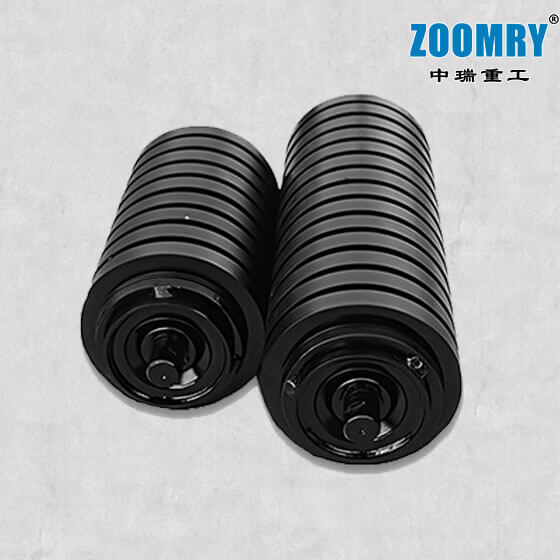
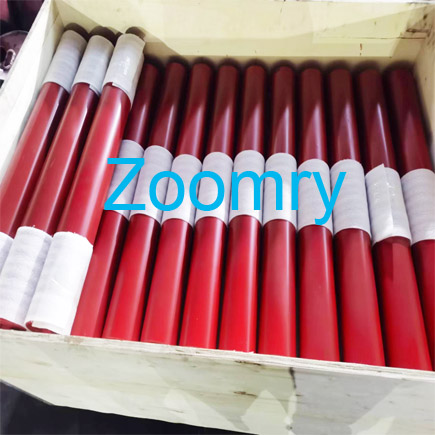
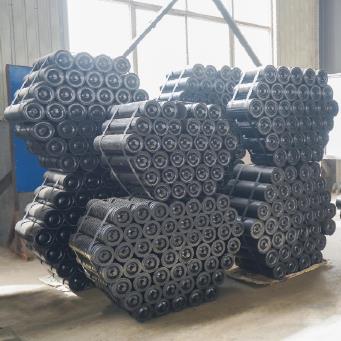
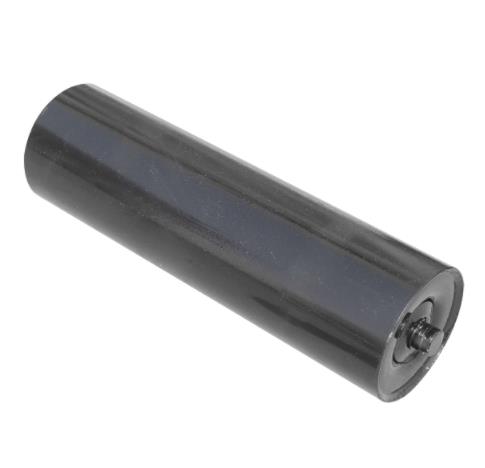
For over two decades, ZOOMRY has manufactured heavy-duty conveyor rollers for mining, cement, port, and aggregate operations worldwide. Our complete range covers steel rollers, HDPE rollers, impact rollers, return rollers, spiral return rollers, rubber disc return rollers, and garland rollers – with capacities to match any belt width and load specification.
Wondering which roller type fits your project? The choice depends on your operating environment, material characteristics, and corrosion resistance requirements. Compare our main types below: steel rollers for heavy-duty applications, HDPE rollers for corrosion resistance in chemical and coastal environments, impact rollers for loading zone shock absorption, and specialized return rollers for self-cleaning and sticky material handling.
Every roller features precision bearings, low rotation resistance (≤2N), and a verified service life of 50,000+ hours. Custom sizes available. Contact our engineers for project-specific recommendations.
| Roller type | Construction | Typical duty | Best for |
|---|---|---|---|
| Standard steel roller | Q235B steel shell with labyrinth seal and pressed bearing housing | Carrying and return | General bulk conveying, dry material |
| HDPE roller | HDPE shell on 20–27 shaft series, sealed bearing | Light to medium | Fertilizer, salt, chemical and coastal sites |
| Impact roller | Rubber rings fitted over a steel shell | Loading zone | High drop heights and large lump size |
| Rubber disc return roller | Alternating rubber discs on a steel shaft | Return side | Sticky material that builds up on a plain shell |
| Steel spiral return roller | Continuous welded steel helix | Return side | Sticky centre build-up and wet fines |
| Garland roller | Three- or five-roll suspended frame | Carrying, high impact | Uneven loading and belt misalignment |
| Self-aligning roller | Steel roller with guide discs and pivoting frame | Carrying and return | Belt tracking on long conveyors |
Standard roller diameters run 89–219 mm with shell walls of 3.5–4 mm plus a wear layer; bearing and shaft combinations follow CEMA B–E duty classes.
No models match your filter.