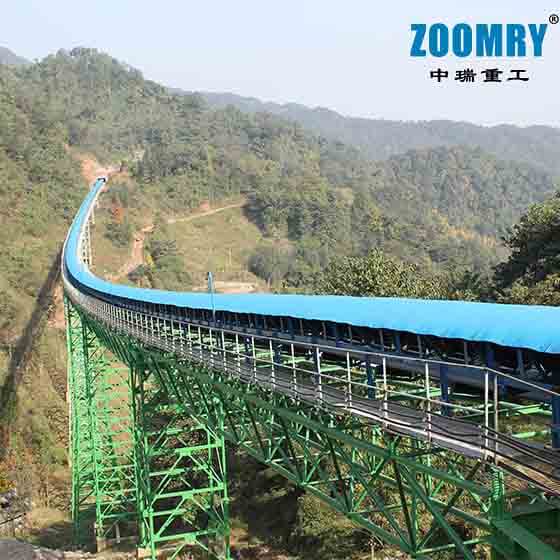
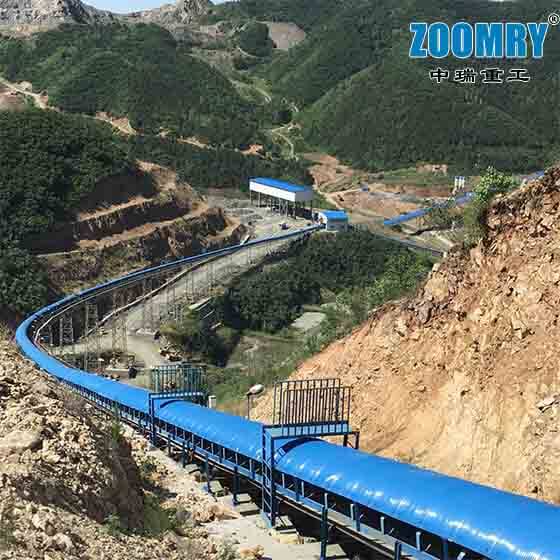
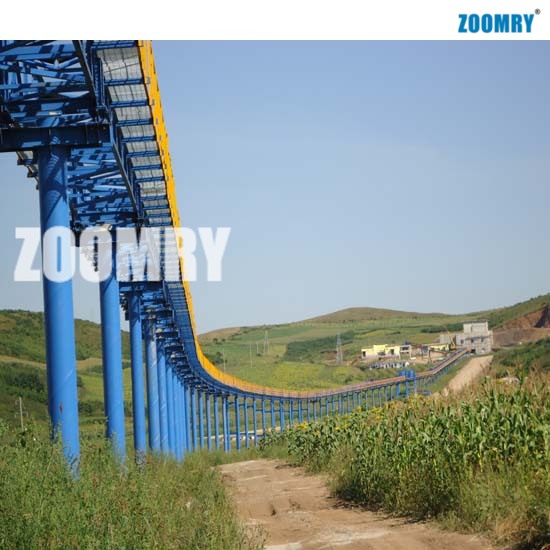
ZOOMRY's curved belt conveyor is designed for versatility – it maximizes available space by following horizontal and vertical curves, reducing excess conveyor length and handling time. This design creates an efficient conveyor solution for your footprint, ready to integrate with existing setups to meet demanding transportation needs.
Which curved belt conveyor fits your site layout? The choice depends on your terrain constraints, material type, and required throughput. Our curved conveyors are engineered to transport heavy loads over complex paths, reducing the need for multiple transfer points and minimizing equipment footprint – ideal for mining, quarry, and industrial sites with limited or irregular space.
With over 20 years of bulk handling expertise, ZOOMRY has delivered custom curved conveyor solutions worldwide. Contact our conveyor system experts for project-specific layout recommendations.
| Belt width | 0.8 m/s | 1.0 m/s | 1.3 m/s | 1.6 m/s | 2.0 m/s | Max roller / drive pulley |
|---|---|---|---|---|---|---|
| 400 mm | 41 | 51 | 64 | 82 | 103 | 89 / 400 mm |
| 500 mm | 69 | 87 | 108 | 139 | 174 | 89 / 500 mm |
| 650 mm | 127 | 159 | 198 | 254 | 318 | 108 / 630 mm |
| 800 mm | 199 | 248 | 310 | 398 | 497 | 133 / 1,250 mm |
| 1,000 mm | 324 | 405 | 507 | 649 | 811 | 159 / 1,250 mm |
| 1,200 mm | — | 594 | 742 | 951 | 1,188 | 159 / 1,600 mm |
| 1,400 mm | — | 825 | 1,032 | 1,321 | 1,651 | 159 / 1,600 mm |
| 1,600 mm | — | — | — | — | 2,185 | 194 / 1,600 mm |
Capacity in m³/h at a 30° surcharge angle; a single flight can reach 15 km or more, and horizontal curves are formed by tilting the idler frames rather than adding transfer towers.