
How to Prolong the Service Life of Conveyor Rollers – Sealing & Maintenance Guide | ZOOMRY
Why Roller Sealing is Critical to Service Life The primary cause of premature roller failure is bearing contamination.
Quick Answer
The primary cause of premature roller failure is bearing contamination. When dust, moisture, or abrasive particles penetrate the bearing housing, they accelerate wear, increase rotation resistance, and eventually cause the roller to seize. Below is the practical sequence, from site conditions to final specification.
How to Prolong the Service Life of Belt Conveyor Rollers
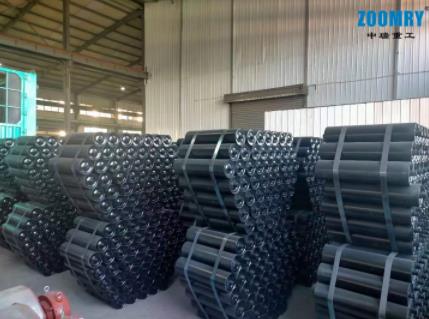
Conveyor rollers are among the most numerous and maintenance-intensive components in any belt conveyor system — a single long-distance conveyor may contain thousands of rollers. Extending roller service life directly reduces replacement costs, maintenance downtime, and belt wear. ZOOMRY conveyor rollers are engineered with advanced sealing technology and precision bearings to achieve 50,000+ hour service life in mining, cement, and port applications. This guide explains the key factors that determine roller longevity and how to maximize it through proper sealing, material selection, and maintenance.
Why Roller Sealing is Critical to Service Life
The primary cause of premature roller failure is bearing contamination. When dust, moisture, or abrasive particles penetrate the bearing housing, they accelerate wear, increase rotation resistance, and eventually cause the roller to seize. A seized roller creates a flat spot on the conveyor belt, causing belt damage, increased power consumption, and potential fire risk from friction. Effective sealing is the single most important factor in roller longevity.
Axial Labyrinth Seal — Non-Contact Protection
ZOOMRY conveyor rollers use an axial labyrinth seal — a non-contact sealing design consisting of inner and outer seal rings that form a narrow, tortuous gap. This labyrinth path:
- Provides excellent dustproof performance — the tortuous path prevents dust ingress without physical contact, meaning zero friction and no seal wear
- Offers low rotational resistance (≤2N) — reducing conveyor drive power requirements
- Allows easy assembly and disassembly along the axis for maintenance
Combined Seal — Contact + Non-Contact for Maximum Protection
For the most demanding environments — mining operations with high dust loads, cement plants with fine abrasive particles, or coastal ports with salt-laden moisture — ZOOMRY's advanced roller design combines both sealing methods:
- Contact seal: Made of oil-resistant rubber with high resilience and wear resistance. Uses interference fit between the rubber seal and roller shaft for positive waterproofing.
- Non-contact labyrinth: Provides the primary dust barrier with zero friction, while the contact seal provides the final moisture barrier.
This combined sealing approach effectively solves both waterproofing and dustproofing challenges — the two leading causes of bearing failure in conveyor idlers.
Additional Factors That Extend Roller Service Life
1. Precision Bearings & Low Rotation Resistance
ZOOMRY rollers use precision-grade bearings with rotation resistance ≤2N — significantly lower than industry average. Lower resistance means less heat generation, reduced energy consumption, and longer grease life. IP66-rated sealing on the bearing housing provides additional protection in wash-down or high-humidity environments.
2. Material Selection — Steel vs HDPE
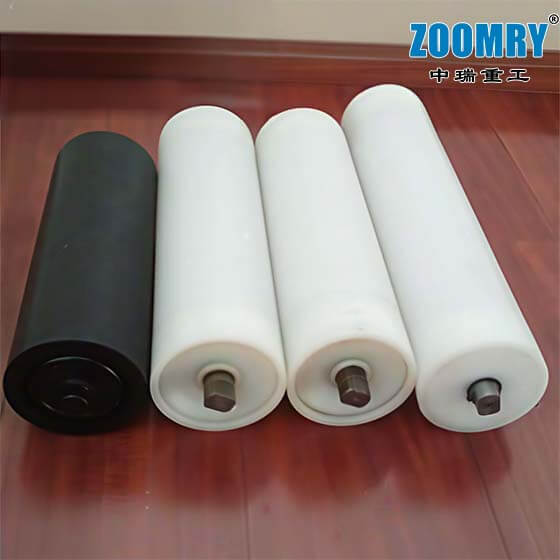
For corrosive environments — salt, fertilizer, chemical plants — HDPE rollers offer 40,000+ hour service life with complete corrosion immunity. Non-magnetic and anti-static properties reduce belt wear by over 30%. For standard applications, steel rollers with precision machining and anti-corrosion coating provide the most cost-effective solution.
3. Proper Installation & Alignment
Misaligned rollers create uneven belt loading, accelerated edge wear, and increased rotation resistance. Use laser alignment tools during installation and conduct quarterly alignment checks. Self-aligning idlers can automatically correct minor belt mistracking before it causes roller damage.
4. Regular Maintenance Schedule
| Maintenance Task | Frequency | Purpose |
|---|---|---|
| Visual inspection | Weekly | Identify seized, noisy, or wobbling rollers early |
| Bearing lubrication | Monthly | Regrease bearings per manufacturer specification |
| Alignment check | Quarterly | Verify roller frames are square and level |
| Seal inspection | Semi-annually | Check labyrinth seals for damage or clogging |
| Complete roller audit | Annually | Replace rollers approaching end of service life |
Related Equipment
Industry Solutions

Explore This Topic: Conveyor Rollers, Idlers & Pulleys
Component-level guides for selecting, classifying and replacing conveyor rollers, idlers, pulleys and belt-cleaning parts.
- Mining Conveyor Rollers Guide — Heavy-Duty Idlers — Topic hub
- PSV 1.20F14.114N Return and Carry Roller: Specification and Replacement Guide — Guide
- How to Choose Conveyor Pulley Lagging? | Rubber vs Ceramic vs Replaceable — Guide
- CEMA D Equal Troughing Idlers: Heavy-Duty 20°/35°/45° Three-Roller Carrying Solution — Product
- Ceramic Pulley Lagging – High-Friction Ceramic Lagging for Drive Pulleys — Product
- Impact Bed | High-Elastic Rubber Belt Conveyor Protection — Product
Let's build it together
Need a custom bulk handling solution?
Talk to our engineers about conveyors, stackers, ship loaders and turnkey EPC systems.