
Large Inclination Belt Conveyor Overview. A large inclination belt conveyor is used where bulk material must be lifted across a limited horizontal distance while maintaining.
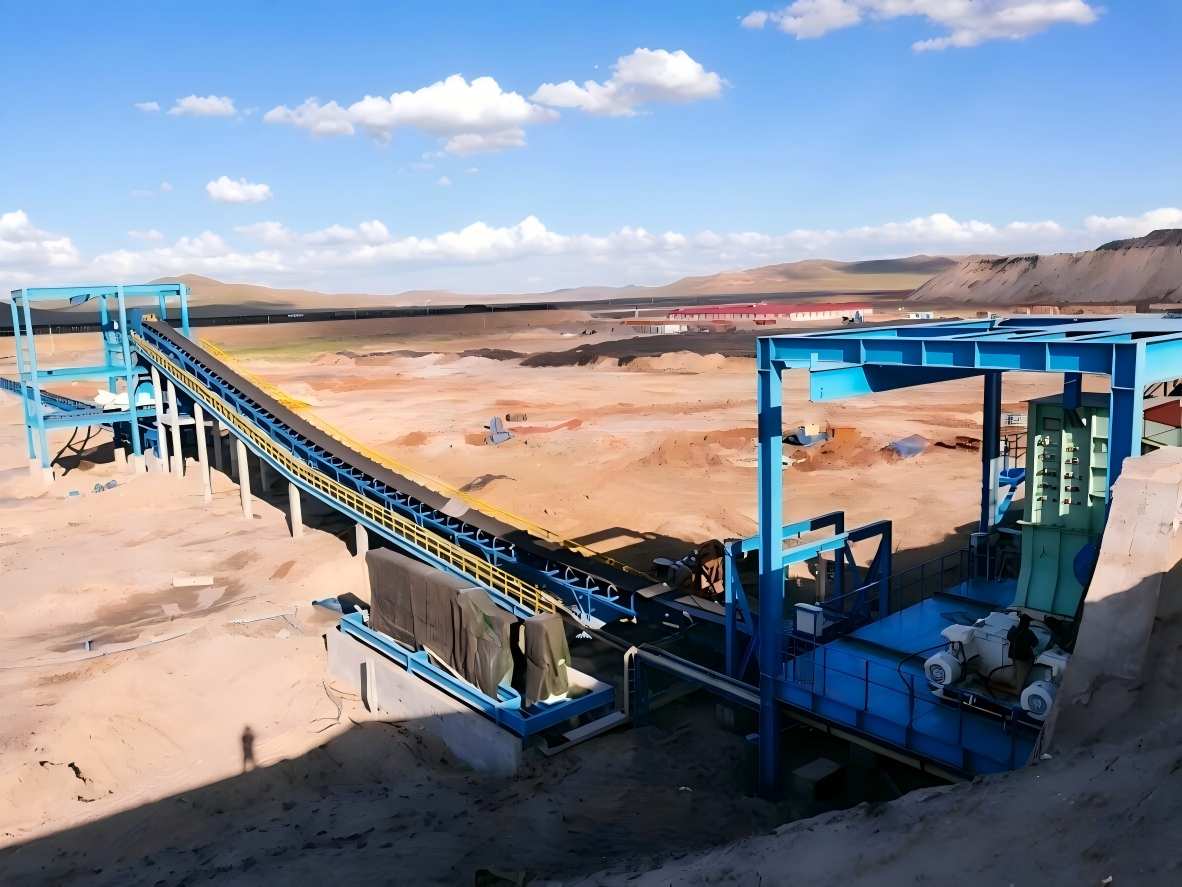
A large inclination belt conveyor is used where bulk material must be lifted across a limited horizontal distance while maintaining continuous belt conveying. Compared with a conventional low-angle conveyor route, it can reduce the required transfer length and help simplify the connection between lower and higher process elevations.
ZOOMRY designs the conveyor arrangement around the required vertical lift, available route length, material flowability, particle size, moisture content, feed condition, and production capacity. Belt surface configuration, drive arrangement, idler layout, tensioning method, and transfer chutes are selected as part of the final project design.
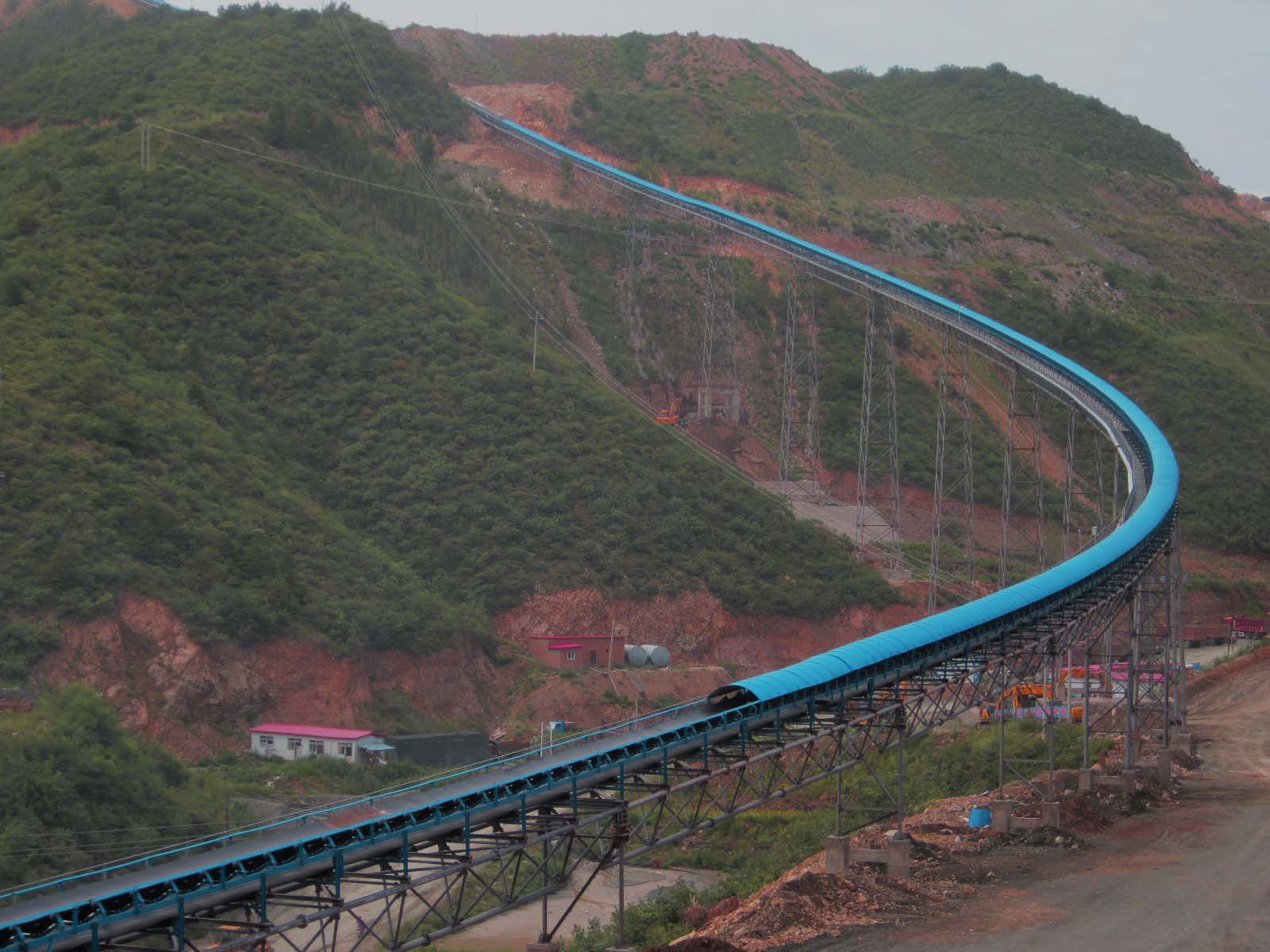
ZOOMRY Large Inclination Belt Conveyor — Continuous Steep-Angle Conveying for Mining and Industrial Applications
As conveyor inclination increases, the tendency of bulk material to slide or roll back along the belt also increases. The required belt surface, loading arrangement, belt speed, and discharge configuration are therefore selected according to the material's flowability, lump size, moisture content, and required conveying angle.
For applications within the normal design range, profiled belt surfaces or project-specific material-retention features may be used to improve material stability on the incline. Where a substantially steeper lift is required, ZOOMRY can evaluate a dedicated steep angle belt conveyor configuration with specialized belting and containment components.
| Parameter | Specification |
|---|---|
| Belt Width | 800 / 914 (36") / 1,000 / 1,200 / 1,400 / 1,600 mm (customizable) |
| Conveyor Length | Project-specific; available in customized route lengths |
| Inclination Angle | Up to ±30°, subject to material properties, belt design, capacity, and site layout |
| Capacity | Up to 15,000 m³/h, subject to material and conveyor design |
| Belt Speed | 0.6 – 4.5 m/s |
| Max Material Particle Size | ≤ 300 mm |
| Pulley Diameter | 400 – 1,800 mm |
| Idler Diameter | 89 – 219 mm |
| Belt Type | Selected according to inclination, material stability, capacity, and loading conditions |
| Design References | Applicable design standards selected according to project and destination requirements |
Final conveyor capacity, belt speed, inclination, pulley size, and belt configuration are determined by material bulk density, particle size, moisture content, flowability, feed conditions, route profile, and operating environment. Values shown are reference ranges and require project-specific engineering confirmation.
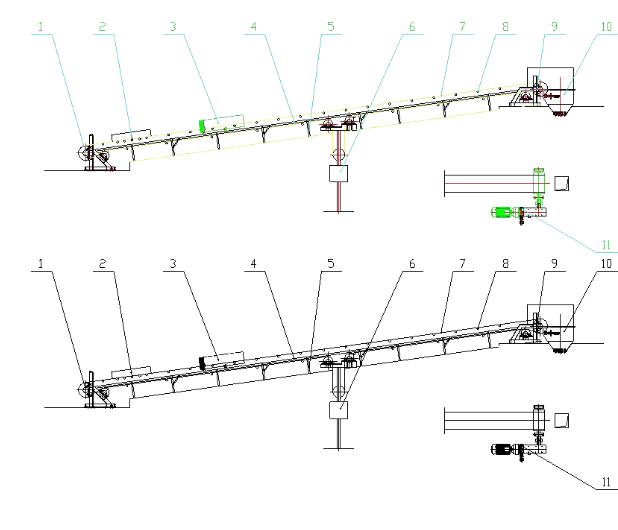
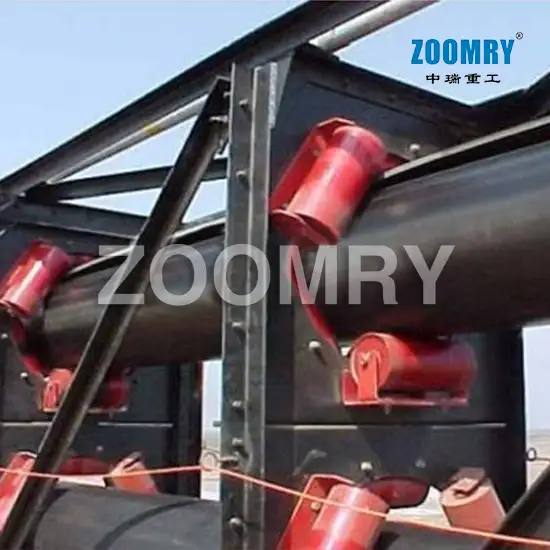
Large Inclination Belt Conveyor Structure — 1. Tail pulley and frame 2. Guide chute 3. Rain cover 4. Middle rack stringer 5. Outrigger 6. Tensioning device 7. Belt 8. Idler 9. Head pulley and frame 10. Hopper 11. Drive system
Safety and monitoring devices are selected according to the conveyor duty, access arrangement, control philosophy, local regulations, and project risk assessment.
Detects belt deviation and sends a warning or shutdown signal. Deviation can damage the belt edges and create safety risks. Switches are typically installed in pairs on both sides of the conveyor at critical tracking points.
A wire rope runs along the full length of the conveyor, allowing operators to trigger an emergency stop from any position. Available in single-sided or double-sided arrangements and generally used in conjunction with walkways.
Monitors belt or pulley rotation speed to detect slippage early. Common causes of belt slip include overloading, insufficient belt tension, or worn drive pulley lagging. The switch compares actual speed against a set reference and activates an alarm or stop signal when deviation exceeds the configured threshold.
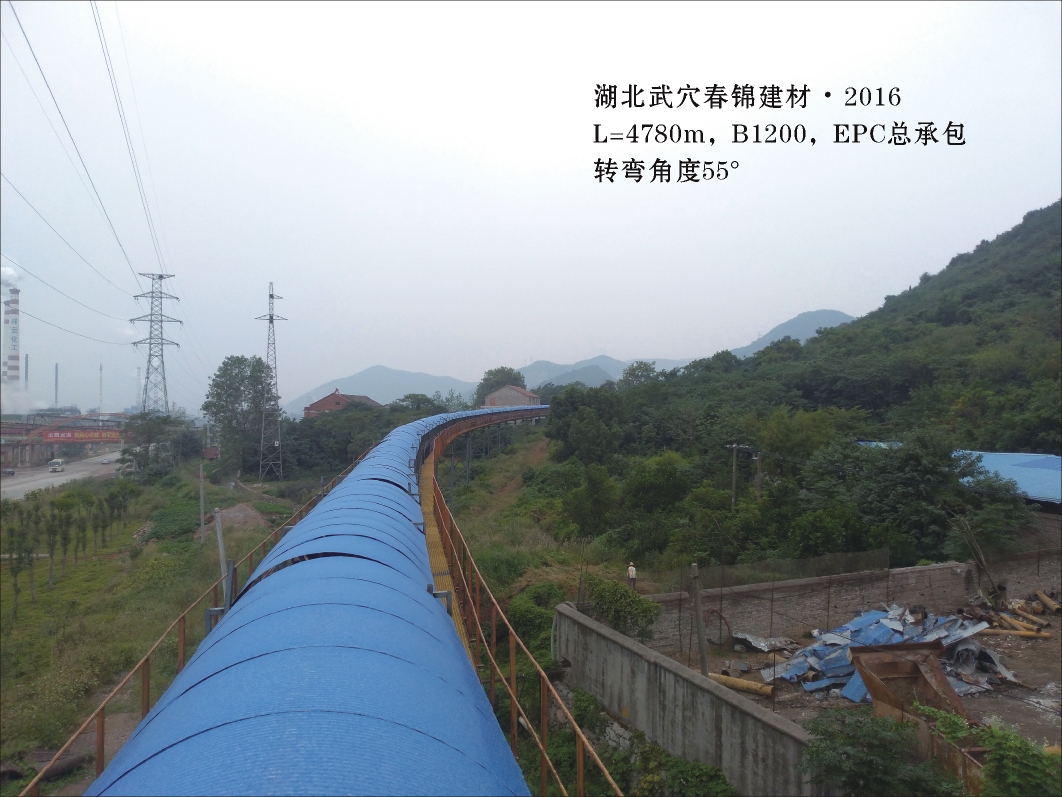
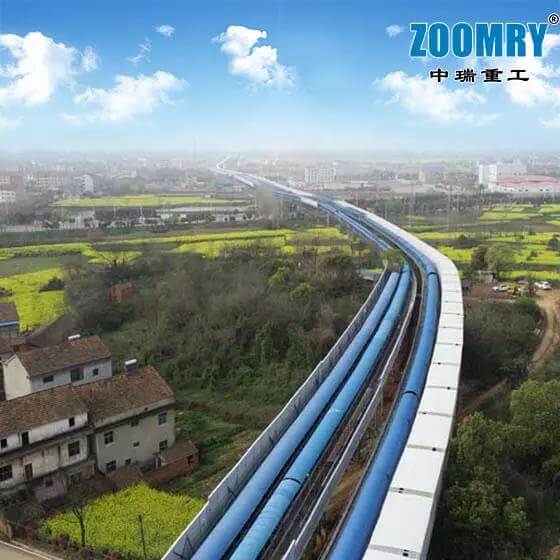
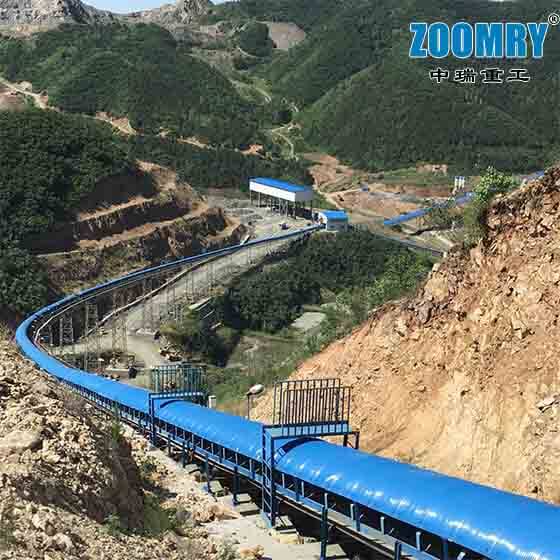
Large Inclination Belt Conveyor in Operation — Hubei Chunjin Limestone Transport Project
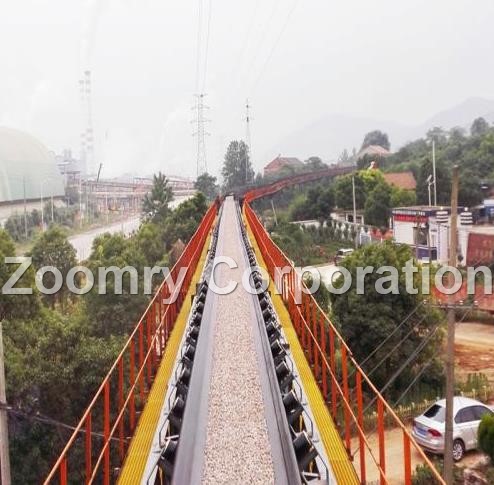
Hubei Chunjin — 4,780 m Belt Conveyor with 57° Steep Incline Section
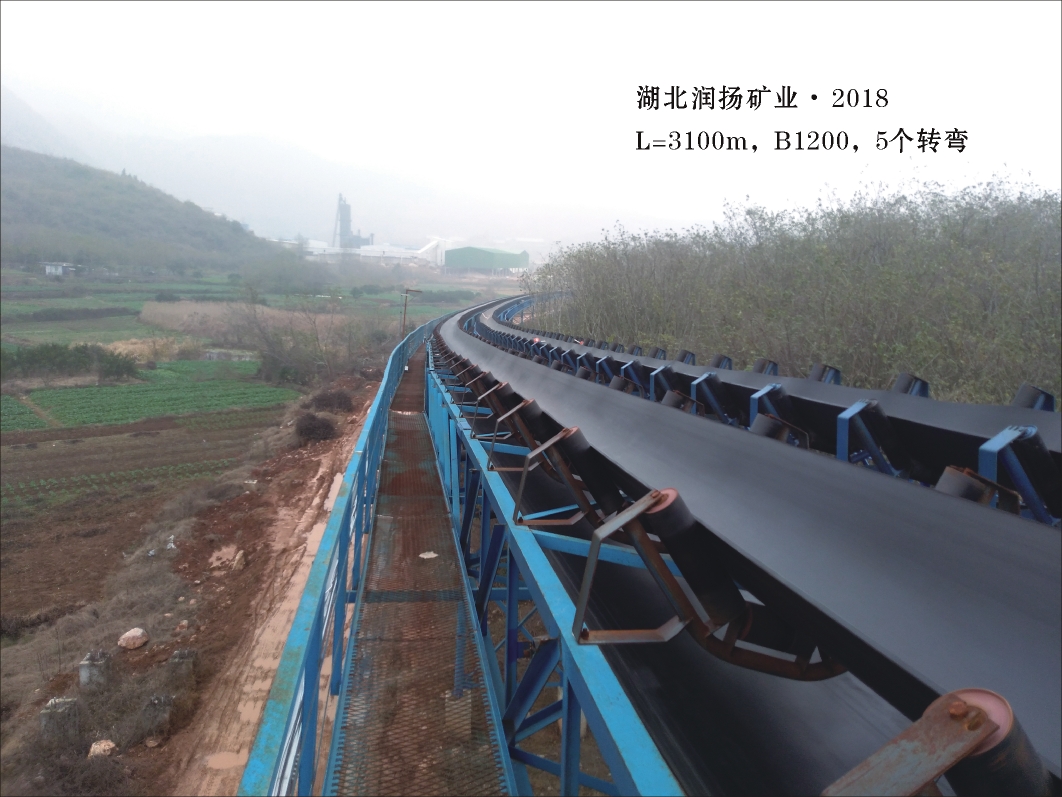
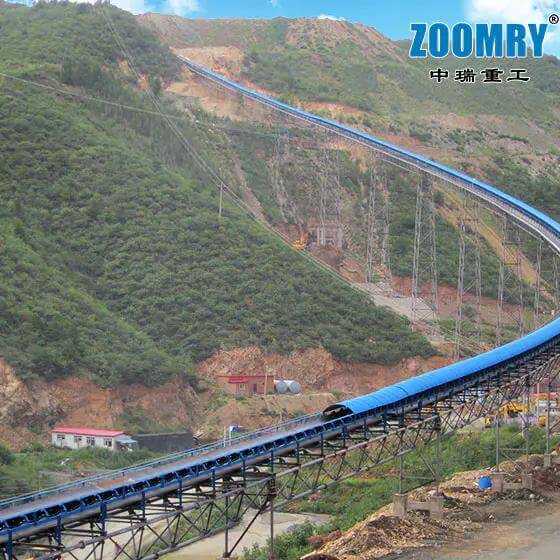
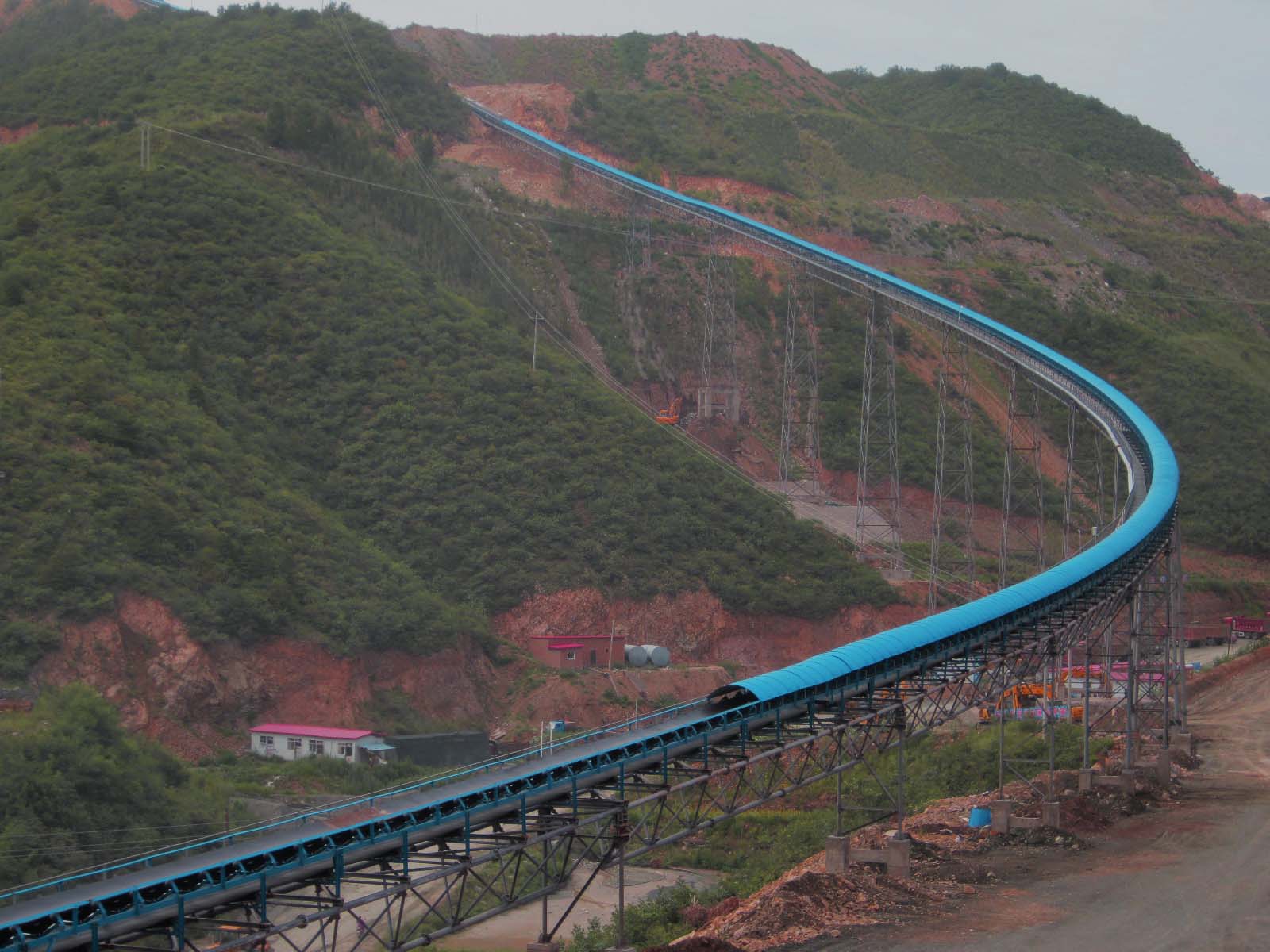
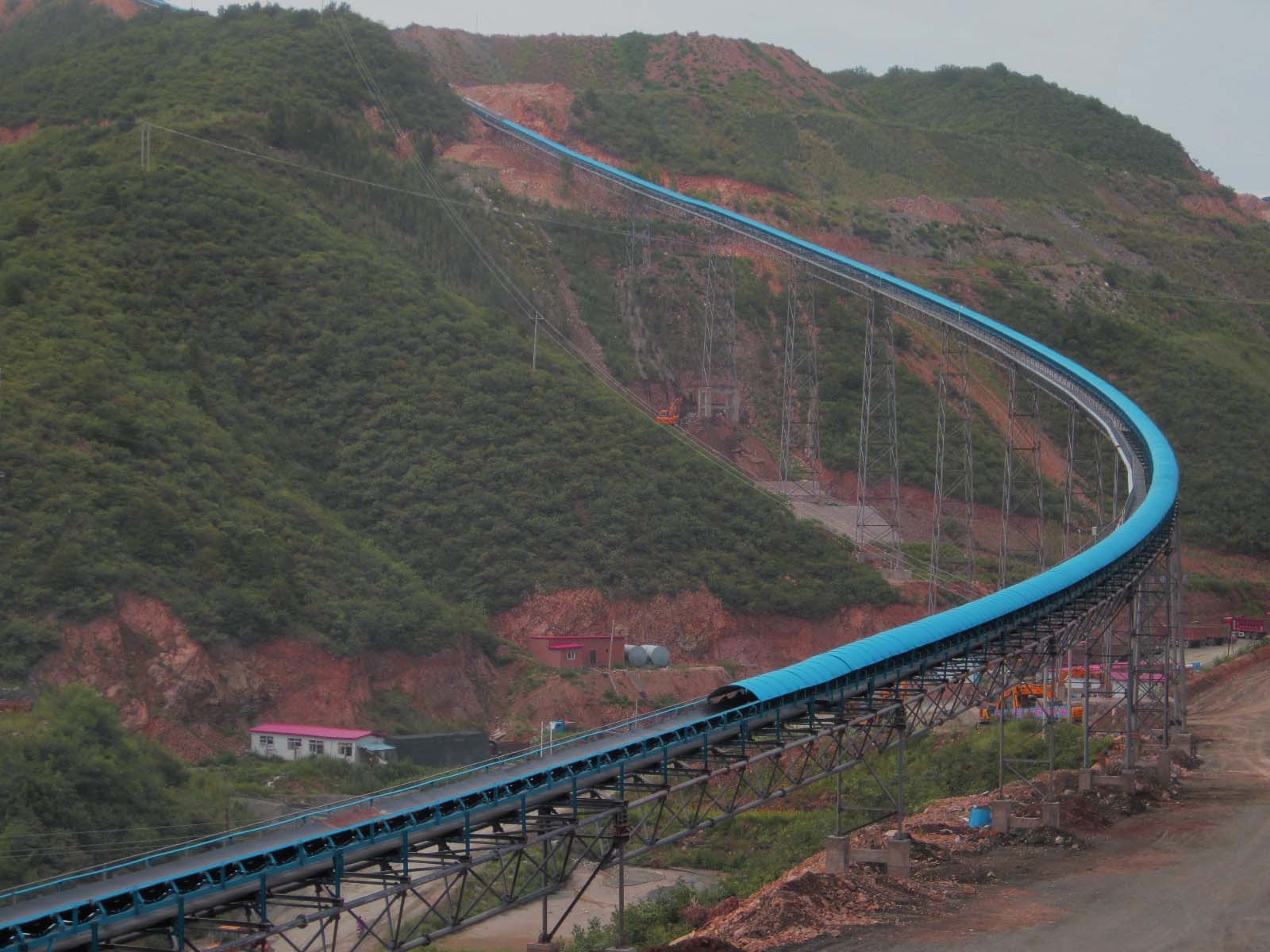
Inner Mongolia Abaga Gold Mine — 5,100 m Conveyor with 61° Turning Angle
Route curvature depends on the specific conveyor design and site requirements. Where curved routing is a key project objective, ZOOMRY can evaluate the suitability of the configuration or recommend a curved belt conveyor solution.
For standard belt types with profiled surfaces, the maximum operating angle is typically ±30°. The actual angle depends on material characteristics such as particle size, moisture content, and flowability. For steeper lifts, a dedicated steep angle belt conveyor with corrugated sidewall or pocket belt configuration can be evaluated.
Belt selection depends on the conveying angle, material properties, and capacity requirements. Common options include chevron belts with raised patterns, cleated belts with vertical barriers, and corrugated sidewall belts with flexible edges. The belt type is confirmed during project engineering rather than applied as a universal standard.
Profiled belt surfaces increase friction and create physical barriers that help keep material stable on the incline. Belt tension, idler spacing, and loading arrangement are also optimized to maintain proper contact between the material and belt surface during steep-angle transport.
Capacities can reach up to 15,000 m³/h depending on belt width, speed, material density, and inclination angle. Final capacity is confirmed through project-specific engineering calculation.
Compare adjacent models, sizes and duty classes in this category before requesting a quotation.
Browse all Large inclination conveyor models or the complete product range.
Tell us your material type, required capacity, vertical lift, route profile, and site constraints — our engineers will recommend a suitable belt configuration and conveyor layout.
Request Large Inclination Conveyor Quote →