
Detailed Explanation of Industrial Conveyor Belts – Types, Selection & Applications | ZOOMRY
Choosing the right industrial conveyor belt improves project efficiency and reduces maintenance costs — truly achieving cost reduction and efficiency enhancement.
Quick Answer
Conveyor belts appear in many familiar settings — airports, subways, supermarkets — but industrial conveyor belts operate in far more demanding environments requiring specific properties such as high-temperature resistance, corrosion resistance, and tear resistance. Further down: worked configurations, common pitfalls, and related ZOOMRY systems.
Conveyor belts appear in many familiar settings — airports, subways, supermarkets — but industrial conveyor belts operate in far more demanding environments requiring specific properties such as high-temperature resistance, corrosion resistance, and tear resistance. As a professional bulk material handling solution provider, ZOOMRY supplies a complete range of conveyor belts for mining, cement, steel, and chemical industries. Choosing the right industrial conveyor belt improves project efficiency and reduces maintenance costs — truly achieving cost reduction and efficiency enhancement.
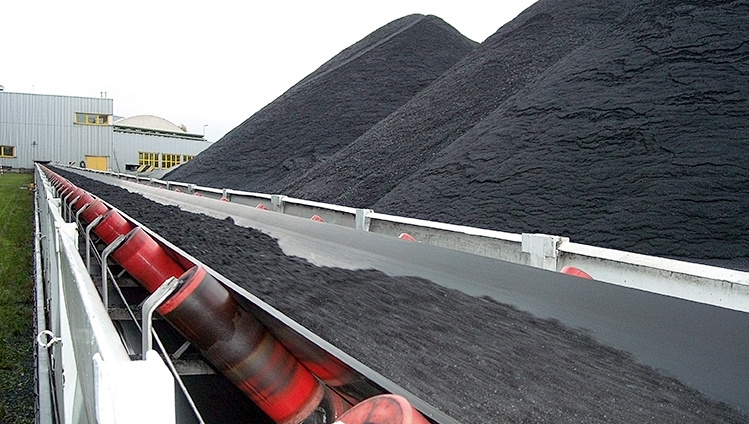
Types of Industrial Conveyor Belts
Ordinary Industrial Conveyor Belt
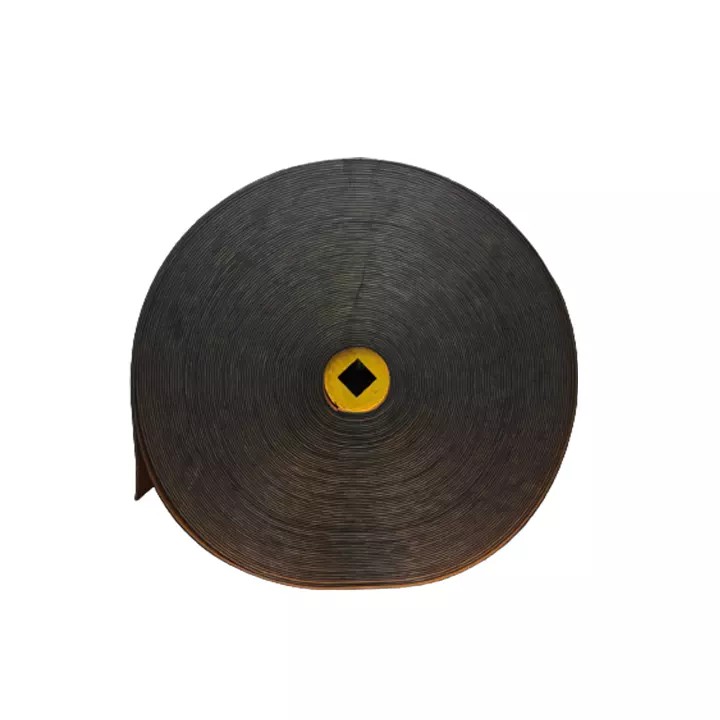
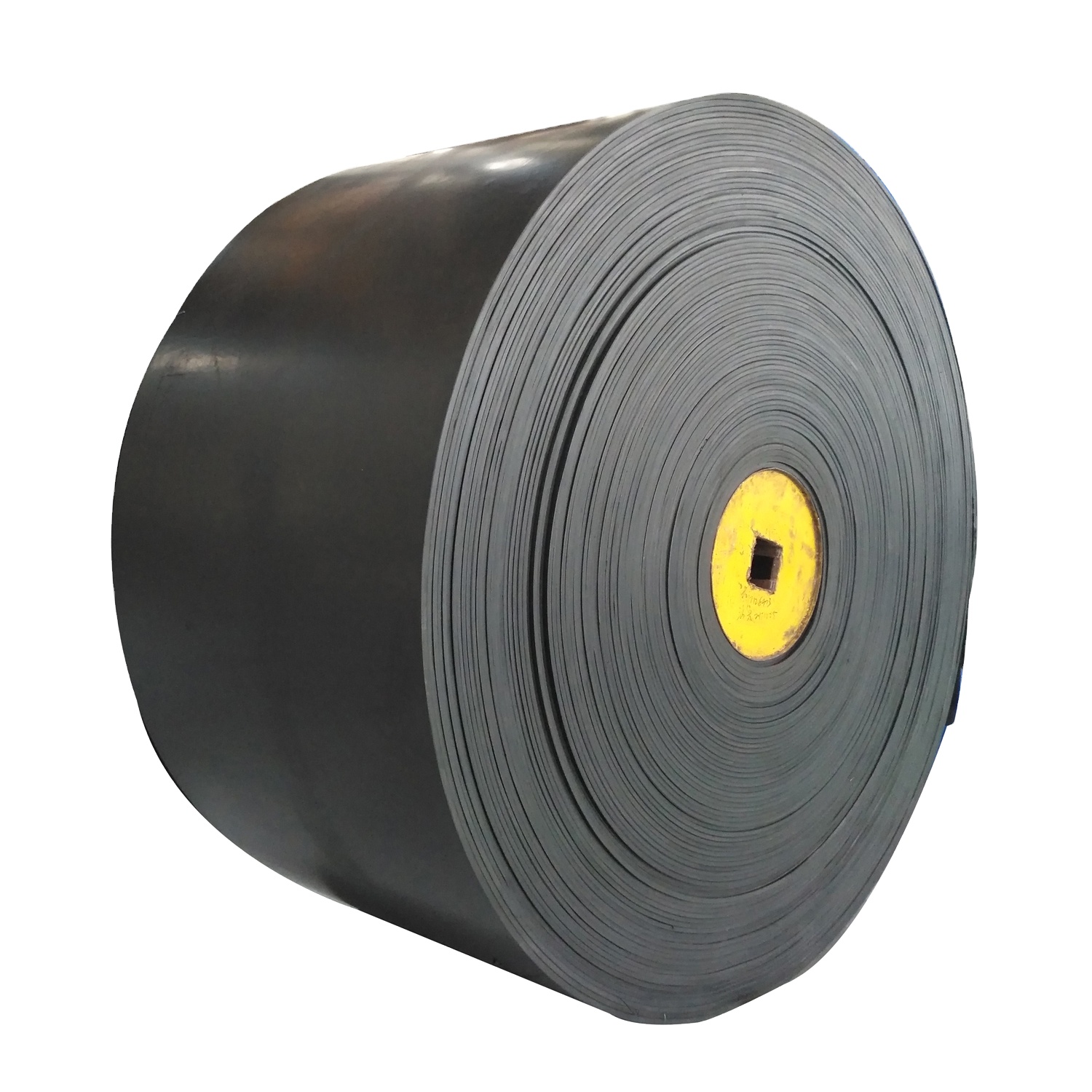
The most widely used type — characterized by low cost and simple maintenance. Typically made of multiple layers of rubber or synthetic materials. Not high-temperature resistant, suitable for transporting general bulk materials. ZOOMRY's fabric conveyor belts offer 3-6 ply EP or nylon construction for moderate-duty applications.
High-Temperature Conveyor Belt
Designed specifically for high-temperature environments — made of special materials such as silicone and high-temperature resistant fibers. Operates normally at temperatures above 200°C with good wear resistance and corrosion resistance. Widely used in metallurgy, casting, and glass industries. ZOOMRY's heat-resistant conveyor belts are available in T1 (100°C), T2 (150°C), and T3 (200°C) grades with EPDM/SBR compounds.
Chemical-Resistant Conveyor Belt
Suitable for environments with acid and alkali exposure — resists various chemical corrosion. Made of special corrosion-resistant materials, maintaining high efficiency even in harsh chemical environments. Mainly used in phosphate fertilizer manufacturing, seawater salt drying, and pharmaceutical industries. ZOOMRY offers belts with NBR/EPDM cover compounds for chemical resistance.
High-Strength Wear-Resistant Conveyor Belt
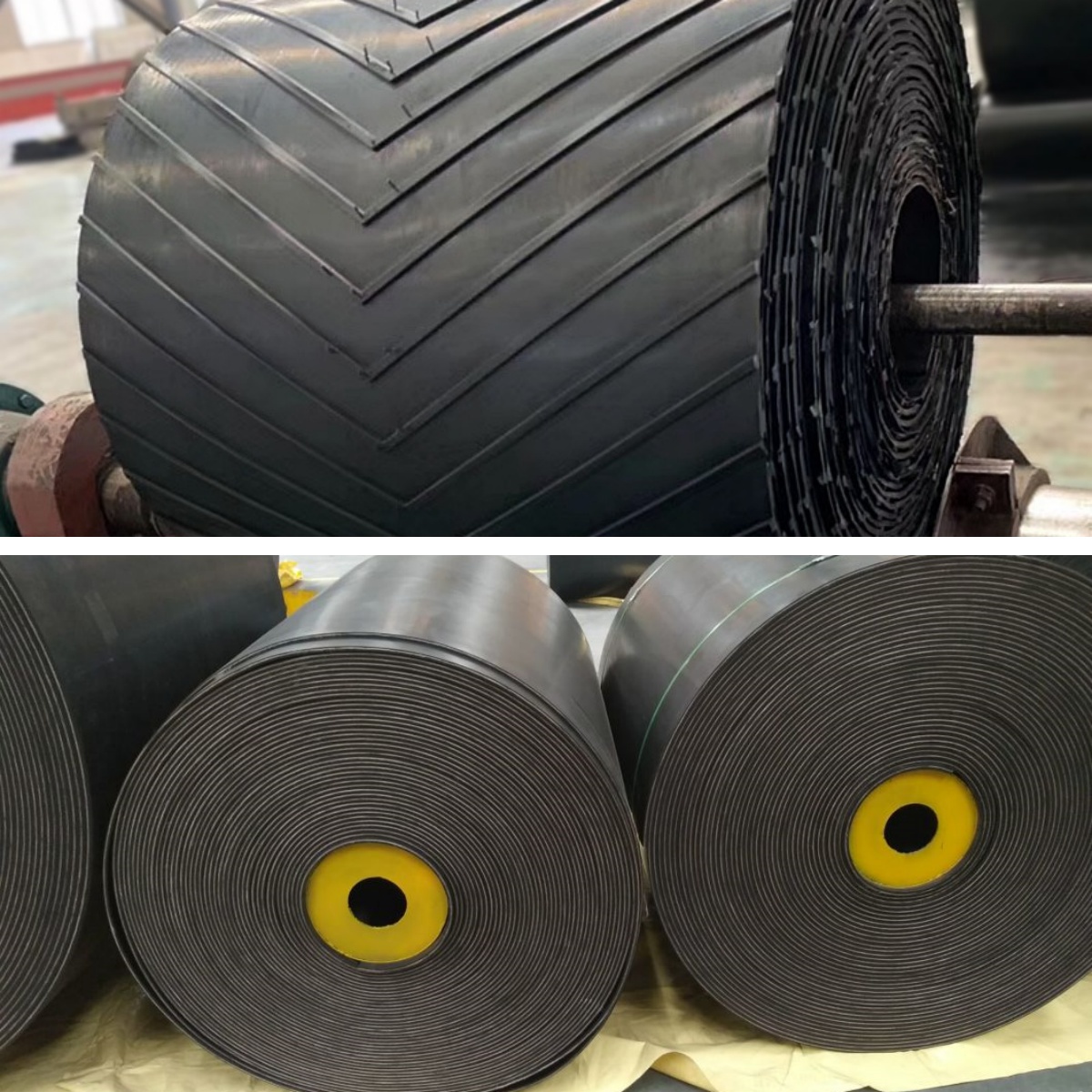
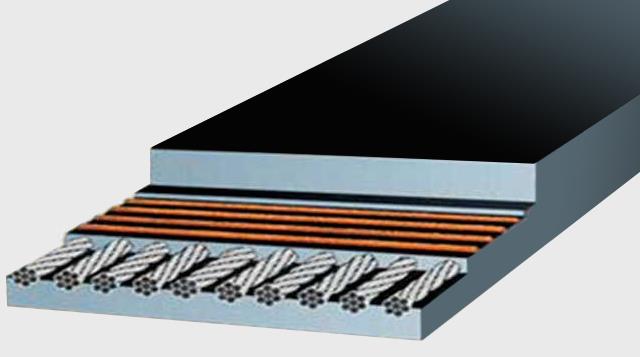
Features high strength, large transport capacity, wear resistance, high load capability, and stable transportation. Made from materials like steel cord, rubber, nylon, or polyester fiber — available in various patterns including patterned (chevron), solid woven flame-retardant, and mesh types. Suitable for long-distance and large-angle transport in mining and aggregate quarry environments.
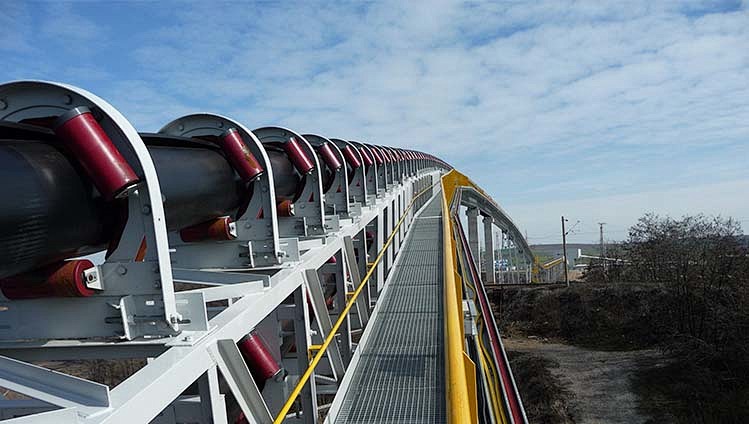
Guide to Choosing Industrial Conveyor Belts
Choosing Based on Material Characteristics
| Material Factor | Recommendation | ZOOMRY Solution |
|---|---|---|
| Temperature | For sintered ore, hot coke — use high-temperature resistant belts with special core materials | Heat-resistant belts |
| Corrosiveness | For chemical raw materials, pesticides — use acid and alkali resistant rubber belts | NBR/EPDM cover grades |
| Granularity & Shape | For large, granular, or sharp materials — use high-strength belts with steel cord core | Steel cord belts |
| Humidity | For high-moisture materials — use rubber or PVC belts with good waterproofing | EP belts (moisture-resistant) |
Choosing Based on Transport Distance
| Distance | Recommendation | ZOOMRY Solution |
|---|---|---|
| Long-Distance | High strength and wear resistance required — steel cord or nylon belts | Steel cord / Nylon belts |
| Short-Distance | Lighter, more cost-effective belts for economical operation | Fabric belts |
Related Equipment
Industry Solutions
Explore This Topic: Belt Conveyor Systems
Foundations of belt conveying: system components, layouts, drive methods, types, cleaning and maintenance.
- Belt Conveyor Systems — Topic hub
- Where Can You Buy A Mining Belt Conveyor,Precautions For Purchasing Mining Belt Conveyors — Guide
- Core FAQs on Belt Conveyors (Issue 3) — Guide
- About ZOOMRY — Belt Conveyor Manufacturer FAQ | Company Information — Guide
- 19 Common Belt Conveyor Problems and Solutions – A Practical Troubleshooting Guide — Guide
- Belt Conveyor Components and Layout: A System Design Guide — Guide
Let's build it together
Need a custom bulk handling solution?
Talk to our engineers about conveyors, stackers, ship loaders and turnkey EPC systems.