
Belt Conveyor Components and Layout: A System Design Guide
A design-oriented look at belt conveyor components and layout: head and tail stations, drives, take-ups, transfer chutes, idler spacing and route planning.
Quick Answer
Belt conveyor systems are an essential component of many industrial processes, from mining and construction to food processing and manufacturing. As a professional bulk material handling solution provider, ZOOMRY offers complete belt conveyor systems for demanding applications worldwide. Further down: worked configurations, common pitfalls, and related ZOOMRY systems.
In this guide: This page approaches the belt conveyor as an engineered system, from component selection to route layout. Related reading: What is a Conveyor System? Components, Types & Applications.
A Guide to Belt Conveyor Systems – Types, Components & Applications
Belt conveyor systems are an essential component of many industrial processes, from mining and construction to food processing and manufacturing. As a professional bulk material handling solution provider, ZOOMRY offers complete belt conveyor systems for demanding applications worldwide. A belt conveyor system is a continuous loop of materials that transports items from one location to another — a cost-effective and efficient way to move goods in large volumes. This guide covers the different types of belt conveyors, their components, and their applications.
Types of Belt Conveyor Systems
There are several types of belt conveyor systems, each with unique features and advantages. ZOOMRY's product range covers all major types:
Slider Bed Belt Conveyors
Slider bed belt conveyors are a simple and cost-effective solution for transporting light to medium-duty loads. They are ideal for applications where the product needs to be transported over a short distance, such as in a manufacturing or distribution facility. The belt slides over a flat metal bed, providing smooth support for lighter materials.
Roller Bed Belt Conveyors
Roller bed belt conveyors are a more heavy-duty version of slider bed belt conveyors. They use conveyor rollers instead of a solid bed, reducing friction and enabling higher-capacity transport. Commonly used in loading and unloading trucks, shipping and receiving areas, and assembly lines.
Incline Belt Conveyors
Incline belt conveyors transport products up an incline. For steep angles, patterned conveyor belts with chevron profiles prevent material rollback. Commonly used in food processing and manufacturing where products need to move between levels. ZOOMRY's large inclination conveyors handle angles up to 90°.
Decline Belt Conveyors
Decline belt conveyors transport products down an incline. Used in shipping and receiving areas where gravity assists material flow. Proper take-up pulley tensioning is essential to prevent belt slippage on decline sections.
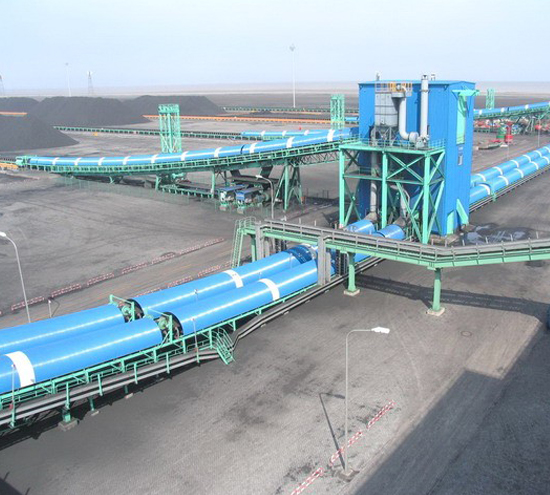
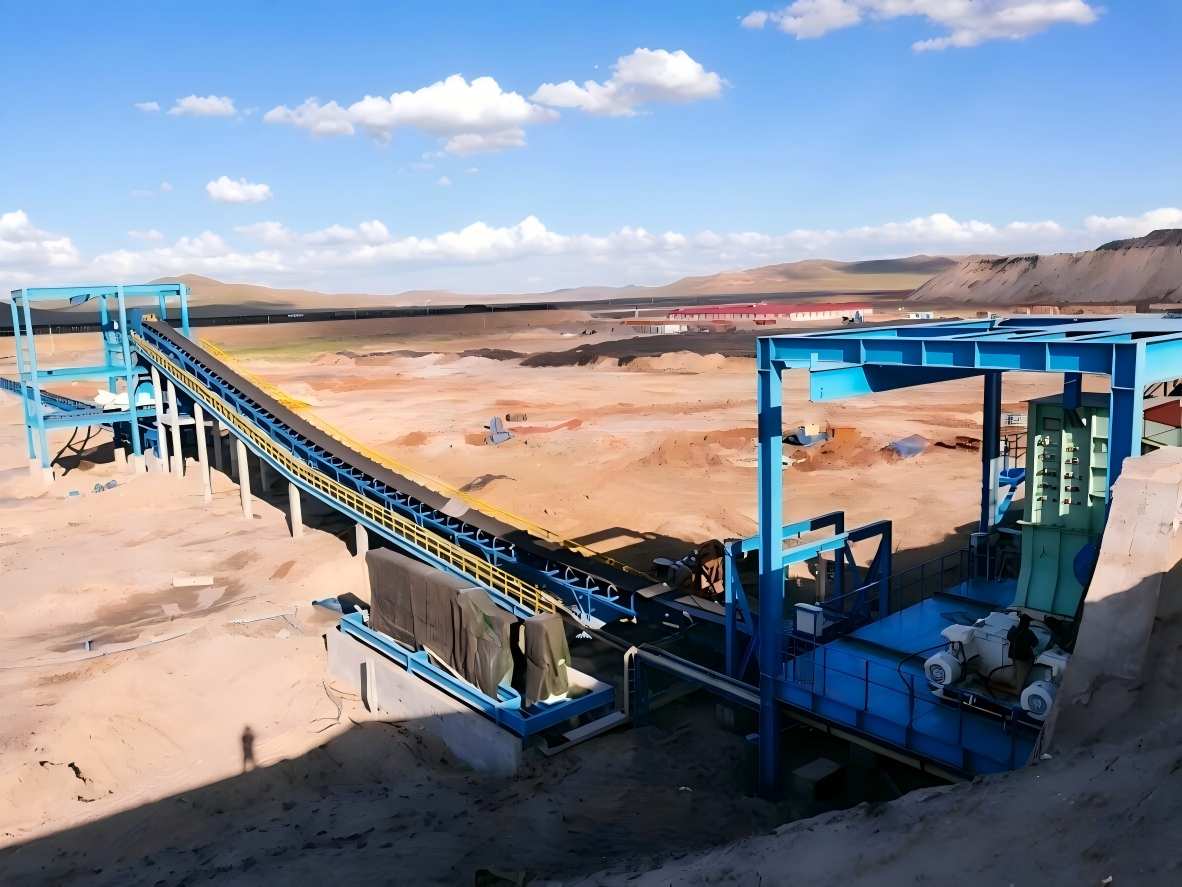
ZOOMRY belt conveyor system — complete bulk material handling solution
Belt Conveyor Components
A belt conveyor system is made up of several components working together. Here are the most critical ones:
Conveyor Belt
The conveyor belt is the main component — a continuous loop that carries products from one end to the other. ZOOMRY offers 11 types including fabric, steel cord, solid woven, pipe, patterned, fire-resistant, and heat-resistant belts. Belt widths up to 2,500 mm and tensile strengths up to 4,000 N/mm.
Conveyor Rollers
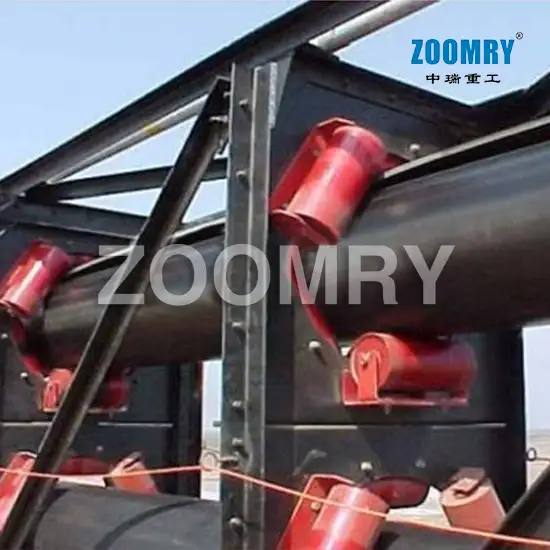
Conveyor rollers are cylindrical devices mounted on the conveyor frame that rotate as the belt moves. They support the belt and guide products. ZOOMRY offers steel rollers, HDPE rollers, impact rollers, and return rollers with 50,000+ hour service life.
Conveyor Pulleys
Conveyor pulleys drive the belt and are powered by an electric motor. Available in drive, tail, bend, snub, and take-up configurations. Drive pulleys with ceramic lagging provide enhanced grip in wet conditions.
Conveyor Idlers
Conveyor idlers support the belt along its length. ZOOMRY's idler range includes carrying, return, impact, and training idlers — manufactured to CEMA B, C, D, and E standards with advanced sealing technology for long service life.
Belt Cleaners & Accessories
Belt cleaners, tracking systems, and impact beds enhance conveyor performance and extend component life. Primary and secondary belt cleaners remove carryback, while impact beds protect the belt at loading points.
Applications of Belt Conveyor Systems
Belt conveyor systems serve a wide range of industries:
Mining and Quarrying
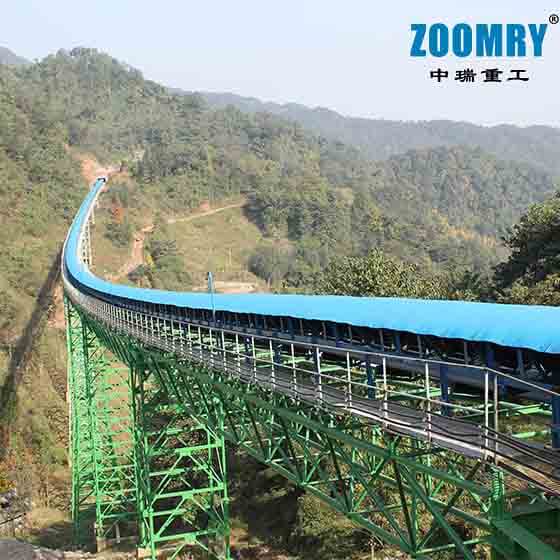
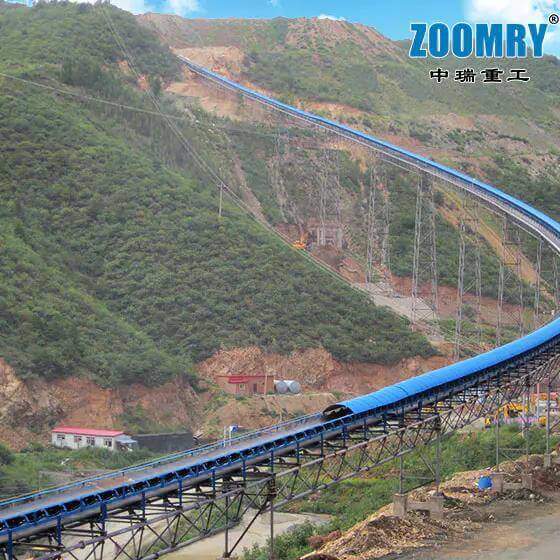
Mining and quarrying operations use belt conveyor systems to transport minerals, rocks, and ores. ZOOMRY's long distance belt conveyors handle up to 17,000 m³/h over 15 km single flights, reducing truck haulage costs by over 40%.
Food Processing
Belt conveyor systems in food processing transport fruits, vegetables, meat, and poultry. Food-grade belts with anti-microbial properties and easy-clean surfaces meet FDA and EU food safety standards. Grain handling applications use enclosed conveyors for dust-free transport.
Manufacturing
Manufacturing facilities use belt conveyor systems to transport raw materials, work-in-progress, and finished products between process stages. Modular designs allow for future expansion and reconfiguration as production needs change.
Related Equipment
Industry Solutions

Explore This Topic: Belt Conveyor Systems
Foundations of belt conveying: system components, layouts, drive methods, types, cleaning and maintenance.
- The Benefits of Using Telescopic Conveyor Systems – Faster Loading & Labour Saving — Guide
- What Are the Safety Protection Devices for Conveyor Belts? — Guide
- Conveyor Pulley Types: Drive, Bend, Snub & Take-Up Pulleys Explained (2026) — Guide
- How to Choose the Right Belt Conveyor — Complete Selection Guide for Bulk Material Handling — Guide
- What Are the Types of Conveyor Belt Scrapers and Their Functions? — Guide
Let's build it together
Need a custom bulk handling solution?
Talk to our engineers about conveyors, stackers, ship loaders and turnkey EPC systems.