
What is a Pipe Conveyor? Tubular Belt Conveyor Technology Overview | ZOOMRY
A pipe conveyor is a rubberized belt formed into a tubular shape from a traditional troughed design. At the loading point, the belt is flat like a standard troughed conveyor.
Quick Answer
A pipe conveyor is a rubberized belt formed into a tubular shape from a traditional troughed design. The belt passes through hexagonal idler groups that curl it into a sealed pipe, fully enclosing the material during transport. The rest of the page explains the construction, duty range, and selection criteria.
A pipe conveyor is a rubberized belt formed into a tubular shape from a traditional troughed design. The belt passes through hexagonal idler groups that curl it into a sealed pipe, fully enclosing the material during transport. Over the past 40 years, pipe conveyor technology has advanced significantly and now matches troughed conveyor technology in capacity and reliability. As a professional bulk material handling solution provider with over 20 years of experience, ZOOMRY designs and manufactures custom pipe conveyor systems for mining, cement, coal, and power industries.
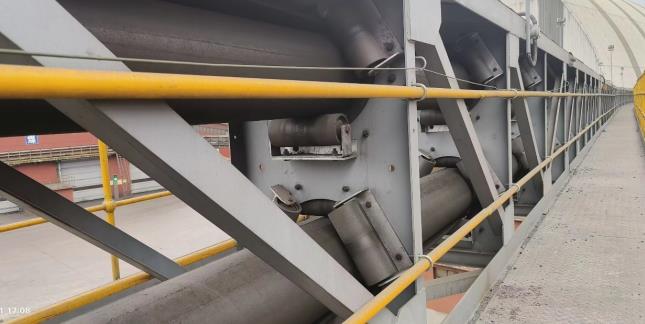
How a Pipe Conveyor Works
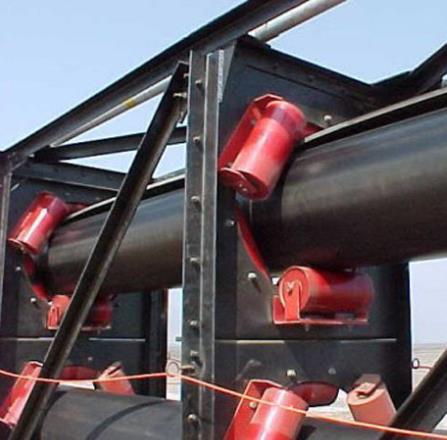
A pipe conveyor transforms a flat conveyor belt into a tubular shape using hexagonal idler roller groups. At the loading point, the belt is flat like a standard troughed conveyor. As it passes through transition idlers, the belt edges are progressively curled upward until they overlap, forming a sealed pipe. Material is loaded at the feed point before the belt closes, then transported inside the enclosed tube. At the discharge point, the belt reopens to release material — then returns empty in its tubular form, preventing carryback spillage on the return side.
This enclosed design enables the pipe conveyor to navigate tight 3D curves and steep inclines up to 30° without transfer points — capabilities that troughed conveyors cannot match. The pipe conveyor belt is available in steel cord and fabric carcass types, with pipe diameters from 100 mm to 850 mm.
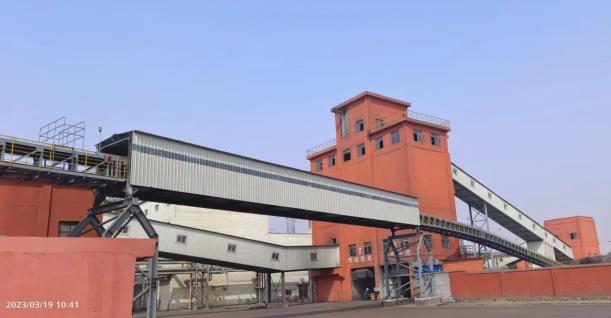
Pipe Conveyor vs Trough Conveyor — Key Advantages
| Feature | Pipe Conveyor | Troughed Conveyor |
|---|---|---|
| Material Containment | Fully enclosed — no spillage or dust | Open — requires covers for dust control |
| Curve Capability | Tight horizontal and vertical 3D curves | Limited to wide-radius horizontal curves |
| Incline Angle | Up to 30° | Typically up to 18-20° |
| Return Side | Enclosed — no carryback spillage | Open — carryback falls onto ground |
| Environmental Protection | Built-in — no additional covers needed | Requires rain covers and wind screens |
| Belt Width Utilization | Smaller width for same capacity | Wider belt required |
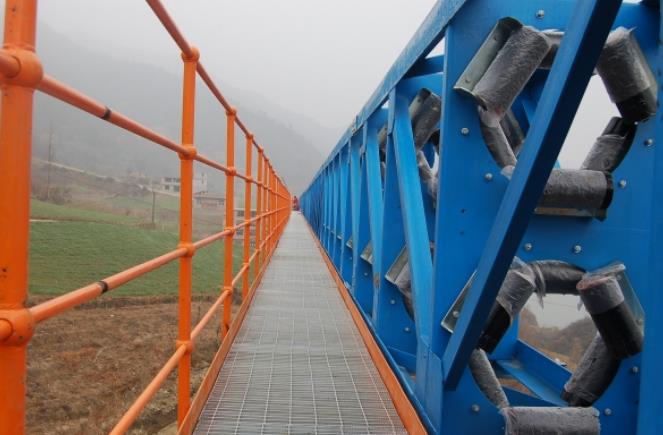
Applications of Pipe Conveyors
Pipe conveyors are the preferred choice when environmental protection, terrain complexity, or material containment are critical:
- Cement plants: Dust-free transport of raw meal, clinker, and finished cement between process stages.
- Coal handling: Enclosed transport prevents coal dust emissions and meets ATEX safety requirements.
- Mining: Navigates complex terrain with 3D curves — eliminates transfer towers and reduces civil works.
- Power plants: Clean transport of coal, limestone, and ash with zero spillage along the route.
- Chemical and fertilizer: Protects hygroscopic and corrosive materials from moisture and contamination.
Related Equipment
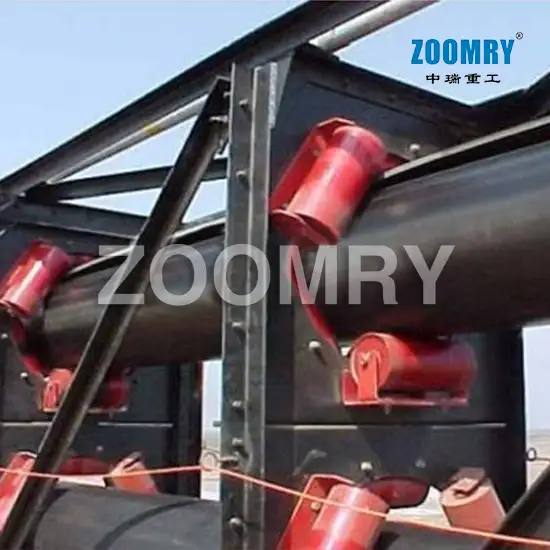
Explore This Topic: Pipe, Curved & Long-Distance Conveyors
Enclosed and geometry-driven conveying: pipe conveyors, horizontally curved belts, steep incline and long-distance overland systems.
- What Is a Pipe Conveyor and How Does It Work? — Topic hub
- What Is the Difference Between a Pipe Conveyor and a Tubular Conveyor? — Guide
- Woodchips & Sawdust Conveyor Solutions | Enclosed Pipe & Tubular Conveyors — Industry solution
- Pipe Conveyor Design – Multi-Point Discharge, Unloading & Sealing Guide — Guide
- Mining Conveyor Solutions | Overland & Underground Belt Conveyors — Industry solution
- Trona Ore Conveyor Solutions | Long Distance & Enclosed Conveyors for Soda Ash — Industry solution
Let's build it together
Need a custom bulk handling solution?
Talk to our engineers about conveyors, stackers, ship loaders and turnkey EPC systems.