 ZOOMRY

Quick answer: A combined truck unloader and mobile ship loader system moves bulk material from road trucks to vessels without fixed port infrastructure. ZOOMRY integrates a drive-over receiving hopper with a radial telescopic ship loader to deliver dust-controlled truck-to-vessel transshipment for coal, ore, aggregates, and grain, with capacities matched to terminal throughput and vessel size.
This page covers the integrated truck-to-vessel solution. For standalone receiving equipment, see the truck unloader range; for loading equipment, see the mobile ship loader series.
What Makes Port Bulk Material Handling So Challenging?
Ports serve as the backbone of global bulk commodity trade, handling millions of tons of ores, coal, aggregates, and cement annually. Yet many terminals still grapple with a set of persistent challenges: fixed equipment that cannot adapt to diverse truck types and vessel sizes, severe dust pollution during transshipment, fragmented operation and maintenance across multi-brand fleets, and painfully long cross-border spare parts supply cycles. bulk material handling equipment must evolve to meet these demands. Drawing on 22 years of expertise as a professional manufacturer and EPC general contractor, ZOOMRY Heavy Industry has engineered an integrated "Truck Unloader + Mobile Ship Loader" solution designed from the ground up for the realities of overseas port operations.
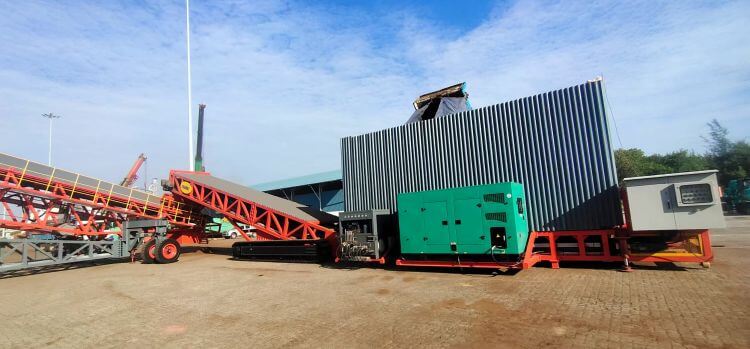
Core Requirements for Port Bulk Material Handling
- Adaptability to diverse materials and ship models: overseas ports routinely handle materials with vastly different physical properties — moist, sticky nickel ore prone to clogging; dust-generating coal; high-hardness aggregates. They must also accommodate vessel sizes spanning from Barges (100–5,000 DWT) and Handysize (10,000–35,000 DWT) up to Capesize (80,000–120,000 DWT). Traditional fixed ship loaders with limited operating height and capacity cannot efficiently serve large-tonnage vessels, forcing costly additional transshipment steps.
- Site and terrain constraints: many aging terminals across Southeast Asia and Africa feature narrow operational spaces and poor ground flatness. Installing fixed equipment demands extensive civil works — concrete foundation pouring that consumes a large share of total project cost and requires months of construction — while permanently locking equipment into a single location with no flexibility to adapt to shifting operational zones.
- Environmental compliance pressure: markets such as the EU, Japan, and South Korea enforce strict dust emission standards and noise limits. Traditional open-type unloading and loading equipment generates significant dust dispersion and high-decibel noise, risking fines or production suspension. Overseas ports also demand high equipment safety redundancy to prevent sudden failures such as belt deviation and wire rope breakage.
- Spare parts supply bottlenecks: multi-brand equipment fleets create compatibility headaches — inconsistent control systems, divergent maintenance standards, and cross-border spare parts delivery cycles stretching 1–3 months. When core components like conveyor rollers or idlers fail, extended downtime directly compromises bulk material transshipment throughput.
Integrated Equipment Solution: Truck Unloader + Mobile Ship Loader
ZOOMRY's integrated solution is built around a core philosophy of "seamless connection, flexible adaptation, and efficient compliance" — achieving one-stop transshipment of bulk materials from truck arrival to vessel loading through coordinated operation of two specialized equipment types, all supported by self-developed core components for long-term reliability.
Mobile Truck Unloader
As a key member of ZOOMRY's product lineup, the truck unloader is purpose-engineered to eliminate the connection bottleneck between trucks and port conveying systems. Available in both wheeled (ZRLS-TU1400 / ZRLS-TU1800) and tracked (ZRLD-TU1400 / ZRLD-TU1800) configurations, its core features align precisely with overseas port requirements:
- High capacity: 200–1,800 tph handling capacity with belt widths from 650 to 1,800 mm depending on configuration, compatible with mainstream 30–50 ton dump trucks. The hopper width supports customization from 3.5 m to 5.7 m, with a low-tail feeding design that eliminates the need to reposition trucks — also adaptable for wheel loaders and excavators.
- All-terrain flexible mobility: wheeled models feature extra-heavy-duty tyres for hardened road surfaces; tracked truck unloader variants employ high-adhesion crawlers for muddy terrain and slopes up to 15°, eliminating the need for costly paved infrastructure.
- Sealing and anti-clogging design: rubber skirts at the hopper bottom reduce material spillage to below 0.3%. An optimized built-in grille filters oversized impurities (>200 mm diameter). For moist, sticky materials such as Indonesian nickel ore, customized heated hopper walls prevent wall adhesion and caking.
- Intelligent control: radio remote control with 100 m range enables simultaneous operation of 2–4 truck channels. Hydraulic ramp adjustment adapts to varying truck compartment heights, boosting unloading efficiency while reducing manual intervention.
Mobile Ship Loader
ZOOMRY's mobile ship loader (ZRSL series) is engineered for "full vessel coverage and intelligent compliance," connecting directly to the mobile truck unloader for seamless truck-to-ship bulk material transshipment:
- Flexible adaptability: compatible with vessels from 100–5,000 DWT Barges through 80,000–120,000 DWT Capesize carriers, with adjustable operating clearance height. Radial rotation, telescoping boom (length configured by model), and luffing functions enable precise material placement within cargo holds — full-hold loading without repositioning the vessel.
- Efficient and clean conveying: PLC-controlled "wind-shielded stockpiling" technology reduces material segregation and breakage. Sealed belt design combined with non-powered ship loader chutes keeps dust emissions low and noise below 45 dB, supporting compliance with EU CE and Russian EAC environmental standards.
- Safety and modular deployment: dual safety guarantees — mechanical self-locking on wire rope breakage and automatic shutdown on belt deviation. Modular components fit into 40-foot HQ containers, cutting overseas shipping costs. On-site assembly typically takes 10–20 days with ZOOMRY engineer support.
- Extended service life: core drive components can use SEW / FLENDER gear motors, reducing energy consumption compared with conventional ship loaders. Heavy-duty conveyor rollers in 40Cr forged steel (diameter ≥200 mm) undergo ultrasonic flaw detection and stress relief, achieving 50,000+ hour service life.
Integrated Operation Process
- Stage 1 — Truck unloading: dump trucks drive onto the mobile truck unloader via its hydraulic ramp and discharge bulk material into the customized hopper. After the grille filters out impurities, material transfers smoothly via belt conveyor to the mobile ship loader's feed inlet. For large-site ports, ZOOMRY's belt conveyor systems provide intermediate transition to maintain continuous material flow.
- Stage 2 — Intelligent ship loading: operators set parameters (vessel DWT, loading speed) via the HMI touchscreen. The PLC system automatically adjusts telescopic boom length and luffing angle for layered material distribution, preventing uneven accumulation. For dust-prone coal, integrated dust-collecting chutes capture particulates in real time.
- Stage 3 — Rapid operation switching: when changing vessel sizes or operational areas, both the truck unloader and ship loader reposition quickly via their own chassis without disassembly. Switching time is reduced to under 30 minutes, meeting multi-vessel simultaneous operation demands.
Truck Unloader vs Fixed Hopper: Which Configuration Fits Your Port?
Selecting the right unloading solution depends on your port's specific operational profile. The table below compares ZOOMRY's mobile truck unloader configurations against traditional fixed hopper systems:
| Feature | Wheeled Truck Unloader | Tracked Truck Unloader | Fixed Hopper System |
|---|---|---|---|
| Mobility | Towable, rapid repositioning | Self-propelled, all-terrain | Fixed in place |
| Ground requirement | Hardened surface preferred | Mud, gravel, soft soil | Concrete foundation required |
| Capacity | 200–3,000 tph | 200–1,800 tph | Varies by design |
| Initial investment | Moderate | Moderate–High | High (civil works a major share) |
| Best for | Multi-berth ports, paved quays | Remote terminals, soft ground | Single-commodity dedicated line |
Core Advantages of the ZOOMRY Solution
Certified Quality Assurance
All solution equipment holds ISO 9001 Quality Management and ISO 14001 Environmental Management certifications. The all-travel mobile shiploader additionally carries CE (EU), EAC (Russia), and KCS (South Korea) certifications for direct access to mainstream overseas markets. Core components — Conveyor idlers, rollers, and cleaning scrapers — are independently developed and manufactured by ZOOMRY. Idler radial runout is ≤0.4 mm (surpassing the 0.5 mm national standard), noise is <40–45 dB (surpassing the 55 dB standard), and service life exceeds 50,000 hours, ensuring stable equipment operation under demanding overseas conditions.
Deep Customization for Regional Conditions
ZOOMRY tailors every solution to the destination port's unique environment: high-temperature anti-corrosion treatment (galvanized roller surfaces + heat-resistant belts above 120°C) for tropical regions like Indonesia and Brazil; C5-M grade high-salt-spray protective coatings for coastal Southeast Asian and European ports; multilingual HMI interfaces (English, Spanish, Russian, etc.) to match local operator workflows. For extreme cold climates, the same engineering rigor that produced our telescopic stacker fleet for Russian operations at -40°C is available upon request.
Full-Lifecycle Service Commitment
Beyond EPC general contracting covering equipment design, manufacturing, and installation, ZOOMRY delivers a comprehensive "O&M + spare parts + upgrades" lifecycle service: strategically positioned spare parts warehouses across Southeast Asia, Europe, and Africa ensure rapid delivery of regular consumables such as idlers and seals; annual equipment audits with on-site engineer inspections and upgrade planning (e.g., PLC system iteration); fast emergency fault response, directly addressing the after-sales concerns that keep overseas port operators up at night.
Measurable Cost Reduction
Compared to traditional "fixed truck unloader + fixed ship loader" configurations, ZOOMRY's integrated mobile solution reduces initial investment by avoiding large-scale civil engineering while improving operational efficiency. PLC automated control reduces labor demand, and equipment energy consumption drops. As a real-world benchmark, an Indonesian nickel ore port adopting this solution saw daily transshipment volume surge from 5,000 tons to 12,000 tons, with annual operating cost savings exceeding US$2 million.
Why Choose ZOOMRY Heavy Industry?
- 22 years of focused expertise: since 2002, ZOOMRY has concentrated exclusively on bulk material conveying equipment, completing over 500 domestic and international projects — from long-distance overland conveyors in China to coal port ship loading projects in Africa. This specialized focus translates into deeper understanding of localized overseas port requirements, including high salt-spray protection and multilingual service needs.
- Independent full-industry-chain capability: ZOOMRY controls the entire value chain — from Conveyor Pulleys and core components to complete machines — with in-house R&D and production. Four major testing centers, including a chemical laboratory and mechanical performance testing lab equipped with over 60 testing instruments, guarantee equipment compatibility and consistent quality.
- Global service network: ZOOMRY maintains service centers in Vietnam, Malaysia, South Africa, Germany, and beyond, staffed with professional engineering teams providing on-site installation guidance, O&M training, and fault diagnosis. Cross-border video technical support ensures overseas customers always receive timely assistance regardless of location.
As global bulk commodity trade continues to intensify, overseas ports require not just individual pieces of equipment, but comprehensive solutions that are efficient, flexible, compliant, and cost-effective. The "Port Bulk Material Handling Solution: Truck Unloader Combined with Mobile Ship Loader" — built on 22 years of technological accumulation — addresses the real-world handling pain points of overseas ports through intelligent equipment coordination, deep customization, and full-lifecycle service, helping terminals strengthen their supply chain competitiveness.
Frequently Asked Questions
Can a mobile truck unloader and mobile ship loader work as one system?
Yes. The truck unloader discharges material into its receiving hopper, and the belt conveyor transfers it directly to the ship loader's feed inlet. Both units reposition on their own chassis, so the pair can switch between berths or operational zones without disassembly.
What vessel sizes can the integrated system serve?
The ship loader side covers vessels from Barges (100–5,000 DWT) and Handysize (10,000–35,000 DWT) up to Capesize (80,000–120,000 DWT). The final match depends on berth geometry, hatch dimensions, freeboard, and tidal range, and is confirmed per project.
How is dust controlled during truck-to-vessel transfer?
Dust is controlled at three points: the receiving hopper uses rubber skirts and an enclosed transfer channel, the ship loader uses a sealed belt design with non-powered loading chutes, and dust-collecting chutes capture particulates at the loading point.
Does the system need fixed port infrastructure?
No. Both units are mobile and self-propelled or towable. The integrated solution avoids concrete foundations and rail infrastructure, which is why it suits terminals with limited civil works budget or temporary operations.
What materials can the integrated system handle?
Coal, iron ore, nickel ore, aggregates, grain, fertilizer, and other bulk commodities. Belt type, hopper liner, and chute material are selected according to material abrasiveness, moisture, and particle size.
Related Solutions for Port & Terminal Operations
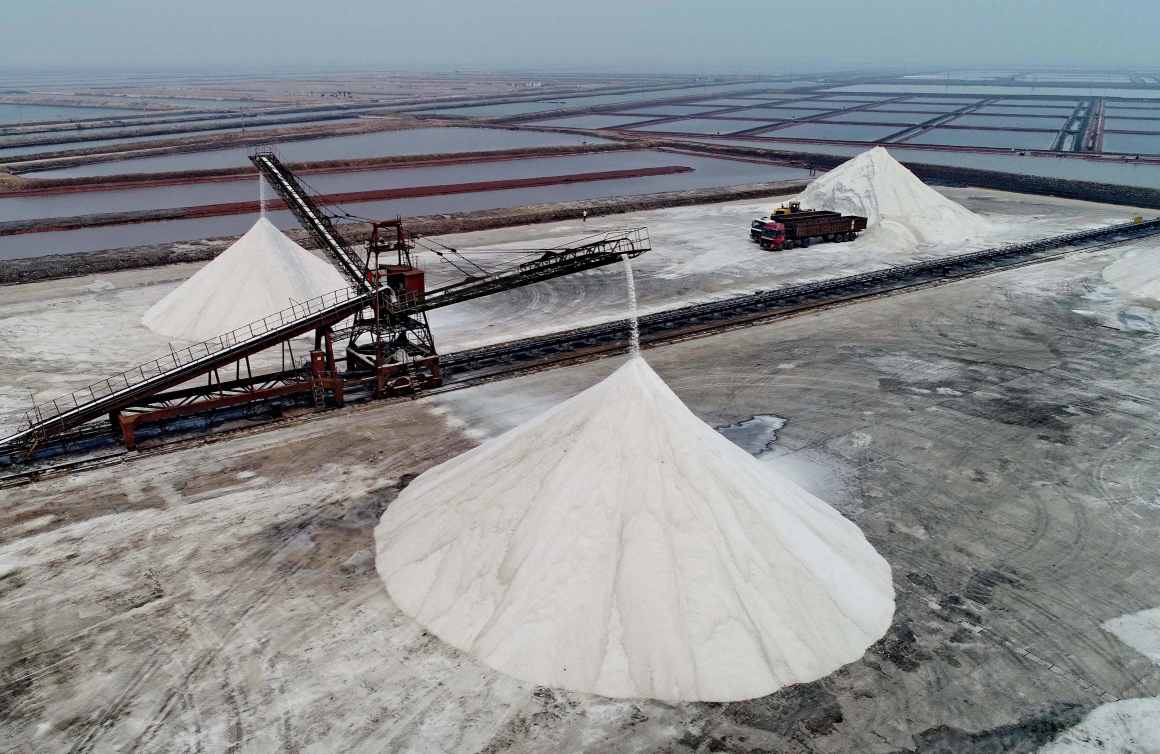
Corrosion-resistant HDPE rollers and stainless steel ship loaders for marine salt terminals.

Alkali-resistant HDPE idlers and enclosed Pipe conveyors for soda ash production and export.
For standalone equipment details, see the truck unloader working principle, the truck unloader types and configurations, and the ZOOMRY EPC project case library for integrated port conveying projects.
Ready to Upgrade Your Port's Bulk Handling Efficiency?
Get a customized Truck Unloader + Mobile Ship Loader solution tailored to your terminal's specific vessel sizes, material types, and throughput demands.
Contact Our Engineers Today