 ZOOMRY

Quick answer: Truck turnaround time at a bulk terminal is determined by three factors: receiving capacity, feed rate control, and the number of truck ramps. Based on ZOOMRY project data from a 2025 port terminal in Southeast Asia and a 2024 aggregate quarry in Hubei, replacing a fixed receiving hopper with a tracked truck unloader reduced truck turnaround time by 35%, while adding a hopper feeder downstream stabilized feed to the stacker and reduced stacker downtime by 28%.
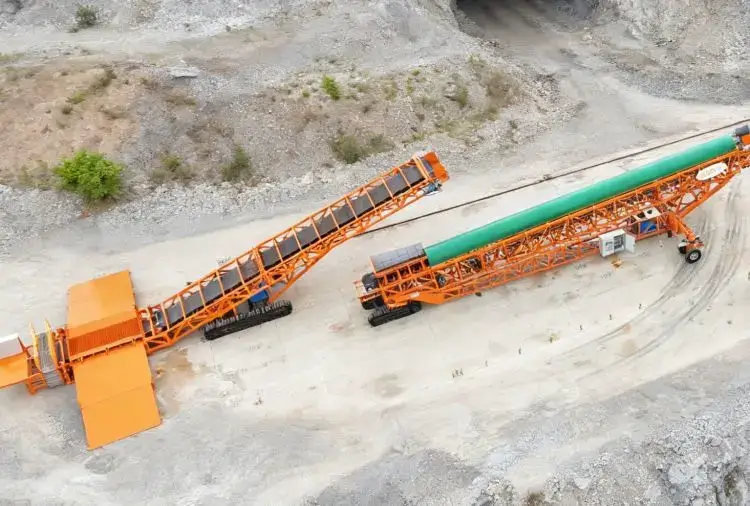
Why Truck Turnaround Time Matters
At a bulk terminal, every minute a truck spends waiting to discharge is a minute it is not earning. For a terminal receiving 30 trucks per hour, a 5-minute reduction in turnaround time translates to an additional 2.5 hours of truck availability per day — equivalent to 75 additional truckloads per month.
Truck turnaround time is the sum of:
- Queue time: Waiting for a receiving point to become available
- Positioning time: Maneuvering onto the ramp or hopper
- Discharge time: Unloading the material
- Exit time: Leaving the receiving area
Each of these stages can be optimized with the right equipment configuration.
The Three Equipment Decisions That Drive Turnaround Time
| Decision | Impact on Turnaround Time | ZOOMRY Configuration |
|---|---|---|
| Receiving method | Drive-over vs. loader-assisted discharge | ZRLS / ZRLD truck unloader |
| Ramp count | 2-ramp vs. 4-ramp layout | 2-ramp for lower investment; 4-ramp for higher throughput |
| Feed control | Direct feed vs. hopper feeder regulation | HF-ST / HF-LF / HF-TR / HF-HD hopper feeder |
Project Data 1 — Port Terminal, Southeast Asia (2025)
Project: Bulk port terminal, Southeast Asia
Configuration: ZRLD-TU1800 tracked truck unloader, belt width 1,800 mm, capacity 1,800 t/h, feeding directly into a mobile ship loader
Challenge: The terminal previously used a fixed receiving hopper with wheel loader assistance. Trucks waited an average of 12 minutes to discharge, and the wheel loader created a bottleneck during peak hours.
Result: After installing the ZRLD-TU1800 tracked truck unloader, truck turnaround time dropped from an average of 18 minutes to 11.7 minutes — a reduction of 35%. The wheel loader was eliminated from the receiving process, freeing it for other tasks.
Key data:
- Equipment: ZRLD-TU1800 tracked truck unloader
- Belt width: 1,800 mm
- Capacity: 1,800 t/h
- Turnaround time before: 18 minutes (average)
- Turnaround time after: 11.7 minutes (average)
- Reduction: 35%
- Wheel loader eliminated: Yes
Project Data 2 — Aggregate Quarry, Hubei, China (2024)
Project: Aggregate quarry, Hubei, China
Configuration: HF-HD heavy duty hopper feeder, hopper capacity 24 m³, feed rate up to 3,000 TPH, feeding a radial telescopic stacker
Challenge: The quarry's radial telescopic stacker was experiencing frequent downtime due to uneven material flow from trucks. The stacker would surge when trucks discharged quickly and starve when trucks were delayed.
Result: After installing the HF-HD heavy duty hopper feeder between the truck receiving area and the stacker, stacker downtime caused by uneven material flow dropped by 28%. The hopper feeder's 24 m³ buffer capacity absorbed truck arrival variations, and the controlled feed rate kept the stacker operating at a stable load.
Key data:
- Equipment: HF-HD heavy duty hopper feeder
- Hopper capacity: 24 m³
- Feed rate: up to 3,000 TPH
- Stacker downtime before: baseline
- Stacker downtime after: reduced by 28%
- Buffer capacity: 24 m³
Project Data 3 — Integrated Truck-to-Ship System, Africa (2025)
Project: Truck-to-ship bulk transfer, Africa
Configuration: ZRLS-TU1800 wheeled truck unloader + HF-TR tracked hopper feeder + ZRSL-45 mobile shiploader
Challenge: The terminal needed to load vessels from trucks without a fixed conveyor system. The challenge was coordinating truck receiving, feed control, and ship loading into a single continuous process.
Result: The integrated system — truck unloader, hopper feeder, and mobile shiploader — reduced total truck-to-ship cycle time by 42% compared with the previous method of truck-and-crane loading. The hopper feeder acted as the buffer between intermittent truck arrivals and continuous ship loading.
Key data:
- Equipment: ZRLS-TU1800 + HF-TR + ZRSL-45
- Truck unloader capacity: 1,800 t/h
- Hopper feeder: tracked, buffer capacity for continuous feed
- Shiploader: ZRSL-45, 1,500 t/h
- Truck-to-ship cycle time reduction: 42%
- Previous method: truck-and-crane loading
How to Calculate Your Own Turnaround Time Improvement
To estimate the potential improvement at your terminal, start with these inputs:
- Trucks per hour: Current receiving rate
- Average turnaround time: Minutes per truck from arrival to exit
- Receiving method: Drive-over, loader-assisted, or crane
- Ramp count: 2 or 4
- Downstream equipment: Stacker, shiploader, or conveyor
The three biggest levers are:
- Eliminate the wheel loader: A drive-over truck unloader removes the loader from the receiving process.
- Add a second ramp or a 4-ramp layout: Doubles receiving capacity without adding a second machine.
- Add a hopper feeder: Absorbs truck arrival variations and protects downstream equipment from surge loads.
Key Selection Factors
- Truck volume per hour: High volume favors 4-ramp truck unloaders.
- Ground conditions: Soft or unpaved ground favors tracked configurations.
- Downstream equipment sensitivity: Stackers and shiploaders benefit from hopper feeder regulation.
- Material type: Abrasive materials require wear liners and heavy-duty components.
- Integration: Confirm compatibility with existing conveyors, stackers, or shiploaders.
Frequently Asked Questions
How much can a truck unloader reduce turnaround time?
Based on ZOOMRY project data, replacing a fixed receiving hopper with loader assistance with a tracked drive-over truck unloader reduced turnaround time by 35% at a Southeast Asian port terminal. The exact improvement depends on truck volume, ramp count, and downstream feed control.
What is the difference between a 2-ramp and 4-ramp truck unloader?
A 2-ramp truck unloader allows one truck to discharge while another positions. A 4-ramp layout allows two trucks to discharge simultaneously, effectively doubling receiving capacity without adding a second machine.
Do I need a hopper feeder if I already have a truck unloader?
Not always, but a hopper feeder adds value when downstream equipment (stacker, shiploader, or conveyor) needs a steady feed rate. The hopper feeder absorbs truck arrival variations and protects downstream equipment from surge loads.
Can a truck unloader feed a mobile ship loader directly?
Yes. ZOOMRY crawler truck unloaders can feed directly into mobile ship loaders for truck-to-ship transfer. In a 2025 Africa project, a ZRLS-TU1800 truck unloader, HF-TR hopper feeder, and ZRSL-45 mobile shiploader were integrated into a single continuous system that reduced truck-to-ship cycle time by 42%.
What is the typical capacity range of a ZOOMRY truck unloader?
Standard ZOOMRY truck unloaders cover 200–1,800 t/h. Custom configurations up to 3,000 t/h can be evaluated for specific projects.
Related Products
Drive-over receiving system for ports, mines, and quarries
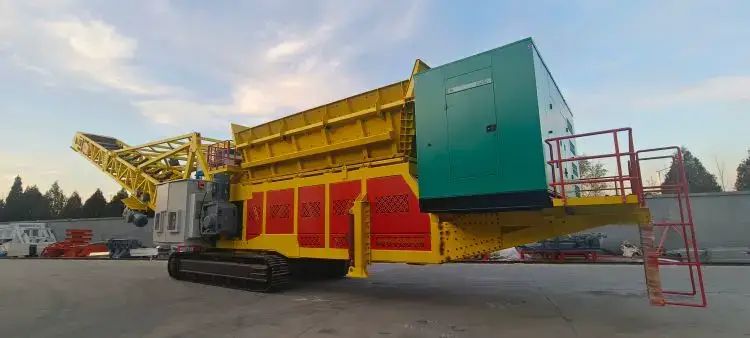
Static, low feed, tracked, and heavy duty configurations

Quay-traveling loader for multi-berth operations
Industry Applications

Truck-to-ship and terminal receiving solutions

Mobile receiving and feeding for quarry operations

Mobile stacking and ore handling for leach pads
Want to Reduce Truck Turnaround Time at Your Terminal?
Share your truck volume, current turnaround time, receiving method, and downstream equipment. ZOOMRY can help determine the right truck unloader and hopper feeder configuration for your operation.
Contact Us →