 ZOOMRY

Quick answer: A Pipe conveyor encloses the belt into a tubular shape to contain dust and allow tight 3D curves. A trough conveyor keeps the belt open in a conventional trough profile, offering higher capacity per belt width and simpler maintenance. Based on three ZOOMRY projects — a 1,568 m coal pipe conveyor in Shandong, an 8,617 m curved trough conveyor in Hubei, and a 3,300 m iron ore trough conveyor in Hebei — the choice depends on dust control requirements, terrain complexity, material sensitivity, and total cost of ownership.
Core Functional Difference
A pipe conveyor uses hexagonal idler groups to fold the belt into a closed tube. The material is fully enclosed from loading point to discharge point. This allows tight horizontal and vertical curves, steep inclines up to 30°, and dust emission control without additional covers.
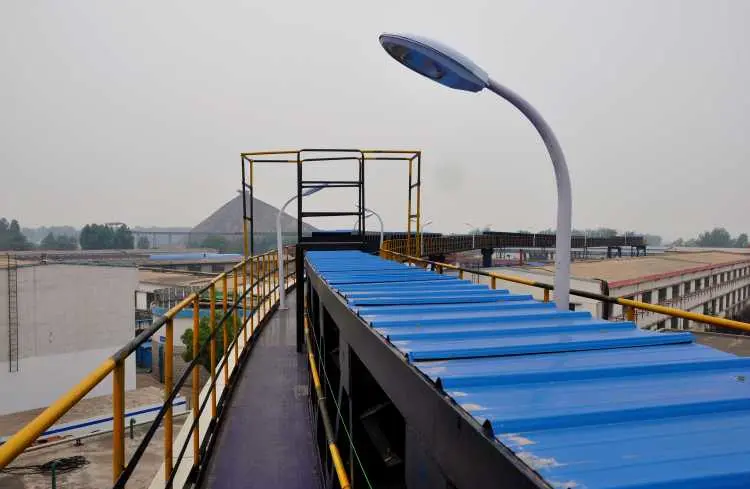
A trough conveyor keeps the belt open in a three-roller trough profile. It offers higher capacity per belt width, easier inspection, and simpler maintenance. It requires more transfer points when the route has multiple curves, and it needs Rain Covers or enclosed galleries for dust and weather protection.
In short: the pipe conveyor is a containment-first design; the trough conveyor is a capacity-first design.
Key Differences at a Glance
| Comparison Factor | Pipe Conveyor | Trough Conveyor |
|---|---|---|
| Belt profile | Closed tube, hexagonal idler groups | Open trough, 3-roller idler sets |
| Dust containment | Fully enclosed, no additional covers required | Requires rain covers or enclosed gallery |
| Curve capability | Tight 3D curves, inclines up to 30° | Horizontal curves possible, larger radius |
| Capacity per belt width | Lower (belt is folded) | Higher |
| Maintenance access | Requires opening the belt at inspection points | Open belt, easier inspection |
| Material protection | Protected from rain, wind, and contamination | Exposed unless covered |
| Best suited for | Dust-sensitive, curved, space-constrained routes | High-capacity, straight or gently curved routes |
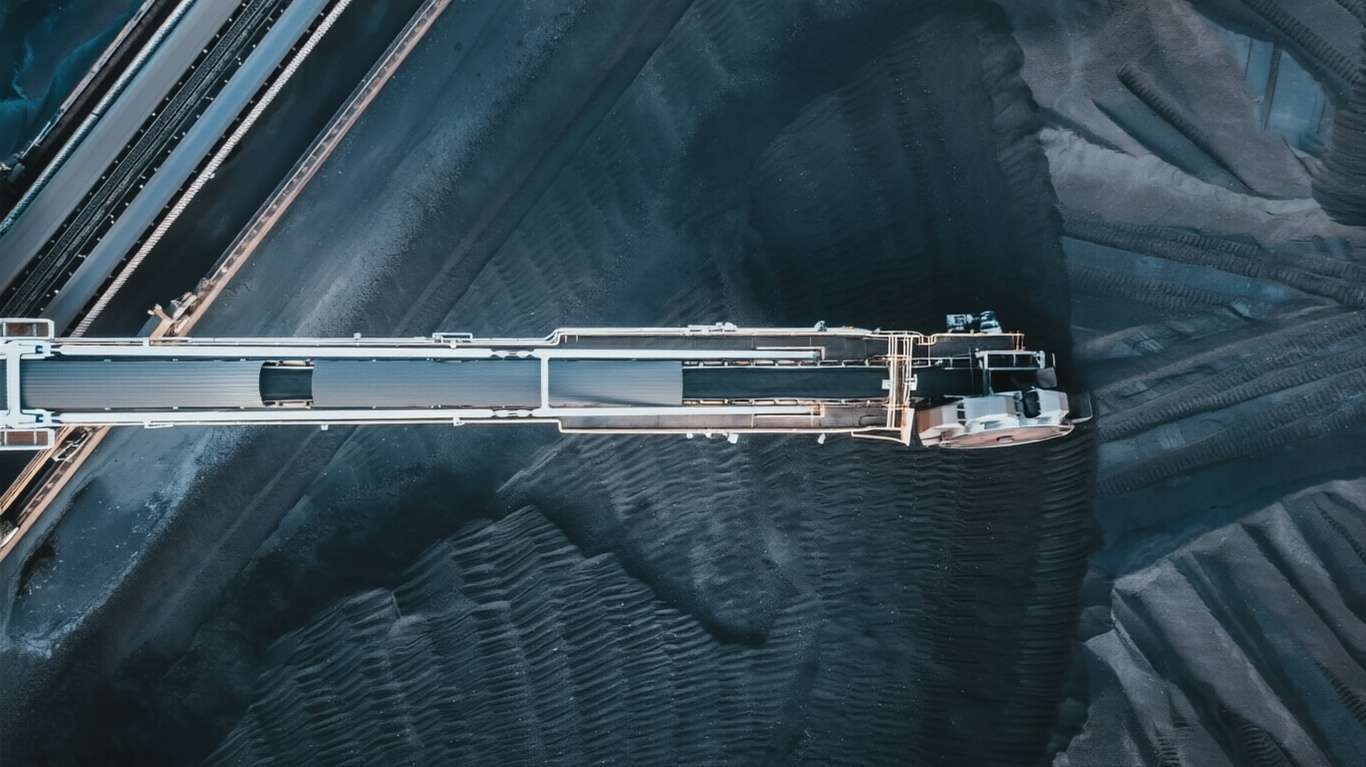
Project Data 1 — Shandong Coal Pipe Conveyor
Project: Open-pit coal facility, Shandong, China
Configuration: Pipe diameter 400 mm, total length 1,568 m, capacity 1,800 t/h
Challenge: The coal yard is close to residential areas. Dust emission limits were strict, and the route crossed existing plant facilities with limited space for transfer points.
Result: Dust emission at the discharge point dropped from 35 mg/m³ (before the pipe conveyor) to 7.5 mg/m³. The 3D curve capability eliminated two transfer points that would have been required with a trough conveyor. Total installed length was 1,568 m with no additional rain covers or enclosed gallery.
Key data:
- Pipe diameter: 400 mm
- Capacity: 1,800 t/h
- Length: 1,568 m
- Dust emission before: 35 mg/m³
- Dust emission after: 7.5 mg/m³
- Transfer points eliminated: 2
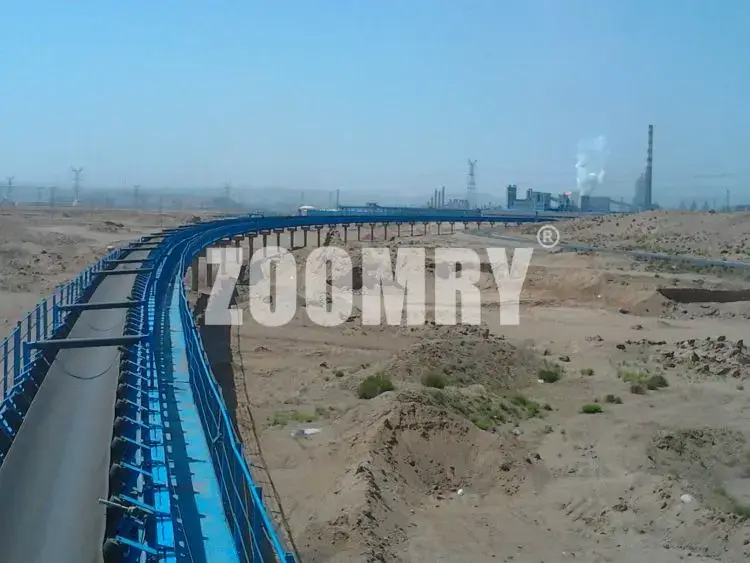
Project Data 2 — Hubei 8,617 m Curved Trough Conveyor
Project: Southeast Mining sand and gravel aggregate, Wuxue, Hubei, China
Configuration: Belt width 1,200 mm, total length 8,617 m, capacity 2,500 t/h, 9 horizontal curves (maximum 36°)
Challenge: The route crosses complex terrain between the mine and the port, with multiple horizontal curves. High capacity was required, and the material (sand and gravel) is not dust-sensitive.
Result: The trough conveyor was selected because the material does not require enclosure and the capacity requirement (2,500 t/h) favored the higher capacity per belt width. The 9 horizontal curves were handled with self-aligning idler sets and a belt turnover device. The system has operated since 2018 with a unit power consumption of approximately 1.0 kWh/t.
Key data:
- Belt width: 1,200 mm
- Capacity: 2,500 t/h
- Length: 8,617 m
- Horizontal curves: 9 (maximum 36°)
- Unit power consumption: ~1.0 kWh/t
- Operation since: 2018
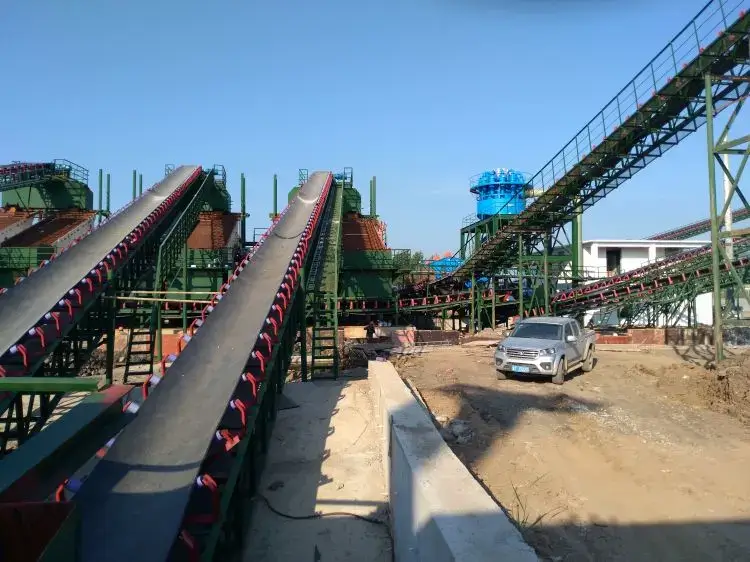
Project Data 3 — Hebei 3,300 m Iron Ore Trough Conveyor
Project: Chengde iron ore mine, Hebei, China
Configuration: Belt width 1,400 mm, total length 3,300 m, capacity 2,000 t/h, ST3150 steel cord belt, 3 horizontal curves (radius 1,200 m), lift 140 m
Challenge: The mine needed to replace truck haulage with a long-distance conveyor. The route follows natural terrain with 3 horizontal curves and a 140 m lift. Iron ore is abrasive but not highly dust-sensitive.
Result: The trough conveyor was selected for its higher capacity per belt width and simpler maintenance. ST3150 steel cord belt was used for the high tension. The system has operated reliably since commissioning, with a reported equipment availability of 99.3%.
Key data:
- Belt width: 1,400 mm
- Capacity: 2,000 t/h
- Length: 3,300 m
- Belt type: ST3150 steel cord
- Horizontal curves: 3 (radius 1,200 m)
- Lift: 140 m
- Equipment availability: 99.3%
When to Choose a Pipe Conveyor
- Dust-sensitive materials: Coal, cement, fly ash, chemicals, and any material with strict emission limits.
- Complex terrain: Routes with tight 3D curves, steep inclines, or limited space for transfer points.
- Material protection required: Materials that must be protected from rain, wind, or contamination.
- Space-constrained routes: Where an enclosed gallery or rain covers would be difficult to install.
When to Choose a Trough Conveyor
- High capacity required: When the required tonnage favors the higher capacity per belt width.
- Material is not dust-sensitive: Sand, gravel, iron ore, and similar materials.
- Straight or gently curved routes: Where the route does not require tight 3D curves.
- Simpler maintenance preferred: Open belt allows easier inspection and maintenance.
Cost Comparison Framework
| Cost Factor | Pipe Conveyor | Trough Conveyor |
|---|---|---|
| Belt cost | Higher (special pipe belt) | Lower (standard belt) |
| Idler cost | Higher (hexagonal idler groups) | Lower (standard 3-roller sets) |
| Civil works | Lower (fewer transfer points) | Higher (more transfer points, covers) |
| Dust control | Built-in | Additional covers or gallery required |
| Maintenance | Higher skill required | Simpler |
Key Selection Factors
- Dust emission limits: Strict limits favor pipe conveyor.
- Route complexity: Tight 3D curves favor pipe conveyor.
- Required capacity: High capacity favors trough conveyor.
- Material sensitivity: Materials needing protection favor pipe conveyor.
- Maintenance capability: Simpler maintenance favors trough conveyor.
- Total cost of ownership: Compare belt, idler, civil works, and dust control costs over the project life.
Frequently Asked Questions
Can a pipe conveyor handle the same capacity as a trough conveyor?
Not at the same belt width. Because the belt is folded into a tube, the pipe conveyor has lower capacity per belt width. To match a trough conveyor's capacity, a pipe conveyor typically requires a larger belt width and pipe diameter.
What is the maximum incline for a pipe conveyor?
Pipe conveyors can handle inclines up to 30° in typical ZOOMRY configurations. Higher angles may be possible with special belt designs and project-specific engineering.
How many curves can a pipe conveyor handle?
Pipe conveyors can handle both horizontal and vertical curves in 3D. The number and radius of curves depend on the pipe diameter, belt type, and route geometry. ZOOMRY pipe conveyors have been supplied with multiple tight curves in a single flight.
Can a trough conveyor be enclosed for dust control?
Yes. Trough conveyors can be fitted with rain covers, enclosed galleries, or dust suppression systems. However, this adds cost and may not achieve the same dust containment level as a pipe conveyor.
Which is more expensive — pipe conveyor or trough conveyor?
The pipe conveyor typically has higher belt and idler costs. The trough conveyor may have higher civil works and dust control costs. The total cost of ownership depends on route length, curve count, dust requirements, and maintenance capability.
Related Products
Enclosed tubular transport for dust-sensitive materials
Long-distance curved trough conveyor for complex terrain
Overland trough conveyor for mining and ports
Industry Applications
Dust-controlled coal transport with pipe conveyors
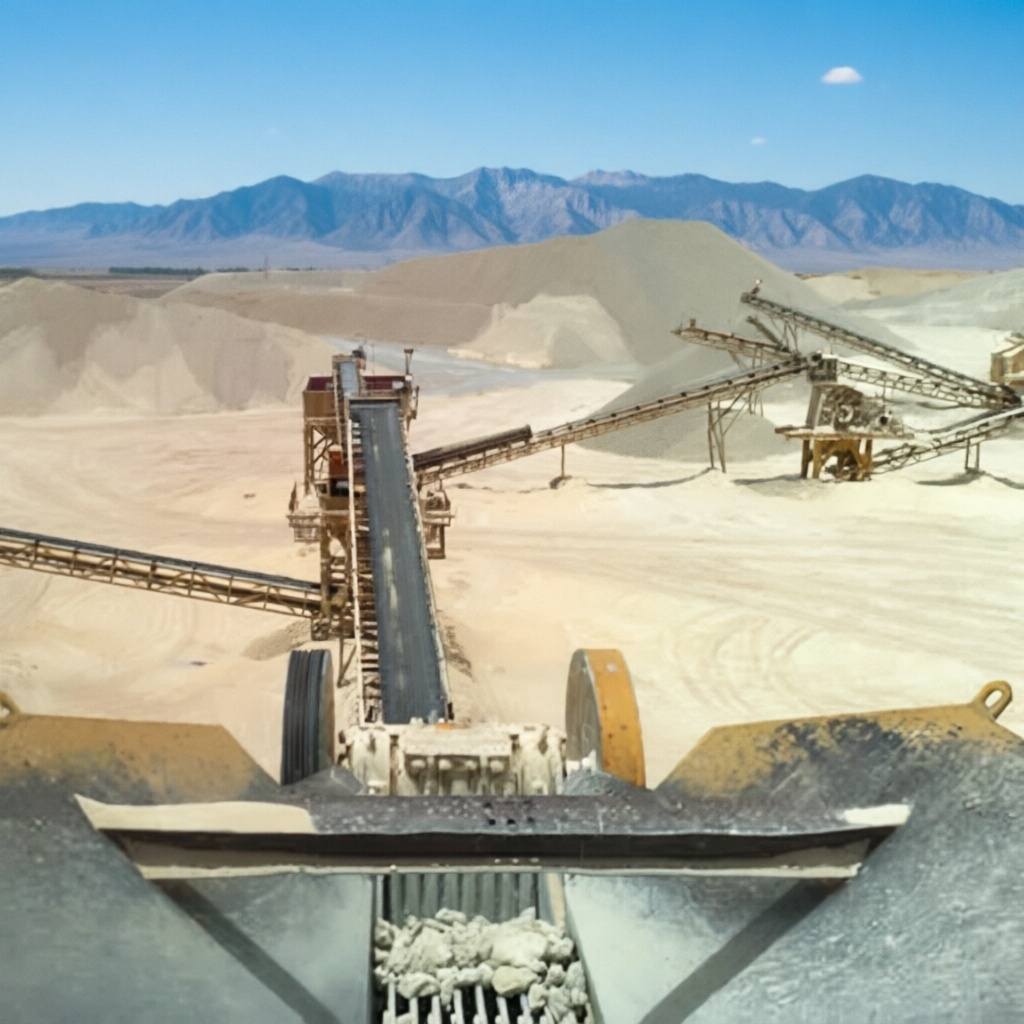
High-capacity curved trough conveyors for aggregates
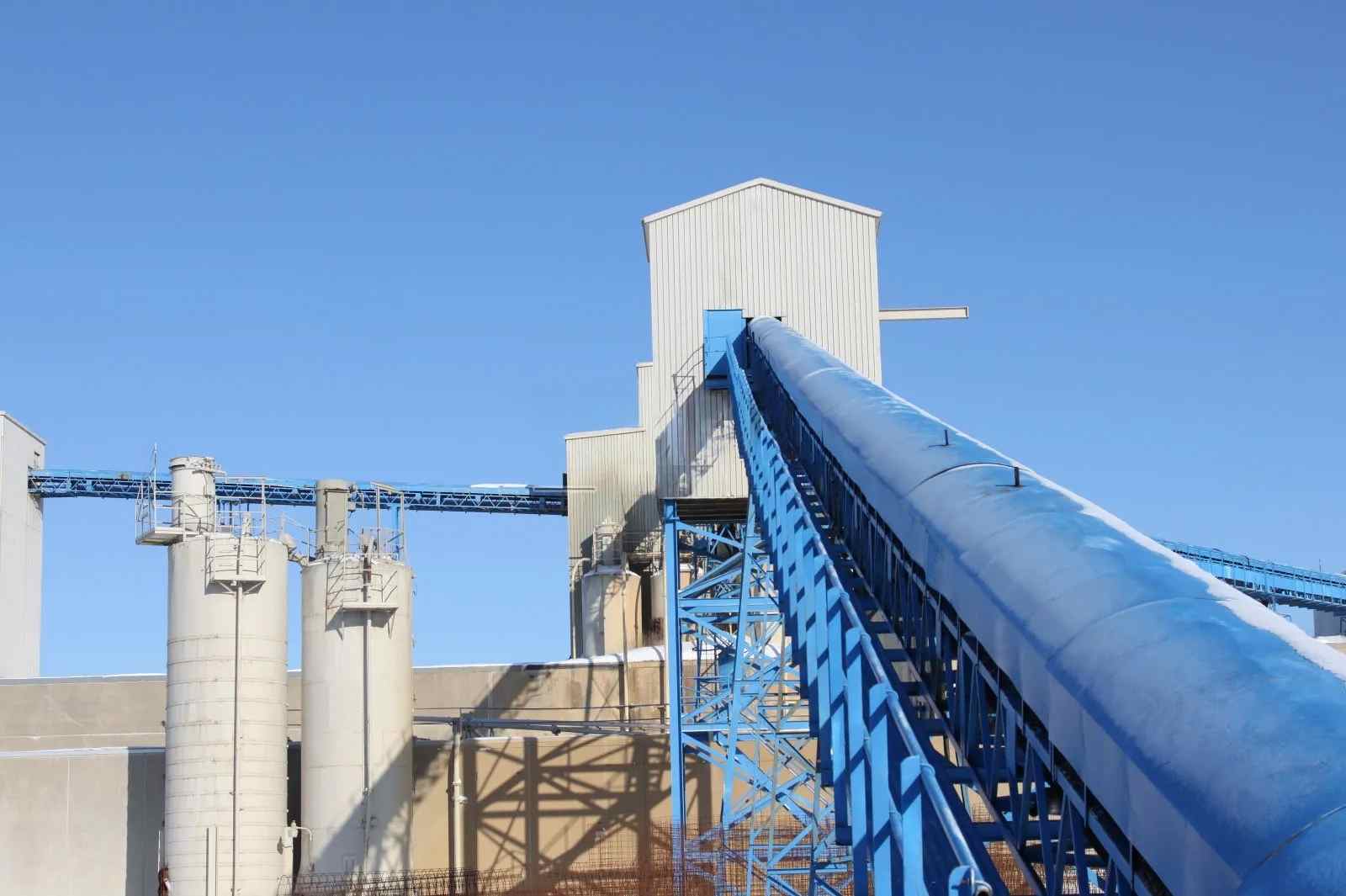
Enclosed transport for cement and raw meal
Choosing Between a Pipe Conveyor and a Trough Conveyor?
Share your material type, dust requirements, route geometry, and required capacity. ZOOMRY can help determine whether a pipe conveyor or trough conveyor configuration fits your project.
Contact Us →