 ZOOMRY

Designing a long distance belt conveyor requires careful evaluation of three critical components — belt, idlers, and drive system — each significantly impacting capital cost, operating efficiency, and system reliability. As a professional bulk material handling solution provider, ZOOMRY engineers complete overland conveyor systems for mining, cement, and port applications. This guide covers the three key design decisions for long-distance conveyors.
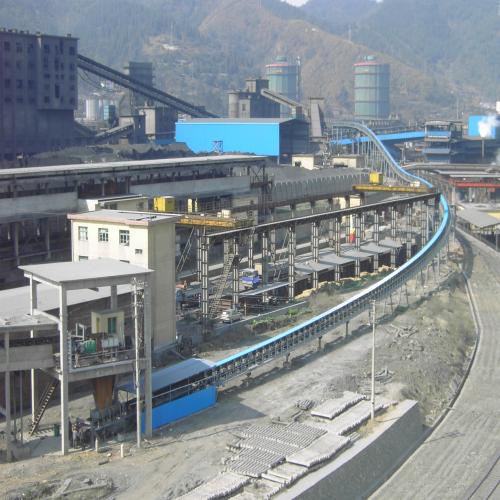
1. Long Distance Conveyor Belt Selection
The conveyor belt accounts for more than 50% of the total conveyor cost — making belt selection the most critical design decision. Two factors directly impact overall machine cost:
- Safety factor: Long-distance conveyors require higher safety factors due to increased consequences of belt failure. Steel cord belts (ST630–ST4000) with tensile strength up to 4,000 N/mm are the standard choice for overland systems — offering ultra-low elongation (0.1-0.25%) to minimize take-up travel over kilometers of belt length.
- Splicing method: Hot vulcanized splices are mandatory for long-distance steel cord belts — achieving joint strength approaching 100% of belt strength. Cold bonding or mechanical fasteners cannot provide the reliability required for multi-kilometer systems where a single splice failure stops the entire line.
2. Long Distance Belt Conveyor idler Selection
Idler selection — particularly diameter and spacing — is critical for long-distance conveyors. Idlers account for approximately 30% of total machine weight, making their selection a major cost and performance factor:
- Idler spacing: Increasing spacing from 1.5 m to 2 m reduces the total number of idlers — directly lowering capital cost and reducing the running resistance coefficient. However, wider spacing requires larger diameter rollers to prevent belt sag between supports.
- Idler diameter: Larger diameters (e.g., 159 mm or 194 mm vs 133 mm) reduce rotation speed for the same belt speed — extending bearing life and lowering running resistance. For long-distance systems, the reduced power consumption from lower-resistance rollers often offsets the higher initial idler cost within the first year of operation.
3. Long-Distance Conveyor Drive Mode Selection
The drive mode — single-head, multi-point multi-drive, or intermediate friction drive — fundamentally determines whether belt strength can be reduced and how long the conveyor can extend:
| Drive Mode | Configuration | Best For |
|---|---|---|
| Single-Head Drive | Single drive pulley at head end — power up to several thousand kW requiring high-voltage motors. Requires steel cord or aramid fiber belts to handle concentrated tension. | Medium-length overland (1-5 km), high-capacity systems |
| Multi-Point Multi-Drive | Multiple drive stations distributed along the conveyor length — reducing maximum belt tension at any single point. Enables use of lower-strength belts. | Long overland (5-15 km), terrain-following routes |
| Intermediate Friction Drive | Belt-driven by intermediate drive stations along the route — can extend conveyor length to tens of kilometers. Uses high-strength nylon or aramid belts with lower tension requirements. | Ultra-long systems (10+ km), low-tension applications |
The drive mode decision cascades through the entire design — affecting belt specification, motor sizing, drive system configuration, and overall project economics. Single-head drives concentrate tension at one point demanding maximum belt strength; multi-point drives distribute tension enabling longer systems with moderate belt specifications.
Related Equipment
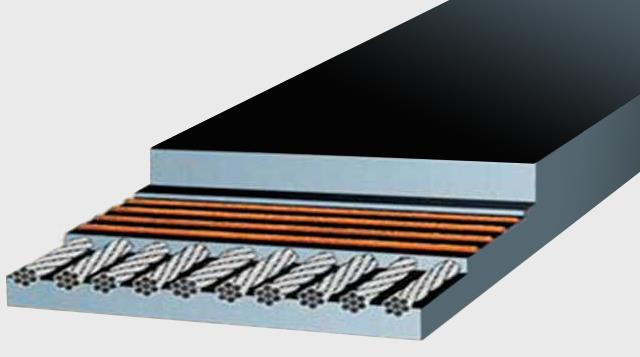
ST630–ST4000 high-tensile belts — essential for long-distance overland conveyor systems.
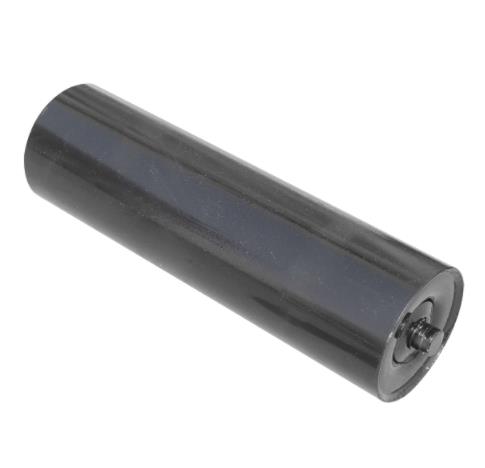
Large-diameter precision rollers — low running resistance for energy-efficient long conveyors.

Multi-drive systems with VFD control — optimized for long-distance conveyor power distribution.
Need Long Distance Conveyor Design Support?
Contact ZOOMRY for belt selection, idler configuration, and drive system recommendations tailored to your overland conveyor project.
Contact Us →