 ZOOMRY

Understanding the key distinctions between drive rollers and Conveyor idlers in belt conveyor systems.
In belt conveyor systems, the terms roller and idler are often used interchangeably. However, in professional engineering contexts, they have distinct meanings: a roller typically refers to a driven component that transmits power, while an idler is a non-driven component that provides support.
The key difference between idler and roller in conveyor systems is straightforward: a roller is a broad term for any cylindrical rotating component — including drive pulleys that transmit power — while an idler specifically refers to a non-driven roller that supports the belt and material without transmitting power. All idlers are rollers, but not all rollers are idlers. Conveyor idlers support the belt and secure the cargo, making them a critical component of all belt conveyor types. Drive pulleys, on the other hand, are driven by motors to provide the forward motion for the Conveyor Belt.
1. Core Difference: Driven vs. Non-Driven
The most fundamental difference lies in the power source:
- Drive Roller (Drive Pulley): This is the driven component of the belt conveyor. Typically installed at the head or tail end, it is rotated by a motor through a reducer. The drive roller relies on friction between itself and the belt to move the conveyor belt forward. It must withstand significant torque and starting torque, and its surface is usually lagged with rubber or ceramic to increase the coefficient of friction.
- Idler Roller (Conveyor Idler): This is the non-driven component of the belt conveyor. It has no power input and rotates passively as the belt moves. The idler's function is to support the belt and the material being conveyed, preventing sagging and misalignment due to the weight of the belt and material. It neither receives nor transmits power, providing only support and guidance.
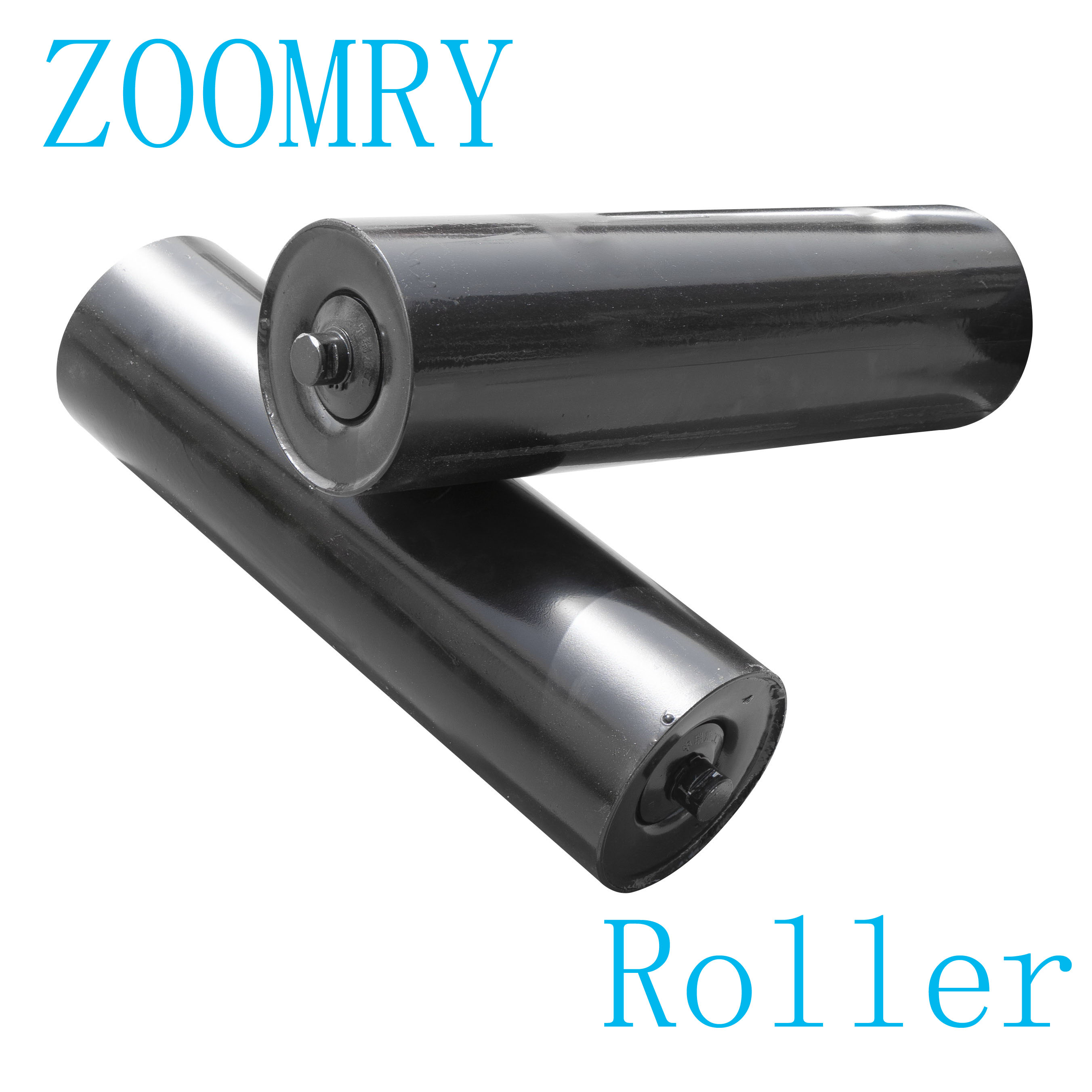
Conveyor Idler Roller — supports the belt and material
2. Structural and Design Differences
Due to their different functions, the structural design of rollers and idlers also differs significantly:
Drive rollers are typically single-piece structures with large diameters (commonly 630mm, 800mm, or even larger), thicker walls, and heavier shafts to withstand high torque and bending stress. Their surfaces require lagging to increase friction, and the bearing housings are often split-type for easier maintenance and replacement.
Idlers are usually composed of multiple rollers forming an "idler set." For example, a troughing idler set typically consists of three rollers arranged at angles of 20°, 35°, or 45° to form a trough-shaped support surface, allowing the belt to carry more material. Idler diameters are relatively smaller (commonly 89mm, 108mm, 133mm, 159mm, etc.), with simpler structures focused on rotational resistance, sealing performance, and service life.
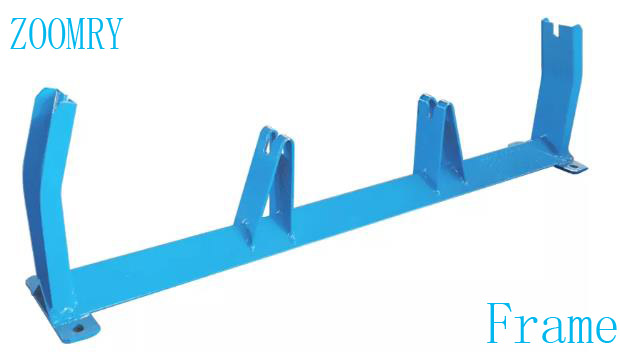
Conveyor Idler Stand — supports the idler frame structure
3. Functional Comparison
| Comparison Dimension | Drive Roller | Idler |
|---|---|---|
| Power Source | Driven (motor-powered) | Non-driven (rotates with belt) |
| Core Function | Transmit power to drive the belt | Support the belt and material, prevent sagging |
| Typical Types | Head pulley, tail pulley, bend pulley | Carrying idlers, return idlers, impact idlers, training idlers |
| Structural Features | Single-piece, large diameter, thick wall, lagged surface | Multi-roller sets, small diameter, thin wall |
| Load Characteristics | High torque and starting torque | Radial loads and impact loads |
4. Common Idler Types and Applications
ZOOMRY Heavy Industry has over 20 years of experience in conveyor systems, offering a wide range of idler types to meet various application requirements:
- Carrying Idlers: Installed on the carrying side of the belt to support the loaded belt and material. Typically arranged in three-roller troughing sets with trough angles of 20°, 35°, or 45°.
- Return Idlers: Installed on the return side of the belt to support the empty belt. Usually flat or V-shaped to keep the belt centered and prevent spillage.
- Impact Idlers: Installed at loading zones where heavy material falls onto the belt. Rubber discs or rings absorb shock, protecting the belt and conveyor structure from damage. ZOOMRY's impact idlers use specially formulated polymers for superior wear and impact resistance.
- Training Idlers (Self-Aligning Rollers): Automatically correct belt misalignment. When the belt drifts off-center, the pivoting action of the training idler steers it back into proper alignment.
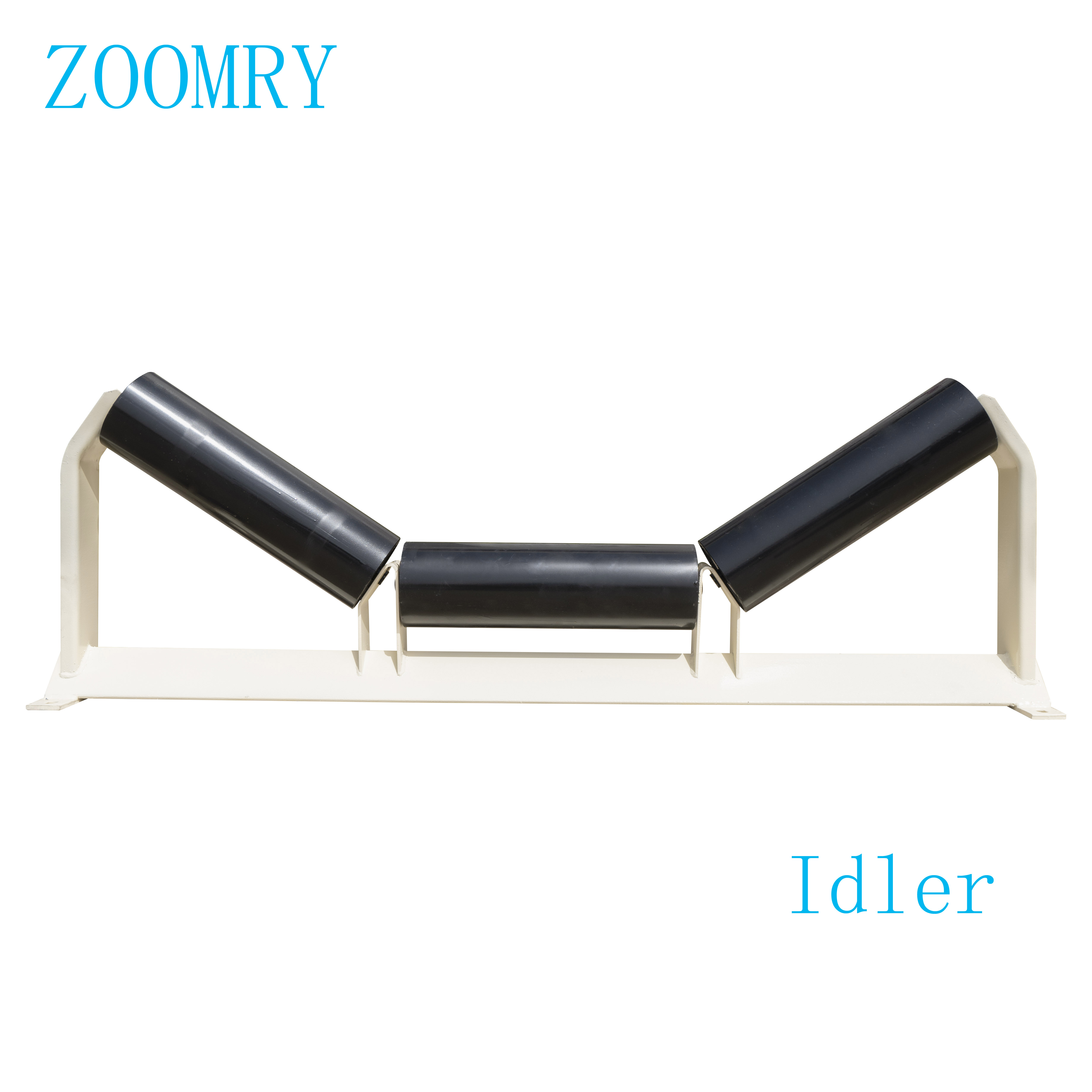
Conveyor Idler Set — three-roller troughing idler group for stable belt support
Additional options include rubber disc return idlers for sticky materials, and silent idlers made from UHMW-PE material that reduce operating noise to 40-45dB — well below national standards.
5. ZOOMRY Product Advantages
ZOOMRY's idler products exceed national standards across several key performance indicators:
| Performance Indicator | National Standard | ZOOMRY Standard | Benefit |
|---|---|---|---|
| Radial Runout (length < 550mm) | ≤0.5mm | ≤0.4mm | Smoother operation, more stable material flow |
| Operating Noise | ≤55dB | 40-45dB | Quieter working environment |
| Rotational Resistance (at 250N radial load) | ≤3N | ≤2N | Lower drive power requirement, energy savings |
ZOOMRY manufactures all core components — including idlers and pulleys — in-house, ensuring consistent quality and fast delivery. All products comply with ISO, CE, and other international standards, and are compatible with a wide range of belt widths and capacities. They seamlessly integrate with ZOOMRY's complete conveyor systems and also serve as direct replacements for major global brands.
Conclusion
Understanding the difference between rollers and idlers is essential for proper selection, system design, and efficient maintenance of belt conveyor systems. As critical support components, idler quality directly affects conveyor reliability and service life. With over 20 years of experience in idler R&D and manufacturing, ZOOMRY is committed to delivering high-performance, long-life idler solutions for mining, coal, chemical, port, and other bulk material handling industries. Explore ZOOMRY's EPC project cases and conveyor system solutions.