 ZOOMRY

The decrease in tension force is the primary reason for Conveyor Belt slippage. When a belt conveyor slips, the tensioning stroke can be adjusted to increase tension force. As a professional bulk material handling solution provider, ZOOMRY supplies complete conveyor systems with integrated tensioning and drive solutions for mining and industrial applications. Common tensioning methods include screw tensioning, hydraulic tensioning, steady vehicle tensioning, and gravity take-up (heavy hammer tensioning). For heavy hammer systems, adding counterweight solves slippage until the belt runs without slipping. If the belt is deformed and tensioning stroke is insufficient, the belt can be cut and re-spliced — but never blindly increase tension, as this causes unnecessary stress and reduces belt service life.
5 Common Causes of Conveyor Belt Slippage and Their Solutions
1. Initial Tension Too Low
Cause: Insufficient tension at the point where the belt leaves the drive pulley causes slippage — typically occurring at startup.
Solution: Adjust the tensioning device to increase initial tension. For fabric belts, target 1-2% elongation; for steel cord belts, 0.1-0.25%.
2. Insufficient Friction Between Drive Roller and Belt
Cause: Water on the belt surface or humid operating environment reduces friction coefficient between the drive pulley and belt.
Solution: Apply rosin powder to the roller to temporarily increase friction — but use a blower device, never by hand, to avoid personal injury. For a permanent solution, install ceramic pulley lagging which maintains grip even in wet and muddy conditions with friction coefficient ≥0.45 — up to 2x higher than non-lagged pulleys.
3. Damaged Bearings Causing Excess Resistance
Cause: Rear roller bearings or upper/lower idler bearings are damaged and cannot rotate — excess tail float and unrepaired damaged components increase running resistance, causing slippage.
Solution: Inspect and replace damaged bearings promptly. A single seized roller can increase system resistance enough to cause belt slippage. Implement a regular bearing inspection and lubrication schedule.
4. Startup Speed Too Fast
Cause: Rapid acceleration at startup causes the belt to slip before full friction engagement with the drive pulley.
Solution: Start slowly — for squirrel cage motors, jog twice before full startup to gradually engage the belt. For large conveyors, install soft-start drive systems with VFD control or hydraulic couplings that provide controlled acceleration, eliminating startup slippage.
5. Conveyor Belt Overload
Cause: Load exceeds the motor's capacity — the belt slips as a protective mechanism.
Solution: While slippage in this case protects the motor from burning out, it should not be relied upon as a safety feature. Reduce material feed rate, verify the conveyor belt is specified for the actual load, and upgrade drive motor or belt strength if throughput requirements have increased beyond original design capacity.
Related Equipment
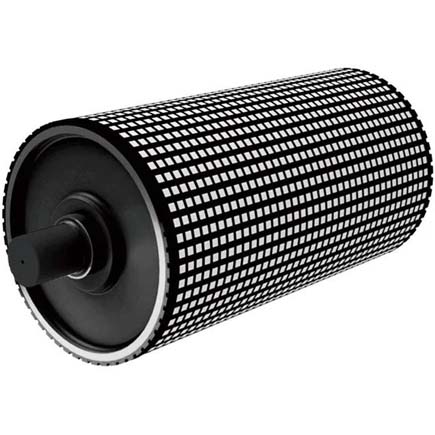
Eliminates belt slippage in wet conditions — friction coefficient ≥0.45, 3-5x longer life.
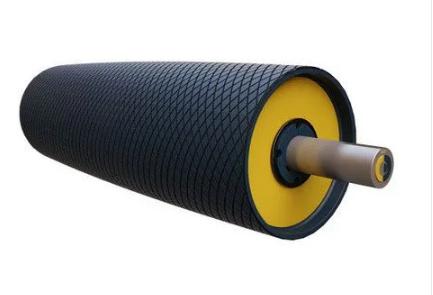
Gravity take-up system — maintains proper belt tension to prevent slippage automatically.

Soft-start VFD drive systems — controlled acceleration eliminates startup belt slippage.
Need Help Solving Conveyor Belt Slippage?
Contact ZOOMRY for pulley lagging, tensioning solutions, and drive system recommendations to eliminate belt slippage.
Contact Us →