 ZOOMRY

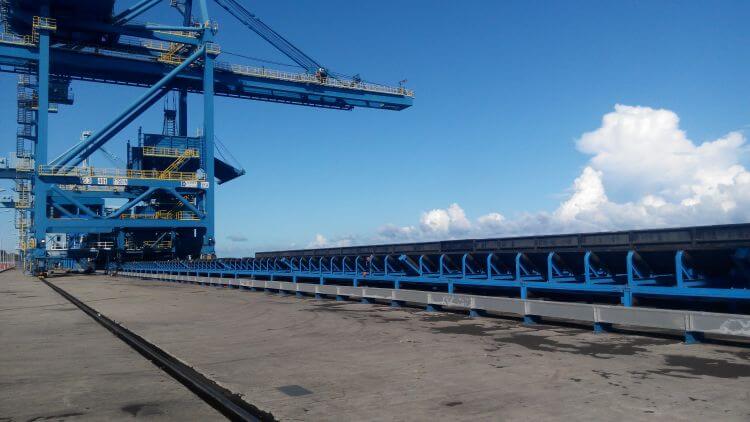
1. Wind Anchoring / Rail Clamp Failure
Symptoms: Rail clamp fails to lock rail in high winds; machine slides or even tips over – major safety risk.
Root causes:
- Insufficient clamping force – hydraulic leakage or spring fatigue;
- Worn clamp jaws – reduced contact area with rail;
- Anchoring device not tested regularly; corrosion or jamming;
- Operator fails to engage anchoring when wind exceeds limit.
Prevention & solutions:
- Regular testing: Monthly clamp force test (loaded and unloaded); ensure force ≥90% of design. ZOOMRY recommends hydraulic clamps with pressure sensors for real-time force display.
- Wear check: Measure jaw thickness quarterly; replace if wear >1/3 of original. Keep jaw/rail contact surfaces clean and free of oil.
- Corrosion prevention: Grease pivot points monthly; apply anti-rust oil on tie rods to prevent jamming.
- Wind interlock: Auto-alarm and clamp engagement when wind >20m/s; forced shutdown and personnel evacuation when wind >25m/s.
2. Audible/Visual Alarm Failure
Symptoms: Alarms or warning lights do not activate during operation; personnel lack machine status awareness.
Root causes:
- Burnt bulbs/LEDs; loose or broken wiring;
- Alarm controller faulty; PLC output point damaged;
- Alarm volume too low (<10dB above background noise);
- Warning light covered with dust – reduced light transmission.
Prevention & solutions:
- Daily check: Test alarms before startup; verify sound and light. ZOOMRY recommends maintaining alarm inspection logs.
- Lamp maintenance: Clean covers monthly; check LED brightness; replace entire unit if brightness drops >30%.
- Volume adjustment: Set alarm volume at least 15dB above ambient noise (typically 75–95dB) for effective warning.
- Wiring check: Inspect controller terminals quarterly; tighten loose connections; verify PLC output voltage (24V±10%).
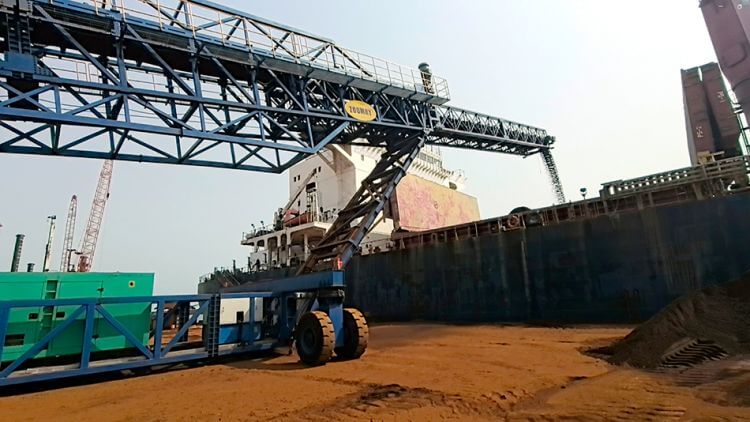
3. Poor Grounding
Symptoms: Static discharge when touching metal parts; control system interference; signal fluctuations.
Root causes:
- Ground resistance >4Ω; ground strip rusted or loose;
- Static grounding strap worn or broken;
- Cable shield improperly grounded – EMI ingress;
- In dusty environments, static buildup may cause explosion risk.
Prevention & solutions:
- Ground resistance test: Measure every six months (≤4Ω); increase frequency before/after rainy seasons. Add ground rods or replace strips if resistance exceeds limit.
- Static strap check: Monthly inspect copper braided straps; replace if >20% of strands broken; ensure good contact.
- Shield grounding: Single-ended shield grounding; ground wire cross-section ≥4mm². ZOOMRY uses dedicated grounding busbar in control cabinets.
- Explosive areas: In dust explosion zones, all electrical equipment and metal structures must have reliable grounding (≤1Ω).
4. Poor Ship-type Adaptability / Uneven Loading
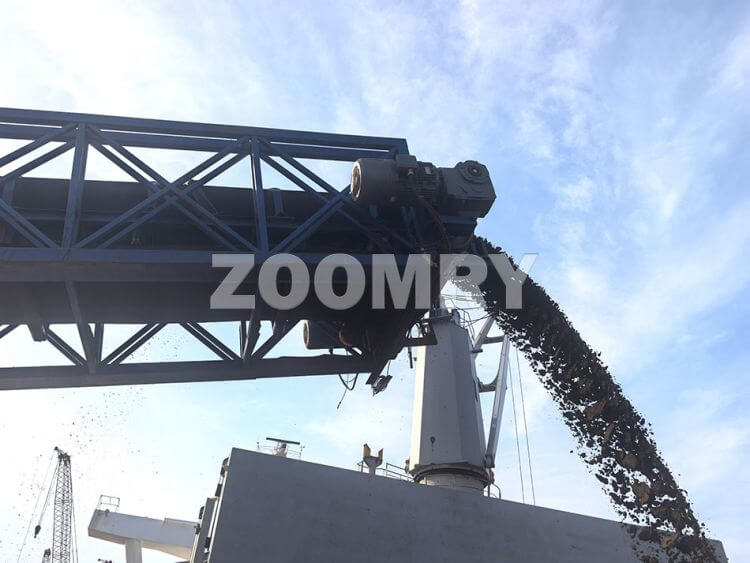
Symptoms: Boom travel or discharge range cannot match different ship types; uneven loading, underfilled or overflowing hatches.
Root causes:
- Boom luffing/extension range too limited for large ships;
- Restricted slewing angle – inability to adjust drop point flexibly;
- Selection did not fully account for common ship types at terminal;
- Operator lacks experience with multiple ship types.
Prevention & solutions:
- Selection design: Provide common ship types (length, hatch size, number of hatches) during selection. ZOOMRY recommends optimal boom travel and slewing angle based on its ship database.
- Flexible adjustment: Configure telescopic spout or swing chute; add adjustable deflector plates for precise drop point control.
- Operator training: Develop SOPs for different ship types; train operators on hold loading distribution techniques.
- Auto-trimming: Equip with ultrasonic hatch scanning + PLC auto-routing for uniform loading.
5. Low Operating Efficiency / Improper Speed Matching
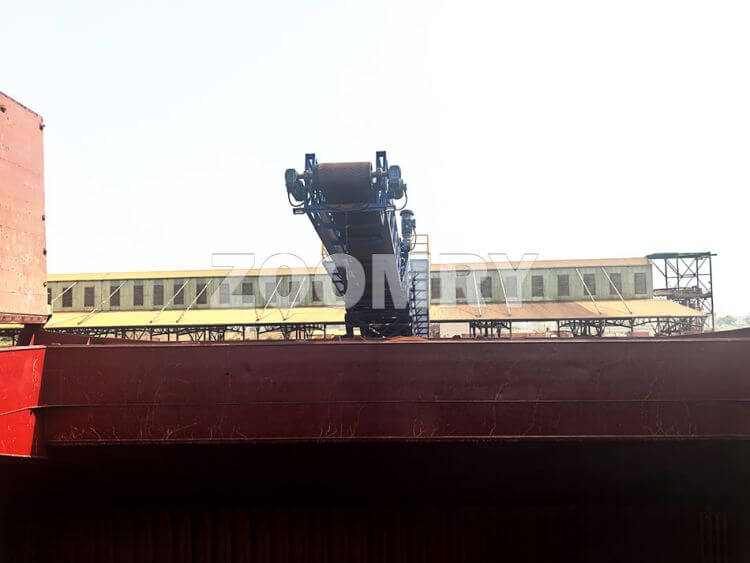
Symptoms: Discontinuous loading due to poor coordination between belt speed and luffing/slewing motion.
Root causes:
- Operator relies on experience without optimized parameters;
- Improper VFD acceleration/deceleration settings – response lag;
- No interlock between luffing/slewing and belt speed;
- Operation plan does not coordinate individual motion cycles.
Prevention & solutions:
- Parameter optimization: Optimize luffing/slewing speed vs belt speed based on actual terminal conditions. ZOOMRY offers both "Efficiency-first" and "Smooth-first" operation modes.
- Speed interlock: PLC interlock between belt speed and luffing/slewing ensures continuous, even loading.
- Operator aid: Console displays "recommended speed" indicator; auto-suggests optimal speed combination based on hatch position.
- Time analysis: Log cycle times to identify bottlenecks (e.g., slow luffing or slewing); adjust VFD parameters accordingly.
6. Increased Winter Failures / Sluggish Operation
Symptoms: Hydraulic system response slows below 0°C; grease solidifies; machine operation noticeably sluggish.
Root causes:
- Hydraulic oil viscosity increases at low temperature – higher flow resistance;
- Grease thickens – poor lubrication in bearings and pivot points;
- Insufficient hydraulic heater capacity or delayed activation;
- Seals shrink in cold – increased internal/external leakage.
Prevention & solutions:
- Oil selection: Use low-temperature hydraulic oil (HV or HS grade, pour point ≤-30°C). ZOOMRY recommends oil grade based on project location's minimum temperature.
- Heating system: Immersion heaters in oil tank – auto-start when oil <10°C; heat tracing on pipes and valve blocks.
- Warm-up cycle: Run 3-5 minutes no-load warm-up; start loaded operation only after oil ≥20°C. ZOOMRY's control system has built-in winter warm-up program.
- Grease change: Use low-temperature lithium or synthetic grease (operating range -30~120°C); shorten greasing interval (monthly to bi-weekly).
- Seal inspection: Check all cylinder and pipe seals before winter; replace if hardened or cracked. Keep cylinders pressurized after shutdown to prevent moisture ingress.
Need a Quote or Technical Advice?
Contact our engineers today for a customized solution.
Request a Quote Chat on WhatsApp