 ZOOMRY

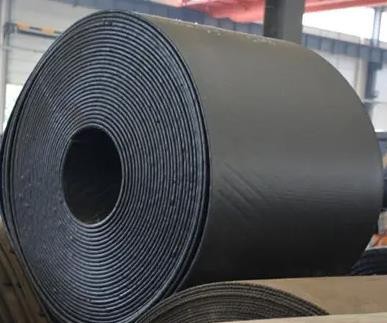
ZOOMRY nylon Conveyor Belts (NN belts) feature an all-nylon canvas carcass — refined through calendering, molding, and vulcanization processes — delivering a thin belt body with high strength, excellent impact resistance, good trough formation, and superior interlayer adhesion. Compared to EP conveyor belts, nylon belts offer maximum elasticity and shock absorption, making them ideal for medium-to-long distance conveying under high loads and high speeds in mining, coal yards, ports, and construction sectors.
What Makes Nylon Belts Different from EP Belts?
The key difference lies in the carcass fiber orientation. NN (nylon-nylon) belts use nylon fibers in both the warp (longitudinal) and weft (transverse) directions, providing maximum elasticity and shock absorption. EP (polyester-nylon) belts use polyester in the warp for lower elongation and dimensional stability, with nylon in the weft for troughability. For applications with high impact forces at the loading point — such as primary crusher discharge or heavy lump material handling — NN belts absorb impact energy better than EP belts, extending splice and carcass life.
However, nylon belts exhibit slightly higher elongation under sustained tension, requiring more take-up travel than EP belts. For long-distance overland conveyors where minimal elongation is critical, steel cord belts or EP belts may be more appropriate. ZOOMRY's engineering team can help match the carcass type to your specific application requirements.
Material Suitability & Structure Options
Nylon conveyor belts are suitable for conveying non-corrosive, non-sharp bulk, granular, and powder materials at room temperature — such as coal, coke, sand, cement, and other bulk materials with densities of 0.5~2.5 t/m³. They can also be used for the transportation of finished goods.
This product adapts to different operating conditions and can be manufactured in various structures: wrapping type, open side type, middle ladder type, and side ladder type — providing flexibility for different conveyor configurations and material handling requirements.
Key Features
- Excellent elasticity and impact resistance: The all-nylon carcass provides superior shock absorption — ideal for heavy impact loading zones and large lump size materials.
- Good flexibility and troughability: The belt conforms easily to standard idler troughing angles, ensuring stable material containment and minimal spillage.
- No mildew corrosion: The nylon carcass resists biological degradation, making it suitable for humid environments and outdoor storage.
- Thin body, high strength: The thin yet strong carcass reduces belt weight while maintaining high tensile ratings — lowering drive power requirements.
- Long service life: Strong interlayer adhesion and wear-resistant cover compounds extend operational life in demanding applications.
Maintenance & Storage Guidelines
Proper storage and maintenance are essential for maximizing the service life of conveyor belts:
Storage Conditions
- Keep the belt clean and avoid direct sunlight, rain, and snow. Prevent contact with acids, alkalis, oils, organic solvents, and other rubber-damaging substances. Maintain at least 1 meter distance from heating devices.
- Storage temperature: -15°C to +40°C, relative humidity: 50-80%.
- Belts must be stored in rolls — never folded. Turn the rolls once per quarter during long-term storage.
Operation Recommendations
- Running speed should not exceed 5.0 m/s. Use lower speeds when transporting bulky, abrasive materials or using a fixed plow unloading device.
- The feeding direction should follow the belt's running direction. Minimize the drop height of material onto the belt, and avoid locating the feeding port directly above rollers.
- Avoid idler rollers being covered by material. Prevent material leakage from becoming stuck between rollers and the belt. Keep moving parts lubricated — but never allow oil or grease on the belt surface.
- Avoid starting under load. If belt deviation occurs, take corrective measures immediately. Repair any local damage promptly to prevent expansion. Protect the belt from being blocked by frames, pillars, or large materials.
Related Industry Solutions
Need Custom Nylon Conveyor Belts?
Contact ZOOMRY for NN nylon conveyor belts engineered to your specific tensile strength, ply count, and cover grade requirements.
Contact Us Today