 ZOOMRY

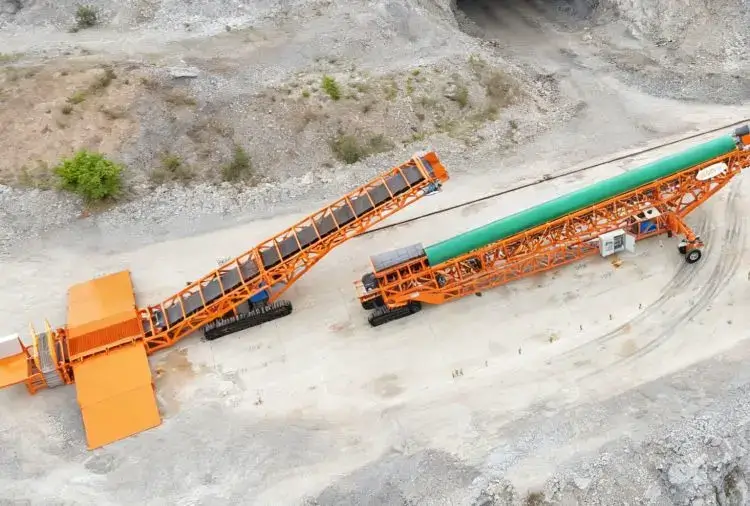
Quick answer: At a multi-berth bulk terminal in Southeast Asia, ZOOMRY replaced a static receiving hopper and wheel loader with an integrated system: a tracked truck unloader (ZRLD-TU1800), a tracked hopper feeder (HF-TR), and a mobile shiploader. The result was a 35% reduction in truck turnaround time (from 18 minutes to 11.7 minutes) and the complete elimination of wheel loader re-handling.
Project Background
The terminal handles a mix of bulk cargo (coal, fertilizer, and aggregates) across multiple berths. The original workflow relied on trucks dumping material into a static hopper. A wheel loader was required to push the material into the hopper and manage the pile.
During peak hours, trucks were queuing for up to 18 minutes just to discharge. The wheel loader became a critical bottleneck, and the terminal was losing throughput, increasing demurrage costs, and facing safety risks from heavy machinery moving around queuing trucks.
| Parameter | Value |
|---|---|
| Location | Southeast Asia |
| Equipment delivered |
ZRLD-TU1800 Tracked Truck Unloader HF-TR Tracked Hopper Feeder Mobile Shiploader |
| System capacity | 1,800 t/h |
| Delivery model | EPCO (EPC + Operation) |
Engineering Challenge 1: The Wheel Loader Bottleneck
The static hopper design required a wheel loader to constantly push material into the discharge area. This created two problems:
- Slow discharge: Trucks had to wait for the loader to clear space before dumping.
- Safety risk: Trucks and loaders were operating in the same tight space.
Solution: Drive-Over Tracked Truck Unloader
ZOOMRY supplied the ZRLD-TU1800 tracked truck unloader. Trucks now drive directly over the hopper and discharge the material. The integrated conveyor moves the material immediately to the next stage.
Because it is tracked, the unloader can be repositioned easily around the yard to serve different receiving zones without needing a crane or heavy trailer.
Engineering Challenge 2: Surge Loads Damaging Downstream Equipment
With trucks discharging quickly, the material flow to the ship loader became highly uneven (surge loads), which could damage the belts and overload the ship loader.
Solution: HF-TR Tracked Hopper Feeder as a Buffer
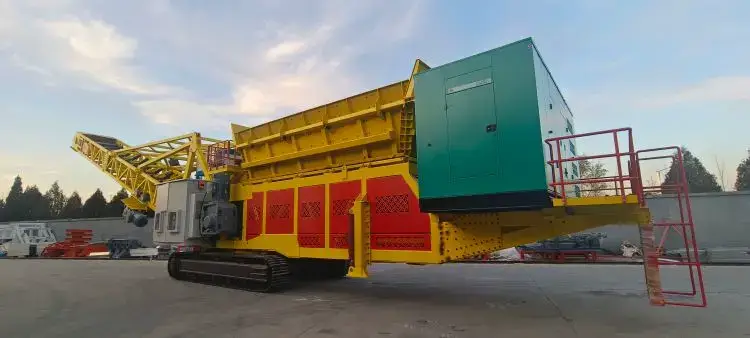
ZOOMRY installed an HF-TR tracked hopper feeder between the truck unloader and the ship loader. The hopper has a 15 m³ capacity, acting as a buffer to absorb the surge when trucks dump.
The feeder then discharges material at a controlled, steady rate to the mobile shiploader, protecting the belts and ensuring smooth loading.
Engineering Challenge 3: Multi-Berth Operations
The terminal has several berths, but the equipment needed to be flexible enough to move between them depending on which vessel was docked.
Solution: Fully Mobile, Tracked Configuration
Both the truck unloader and the hopper feeder are tracked and self-propelled. The mobile shiploader is wheeled. This allows the entire system to be relocated from one berth to another in hours, not days.
Measured Results
| Metric | Before (Static Hopper) | After (ZOOMRY System) |
|---|---|---|
| Truck Turnaround Time | 18.0 minutes | 11.7 minutes (-35%) |
| Wheel Loader Requirement | Continuous | Eliminated |
| Receiving Method | Loader-assisted dump | Drive-over direct discharge |
| Downstream Protection | None | 15 m³ buffer hopper + controlled feed |
Key Takeaways for Port Operators
- Eliminate the wheel loader: A drive-over truck unloader removes the loader from the receiving process, reducing labor cost and safety risks.
- Add a hopper feeder buffer: It absorbs surge loads from fast-dumping trucks and protects downstream conveyors and shiploaders.
- Use tracked equipment for flexibility: Tracked unloaders and feeders can be repositioned between berths without heavy lifting equipment.
Frequently Asked Questions
How much can a truck unloader reduce turnaround time?
Based on this project, replacing a static hopper with loader assistance with a tracked drive-over truck unloader reduced turnaround time by 35% (from 18 minutes to 11.7 minutes). Exact improvement depends on truck volume and site layout.
Do I need a hopper feeder if I already have a truck unloader?
Not always, but it is strongly recommended when the downstream equipment (ship loader or stacker) requires a steady feed rate. The hopper feeder acts as a buffer to absorb surge loads.
Can the system be moved between berths?
Yes. The ZRLD truck unloader and HF-TR hopper feeder are tracked, and the shiploader is wheeled. The system can be relocated without heavy lifting equipment.
What is the capacity of the system installed at this port?
The system is configured for 1,800 t/h, using the ZRLD-TU1800 tracked truck unloader.
Related Products
Drive-over receiving for ports and mines
Buffer and controlled feed solutions

Multi-berth loading systems
Industry Applications
Bulk terminal loading and receiving

Coal export terminal systems

Aggregate receiving and loading
Looking to Reduce Truck Turnaround at Your Port?
Share your truck volume, current turnaround time, and downstream equipment requirements. ZOOMRY can design an integrated system to increase throughput and eliminate bottlenecks.
Contact Us →