 ZOOMRY

Long distance overland belt conveyors are a type of conveyor system used to transport bulk materials over long distances, typically in industrial or mining settings. These conveyors are designed to efficiently move large quantities of materials such as ore, coal, minerals, aggregates, or other bulk commodities from one location to another — often replacing truck haulage and reducing transport costs by over 40%.
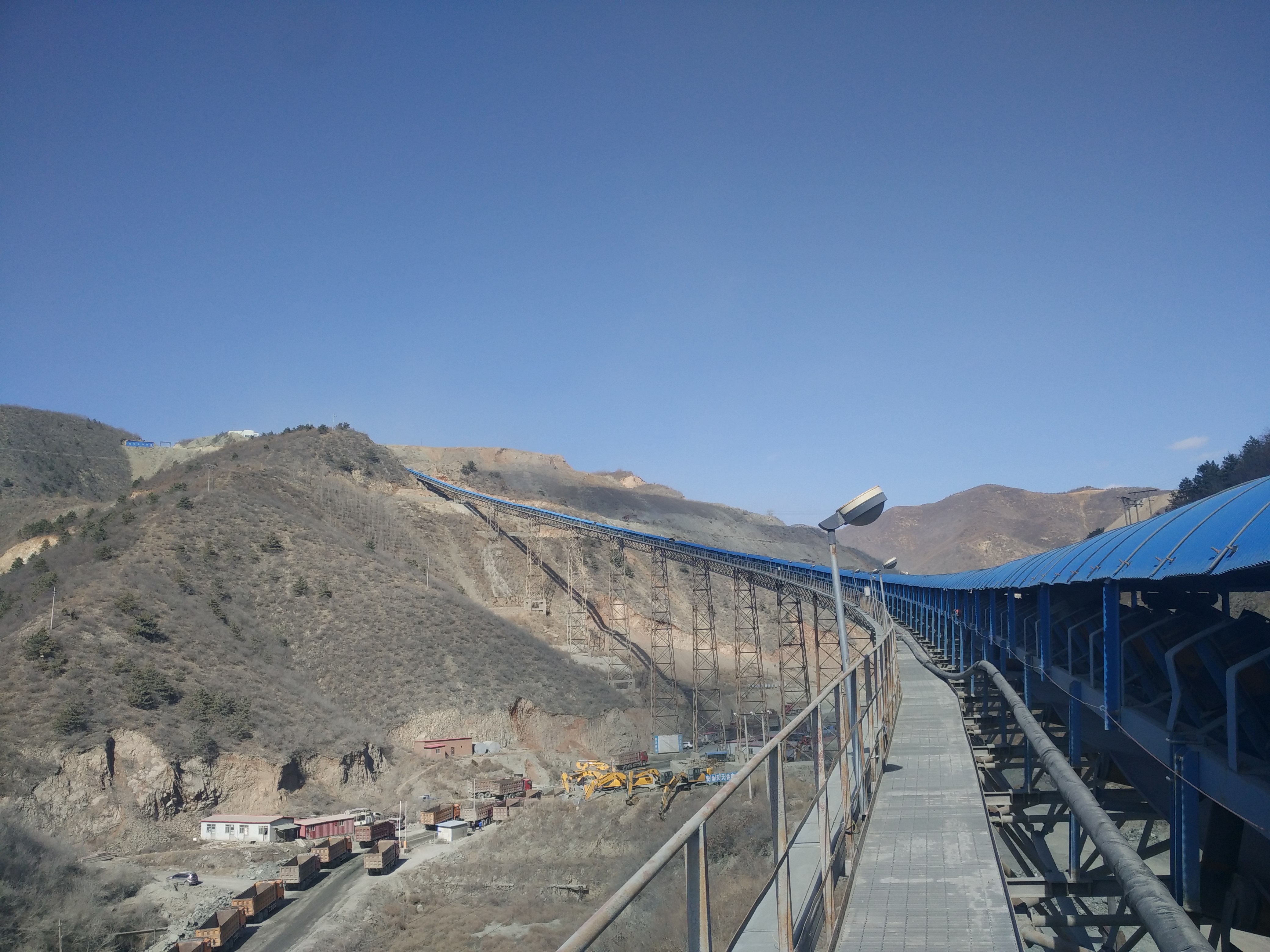
ZOOMRY Long Distance Overland Belt Conveyor — Spanning Kilometers with Horizontal and Vertical Curve Capability
Characteristics of Long Distance Overland Belt Conveyors
- Length: These conveyors can span several kilometers or miles, allowing for the transportation of materials across vast distances. Single-flight systems can reach up to 15 km, while multi-flight networks extend to 70 km.
- Continuous Operation: Designed for continuous and reliable 24/7 operation, enabling uninterrupted movement of materials in demanding mining and cement environments.
- Belt Structure: Robust belt construction, typically composed of multiple layers of reinforced fabric or steel cords, to withstand high tension and load demands with tensile strengths up to 4,000 N/mm.
- Belt Width and Capacity: Belt widths range from 400mm to 2,400mm, handling capacities up to 17,000 m³/h — enabling efficient transport of large volumes of materials.
- Support System: To maintain stability and prevent sagging over long distances, overland belt conveyors are equipped with a series of idler rollers and support structures along the entire conveyor route.
- Drive System: Powerful drive systems often utilize multiple drive stations along the conveyor length to ensure proper belt tension and drive power distribution.
- Conveyor Control and Monitoring: Advanced control systems and monitoring technologies optimize operation, ensure safety, and detect potential issues — including belt deviation, temperature anomalies, and splice condition monitoring.
Application Scenarios of Long Distance Overland Belt Conveyors
Long distance overland belt conveyors find application in various scenarios where the efficient transportation of bulk materials over extended distances is necessary. Here are some common application scenarios:
- Mining Operations: Extensively used to transport minerals, ores, and coal from the extraction site to processing plants, stockpiles, or ports. They enable economical and continuous movement of materials over rugged terrain including hills, valleys, and uneven landscapes.
- Quarrying and Aggregates: Transport aggregates such as sand, gravel, crushed stone, and limestone from the quarry to processing facilities or distribution points — enabling cost-effective movement of large volumes over significant distances.
- Power Plants: Used in coal-fired power plants to transport coal from storage yards or mines to power generation units — ensuring a steady and reliable fuel supply for continuous power generation.
- Ports and Terminals: Transport bulk materials including ores, coal, grain, and fertilizers from storage yards to loading/unloading facilities such as ship loaders or railcar loaders.
- Construction and Infrastructure Projects: Assist in transporting bulk construction materials such as aggregates, cement, or sand over long distances for highways, dams, or tunnel projects.
- Industrial Applications: Used in cement plants, steel mills, or fertilizer production facilities to transport raw materials, intermediate products, or final products between different stages of the manufacturing process.
ZOOMRY Curved Belt Conveyor Technology
The ZOOMRY long-distance curved belt conveyor is capable of navigating horizontal curves without transfer points — combining plane turning with vertical convex-concave arc turning to follow natural terrain and avoid obstacles. This eliminates the need for multiple conveyor segments and transfer towers, significantly reducing civil engineering costs and material degradation at transfer points.
To ensure the Conveyor Belt runs steadily and reliably at each curve, ZOOMRY engineers use professional calculation program software to determine the belt tension at every turning point. Based on these parameters, they then calculate the precise inclination angle of the idler support and each idler at every turn — ensuring stable belt tracking and minimizing edge wear.
Related Industry Solutions
Need a Custom Overland Conveyor Solution?
Contact ZOOMRY for a long distance overland belt conveyor engineered to your terrain, capacity, and material requirements — backed by 20+ years of bulk material handling expertise.
Contact Us Today