 ZOOMRY

Bucket Wheel Stacker Reclaimer – How to Choose the Right Technical Specifications?
I. Overview and Main Types of Bucket Wheel Stacker Reclaimer
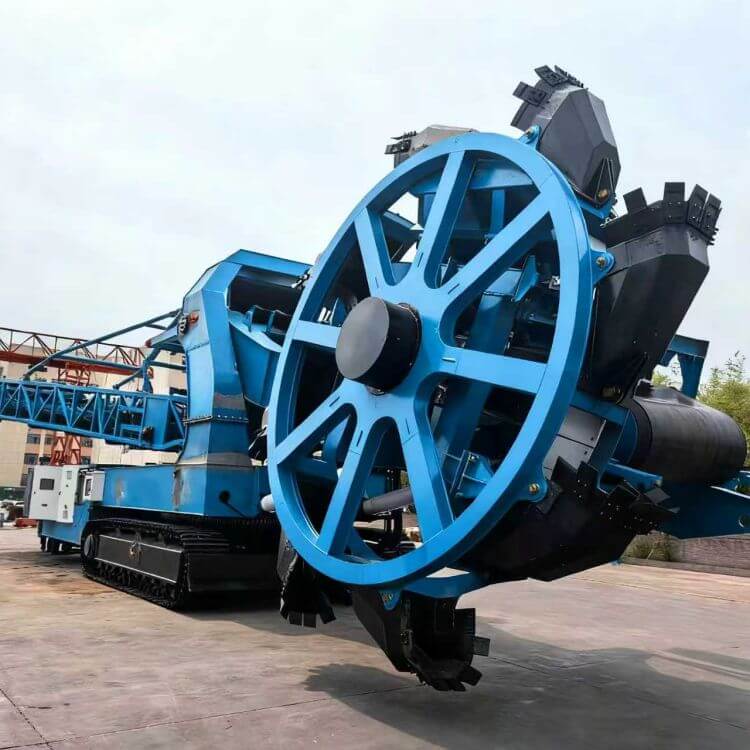
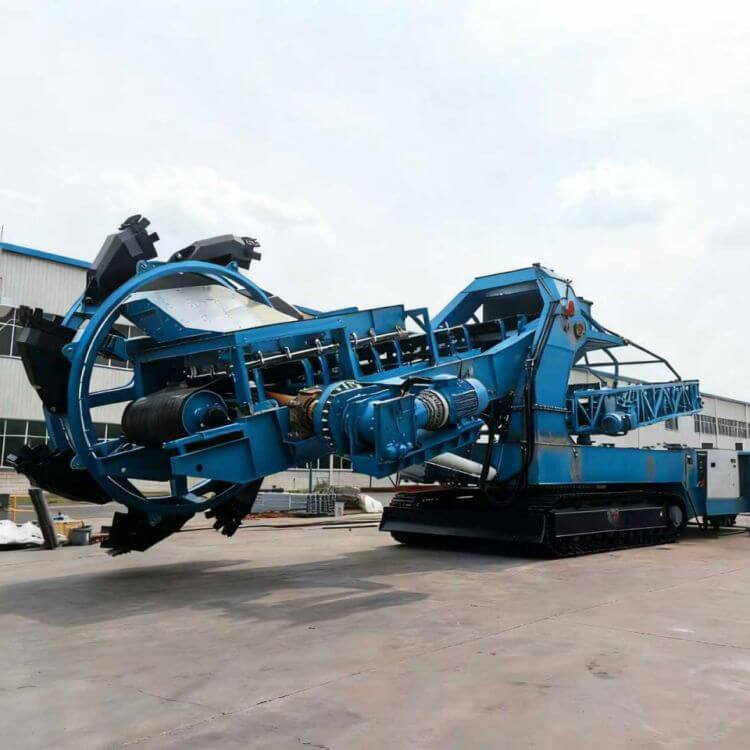
A bucket wheel stacker reclaimer is a high-efficiency bulk material handling machine that integrates both stacking and reclaiming functions. It is widely used in ports and terminals, mining operations, thermal power plants, cement plants, and steel mills for bulk material storage and handling. By rotating the bucket wheel for reclaiming and slewing the boom for stacking, it enables efficient stockyard management and continuous operation.
Comparison of Main Types:
| Type | Structural Features | Applications | Advantages | Limitations |
|---|---|---|---|---|
| Boom-Type | Slewing boom with bucket wheel; highly flexible | Ports, medium and small stockyards | Large working range, wide slewing angle | Limited stacking and reclaiming height |
| Portal-Type | Portal frame with bucket wheel; rail-mounted | Large stockyards, multi-bay yards | Large span, multi-bay operation capability | Complex structure, higher capital investment |
| Bridge-Type | Bridge structure with bucket wheel; high efficiency | Power plants, coal mines | High reclaiming efficiency, suitable for continuous operation | Lower operational flexibility |
| Elevated-Type | Elevated support structure with bucket wheel | Space-constrained sites | Adapts to special terrain conditions | Limited application scenarios |
ZOOMRY's product portfolio includes boom-type, portal-type, and bridge-type configurations, with customized designs available based on material characteristics, site conditions, and specific operational requirements.
II. Key Technical Specifications
2.1 Bucket Wheel Diameter and Bucket Capacity
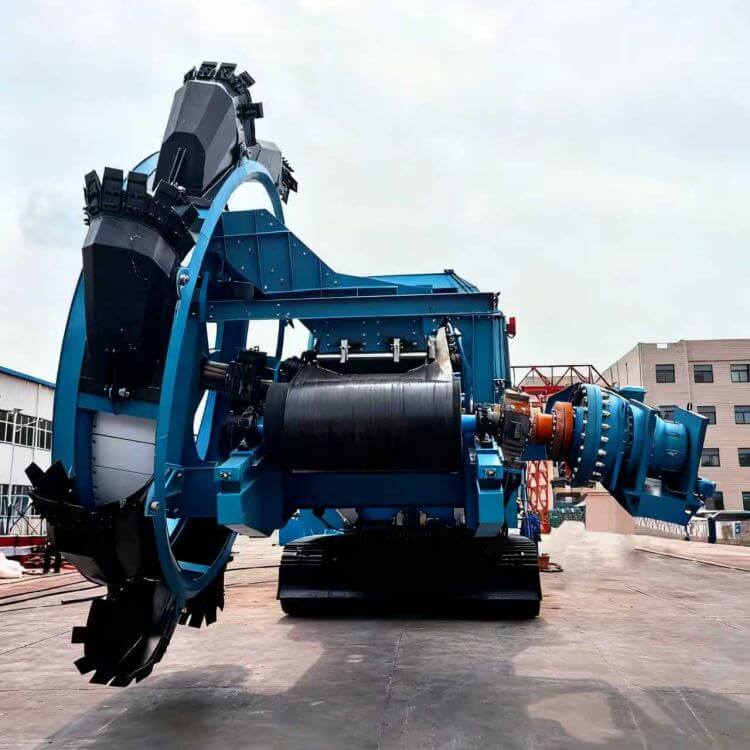
Bucket wheel diameter (D) and individual bucket capacity (V) directly determine reclaiming capacity. Typical bucket wheel diameters range from 4 m to 12 m, with bucket capacities from 0.1 m³ to 1.5 m³.
| Bucket Wheel Diameter | Recommended Bucket Capacity | Typical Reclaiming Capacity | Suitable Materials |
|---|---|---|---|
| 4–6 m | 0.1–0.3 m³ | 300–800 t/h | Coal, limestone |
| 6–8 m | 0.3–0.6 m³ | 800–1,500 t/h | Ore, aggregates |
| 8–10 m | 0.6–1.0 m³ | 1,500–2,500 t/h | Iron ore, coal |
| 10–12 m | 1.0–1.5 m³ | 2,500–4,000 t/h | Large port bulk cargoes |
Selection tip: A larger bucket wheel diameter increases single-pass reclaiming capacity but requires greater structural strength. The final selection should take into account material bulk density, particle size, and the target reclaiming rate.
2.2 Slewing Radius and Slewing Angle
The slewing radius (R) determines the machine's working coverage, typically ranging from 20 m to 60 m, with large port units reaching over 80 m. Slewing angles generally range from ±90° to ±180°, with full-slewing models capable of 360° rotation.
Selection tip: The slewing radius should cover both the length and width of the stockyard to minimize frequent machine repositioning. Larger slewing angles offer greater operational flexibility but increase structural complexity and cost.
2.3 Stacking Capacity and Reclaiming Capacity
Stacking capacity and reclaiming capacity are core performance indicators, typically ranging from 300 to 5,000 t/h.
Important principle: Stacking and reclaiming capacities should be well matched. If stacking capacity far exceeds reclaiming capacity, material will accumulate; if the reverse occurs, equipment idle time increases, reducing overall efficiency.
2.4 Stacking Height and Reclaiming Depth
Stacking height determines storage density per unit area and typically ranges from 8 m to 20 m. Reclaiming depth depends on the bucket wheel boom's luffing range.
Selection tip: Greater stacking height increases yard utilization but demands higher boom strength and more capable luffing mechanisms. Reclaiming depth should cover the full pile height—from bottom to top—to avoid the need for auxiliary equipment rework.
2.5 Travel Speed and Slewing Speed
- Travel speed: Typically 5–30 m/min; affects efficiency during long-distance relocation
- Slewing speed: Typically 0.05–0.2 r/min; affects single-cycle duration
Selection tip: Travel speed should match the frequency of relocation, and slewing speed should be coordinated with reclaiming capacity. Variable frequency drives (VFDs) enable stepless speed adjustment to accommodate varied operational rhythms.
2.6 Installed Power and Energy Consumption
Installed power determines the machine's maximum capacity, typically ranging from 200 kW to 2,000 kW. Power distribution across the various mechanisms—bucket wheel drive, boom slewing, luffing, and travel—should be carefully balanced to avoid under-sizing or excessive redundancy.
2.7 Control Systems
- Manual control: Local console operation, suitable for simple applications
- PLC control: Logic interlocking and fault self-diagnostics
- Semi-automatic control: Preset paths and parameters, reducing manual intervention
-
Fully automatic control: Integrated yard scanning and unmanned operation (the industry trend)
III. Selection Recommendations by Application
3.1 Port / Terminal Applications
Characteristics: High throughput, continuous operation, varied vessel types, and limited yard space.
Recommendations:
- Bucket wheel diameter ≥8 m, bucket capacity ≥0.6 m³, reclaiming capacity ≥1,500 t/h
- Slewing radius ≥40 m, slewing angle ≥±120°
- Travel speed ≥15 m/min to support multi-berth transfers
- Fully automatic control recommended, with vessel scanning and path optimization
- ZOOMRY has extensive experience in port stacker reclaimer projects, offering tailored parameter solutions based on vessel types and yard layouts
3.2 Mining / Quarry Applications
Characteristics: High abrasion, large lump materials (ore, rock), dusty conditions, and harsh environments.
Recommendations:
- Bucket wheel constructed with wear-resistant materials (high-chrome cast iron or abrasion-resistant steel), with replaceable teeth
- Bucket capacity selected based on lump size, recommended ≥0.4 m³
- Crawler undercarriage preferred for rough terrain
- Reinforced boom structure with sealed protection
- Dust suppression system and wear liners included
3.3 Power Plant / Cement Plant Applications
Characteristics: Powdery materials (coal, limestone), good flowability, relatively fixed stockyards, and high environmental standards.
Recommendations:
- Bucket wheel diameter 6–8 m, bucket capacity 0.2–0.5 m³
- Reclaiming capacity of 500–1,200 t/h is sufficient for most plants
- Rail-mounted travel for precise positioning
- Enhanced sealing and dust control to meet emission standards
- Semi-automatic or fully automatic control recommended to reduce labor costs
3.4 Steel Mill Applications
Characteristics: Multiple material types (iron ore, coke, additives), numerous stockpile bays, and frequent material switching.
Recommendations:
- Portal-type or bridge-type reclaimers for multi-bay coverage
- Separate stacking and reclaiming capacities tailored to different material characteristics
- Slewing radius ≥35 m for effective multi-bay coverage
-
ZOOMRY provides customized solutions for steel industry applications, backed by multiple successful references
IV. Industry Trends and Technological Developments
- Intelligence and automation: 3D laser scanning, GPS positioning, and AI algorithms now enable automatic yard modeling, path planning, and unmanned operation—a key direction for the industry.
- Environmental compliance: Fully enclosed conveying, dry fog dust suppression, and low-noise designs are becoming standard, helping meet increasingly stringent environmental regulations.
- Energy efficiency: VFDs, energy recovery systems, and lightweight design significantly reduce operational energy consumption.
- Digital maintenance: Equipment health management platforms (PHM) using vibration, temperature, and current sensors enable predictive maintenance, reducing unplanned downtime.
V. Common Selection Pitfalls and Considerations
- Focusing only on stacking capacity while ignoring reclaiming capacity matching: Both should be designed together to avoid system bottlenecks.
- Failing to fully account for material characteristics in bucket wheel wear: Abrasive materials require wear-resistant construction and replaceable teeth.
- Overlooking extreme weather conditions (low temperature, high humidity, salt spray): Requires specialized low-temperature hydraulic systems and anti-corrosion coatings.
- Chasing oversized parameters without considering return on investment: Equipment specifications should be determined based on actual throughput needs and peak demand.
-
Need Selection Support or a Technical Proposal?
Contact our engineers today for a customized stacker reclaimer solution tailored to your needs.
Request a Quote Chat on WhatsApp