 ZOOMRY

ZOOMRY has deep expertise in the global bulk material handling equipment industry, with products covering core equipment such as belt conveyors and telescopic stackers, as well as components including idlers and rollers. Drawing on practical experience from domestic and international projects, we provide professional and actionable suggestions for high-frequency industry questions. A FAQ table is attached at the end for quick browsing.
Ⅰ.How to Seal the Chute?
For dusty materials and work sites, the chute adopts a fully enclosed design. The cover plate features a steel plate + buffer channel structure, and 2~3 layers of wear-resistant rubber skirts are installed at the contact area with the belt. Multiple layers of fitting block dust leakage, meeting global environmental control requirements.
Ⅱ.How to Deal with Load Impact During Belt Conveyor Braking and Startup?
- Long-distance belt conveyors have large inertial mass, resulting in long free stopping time when stopping with load. A large disc brake is installed at the tail, with 2~3 different braking speeds to meet the needs of normal stopping and emergency braking;
- Short belt conveyors have small inertial force and can be started via hydraulic coupling or electrical soft starter; long belt conveyors require smooth startup with frequency converters, with a startup time ≥3 minutes to avoid tripping due to excessive current and belt damage.
Ⅲ.What Are the Conditions for Permanent and Temporary Land Acquisition in Belt Conveyor Projects?
- The so-called "permanent land acquisition" actually refers to long-term use rights (similar to industrial land nature), with a usable period of 30-50 years that can be applied for, covering only the projection area of the belt conveyor gallery;
- Temporary land acquisition is used for construction access roads, with a width of 4m~8m, and the land must be restored to its original state after construction; long-term access roads can be included in the land acquisition scope to meet the needs of vehicle passage along the line during later operation.
Ⅳ.What Are the Sewage Treatment Measures During Belt Conveyor Operation?
There is no material spillage or sewage along the belt conveyor due to good anti-deviation and belt turnover prevention measures. Sewage disposal is generally considered at the head and tail transfer stations, and sewage collection pipelines can be installed if necessary. For projects with strict requirements, sedimentation tanks need to be set up. However, most projects do not involve sewage disposal measures or requirements.
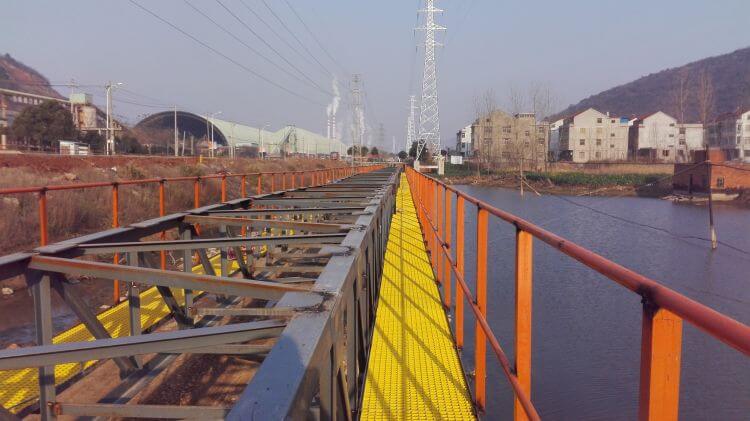
Ⅴ.If Common Galleries Are Not Equipped with Ventilation Windows, Does the Ventilation Meet Requirements? Does the Steel Grate Walkway Meet the Requirements of Fully Enclosed Galleries?
- Fully enclosed color steel plate galleries achieve natural ventilation through gaps at the plate joints, without the need for additional ventilation equipment, meeting the needs of equipment heat dissipation and personnel inspection, and complying with internationally accepted standards;
- Steel grate is a common material for walkway plates, featuring high strength and good anti-slip performance. It has no conflict with the core requirements of fully enclosed galleries and complies with international safety standards, with no compliance issues.
Ⅵ.What Is the Concept and Software Application of Belt Conveyor Dynamic Analysis?
Belt conveyor dynamic analysis refers to the analysis of the interaction between factors such as belt speed, belt tension, and tensioning force during startup and braking. Its core purpose is to avoid problems such as sudden tension increase and roller slipping caused by excessive startup speed, and it needs to be focused on for long-distance and high-capacity equipment; currently, national standards do not mandate dynamic calculation, but mainstream foreign software already has this function, making it a key link in the design of international high-end projects.
Ⅶ.What Are the Types of Belt Conveyor Calculation Software?
Mainstream global calculation software is divided by system into:
- International software: BELT ANALYST by Overland Conveyor Co., Inc. (mechanical calculation), Sidewinder from the United States (complex terrain design), ANSYS finite element analysis software (multi-dimensional simulation);
- Domestic software: PDJCAD calculation and drawing software based on the GB system;
- ZOOMRY's customized program: adaptable to common domestic and international standards such as ISO, GB, and EN, covering the entire process of calculation, simulation, and drawing.
Ⅷ.Why Is the Motor of Downward Belt Conveyors Installed at the Tail?
The running resistance of the upper belt of downward belt conveyors is negative, and the motor operates in a power generation state during the overall operation, with the core function of braking to prevent overspeed. Therefore, it is usually installed at the tail to "pull" the belt; for belt conveyors with a downward angle <2° or only partial downward sections, the motor needs to be installed at the head. Specific installation positions require targeted calculations based on project parameters.
Ⅸ.What Is Multi-Point Drive?
Multi-point drive is suitable for long-distance, undulating, or high-capacity belt conveyors:
- For long-distance belt conveyors with high resistance in the lower branch, an auxiliary drive is added at the tail to optimize belt tension distribution together with the main drive at the head;
- For undulating belt conveyors with complex working conditions, motors are installed at both the head and tail;
- For long-distance and high-capacity equipment, drives can be installed in the middle to share the load and reduce the cost of belt models.
Ⅹ.What Are the Types of Soft Starters, and How to Select Them?
- Mechanical types: Hydraulic coupling (for short belt conveyors and low-power applications, low cost and mature technology), permanent magnet coupling (slightly better performance than hydraulic coupling), CST (based on hydraulic oil clutch principle, complex structure and high cost, rarely used);
- Electrical type: Frequency converter soft start (preferred for long-distance and high-power applications, with large torque and adjustable power balance);
- Selection principle: Hydraulic coupling or permanent magnet coupling is selected for short-distance/low-power applications, and frequency converter soft start is preferred for long-distance/high-power applications.
Core FAQ Table for Belt Conveyors
| Core Questions | Key Answers |
|---|---|
| How to seal the chute? | Fully enclosed design with a steel plate + buffer channel cover plate; 2~3 layers of wear-resistant rubber skirts are installed at the contact area with the belt to block dust leakage. |
| How to deal with load impact during belt conveyor braking and startup? | Large disc brakes (with 2~3 braking speeds) are installed at the tail of long-distance equipment; hydraulic coupling/electrical soft starter is used for short belt conveyors, and frequency converter soft start (startup time ≥3 minutes) is selected for long belt conveyors. |
| What are the conditions for permanent and temporary land acquisition in belt conveyor projects? | Permanent land acquisition (30-50 years of use rights) covers the gallery projection; temporary land acquisition (4~8m wide construction access roads) is restored after completion, and long-term access roads can be included in the land acquisition scope. |
| What are the sewage treatment measures during belt conveyor operation? | No material spillage/sewage along the line; sewage collection pipelines can be installed at transfer stations, and sedimentation tanks are equipped for strict projects; most projects do not require additional sewage disposal facilities. |
| If common galleries are not equipped with ventilation windows, does the ventilation meet requirements? Does the steel grate walkway meet the requirements of fully enclosed galleries? | Color steel plate galleries meet ventilation requirements through natural ventilation without additional equipment; steel grate walkways are compliant in terms of strength and anti-slip performance, meeting international safety standards. |
| What is the concept and software application of belt conveyor dynamic analysis? | Analyzes the interaction between startup/braking, belt speed, tension, and other factors to avoid equipment failures; necessary for long-distance/high-capacity equipment, and supported by mainstream foreign software. |
| What are the types of belt conveyor calculation software? | International: BELT ANALYST, Sidewinder, ANSYS; Domestic: PDJCAD; ZOOMRY's customized program (adaptable to ISO/GB/EN multi-standards). |
| Why is the motor of downward belt conveyors installed at the tail? | The motor plays a braking role to prevent overspeed and is usually installed at the tail; for downward angles <2° or only partial downward sections, the motor is installed at the head (targeted calculations required). |
| What is multi-point drive? | Suitable for long-distance/undulating/high-capacity belt conveyors; optimizes tension and shares load through multiple drive units at the head/tail/middle to reduce the cost of belt models. |
| What are the types of soft starters, and how to select them? | Types: Hydraulic coupling, permanent magnet coupling, CST, frequency converter soft start; Selection: The first two are for short-distance/low-power applications, and frequency converter soft start is preferred for long-distance/high-power applications. |
If the above content cannot solve your current question, you can click the image below to contact us or view our historical articles: Technical FAQs on Belt Conveyor and Related Equipment
