 ZOOMRY

This conveyor selection guide addresses a critical challenge in bulk material handling: a belt conveyor that is mismatched with working conditions and materials will often trigger a series of chain problems — at best, it will cause material spillage, Conveyor Belt deviation, rising equipment failure rate, and surging operation and maintenance costs; at worst, it will lead to conveyor belt tearing, unplanned production line shutdowns, and even production safety accidents. For EPC contractors, manufacturing enterprises, and material handling operators worldwide, understanding the correct conveyor specification and belt conveyor material handling principles is essential to accurately select equipment with reliable performance, strong adaptability, and excellent long-term value based on material characteristics, operating conditions, production goals, and compliance requirements.
The essence of a belt conveyor is to provide customized solutions for the continuous transportation of specific materials. Therefore, material characteristics are the absolute core of all selection work, and also the primary factor determining equipment configuration, structural design, and material selection. The properties of bulk materials vary widely across different industries around the world, and any selection that deviates from material characteristics will lose its foundation. In the initial stage of selection, it is necessary to complete the accurate sorting and quantitative confirmation of the full-dimensional properties of materials, and at the same time lock in clear boundaries of conveying requirements.
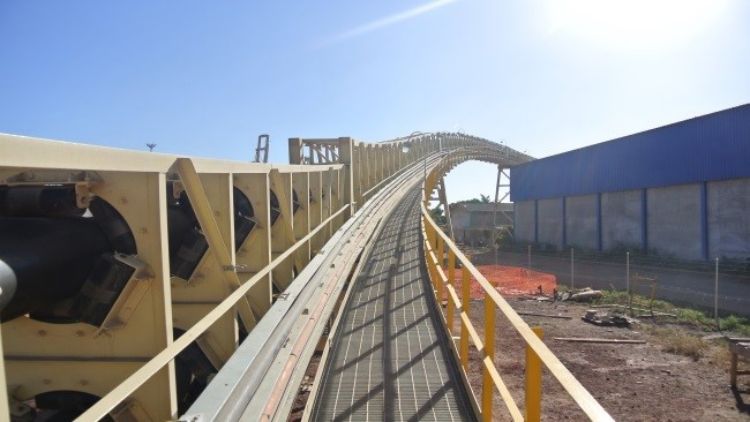
Material Characteristics: The Foundation of Conveyor Selection
Material Form and Adaptation Requirements
- Powdery materials (such as cement, fly ash, flour): The core pain points are dust emission and caking. During selection, focus should be placed on overall sealing performance and low-speed conveying design to avoid dust leakage and material residue, and it should be equipped with a sealed feed chute and dust removal interface.
- Granular materials (such as sand and gravel, grain, chemical particles): With good fluidity, conventional trough belt conveyors are applicable. The core is to match the compatibility between belt width and particle size.
- Bulk materials (such as iron ore, raw coal lumps): With extremely strong impact and abrasiveness on the conveyor belt, it is necessary to ensure that the belt width is not less than 3-5 times the maximum particle size. Buffer idlers and impact-resistant conveyor belts should be configured at the dropping point.
- High-viscosity materials (such as coal slime, sludge, wet slag): Focus on anti-sticking design and Belt Cleaner system configuration to avoid material adhesion causing pulley material sticking, deviation, and spillage.
Core Physical Parameters of Materials
The bulk density of the material is the core basic parameter for calculating conveying capacity, conveyor belt tension, idler load, and drive power. For high-density heavy-duty materials (such as metal ore, barite), it is necessary to strengthen the structural strength of the frame, select high-load Conveyor idlers and high-strength conveyor belts, and reserve sufficient redundancy for drive power; for light materials (such as grain, plastic particles), the structural design can be optimized to control dead weight and energy consumption while ensuring stability.
The abrasiveness of the material directly determines the material selection of core wear parts. For highly abrasive materials, conveyor belts with high wear-resistant rubber cover, wear-resistant ceramic lagged pulleys and high-seal wear-resistant idlers should be selected to greatly extend the service life of the parts and reduce the frequency of shutdown and replacement.
Customized Adaptation for Special Material Properties
- High-temperature materials: Select heat-resistant conveyor belts and high-temperature resistant bearing lubrication systems.
- Alpine region scenarios: Adapt low-temperature and frost-resistant materials to avoid brittleness and cracking of the conveyor belt.
- Acid and alkali corrosive materials: Select corrosion-resistant conveyor belts and anti-corrosion treated metal structural parts.
- Flammable and explosive scenarios: Adopt the complete machine design meeting international explosion-proof standards with flame-retardant anti-static conveyor belts.
- Food and pharmaceutical industries: Select conveyor belt materials that meet FDA and EU 10/2011 food contact standards.
Core Conveying Requirements
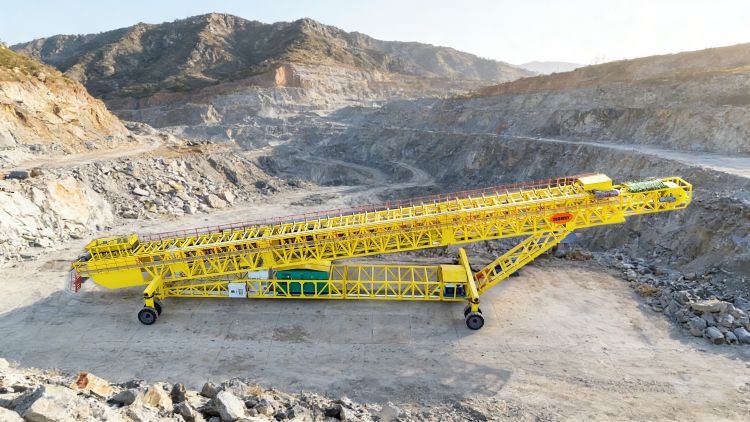
After sorting out the material characteristics, it is necessary to simultaneously lock in clear boundaries of conveying requirements: rated conveying capacity and peak conveying capacity, horizontal conveying distance and vertical lifting height, conveying line layout (straight line, turning, high incline), installation form (fixed, mobile, telescopic), as well as the connection requirements with upstream and downstream equipment such as feeders, stackers, and ship loaders. ZOOMRY offers a full range of belt conveyor products and bulk material handling equipment adaptable to full-scene conveying needs from short-distance workshop transfer to long-distance cross-regional conveying and port terminal loading and unloading.
Standardized Selection of Core Technical Parameters
The selection of belt conveyor is a rigorous engineering and technical work. The determination of all core parameters must comply with globally accepted technical standards such as ISO 5048, CEMA and DIN to ensure the versatility, compliance and safety of the design. The selection of core technical parameters directly determines the conveying capacity, operating efficiency and safety redundancy of the equipment, and is the core technical link of the selection work.
Matching Selection Logic of Conveying Capacity and Belt Width
Conveying capacity is the core goal of selection, and its theoretical calculation must follow the internationally accepted formula: Q = 3600 × v × S × ρ × ψ. During selection, it is necessary to not only meet the conveying requirements under rated working conditions, but also reserve 10%-20% peak redundancy to cope with load fluctuations. The selection of belt width must simultaneously meet the dual requirements of conveying capacity and material particle size, and the general belt width specifications of ISO or CEMA standards should be preferred to facilitate the global procurement and replacement of subsequent spare parts and reduce the difficulty of operation and maintenance.
Scenario-based Optimized Selection of Belt Speed
- Powdery materials: suitable for low-speed conveying to reduce material dust emission and scattering.
- Bulk and highly abrasive materials: suitable for medium and low speed to reduce impact and wear on the conveyor belt.
- Light and good fluidity materials such as grain: can be selected with medium and high speed to improve conveying efficiency.
- For long-distance conveying scenarios: belt tension can be reduced by optimizing the belt speed to achieve energy consumption optimization.
At the same time, the selection of belt speed must also match the loading and unloading device and transfer point design of the conveyor to avoid impact and spillage caused by excessive speed difference during the material transfer process.
Conveyor Belt Tension and Drive System
The accurate calculation of conveyor belt tension is the core basis for determining the conveyor belt grade, material selection and drive system configuration. It is necessary to comprehensively consider the conveying length, lifting height, material load, running resistance, belt speed and other multi-dimensional factors, and determine the maximum and minimum tension through the calculation method of ISO 5048 or CEMA standards to ensure that the conveyor belt does not slip or excessive sag.
The material selection of the conveyor belt must match the tension requirements. For medium and short distance, medium and light load conditions, fabric core conveyor belts can be selected; for long-distance, large conveying capacity and heavy load conditions, steel cord conveyor belts should be selected, and the corresponding cover rubber material should be adapted in combination with the material characteristics.
The drive system is the "heart" of the belt conveyor. For conventional working conditions, the drive scheme of asynchronous motor + reducer can be selected; for long-distance, large conveying capacity and frequent start-stop conditions, variable frequency drive (VFD) system is recommended, which can realize soft start and soft stop, accurately control the belt speed, and achieve 10%-30% lower energy consumption compared with conventional drives; for large incline upward conveying conditions, a backstop device must be configured; for downward conveying conditions, braking and speed limiting devices must be configured.
Conveying Inclination Angle and Line Layout
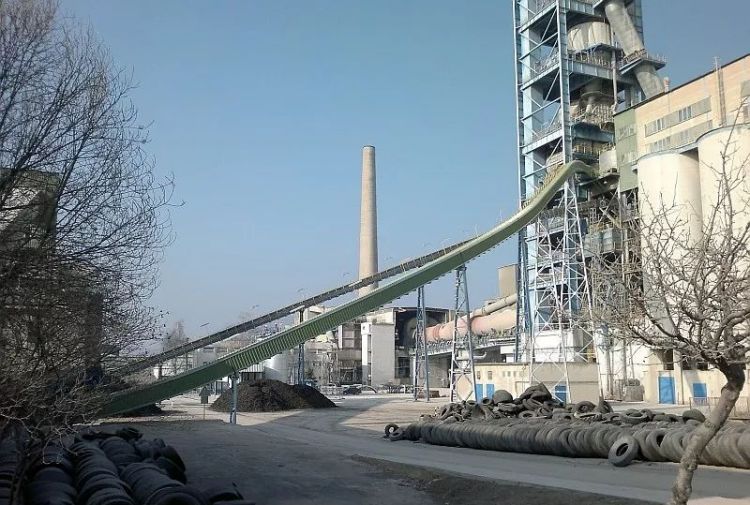
The maximum safe conveying inclination angle of conventional general trough belt conveyors is usually no more than 18°. Beyond this inclination angle, special high-incline belt conveyors should be selected, such as corrugated sidewall belt conveyors and patterned belt conveyors, which can achieve vertical lifting up to 90° and adapt to working conditions with limited space and high-incline lifting requirements.
For conveying lines with turning requirements, turning belt conveyors should be selected. Through accurate calculation of turning radius and conveyor belt tension distribution, the idler set layout can be optimized to avoid conveyor belt deviation, realize long-distance curve conveying without transfer station, and greatly reduce the civil construction cost and system complexity of the project.
Adaptation Selection of Core Components
The overall performance of a belt conveyor is ultimately determined by the quality and adaptability of each core component. A high-quality overall design must be matched with high-quality core components adapted to the working conditions to ensure the long-term stable operation of the equipment and reduce the full life cycle operation and maintenance costs. ZOOMRY can provide a full range of conveyor core components such as idlers, idler sets, pulleys, cleaning scrapers, and chutes. All products comply with internationally accepted standards and can realize the adaptation and replacement of spare parts worldwide.
Idlers and Idler Sets
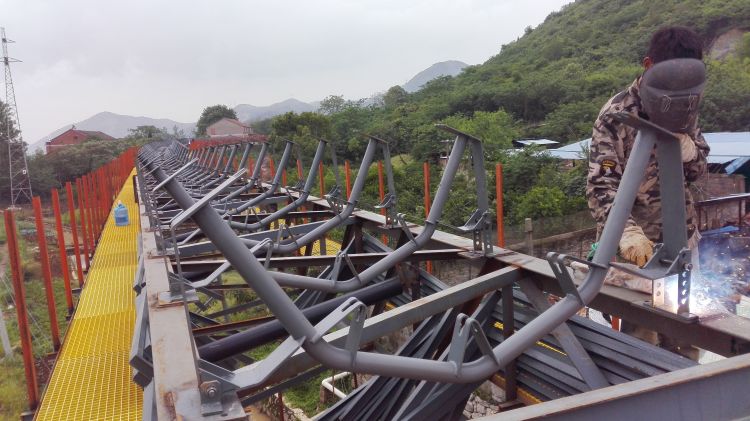
Idlers and idler sets are the core load-bearing components of the belt conveyor, and their quality directly determines the service life of the conveyor belt and the overall running resistance of the machine, accounting for more than 70% of the total number of rotating parts of the machine.
During selection, the diameter, wall thickness, bearing model and sealing structure of the idler should be determined according to the material load, belt speed and working environment. For heavy-duty and high-speed working conditions, idlers with large diameter, thick wall pipe and high-precision bearings should be selected; for harsh working conditions such as multi-dust, humid and corrosive environments, high protection grade idlers with multiple sealing structures should be selected; the material dropping impact area should be equipped with impact beds or buffer idlers to absorb impact force and protect the conveyor belt. At the same time, the trough angle of the idler set must match the material characteristics and conveying inclination angle. The conventional trough angles are 30°, 35° and 45°.
Drive Pulleys and Bend Pulleys
Pulleys are the core components for power transmission and conveyor belt direction change, divided into drive pulleys and bend pulleys. The drive pulley is responsible for transmitting the power of the drive system to the conveyor belt. For heavy-duty working conditions, cast-welded structure pulleys should be selected, and the surface should be rubber lagged to increase the friction coefficient and reduce the risk of slipping; for highly abrasive and humid working conditions, ceramic lagged pulleys are recommended to greatly improve the wear resistance and anti-slip performance and extend the service life of the pulley. The bend pulley is responsible for the direction change and tension adjustment of the conveyor belt.
Conveyor Belt Selection
The conveyor belt is the core component with the highest cost proportion of the belt conveyor, usually accounting for 30%-50% of the total machine cost. Its selection adaptability directly determines the service life and operation and maintenance costs of the whole machine.
During conveyor belt selection, three core factors of tension demand, material characteristics and working environment must be comprehensively considered, and conveyor belt products that meet international standards such as ISO and DIN should be preferred. In addition to the core material adaptation of the core body and cover rubber mentioned above, attention should also be paid to the core indicators of the conveyor belt such as interlayer bonding strength, tear resistance, and splicing technology to ensure that the conveyor belt does not suffer from delamination, tearing and other failures during long-term operation.
Auxiliary Functional Components
The selection of auxiliary functional components is the key to avoiding equipment failures, improving operating efficiency and reducing operation and maintenance difficulty. The core includes cleaning devices, deviation correction devices, braking devices, chute and feed chutes, etc.
Cleaning devices (belt cleaners) are essential configurations, which are divided into primary cleaners, secondary cleaners, and return cleaners. They can effectively remove the adhered materials on the surface of the conveyor belt, and prevent materials from entering the pulley resulting in material sticking, deviation, conveyor belt wear and other problems. During selection, they must match the material viscosity, belt speed and conveyor belt material; the automatic deviation correction device can monitor the conveyor belt deviation in real time and adjust automatically, especially suitable for long-distance and complex working condition conveyors; the selection of chute and feed chute must match the material characteristics and belt speed, optimize the material falling track, reduce the impact of materials on the conveyor belt, and avoid material spillage and dust emission at the same time.
Common Pitfalls in Selection
In the process of belt conveyor selection, in addition to the adaptation of technical parameters and components, attention should also be paid to compliance, full life cycle cost and operation and maintenance convenience, to avoid falling into the selection误区 of "low price first, only focusing on the initial procurement cost", and ensure the compliant use and long-term stable operation of the equipment in different regions around the world.
First, it is necessary to strictly comply with the relevant regulations and standards of safety, environmental protection, explosion protection and other related regulations and standards in the region where the project is located, such as CE certification in the European Union, OSHA safety standards in North America, explosion-proof certification in the mining field, etc., to ensure that the equipment meets the local compliance requirements and avoid obstacles to project delivery. Second, it is necessary to establish the concept of full life cycle cost. Although a high-quality, high-adaptability conveyor has a slightly higher initial procurement cost, its full life cycle cost is much lower than that of low-price and low-quality equipment within a 3-5 year use cycle due to lower failure rate, longer service life of components, lower energy consumption and operation and maintenance costs. At the same time, attention should be paid to the operation and maintenance convenience of the equipment during selection, and general standardized components should be preferred to facilitate the global procurement and replacement of spare parts and reduce the downtime for maintenance.
The selection of belt conveyor is never a simple parameter matching, but a systematic project based on material characteristics, working condition requirements, compliance standards and long-term value. Only by anchoring the core requirements from the source, following internationally accepted technical specifications, and accurately matching each technical parameter and core component, can we select a belt conveyor that truly adapts to our own scenarios, and realize the efficient, safe and low-carbon operation of the bulk material conveying system.
ZOOMRY, as a professional global bulk material handling equipment service provider, has the R&D, production and service capabilities for a full range of belt conveyors and supporting bulk material handling equipment. View ZOOMRY's EPC project cases to see our conveyor selection and engineering track record worldwide.
Related Products
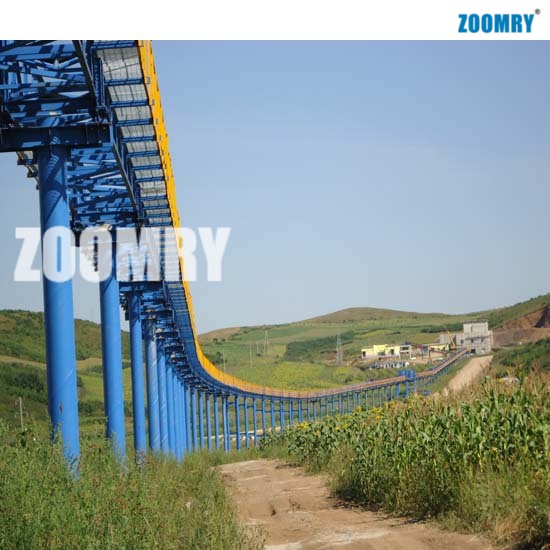
Long-distance curved conveying — up to 15 km single flight
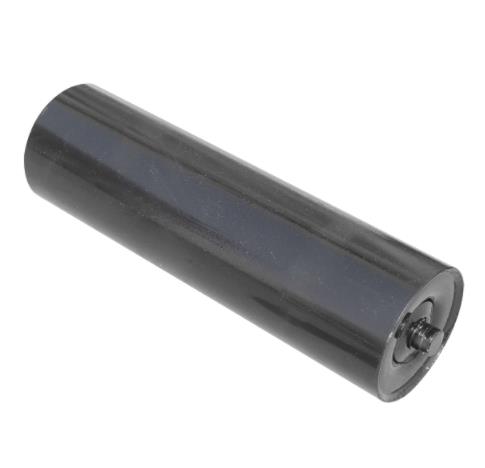
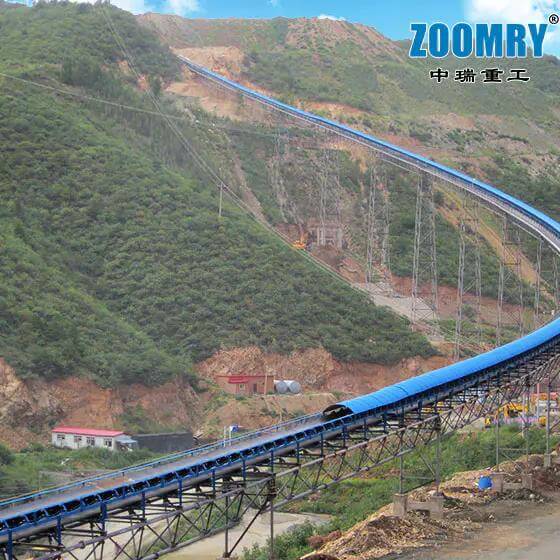
Steep-angle conveying — up to 30° incline
Industry Applications
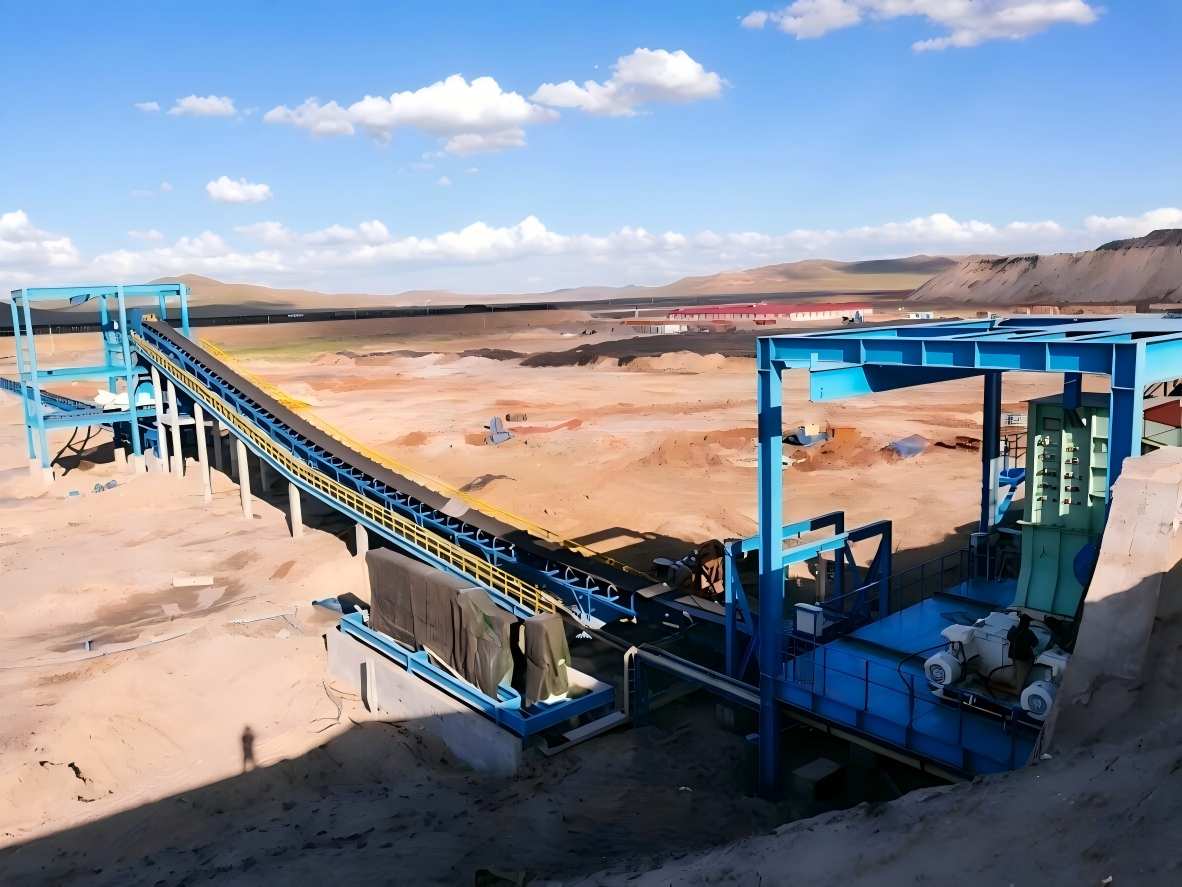
Heavy-duty belt conveyors for ore, coal, and minerals
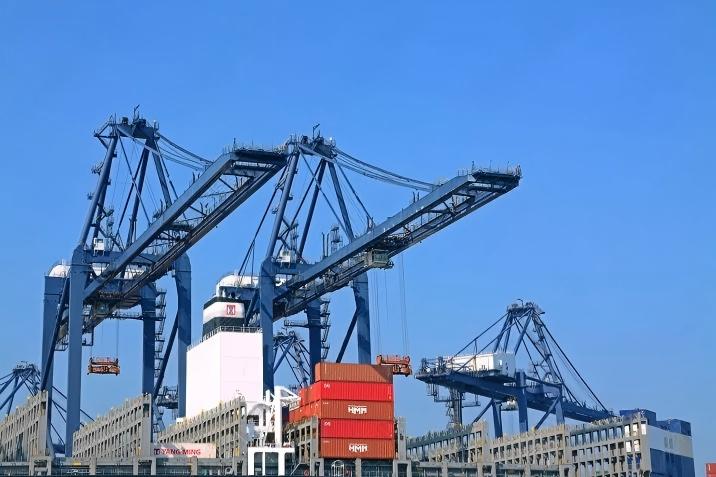
Belt conveyor systems for port bulk cargo handling
Need Help with Belt Conveyor Selection?
Contact ZOOMRY for belt conveyor selection guidance, technical specifications, and expert recommendations tailored to your material characteristics and operating conditions.
Contact Us →