 ZOOMRY

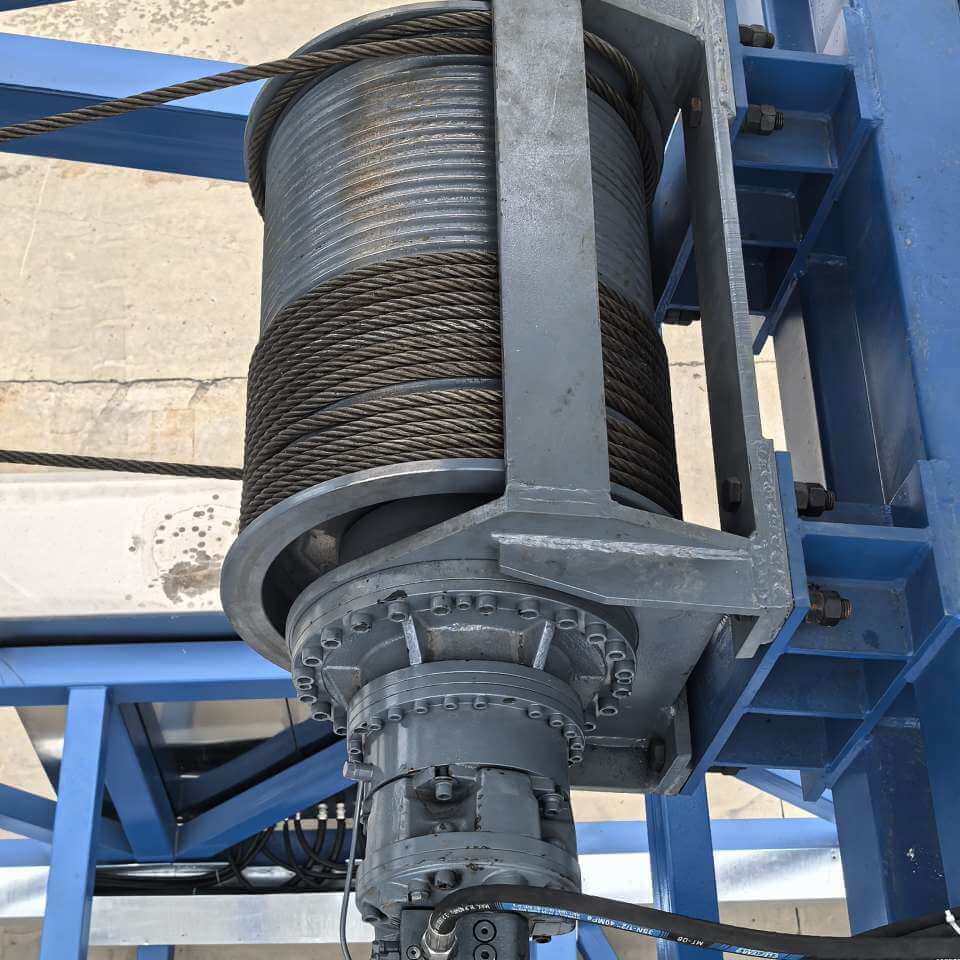
1. Slewing Jamming / High Rotational Resistance
Symptoms: Obvious resistance when rotating the boom; increased motor current or abnormal hydraulic motor pressure; jerky motion.
Root causes:
- Lack of lubrication in slewing bearing (raceway); dust or seawater ingress leading to roller/raceway wear;
- Worn slewing reducer gears or bearings; low oil level;
- Abnormal gear backlash (too tight or too loose), tooth surface rust;
- Loose mounting bolts causing bearing misalignment.
Prevention & solutions:
- Lubrication: Grease slewing bearing every 50 operating hours with EP lithium grease; purge old grease. In coastal/dusty environments, shorten to 30 hours; use water/dust-proof seals.
- Reducer inspection: Check oil level and quality every 3 months; listen for abnormal gear noise; inspect bearings and gears if noise persists.
- Gear backlash: Check clearance annually (0.2–0.4mm recommended). Clean and apply anti-rust grease; retighten mounting bolts monthly (torque 900–1200 N·m).
- ZOOMRY's recommendation: For harsh conditions, consider an automatic lubrication system with contamination sensors. ZOOMRY offers online slewing bearing wear monitoring on selected export models.
2. Slewing Noise & Vibration
Symptoms: Clicking or knocking sounds during slewing; whole machine vibration; metallic impact noise in severe cases.
Root causes:
- Pitting or spalling on slewing bearing raceway or rollers;
- Broken reducer gear teeth or excessive bearing clearance;
- Air ingress or hydraulic pulsation (for hydraulic slewing);
- Slewing brake not fully disengaged.
Prevention & solutions:
- Condition monitoring: Use electronic stethoscope or vibration analyzer regularly. Stop and inspect raceway if abnormal noise appears.
- Replace worn parts: Replace slewing bearing if pitting depth >1mm or spalling area >5%; replace gears in pairs if damaged.
- Hydraulic bleeding: Check oil level; bleed air from highest point; replace return filter.
- Brake adjustment: Check clearance (0.5–1mm) and ensure full disengagement.
- Reference: ZOOMRY provides vibration baseline values and training for ship loader slewing mechanism during commissioning.
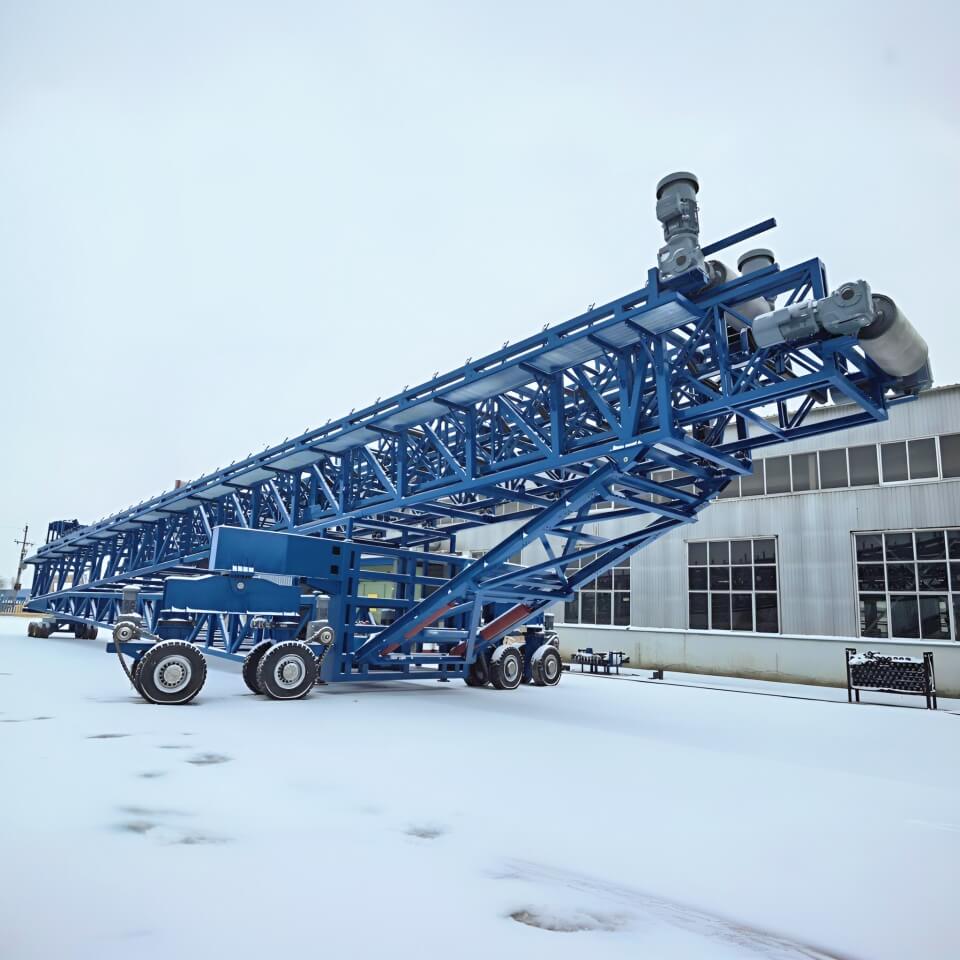
3. Pitching Slow / Weak (Luffing)
Symptoms: Boom lifting speed lower than design; difficulty raising; unable to maintain angle; high hydraulic oil temperature.
Root causes:
- Hydraulic pump internal wear leading to volumetric efficiency loss;
- Cylinder seal aging or bore scoring causing internal leakage;
- Hydraulic oil degraded (emulsified, oxidized) or filter clogged;
- Relief valve pressure set too low or spool stuck.
Prevention & solutions:
- Oil analysis: Sample oil every six months (viscosity, acid number, water content, ISO cleanliness). Replace oil every 2000 hours or annually (1500 hours in severe conditions).
- Pump & cylinder test: Measure pump case drain flow to detect internal leakage (>10% of rated flow indicates repair/replacement). Perform cylinder drift test.
- Filter maintenance: Replace return filter after first 50 hours, then every 500 hours. Clean or replace suction filter when differential pressure alarm triggers.
- Pressure adjustment: Check and adjust relief valve to design pressure (e.g., 18 MPa). Clean stuck spools.
- ZOOMRY's solution: Recommend online oil cleanliness monitoring and oil temperature/level sensors for hydraulic health management.
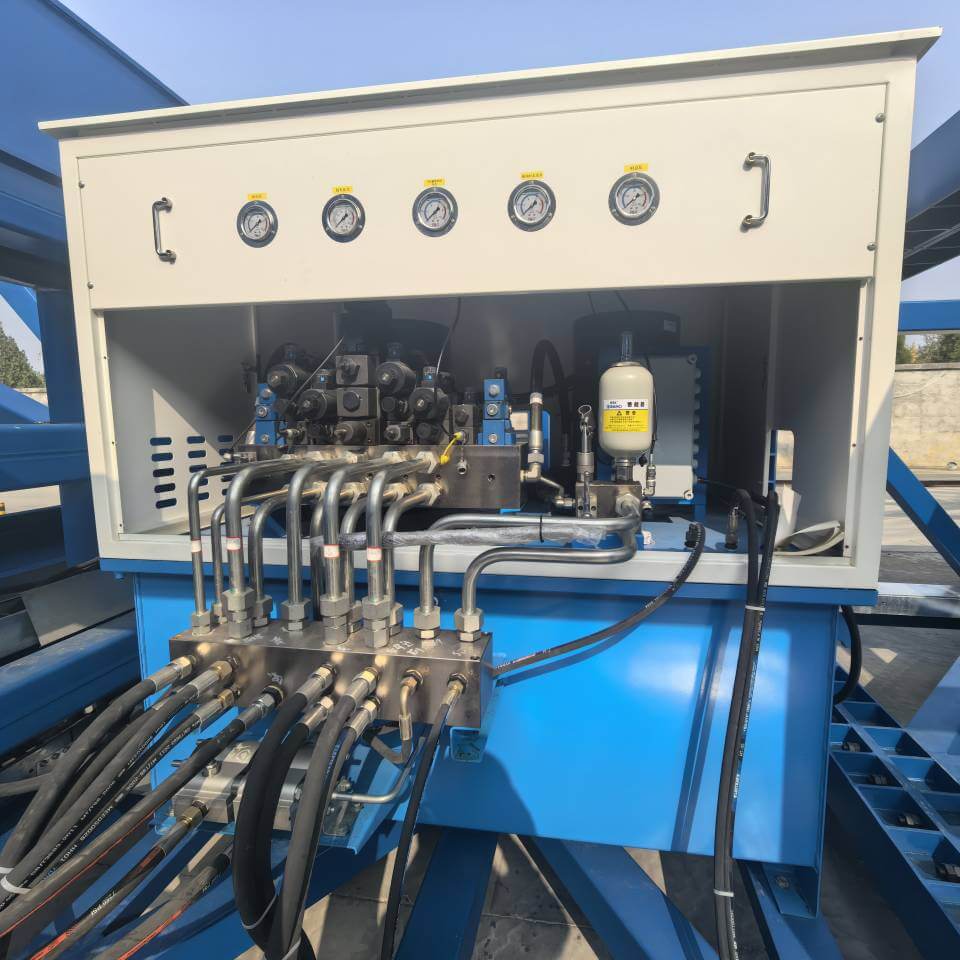
4. Pitching Shudder / Unstable Holding
Symptoms: Jerky motion during pitching; boom sinks or wobbles when held at an angle, especially under heavy load.
Root causes:
- Air trapped in hydraulic circuit (cylinder suction, leaking fittings);
- Counterbalance valve (hydraulic lock) misadjusted or worn, causing pressure oscillation;
- Cylinder cushion失效 or bent piston rod;
- Uneven tension in luffing wire rope (if applicable).
Prevention & solutions:
- Air bleeding: Bleed cylinder via bleed screw repeatedly until no bubbles. Tighten all fittings; replace damaged seals.
- Counterbalance valve repair: Disassemble, clean spool, replace spring; recalibrate cracking pressure (typically 1.2–1.5x main pressure). Replace if severely worn.
- Cylinder check: Measure piston rod straightness (≤0.2mm/m); inspect for scoring. Repair or replace.
- Load test: Test pitching stability under rated load; adjust damping orifice if pressure fluctuates.
- Practical tip: ZOOMRY recommends dual counterbalance valves on luffing cylinders for safer holding, plus boom angle sensor for closed-loop control.
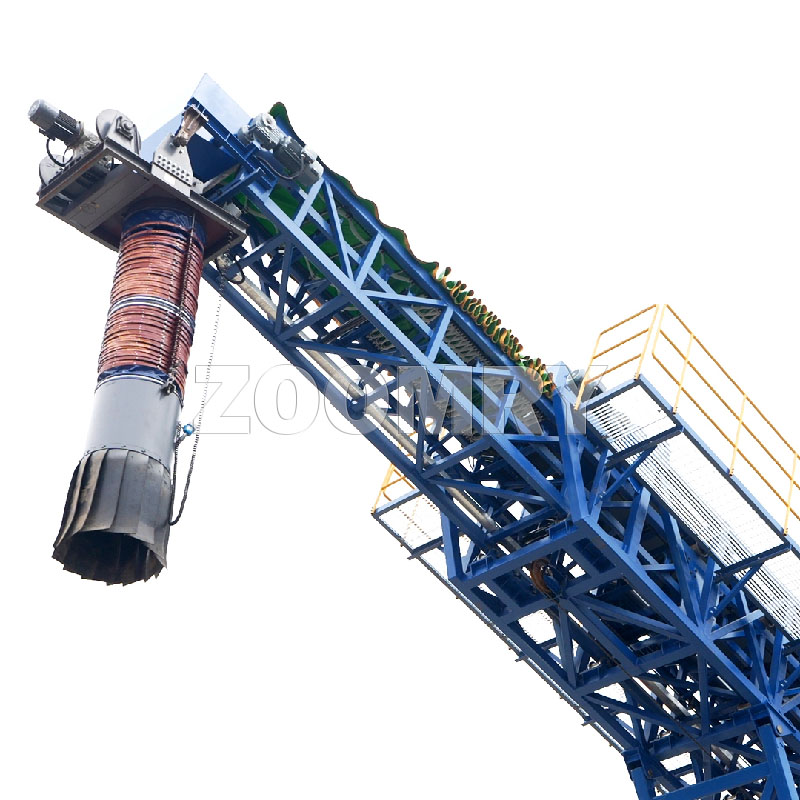
5. Pitching Limit / Anti-collision Device Failure
Symptoms: Boom does not stop at upper/lower limits; hits mechanical stops or collides with ship/wharf – serious safety hazard.
Root causes:
- Pitch angle sensor (encoder or proximity) damaged by moisture, or short circuit;
- Limit switch buried by spillage, damaged, or displaced;
- PLC losing limit signal due to logic error or wiring issue;
- Anti-collision radar/laser sensor contaminated or miscalibrated.
Prevention & solutions:
- Redundant limits: Install at least two independent limit devices per side (mechanical + proximity) connected to different PLC input modules; implement double-limit interlock logic.
- Regular test & cleaning: Manually trigger each limit weekly; verify PLC response and stop action. Clean sensor lenses.
- Moisture protection: Use IP65+ junction boxes; add desiccant; inspect cables for damage.
- Anti-collision calibration: Verify radar/laser distance readings monthly (e.g., alarm at 1.5m, emergency stop at 1.0m).
- Field practice: ZOOMRY provides limit system fault simulation training during commissioning and hardwires anti-collision radar signals to the drive emergency stop circuit.
Need a Quote or Technical Advice?
Contact our engineers today for a customized solution.
Request a Quote Chat on WhatsApp