 ZOOMRY

As two mainstream types of continuous conveying equipment in the industrial field, belt conveyors and roller conveyors are often included in the selection comparison by purchasers and engineering technicians. However, there are essential differences between the two in terms of core design logic, applicable scenarios, and performance boundaries — especially in the bulk material handling sector, where belt conveyors have long been the dominant and technically proven solution worldwide.
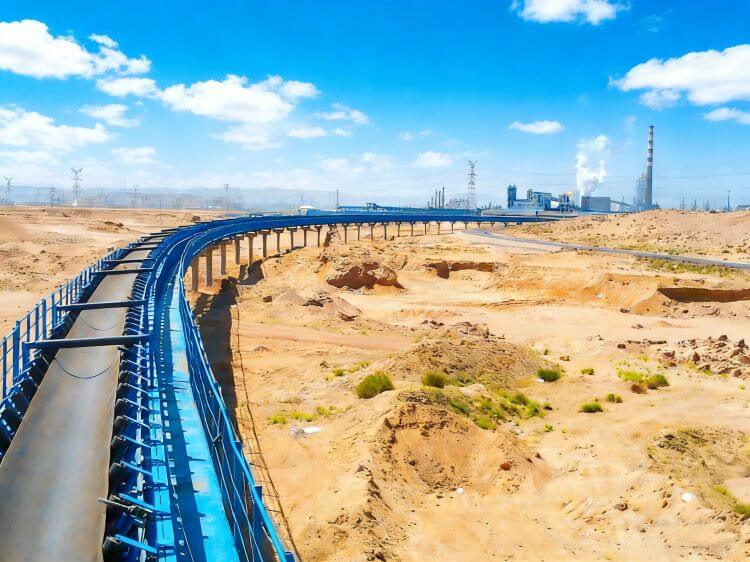
ZOOMRY Belt Conveyor System — The Global Standard for Continuous Bulk Material Transport
1. Core Working Principles of the Two Types of Conveyors
1.1 Belt Conveyor
A belt conveyor uses the Conveyor Belt as both the traction and carrying component. It provides traction through the friction between the drive pulley and the conveyor belt, driving the closed and circulating conveyor belt to run continuously, so as to realize the stable transfer of materials from the feeding end to the discharging end. Its core components include conveyor belt, drive/deflection pulleys, idlers and idler sets, tensioning devices, frame, cleaning scrapers, chute, drive system and safety protection system. It is a special equipment built for the continuous conveying of bulk materials.
After a century of technological iteration, belt conveyors have formed a product matrix covering full working conditions. From a few meters of workshop process connection to tens of kilometers of long-distance cross-regional conveying; from horizontal transfer to large-inclination, vertical lifting, and even complex line layout with spatial turning, stable operation can be achieved through customized design. It is currently the most widely used and most technically mature core equipment in the global bulk material conveying field, and its market scale has long dominated the continuous conveying equipment industry.
1.2 Roller Conveyor
A roller conveyor is a conveying equipment that forms a carrying surface through multiple sets of parallel arranged driven or non-powered rollers, and drives materials to move by the rotational friction of the rollers. It is mainly divided into two categories: non-powered gravity roller conveyors and powered roller conveyors. Its core carrying unit is an independent rigid roller, and its original design intention is to provide a short-distance transfer solution for regular, flat-bottomed unitized goods (such as pallets, boxes, baskets).
From the perspective of structural essence, the roller gap and point-contact carrying mode of the roller conveyor determine its inherent adaptation defect for bulk materials. It can barely handle only extra-large bulk materials with particle size larger than the roller gap and no scattering risk, and cannot meet the conveying demand of powdery, fine-grained, high-fluidity bulk materials. It is rarely used as the main conveying equipment in the global bulk material handling industry.
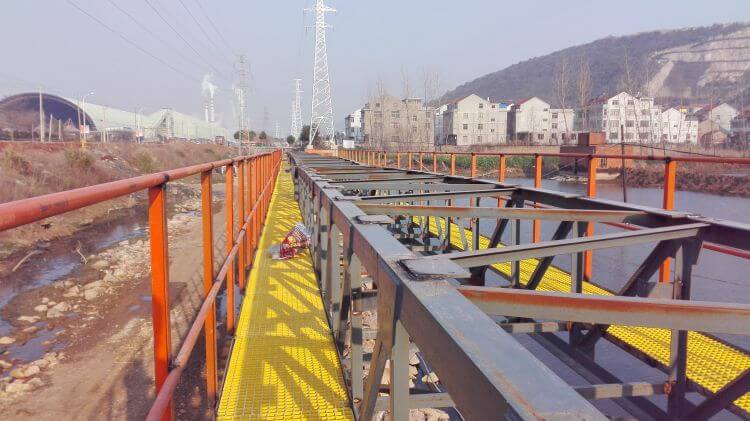
ZOOMRY Belt Conveyor — Engineered for Continuous Bulk Material Handling Across All Working Conditions
2. Core Differences Between Belt Conveyors and Roller Conveyors
2.1 Material Adaptability
- The adaptation range of roller conveyors is highly limited: it can only stably carry regular, flat-bottomed unitized goods. For bulk materials, it can only handle extra-large bulk materials with particle size larger than the roller gap and no fluidity. If used for conveying powdery and fine-grained bulk materials, serious material scattering, jamming in the roller gap, dust ingress and damage to bearings will occur — leading to frequent fault shutdowns, which is completely unable to adapt to the core demand of bulk material conveying.
- Belt conveyors have super strong adaptability to all types of bulk materials: the continuous closed conveyor belt forms a gapless complete carrying surface, which can perfectly adapt to industrial bulk materials from micron-level ultra-fine powder (cement, fly ash, ore powder), grain, coal to large-size bulk materials such as sand, gravel and ore, covering more than 99% of industrial bulk material categories. For special materials and working conditions such as high abrasiveness, high corrosion, high temperature and severe cold, stable conveying can be achieved by replacing steel cord belts, heat resistant belts, fire resistant belts and other specialized belt types, matched with customized material guide trough, chute and protective structure. At the same time, through the fully enclosed cover design, material scattering and dust leakage can be completely eliminated, and the material quality can be guaranteed to the greatest extent. This is the core reason why it has become the preferred equipment in the global bulk material conveying industry.
2.2 Working Condition Coverage Capacity
- The working condition coverage capacity of roller conveyors is extremely limited: the single-section conveying distance usually does not exceed tens of meters, and it can only realize horizontal or slight inclination conveying of ≤5°. When the inclination angle is too large, material slipping and conveying failure will occur; the conveying capacity is limited by the roller load and spacing, which cannot realize large-flow continuous conveying, and is only suitable for short-distance, low-flow, intermittent operation scenarios for unitized goods transfer.
- Belt conveyors have almost boundaryless adaptability to working conditions: it can realize continuous conveying from a few meters of short-distance process connection to more than ten kilometers of single-machine long-distance and tens of kilometers of full-line cross-regional conveying; through customized design such as patterned conveyor belts and ribbed conveyor belts, it can realize large-inclination even vertical lifting from 0 to 90°, completely breaking through terrain restrictions; the conveying capacity can cover ultra-large flow demand from a few cubic meters to tens of thousands of cubic meters per hour, and can realize 7×24 hours uninterrupted continuous operation, perfectly adapting to the large-scale and continuous production demand of industries such as mining, ports, and electric power. Whether it is the production line of a fixed factory, or the mobile operation scenarios of open-pit mines, ports and wharves, accurate adaptation can be achieved through customized design of different models such as fixed, mobile and telescopic types.
2.3 Flexibility of Spatial Layout
- Roller conveyors have extremely high requirements for spatial layout: they can only be arranged along a straight line or a broken line with a fixed angle, and cannot realize horizontal turning and spatial slope changing. If the conveying direction needs to be changed, additional steering equipment must be added, which not only increases the complexity of the system and investment cost, but also adds a large number of fault points.
- Belt conveyors have extremely strong flexibility in spatial layout: it can realize complex line layout with horizontal turning, spatial slope changing, multi-point feeding and multi-point discharging, and can complete material conveying in complex paths without additional steering equipment, which greatly simplifies the overall design of the conveying system and reduces the comprehensive investment of the project; it adopts modular design, which can realize rapid on-site splicing and installation, and can adapt to various installation forms such as fixed type, hanging type, mobile type and telescopic type, which can perfectly adapt to the space constraints of different sites, and can achieve efficient implementation whether it is a new project or an old line transformation.
2.4 Operation Stability and Material Protection
- Roller conveyors have inherent defects in operation stability and material protection capacity: the roller is in point contact with the material, and the load is concentrated on a single roller. For irregular materials, it is very easy to have jamming, beating and rolling problems, which will not only cause material crushing and loss, but also lead to roller bearing damage, equipment abnormal noise and other faults. The failure of a single set of rollers will lead to the shutdown of the whole line, with many fault points, and the mean time between failures (MTBF) is much lower than that of belt conveyors, which cannot meet the production demand of long-term continuous operation.
- Belt conveyors have significant advantages in operation stability and material protection capacity: the conveyor belt is a continuous carrying surface, the material is in surface contact with the conveyor belt, the load is evenly distributed, there is no impact and beating during operation, which can effectively avoid the rolling, scattering and crushing of materials, and ensure the integrity and quality of materials to the greatest extent; through multi-point support of idler sets, matched with protection devices such as anti-deviation, anti-slip and anti-tear, it can effectively avoid all kinds of common faults, with extremely low equipment failure rate, and the MTBF can reach tens of thousands of hours, which can ensure long-term continuous and stable operation, and greatly reduce the production loss caused by unplanned shutdown.
2.5 Full Life Cycle Operation and Maintenance Cost
- Roller conveyors have low initial investment in the scenario of unitized goods, but in the bulk material conveying scenario, the full life cycle cost will increase exponentially: bulk materials will continue to get stuck in the roller gap, causing rapid wear of rollers and bearings, extremely high replacement frequency, and greatly increased operation and maintenance costs.
- Belt conveyors have the ultimate full life cycle cost advantage: core components such as idlers, pulleys, and conveyor belts all adopt standardized and wear-resistant design. The core components produced by ZOOMRY have passed strict working condition simulation tests and life verification, with a service life far higher than the industry average level of 50,000+ hours; daily operation and maintenance only need regular inspection of conveyor belt tension, idler rotation condition, and cleaning scraper wear state, with simple operation and maintenance, convenient spare parts replacement, and short shutdown maintenance time.
2.6 Environmental Protection and Safety Compliance
- Roller conveyors have serious compliance risks in bulk material conveying scenarios: they cannot realize closed conveying, and serious dust leakage will occur during the conveying of powdery materials, which cannot meet the environmental protection emission standards of regions around the world.
- Belt conveyors can perfectly adapt to the environmental protection and safety compliance requirements of countries around the world: through supporting components such as fully enclosed cover, material guide trough, dust removal device and chute, fully enclosed conveying can be realized, dust leakage and material scattering can be completely eliminated — such as enclosed Pipe conveyors that fully seal the material during transport. ZOOMRY belt conveyors can be matched with a full set of safety protection systems such as pull rope switch, deviation switch, emergency stop device, belt tear detection, temperature monitoring, etc., with design and manufacturing strictly following international standards such as EN 620 and ISO 5048.
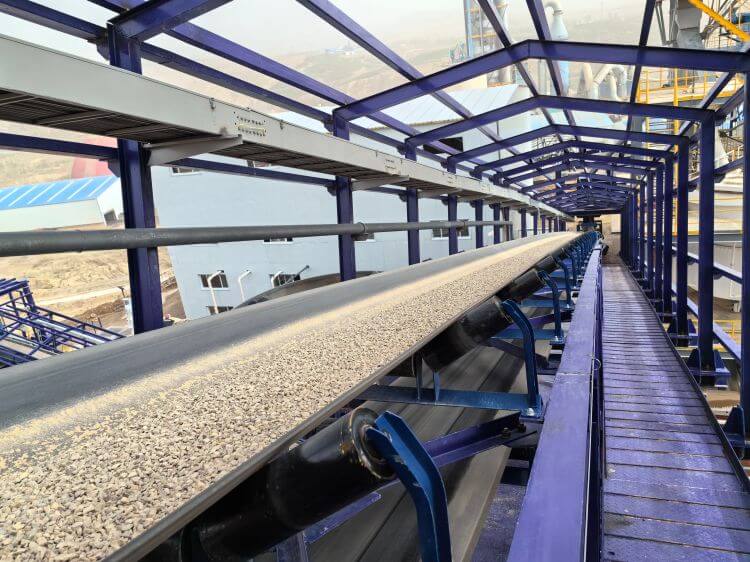
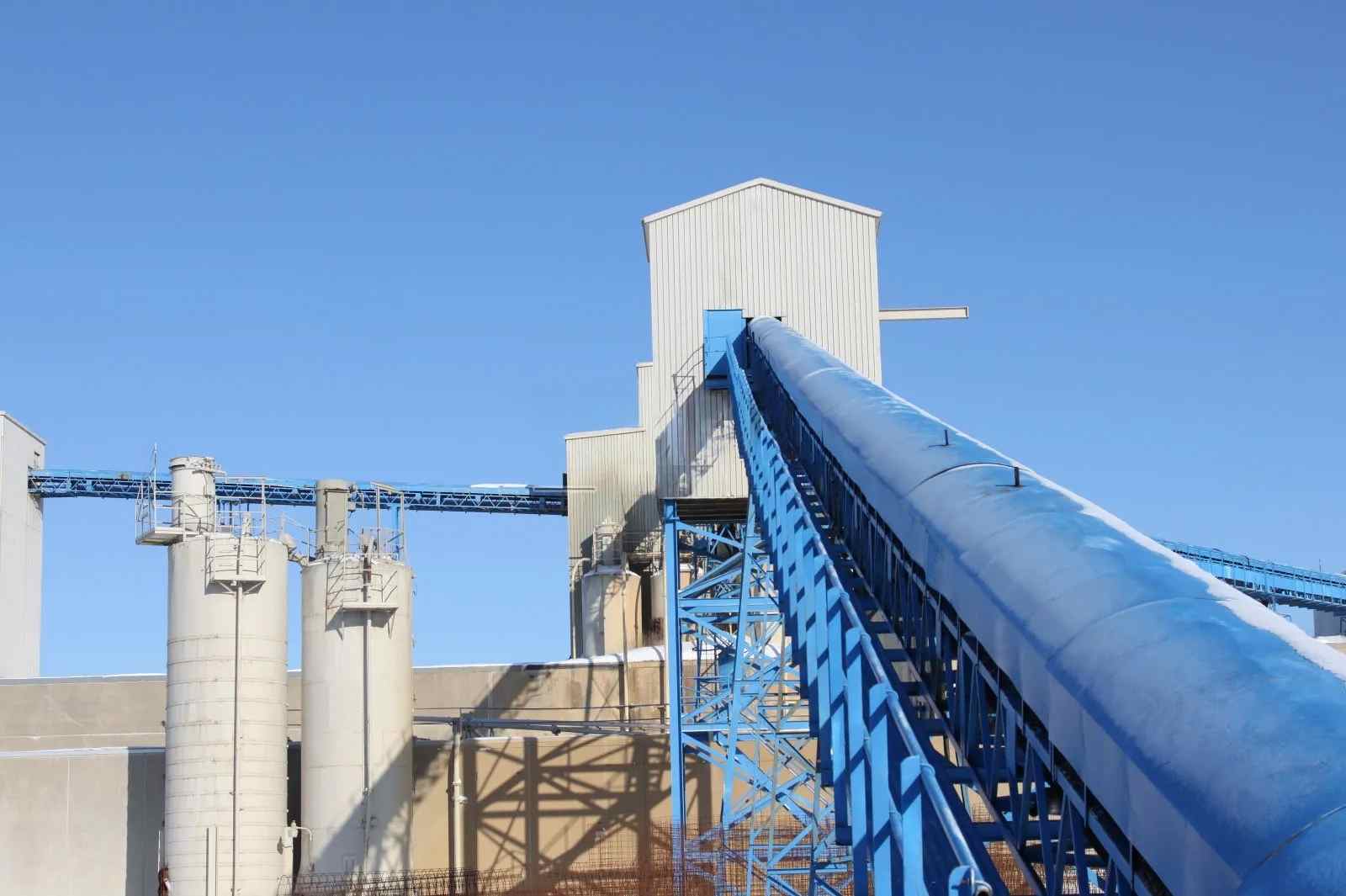
ZOOMRY Belt Conveyor — Fully Enclosed Design for Dust-Free, Environmentally Compliant Bulk Material Handling
3. Global General Selection Decision Guide for Conveying Equipment
3.1 Take Conveyed Material Properties as the Core Decision Premise
- If your conveying object is all kinds of bulk materials such as powdery, granular and bulk materials, regardless of the particle size, abrasiveness, temperature and corrosiveness of the material, the belt conveyor is the only selection solution that can realize long-term stable operation. Roller conveyors have inherent technical defects for bulk material conveying. Forced use will lead to a series of problems such as frequent failures, material loss, and compliance risks, which is by no means a reasonable choice for bulk material conveying.
- Only when your conveying object is regular, flat-bottomed unitized goods (such as pallets, boxes, baskets), and it is a short-distance, horizontal transfer scenario, the roller conveyor can be used as an alternative solution. It should be specially noted that ZOOMRY focuses on the field of bulk material conveying, with core products being belt conveyors and supporting bulk material handling equipment, and does not produce roller conveyors. It can provide more professional and focused technical solutions for global bulk material conveying customers.
3.2 Take Working Condition Parameters as the Core Matching Standard
- Conveying distance: Only belt conveyors can fully adapt to the range from short-distance process connection to tens of kilometers of long-distance conveying; roller conveyors are only suitable for short-distance conveying within tens of meters.
- Conveying inclination: Only belt conveyors can realize the full-angle demand of horizontal, inclined, large-inclination and even vertical lifting; roller conveyors can only adapt to slight inclination scenarios of ≤5°.
- Operation mode: Only belt conveyors can stably meet the demand of large-flow, 7×24 hours continuous production; roller conveyors are only suitable for small-flow, intermittent operation scenarios.
- Spatial layout: Only belt conveyors can achieve flexible adaptation for complex lines, turning and slope changing, multi-point feeding and discharging scenarios; roller conveyors can only complete fixed straight line conveying.
3.3 Take Compliance and Long-term Operation Demand as the Core Verification Dimension
- Environmental protection compliance: If the material has dust pollution risk, or the project location has strict environmental protection emission standards, the fully enclosed conveying design of the belt conveyor can fully meet the compliance requirements, while the roller conveyor has unavoidable environmental protection risks.
- Safety compliance: If the project needs to comply with international general safety standards such as ISO, EN, OSHA, the belt conveyor can achieve full compliance through a full set of safety protection systems, while the safety protection of roller conveyors is extremely difficult and difficult to meet high-standard safety requirements.
- Long-term operation: If you pursue high equipment reliability, low operation and maintenance cost and full life cycle economy, the belt conveyor is the only optimal choice, and its long-term operation advantage in bulk material conveying scenarios is unmatched by roller conveyors.
3.4 Core Professional Suggestions for Customized Selection of Belt Conveyors
- Material characteristics first: According to the core parameters of the material such as particle size, bulk density, abrasiveness, moisture content, temperature, corrosiveness, etc., the core design such as conveyor belt material, belt speed, idler spacing, material guide trough structure should be customized to ensure the perfect adaptation of the equipment and materials.
- Accurate matching of working condition parameters: Combined with parameters such as conveying capacity, conveying distance, inclination angle, line layout, on-site environment, rigorous mechanical calculation and system simulation should be carried out, and the drive scheme, pulley configuration, tensioning device, frame structure, etc. should be customized to avoid insufficient selection or over-design.
- Integrated design of supporting systems: It is necessary to simultaneously support cleaning scrapers, chutes, dust removal devices, safety protection systems, intelligent control systems, etc., to realize the integrated and intelligent operation of the conveying system, and improve the automation level and safety redundancy of the equipment.
- Special adaptation for extreme working conditions: For special working conditions such as severe cold, high temperature, high humidity, high altitude, explosion-proof, etc., special material and structural design should be carried out to ensure the stable operation of the equipment in extreme environments.
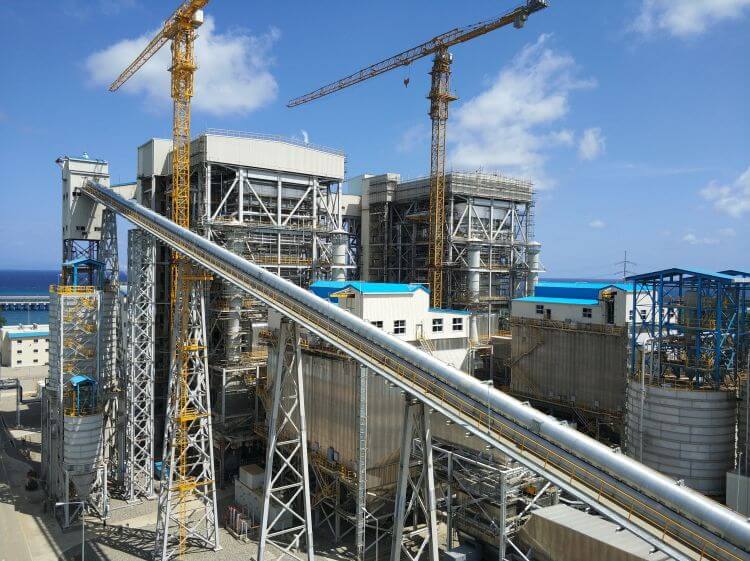
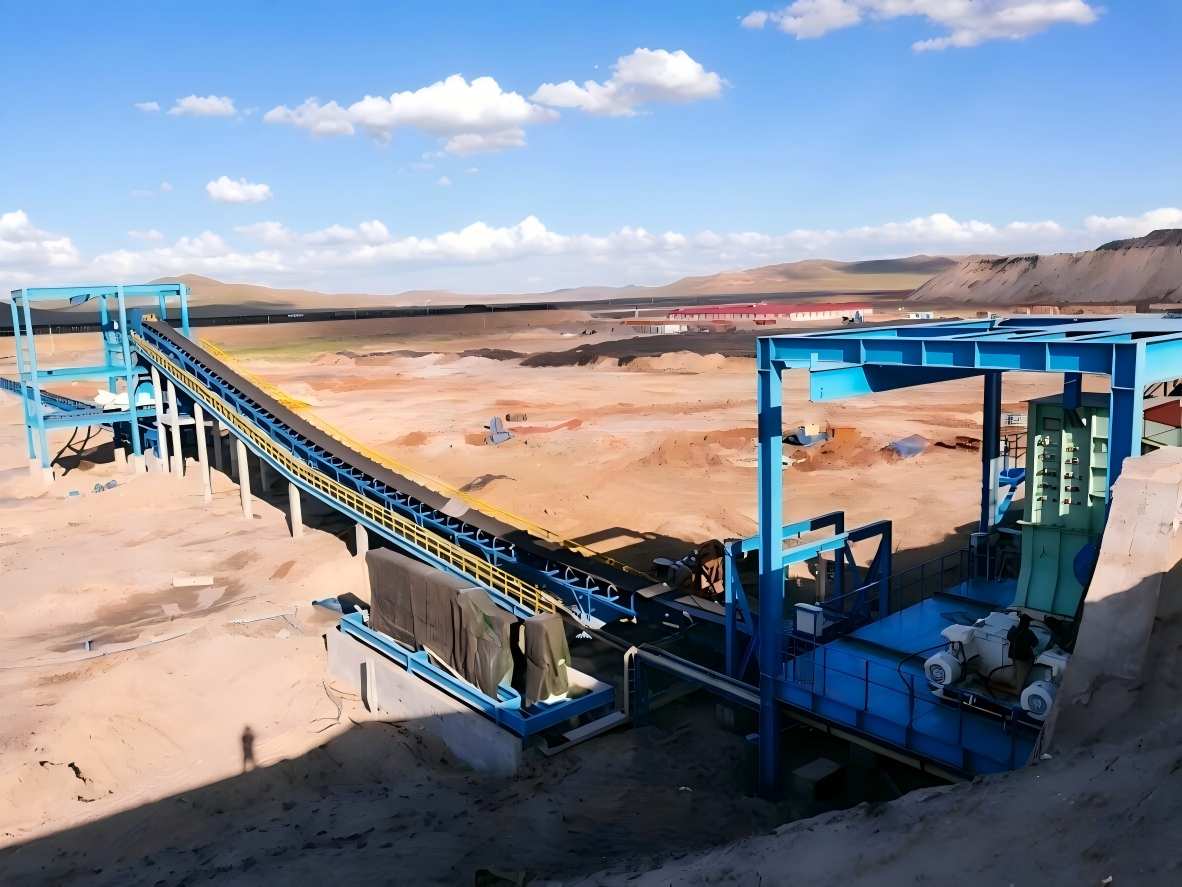
ZOOMRY Belt Conveyor System — Full-Condition Coverage from Short-Distance to 10km+ Long-Distance Overland Conveying
Choose ZOOMRY Belt Conveyors
ZOOMRY has been deeply engaged in the global bulk material conveying equipment field for over 20 years, focusing on the technical research and development, manufacturing and system integration of belt conveyors and supporting bulk material handling equipment. Our products cover a full range including fixed belt conveyors, large-inclination belt conveyors, telescopic belt conveyors, and tubular belt conveyors. At the same time, we independently research and develop and produce a full set of core components such as idlers, pulleys, cleaning scrapers, and chutes. Our products and services are exported to many countries and regions around the world, strictly follow international general standards such as ISO and EN, and have been widely recognized by global customers.
Core Technical Advantages
- Full working condition customized design capability: We have a professional technical R&D team, which can provide one-stop solutions from scheme design, manufacturing, installation and commissioning to full life cycle operation and maintenance according to customers' material characteristics, working condition parameters, on-site environment and compliance requirements.
- Independent and controllable core components: Core components such as idlers and pulleys adopt independently developed wear-resistant, anti-corrosion and low-resistance design, which have passed strict working condition simulation tests and life verification. Their service life of 50,000+ hours is far higher than the industry average level, which greatly reduces customers' operation and maintenance costs and shutdown risks.
- Intelligent system integration capability: It can be matched with an intelligent monitoring and control system to realize real-time monitoring, early warning and automatic adjustment of parameters such as conveyor belt deviation, tearing, slipping, bearing temperature and vibration, realize intelligent operation and maintenance of the equipment, and improve the operation efficiency and reliability of the equipment.
- Global compliance and service capability: The product design fully complies with the industrial safety and environmental protection standards of all regions around the world, and can provide multilingual technical support, installation guidance and after-sales service, providing global customers with full life cycle technical guarantee.
Conclusion
Although belt conveyors and roller conveyors are both industrial continuous conveying equipment, there are essential differences between their core design logic, applicable scenarios and performance boundaries. Roller conveyors are equipment built for short-distance transfer of regular unitized goods, which only have certain applicability in warehousing logistics and unitized goods production scenarios, and have unavoidable inherent defects in the bulk material conveying field. The belt conveyor is the core equipment specially designed for the continuous conveying of bulk materials. With core advantages such as full-category bulk material adaptation, full working condition coverage, high operation stability, low full life cycle cost, and high environmental protection and safety compliance, it has become the absolute mainstream equipment in the global bulk material conveying industry, and is the only optimal selection for bulk material conveying scenarios.
For global bulk material conveying customers, choosing ZOOMRY means choosing the most professional, reliable and cost-effective conveying solutions. Whether you need a single belt conveyor or a complete turnkey EPC conveying system, ZOOMRY's engineering team is ready to provide customized technical support and full life cycle services.
Related Industry Solutions
Need a Custom Belt Conveyor Solution?
Contact ZOOMRY's engineering team to discuss your material characteristics, site conditions, and throughput requirements — backed by 20+ years of bulk material handling expertise.
Contact Us Today