 ZOOMRY

A bend pulley may not be the most visible component in your belt conveyor system, but choosing the wrong one leads to belt mistracking, premature wear, and unplanned downtime. Whether you need a tail pulley at the loading end, a bend pulley to redirect the belt near the drive station, or a take-up pulley to maintain tension — the right selection makes the difference between smooth operation and constant maintenance.
This guide walks you through the key factors in selecting a bend pulley: belt width and diameter matching, surface type (smooth vs rubber-lagged), bearing configuration, and application-specific requirements for mining, cement, and port operations.
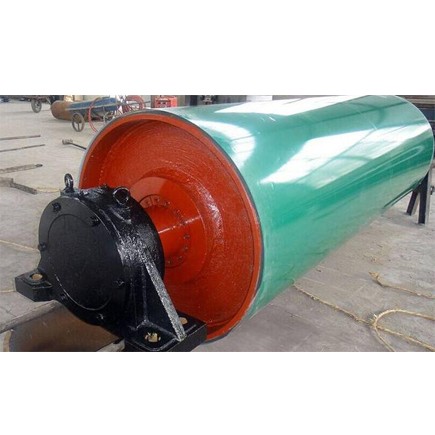
ZOOMRY Bend Pulley & Tail Pulley — 16Mn Steel Shell, 45#/40Cr Shafts, Belt Widths 400–2,400 mm
Bend Pulley vs Tail Pulley: What Is the Difference?
| Feature | Bend Pulley | Tail Pulley |
|---|---|---|
| Location | Near drive station or take-up section | Loading end of conveyor |
| Primary Function | Changes belt direction / increases wrap angle | Returns belt from carrying side to return side |
| Drive | Free-rotating (driven by belt) | Free-rotating (driven by belt) |
| Surface Options | Smooth steel or rubber-lagged | Smooth steel or rubber-lagged |
| Diameter Range | 200–1,400 mm | 200–1,400 mm |
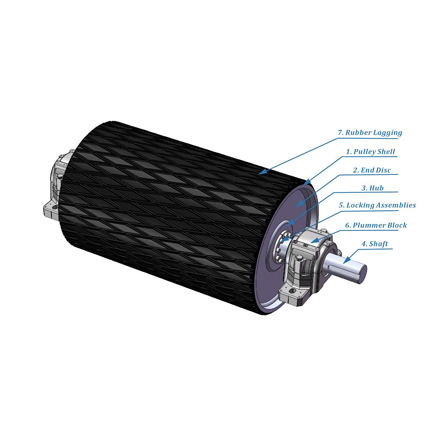
Both pulley types share the same construction standards — 16Mn steel shells, 45#/40Cr shafts, CNC four-roll rounding — but serve different positions in the conveyor circuit. The bend pulley redirects the belt to increase the wrap angle around the drive pulley, improving traction. The tail pulley anchors the far end of the conveyor, often doubling as a tensioning point.
How to Select the Right Bend Pulley Diameter?
The pulley diameter directly affects belt life and tracking performance. A general rule: larger diameters reduce belt flex fatigue but cost more and require more space. ZOOMRY bend pulleys are available from 200mm to 1,400mm — matched to belt widths from 400mm to 2,400mm. The minimum recommended diameter depends on your belt carcass type:
- Fabric belts (EP/NN): Pulley diameter ≥ 125× belt carcass thickness
- Steel cord belts: Pulley diameter ≥ 145× cord diameter
- High-tension applications: Consider increasing diameter above minimum for extended service life
For operations seeking to reduce belt wear at directional change points, upgrading to a larger diameter bend pulley with rubber lagging can help reduce belt wear — particularly in abrasive mining environments where fines accumulate on the pulley face.
Smooth vs Rubber-Lagged Bend Pulley: When to Choose Which?
| Surface Type | Best For | Advantages | Limitations |
|---|---|---|---|
| Smooth Steel | Clean, dry environments; low-tension applications | Lower cost, easier to clean, no lagging wear | Reduced grip in wet/dusty conditions |
| Rubber Lagged | Wet, dusty, or high-tension applications | Superior grip, reduced belt slippage, protects pulley face | Higher cost, lagging requires periodic replacement |
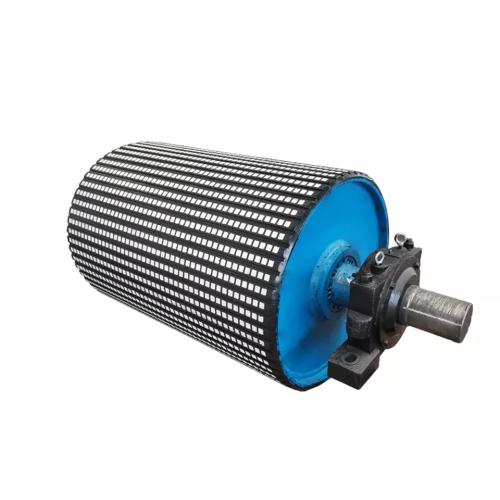
For bend pulleys operating in high-moisture port terminal or cement plant environments, rubber lagging is strongly recommended. The lagging channels water and fines away from the belt contact surface, maintaining consistent friction and helping prevent belt slip. ZOOMRY also offers ceramic pulley lagging for extreme-duty applications where rubber wear is a concern.
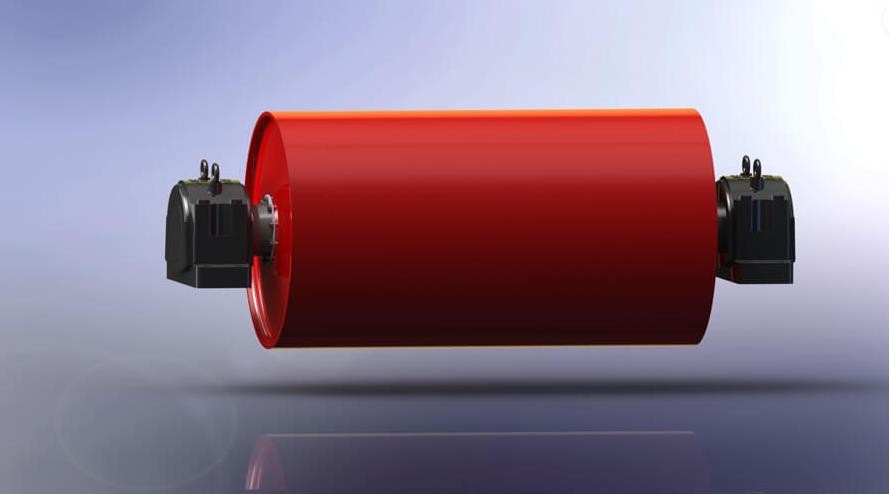
ZOOMRY Bend Pulley with Rubber Lagging — Enhanced Grip for Wet and Dusty Conveyor Environments
What Are the Key Quality Indicators for a Bend Pulley?
- Shell Ovality: ZOOMRY maintains ovality below 1.5mm through CNC four-roll rounding — helping prevent belt vibration and extending bearing life.
- Shaft Concentricity: 45#/40Cr shafts with precision-machined bearing seats ensure smooth rotation without eccentric loading.
- Weld Integrity: All welds undergo ultrasonic flaw detection and tempering stress relief to help prevent cracking under cyclic loading.
- Static Balance: Dynamic balancing performed when belt speeds exceed 2.5 m/s — critical for high-speed conveyors.
Related Products
Related Industry Solutions
Need Help Selecting the Right Bend Pulley?
Contact ZOOMRY for a bend pulley recommendation based on your belt width, material, and operating conditions — backed by ISO 9001 & CEMA certified manufacturing.
Contact Us Today