 ZOOMRY

Quick answer: A steel cord Conveyor Belt is not selected by ST rating alone. The ST number defines nominal breaking strength, but three other parameters determine whether the belt survives the duty: the safety factor (ST500–ST1000 short feeders run 9.5:1, ST2500–ST3600 high-capacity pit-to-plant conveyors run 7.5:1), the splice efficiency (steel cord retains 90–100% of parent strength, fabric 60–80%), and the rip prevention strategy (steel cord is vulnerable to longitudinal tearing from trapped objects). ZOOMRY covers ST630–ST4000 with cover grades from abrasion-resistant to heat-resistant.
Why ST Rating Alone Is an Incomplete Specification
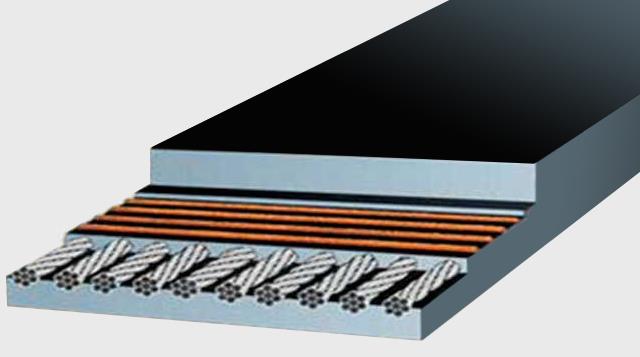
Two belts with the same ST rating can have different cord counts, cord diameters, pitch, and cover thickness — and therefore different actual performance in the same application. The ST rating is a nominal breaking strength per unit width, not a complete specification. A belt specified only as “ST2000” can be built with different cord constructions that behave differently under impact, fatigue, and splicing.
For a mining conveyor, the ST rating is the starting point. The safety factor, the splice design, the cover grade, and the rip protection strategy are the parameters that determine whether the belt reaches its design life or becomes a maintenance line item. The selection sequence is: duty and tension → ST rating → safety factor check → splice efficiency → cover grade → rip prevention.
Step 1 — ST Rating and the Safety Factor That Goes With It
The ST rating is the nominal breaking strength in N/mm of belt width. A ST2000 belt 1,200 mm wide has a nominal breaking strength of 2,400 kN before any splice factor is applied. But the required ST rating is not simply the calculated operating tension — it is the operating tension multiplied by a safety factor that depends on the duty and the consequences of failure.
| ST range | Typical duty | Safety factor target | Design note |
|---|---|---|---|
| ST500–ST1000 | Short mine feeders, moderate lifts | 9.5:1 | Confirm impact and take-up loads |
| ST1250–ST2000 | Medium-distance overland, plant conveyors | 8:1–9:1 | Check splice design against dynamic loads |
| ST2500–ST3600 | High-capacity pit-to-plant, long overland | 7.5:1 | Controlled acceleration and engineered splice required |
Design rule: do not specify the ST rating from a tension calculation alone. Apply the safety factor for the duty, then round up to the next standard ST grade. A belt selected at exactly the calculated tension with no safety margin will be the first component to fail when the conveyor is pushed above nameplate.
Step 2 — Splice Efficiency: The Steel Cord Advantage That Matters
Every conveyor belt has at least one splice, and the splice is where the belt is weakest — or strongest. Steel cord belts retain 90–100% of parent belt strength through a properly vulcanized splice. Fabric belts (EP/NN) retain 60–80%. That difference is not a minor performance gap — it is the reason steel cord belts are specified for high-tension, long-distance, and high-capacity mining conveyors where a splice failure stops the entire line.
The practical consequence: a steel cord belt can be specified closer to its nominal strength because the splice does not erode the margin. A fabric belt needs a larger nominal strength to compensate for the splice loss, which adds weight, pulley diameter, and cost. For a mining main line carrying 2,000–3,500 t/h over multiple kilometres, the splice efficiency advantage of steel cord is decisive.
Selection tip: the splice efficiency is only realised if the splice is engineered for the belt and the duty. A steel cord belt spliced with a generic procedure, or with mismatched splice materials, can lose the efficiency advantage and fail at the joint. Specify the splice design with the belt, not after it.
Step 3 — Cover Grade: Matched to the Material, Not the ST Rating
The cover grade is independent of the ST rating. A ST3150 belt carrying abrasive iron ore needs a different cover compound from a ST3150 belt carrying heat-resistant clinker or flame-retardant coal. The cover grade determines wear life and, in some cases, fire safety compliance.
| Cover grade | Application | Key property |
|---|---|---|
| Abrasion-resistant (DIN Y, W, X) | Iron ore, granite, copper concentrate, abrasive aggregate | High wear resistance, maintains cover thickness under abrasion |
| Heat-resistant (HR, SHR, UHR) | Cement clinker, sinter, coke, hot casting up to 200°C | Retains elasticity and adhesion at elevated temperature |
| Flame-retardant (ISO 340, EN 12882) | Underground coal, biomass, combustible dust environments | Self-extinguishing, anti-static for explosive atmospheres |
| Oil-resistant | Grain with oil content, recycled material, oily scrap | Resists swelling and cover degradation from hydrocarbon contact |
Design rule: match the cover grade to the material first, then confirm the ST rating provides the required tension capacity. A high-ST belt with the wrong cover grade will wear through the cover and expose the cords before the belt reaches its tension limit — the failure is at the surface, not the carcass.
Step 4 — Rip Prevention: The Steel Cord Vulnerability
Steel cord belting is strong in tension but vulnerable to longitudinal ripping. A trapped object — a piece of structural steel, a rock jammed at a transfer point, a worn idler frame — can penetrate the rubber cover, lodge between the cords, and rip the belt longitudinally along the entire conveyor length. This is the steel cord belt’s “Achilles heel”. The rip is not a gradual wear failure; it is a sudden, catastrophic event that can destroy hundreds of metres of belt in minutes.
The prevention strategy has three layers. First, breaker plies or rip-stop fabric layers embedded in the belt resist penetration and limit rip propagation. Second, rip detection systems — embedded sensor loops or magnetic monitoring — detect a rip at the moment it starts and stop the conveyor before the damage propagates. Third, transfer point design that prevents large objects from entering the belt path in the first place. ZOOMRY specifies breaker-ply construction for mining main lines and can integrate rip detection with the belt order.
Selection tip: for any steel cord belt in a mining main line handling run-of-mine material, specify breaker plies and rip detection at the order stage. Retrofitting rip protection after the first rip is more expensive than the belt it was meant to save.
Selection Checklist
-
Duty and tension. Calculate the operating tension, apply the safety factor for the duty (9.5:1 for short feeders, 7.5:1 for high-capacity main lines), round up to the next ST grade.
-
ST rating and cord construction. Confirm the cord count, cord diameter, and pitch — not just the ST number. Two ST2000 belts can have different constructions.
-
Splice design. Specify the splice procedure and materials with the belt. Steel cord splice efficiency is 90–100% only when the splice is engineered for the belt.
-
Cover grade. Match to the material: abrasion, heat, flame, or oil resistance. Do not let the ST rating drive the cover choice.
-
Rip prevention. Breaker plies for mining main lines. Rip detection for high-value, long-distance, or run-of-mine conveying. Transfer point design to keep tramp material off the belt.
-
Pulley diameter and take-up. The belt construction and ST rating affect minimum pulley diameter and take-up travel. Confirm both before the structure is designed.
Frequently Asked Questions
How do I choose the ST grade for a steel cord conveyor belt?
Calculate the operating tension, apply the safety factor for the duty — 9.5:1 for short feeders, 8:1–9:1 for medium overland, 7.5:1 for high-capacity main lines — then round up to the next standard ST grade. A ST2000 belt 1,200 mm wide has a nominal breaking strength of 2,400 kN before splice factor.
What is the splice efficiency of a steel cord belt compared with a fabric belt?
A properly vulcanized steel cord splice retains 90–100% of parent belt strength. A fabric (EP/NN) splice retains 60–80%. The steel cord advantage is why high-tension, long-distance, and high-capacity mining conveyors use steel cord belting.
Why are steel cord belts vulnerable to longitudinal ripping?
A trapped object can penetrate the rubber cover, lodge between the steel cords, and rip the belt along its length. Steel cord is strong in tension but the cords are parallel and do not resist penetration as well as fabric plies. Breaker plies and rip detection systems are the standard prevention measures.
What cover grade should I use for a steel cord belt?
Match the cover to the material, independent of the ST rating. Abrasion-resistant for iron ore and aggregate, heat-resistant for clinker and sinter, flame-retardant for underground coal and combustible dust, oil-resistant for oily materials. The ST rating provides tension capacity; the cover grade provides wear and environmental resistance.
Can a steel cord belt be spliced on site?
Yes. Steel cord belts are spliced by hot vulcanization on site. The splice requires the correct splice materials, cord arrangement, and vulcanization parameters for the specific belt construction. A generic splice procedure on a steel cord belt can lose the efficiency advantage and fail at the joint.
Related Products
ST630–ST4000, cover grades from abrasion to heat resistant, ISO 9001 certified
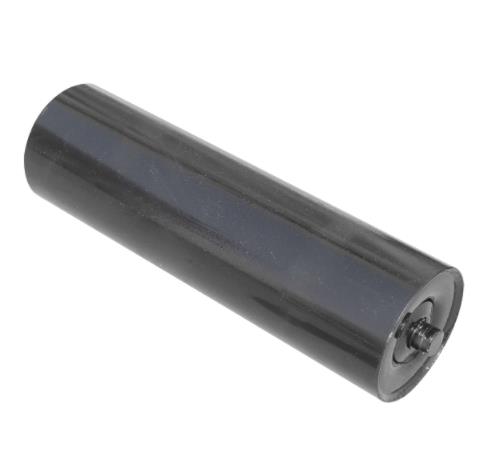
CEMA rating, bearing-seal system, runout, and documented project life
Related Reading
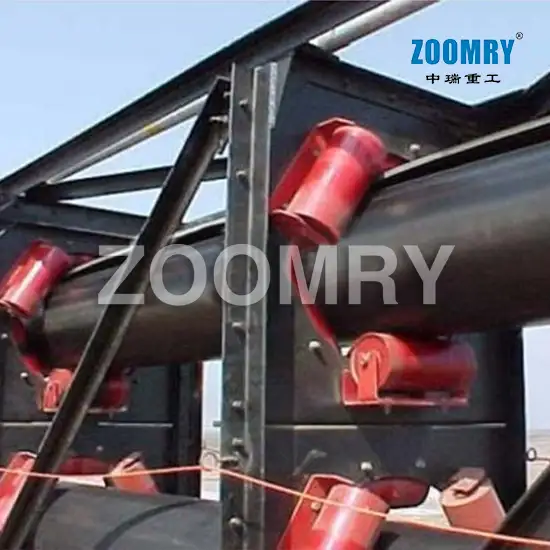
Pipe diameter from particle size, fill factor, and curve mapping

Bulk material handling projects across ports, mines, and terminals
Specifying a Steel Cord Belt for a Mining Conveyor?
Send us the duty, operating tension, material type, and route. ZOOMRY engineers will confirm the ST grade, safety factor, splice design, cover grade, and rip prevention strategy before the belt is ordered.
Contact Our Engineers →