 ZOOMRY

A ship loading system is a specialized bulk material handling setup that transfers dry bulk cargo — such as coal, iron ore, grain, fertilizer, and aggregates — from shore-based stockpiles or feed conveyors directly into the cargo holds of vessels. Choosing the right ship loader for your vessel type is the single most important decision in port equipment selection.
Modern ship loading systems range from compact mobile units for small barges to massive radial telescopic shiploaders capable of loading Capesize vessels at over 8,000 tons per hour. The key to maximizing port efficiency is matching your loader's reach, capacity, and mobility to the specific vessel sizes your terminal handles. A mismatched loader — one too small for your largest vessels or too large for your typical traffic — creates costly bottlenecks in both directions.
ZOOMRY manufactures a complete range of mobile ship loaders under the ZRSL series, spanning four models (ZRSL-33, ZRSL-46, ZRSL-52, ZRSL-58) that cover every vessel class from 100-ton barges to 180,000 DWT Capesize bulk carriers. Below we break down which loader fits each vessel type, what capacity and reach you need, and how to future-proof your port investment.
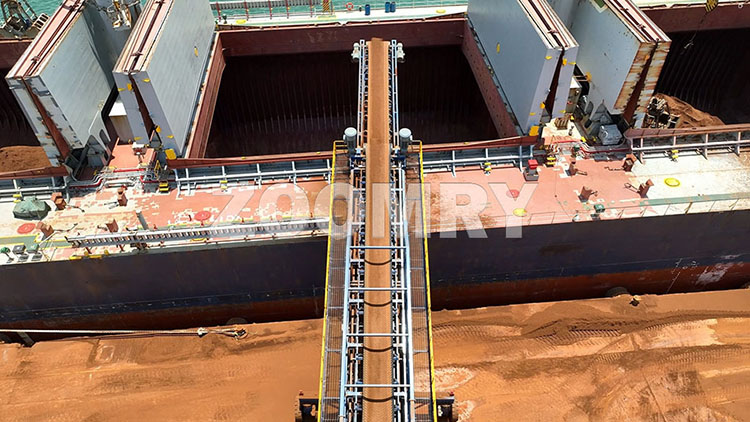
ZOOMRY Mobile Ship Loader — Adaptable to Barges, Handysize, Handymax, Panamax, and Capesize Vessels
Ship Loading Systems by Vessel Type
Each vessel class demands a specific combination of boom length, clearance height, and handling capacity. The table below summarizes ZOOMRY's recommended model for each vessel type, followed by detailed breakdowns for each class.
| Vessel Type | DWT (ton) | Clearance Height (m) | ZRSL-33 | ZRSL-46 | ZRSL-52 | ZRSL-58 |
|---|---|---|---|---|---|---|
| Barge | 100–5,000 | 0–3 | ✅ | ✅ | ✅ | ✅ |
| Handysize | 10,000–35,000 | 4–8 | ✅ | ✅ | ✅ | ✅ |
| Handymax | 35,000–50,000 | 6–10 | — | ✅ | ✅ | ✅ |
| Panamax | 60,000–80,000 | 10–14 | — | — | ✅ | ✅ |
| Capesize | 80,000–180,000 | 14–18 | — | — | — | ✅ |
Barge Loading (100–5,000 DWT)
Barges are the workhorses of inland waterways and coastal transshipment. They require compact, highly mobile ship loaders with low clearance heights (0–3m) and the ability to move quickly between multiple loading points along narrow quays. The ZRSL-33 is purpose-built for this application: its short 33m boom and wheeled chassis allow operators to load a barge from one or two positions, then reposition to the next vessel in minutes without complex infrastructure.
Recommended model: ZRSL-33 (also compatible with all higher models for larger barge fleets)
Typical capacity needed: 100–500 t/h
Key advantage: Lowest infrastructure dependency — deploy directly on unpaved riverbank quays.
Handysize Loading (10,000–35,000 DWT)
Handysize vessels dominate regional dry bulk trade — grains, minor ores, fertilizers, and steel products. Their 4–8m hatch clearance and 25–35m beam width require a loader with moderate reach and sufficient radial travel to cover multiple hatches from a single feed position. The ZRSL-46 hits this sweet spot: its 46m boom with telescopic extension trims all hatches without repositioning the chassis, cutting loading time by roughly 30% compared to a fixed conveyor.
Recommended model: ZRSL-46
Typical capacity needed: 500–1,500 t/h
Key advantage: All-wheel travel mobility enables rapid berth switching — ideal for multi-cargo terminals.
Handymax Loading (35,000–50,000 DWT)
Handymax vessels are the largest ships that can still access most world ports without deep-water berths. With 6–10m clearance heights and 32m+ beam widths, they demand longer boom reach and higher handling rates to stay within loading windows. The ZRSL-52 with its 52m telescopic boom is the minimum recommended loader — it reaches across the wider beam while the radial function sweeps the boom across hatches, enabling continuous loading at 1,500–3,000 t/h.
Recommended model: ZRSL-52 (minimum)
Typical capacity needed: 1,500–3,000 t/h
Key advantage: Eliminates the need for vessel shifting during loading — one position covers all hatches.
Panamax Loading (60,000–80,000 DWT)
Panamax vessels represent the backbone of global dry bulk shipping — coal, iron ore, and grains. Their 10–14m clearance, 7–9 hatches, and 80,000-ton cargo capacity require high-capacity, long-reach shiploaders that minimize port stay. The ZRSL-52 handles Panamax vessels efficiently at 3,000+ t/h, while the ZRSL-58 provides additional reach margin for ports with lower quay heights or larger tidal variations.
Recommended model: ZRSL-52 or ZRSL-58
Typical capacity needed: 2,500–5,000 t/h
Key advantage: Radial + telescopic + luffing triple function enables full hatch coverage in a single pass.
Capesize Loading (80,000–180,000 DWT)
Capesize vessels — too large for the Panama Canal — are the giants of iron ore and coal export terminals. With clearance heights up to 18m, beam widths exceeding 45m, and cargo capacities of 180,000 tons, they require the largest, most powerful mobile shiploaders. The ZRSL-58 with its 58m telescopic boom is ZOOMRY's flagship for Capesize loading — delivering up to 8,400 t/h with the structural rigidity and reach to load 18m-high hatches from a stable quayside position.
Recommended model: ZRSL-58 (sole recommendation)
Typical capacity needed: 5,000–8,400 t/h
Key advantage: Heavy-duty construction with reinforced boom for continuous high-capacity loading.
Key Equipment for Ship Loading
Beyond the shiploader itself, a complete port handling system typically includes feed conveyors, hopper feeders, and dust control equipment working in coordination. Below are the core equipment types that form an integrated ship loading operation:
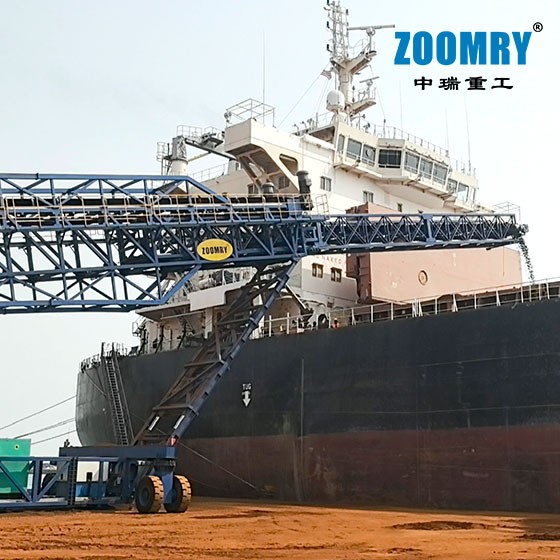
Radial Telescopic Shiploader
The core ship loading equipment with radial, telescopic, and luffing functions. Covers multiple hatches from a single feed position without vessel shifting. Available in ZRSL-33 through ZRSL-58 models for all vessel classes.
View Details →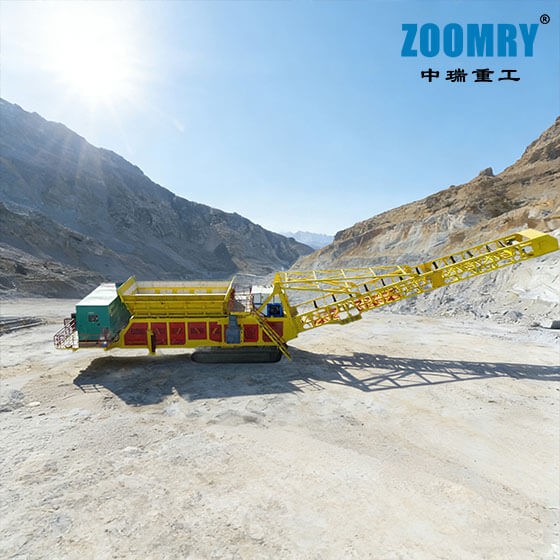
Mobile Hopper Feeder
Provides controlled, consistent feed rates to the ship loader from trucks or wheel loaders. Prevents surges that cause uneven vessel loading and ensures continuous operation during peak export periods.
View Details →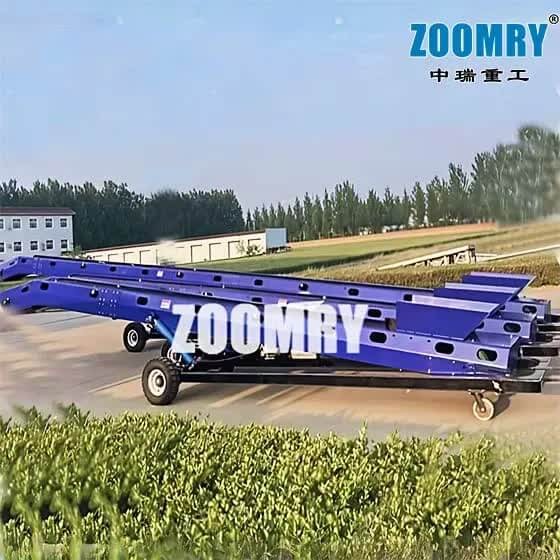
Mobile Link Conveyors
Modular, relocatable link conveyors that bridge stockpiles to the ship loader feed point. Eliminate truck haulage on the quay and reduce double handling — improving port efficiency and reducing fuel costs.
View Details →Why Choose ZOOMRY Ship Loaders
- Full Vessel Range Coverage: Four ZRSL models span from 100-ton barges to 180,000 DWT Capesize vessels — one manufacturer for every port requirement.
- 50,000+ Hour Component Life: Independently manufactured idler rollers and drums exceed 50,000 hours — 2.3× the industry average — dramatically reducing lifecycle maintenance costs.
- Rapid Deployment: Mobile ship loaders can be operational within days of arrival, not months. Modular containerized shipping with on-site assembly in 16–20 days minimizes port downtime.
- Global Compliance: CE, EAC, and ISO 9001/14001 certified. Dust emissions controlled to ≤10 mg/m³, meeting international environmental standards for bulk cargo operations.
Ship Loading System in Action
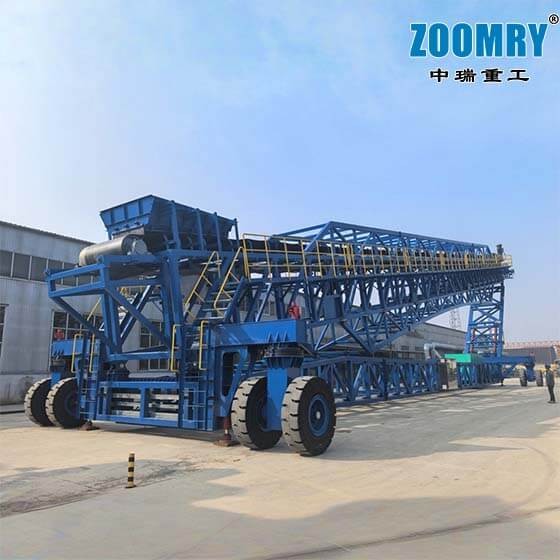
Bintulu Port PKE/PKS Ship Loading — Malaysia
ZOOMRY delivered mobile ship loaders to Bintulu Port, Malaysia's largest palm kernel handling hub, processing over 1.5 million tons annually. The ZRSL-50 units handle barges and Handysize bulk carriers with telescopic reach and integrated dust suppression — achieving 1,280 t/h loading capacity and reducing vessel turnaround time from 38 hours to 20.5 hours.
Read Full Case Study →Need Help Selecting the Right Ship Loader for Your Terminal?
Contact our port equipment specialists for a free vessel compatibility assessment and customized loading solution.