 ZOOMRY

The core function of the Heavy Duty Hopper Feeder is to accurately receive heavy bulk materials such as iron ore, coal, and granite transported by loaders and excavators. After smoothly accepting these materials from storage silos or job sites, it continuously and evenly conveys them to downstream equipment including crushers, belt conveyors, and mobile shiploaders, serving as the core support for high-load operations at mine sites.
Bulk materials at mine sites generally feature large particle sizes (some up to 250mm), heavy unit weights, and high transportation demands. Additionally, the operating environment often faces challenges such as intense dust, drastic day-night temperature differences, and rough terrain. Traditional feeding equipment frequently encounters issues like insufficient load-bearing capacity, poor speed regulation accuracy, material jamming, accumulation, and unbalanced conveying rhythms, directly leading to overload shutdowns of downstream equipment or idle production capacity. ZOOMRY's Heavy Duty Hopper Feeder, with its robust load-bearing structure design and precise variable frequency speed regulation system, can not only stably resist the impact load of large-particle bulk materials but also achieve uniform feeding, eliminating the risk of failures in downstream equipment caused by uneven feeding from the source. Meanwhile, the equipment boasts excellent dust resistance and high-temperature resistance, maintaining continuous operation even under harsh working conditions and laying a solid foundation for the efficient and stable operation of mining production lines.
Beyond the core mining scenario, this equipment also perfectly meets the needs of similar high-load operations such as bulk material transfer at ports. Its maximum handling capacity of 3000TPH (tons per hour) can accurately match the continuous production rhythm of large-scale mines, and the compatible feeding particle size of ≤250mm covers most aggregate specifications at mine sites. No additional crushing or pretreatment of raw materials is required, significantly streamlining the operation process and making it the preferred equipment for global mining enterprises to improve production efficiency and reduce operational risks.
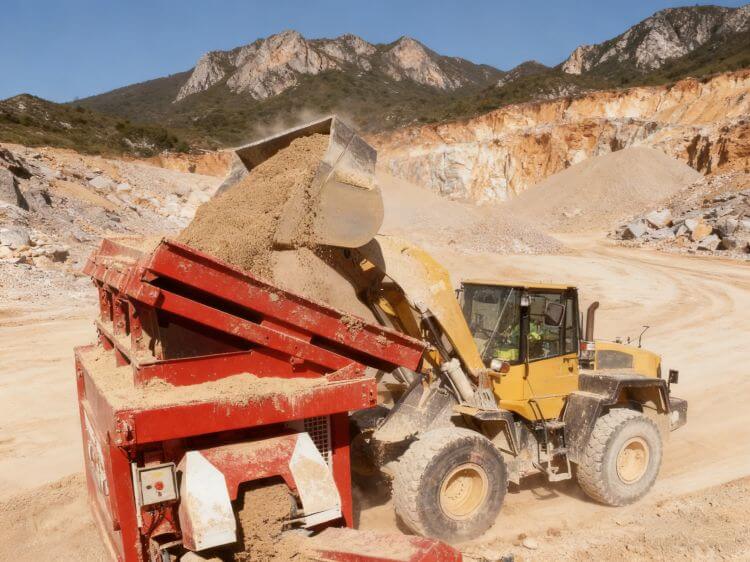
Components of the Heavy Duty Hopper Feeder
The efficient operation of ZOOMRY's Heavy Duty Hopper Feeder stems from its professional structural design tailored to mine site conditions. Each core component is built around the three key requirements of "high load-bearing capacity, high durability, and high adaptability," ensuring long-term stable operation of the equipment in harsh environments.
The hopper device adopts a large-capacity design of 12-24m³, enabling centralized temporary storage of raw materials. Transport equipment commonly used at mine sites does not need to wait for a long time for unloading, effectively reducing equipment idle time and significantly improving the overall efficiency of the feeding process. The interior of the hopper fully considers material flow characteristics, specifically avoiding the freezing and accumulation of wet or sticky materials. During winter operations, simply cleaning residual materials in the silo in advance can prevent jamming risks during startup.
The feeding system offers two adaptation options: heavy-duty belt and chain plate, meeting the conveying needs of different material characteristics. Belt feeding is suitable for the stable transfer of medium-hardness bulk materials, reducing material wear on the equipment; chain plate feeding is welded from high-strength alloy steel plates, featuring excellent impact resistance and wear resistance, capable of easily handling the conveying challenges of large-particle ore.
The drive system adopts a dual-motor drive design, supporting the selection of electric or hydraulic drive modes, with strong and stable power output. Combined with variable frequency control technology, it can flexibly adjust the feeding speed according to the operation rhythm of downstream equipment, achieving precise matching of feeding volume. In terms of the support and mobile structure, the 15-24m inclined arm can adapt to a discharge height of 5.5-8.2m. The dual-option chassis (wheel-type and crawler-type) endows the equipment with flexible mobility, allowing quick position adjustment according to changes in mine operation points without the need for fixed installation foundations, adapting to the site conditions of different mines.
The protection system reaches IP65 (NEMA-4 rating), effectively isolating dust and moisture erosion, ensuring the normal operation of the electrical system and moving parts in the harsh outdoor environment of mine sites. Targeting common mine site issues such as material impact, dust pollution, and uneven terrain, the equipment has also undergone targeted optimizations: wear-resistant liners are installed inside the hopper to reduce impact damage from falling large ore blocks; chain plate connections are fixed with high-strength bolts, combined with keyless bushing connection technology, balancing ease of disassembly and assembly with structural strength; the variable frequency control design of the dual-motor drive can avoid overload of downstream crushers due to excessive feeding or production capacity waste caused by insufficient feeding.
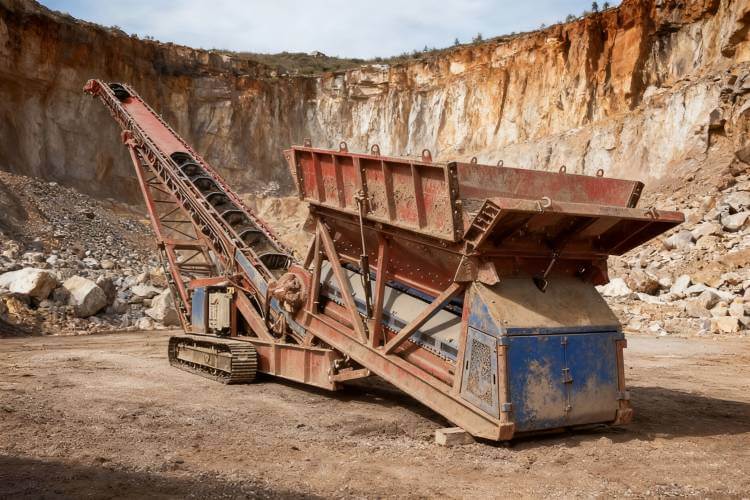
Mine Site Operation Process of the Heavy Duty Hopper Feeder
The operation process of ZOOMRY's Heavy Duty Hopper Feeder at mine sites follows the scientific logic of "preparation and commissioning - raw material reception - precise conveying - safety interlocking - final maintenance." Each link is closely connected to ensure efficient matching with the mine's production rhythm, maximizing operational efficiency and safety factors.
Pre-operation preparation requires a comprehensive inspection of the tightness of anchor bolts, the oil level of the drive device, the integrity of the lubrication system, and the tension of chain plates or belts to avoid component loosening or jamming during operation. At the same time, it is necessary to confirm that the interlocking control signals of upstream and downstream equipment are normal, and emergency stop devices are installed in prominent and easily operable positions, complying with the requirements of the EN 1009-2:2020 international safety standard. After completing the inspection, a no-load test run of no less than 2 hours is required, focusing on monitoring key indicators such as equipment operation noise (not exceeding 85 dB(A)) and bearing temperature rise (not exceeding 30℃). Only after confirming no abnormalities can the equipment enter the load operation state.
After transport equipment such as excavators and bucket wheel stacker-reclaimers deliver the mined raw materials to the hopper, the Heavy Duty Hopper Feeder starts the feeding system according to the operating status of downstream equipment. During startup, the principle of "bottom-up against the ore flow direction" must be strictly followed: the feeder can only be started after downstream equipment such as crushers and belt conveyors are operating normally, avoiding material accumulation when downstream equipment is not ready. For large-particle ore (≤250mm), the chain plate feeding system carries materials through high-strength alloy chain plates, achieving stable conveying through the meshing transmission of sprockets and chains, preventing belt slipping or material spillage; for medium-hardness bulk materials, the belt feeding system can be selected, which reduces material wear on the equipment through wear-resistant belts and realizes efficient transfer. The dual-motor drive system precisely adjusts the feeding speed through variable frequency control, with a maximum handling capacity of 3000TPH, ensuring uniform conveying of raw materials to downstream equipment and improving crushing or transfer efficiency.
During equipment operation, the safety interlocking mechanism provides full protection. Real-time interlocking with upstream and downstream equipment is maintained through interlocking control signals. When a failure occurs in downstream equipment, the feeder can automatically decelerate or stop, avoiding equipment damage caused by material accumulation. If large ore blocks block the feed inlet or discharge outlet, the equipment will immediately issue an alarm signal. Operators must stop the equipment and cut off the power supply in accordance with specifications before handling the issue. The handling must be carried out by no less than two people, with at least one person monitoring the entire process to ensure operational safety. All moving parts are equipped with reliable protective devices to prevent injuries caused by accidental contact by personnel, fully complying with the requirements of international safety standards for mechanical protection. Cleaning, maintenance, or overhaul work is strictly prohibited during equipment operation.
Standardized operation during the final maintenance phase is crucial for extending equipment service life. During shutdown, the principle of "top-down along the ore flow direction" should be followed: first stop the feeder from receiving materials, and then shut down the equipment after the raw materials in the hopper are basically conveyed, avoiding difficulties in the next startup due to residual raw materials. After the operation, it is necessary to promptly clean the ore, dust, and oil stains on the equipment surface, carefully inspect the wear of vulnerable parts such as chain plates and belts, and keep records of lubrication maintenance and operation to fully prepare for the next operation.
Core Advantages of the Heavy Duty Hopper Feeder
ZOOMRY's Heavy Duty Hopper Feeder has become the preferred equipment for global mining enterprises due to its outstanding advantages in high load-bearing capacity, durability, and flexible adaptability. These advantages are directly transformed into improved production capacity and optimized operational costs for mine sites.
-
The maximum handling capacity of 3000TPH can perfectly match the continuous production rhythm of large-scale mines, with a significant increase in production capacity compared to traditional feeding equipment; the compatible feeding particle size of ≤250mm covers most aggregate specifications at mine sites, eliminating the need for pre-crushing or pretreatment of raw materials, reducing intermediate operation links, and effectively shortening the production cycle.
-
The IP65 (NEMA-4 rating) protection level and high-strength structure design enable the equipment to operate stably in harsh mine environments such as heavy dust, high temperature, and humidity, reducing failure shutdowns caused by environmental factors. The chain plates are made of high-strength steel no less than Q235, the service life of sprockets is no less than 5 years, the service life of chain plates is no less than 3 years, and the overall service life of the equipment before scrapping can reach 10 years, significantly reducing equipment replacement frequency and maintenance costs.
-
The dual-option chassis (wheel-type/crawler-type) allows the equipment to move flexibly according to changes in operation points without the need for fixed installation foundations; the 15-24m inclined arm and 5.5-8.2m discharge height can flexibly adapt to downstream conveying equipment of different heights, reducing the difficulty of modifying mine production lines. Meanwhile, the variable frequency control operation method is simple and easy to understand, and operators can take up their posts after short-term training. The equipment operation status can be monitored in real-time through the interlocking control system, facilitating timely detection and handling of abnormalities.
-
The product strictly complies with the EN 1009-2:2020 international standard and JB/T 4040 industry standard. It has passed type tests and production process quality control to ensure the consistency and reliability of product quality, enabling free circulation in the global market. The comprehensive safety protection design, including emergency stop devices, protective railings for moving parts, and interlocking alarm systems, maximizes the personal safety of operators and reduces mine operation risks.
Maintenance Guide for the Heavy Duty Hopper Feeder
To ensure the long-term stable operation of the Heavy Duty Hopper Feeder at mine sites and extend its service life, it is necessary to strictly follow scientific maintenance principles and operational specifications. The core points are as follows:
-
Daily maintenance requires regular inspection of the lubrication system to ensure sufficient lubrication of key components such as the drive device, sprockets, and bearings, avoiding increased component wear caused by dry friction; focus on checking the tension and wear of chain plates or belts every week, promptly tightening loose bolts, and immediately replacing severely worn or broken parts to avoid equipment failures; regularly clean residual materials inside the hopper and on the equipment surface to prevent the accumulation and freezing of wet materials or caking of sticky materials, which may affect the normal operation of the equipment.
-
Operators must hold valid certificates to work, wear complete labor protection equipment, and are prohibited from working under the influence of alcohol or fatigue. They must concentrate on their work during operation to avoid irregular operations. Cleaning, maintenance, or overhaul work is strictly prohibited during equipment operation, and direct contact with moving parts with hands or tools is not allowed. When handling material jamming, the equipment must be stopped and the power supply cut off first, with a dedicated person assigned to monitor. Strictly abide by the shift handover system, and keep detailed records of equipment operation status, existing hidden dangers, and handling situations to ensure the continuous transmission of operational information.
-
Conduct regular overhauls in accordance with the requirements of the equipment manual. The service life before the first overhaul is no less than 14,000 hours. During the overhaul, fully disassemble and inspect the equipment, replace aging components, and restore equipment performance. When the equipment is parked for a long time, it should be stored in a covered and moisture-proof place. Electrical equipment should be kept dry and ventilated, and exposed processed surfaces should be coated with anti-rust grease to prevent component corrosion. According to the material characteristics of the mine site (such as corrosiveness, high hardness, etc.), regularly replace vulnerable parts such as wear-resistant liners and chain plates to avoid affecting the conveying efficiency and safety of the equipment due to component wear.
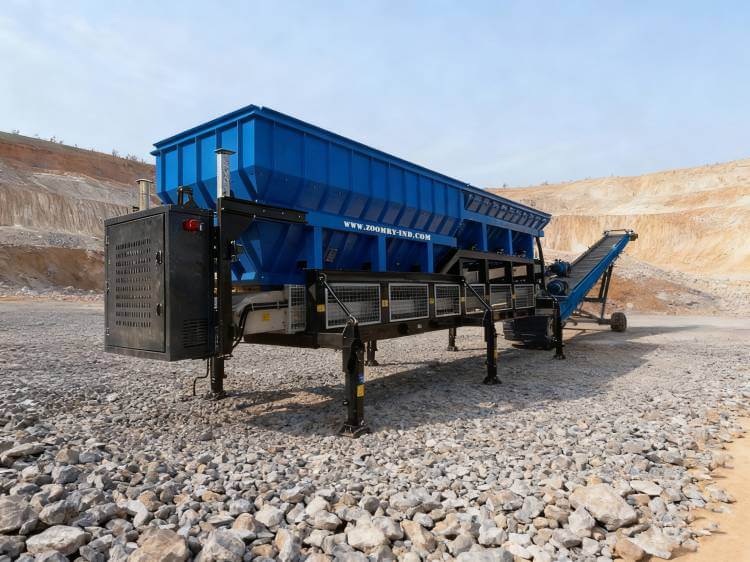
A Reliable Partner for Global bulk material handling equipment
With years of experience in the bulk material handling equipment industry, ZOOMRY has become a trusted partner of global mining enterprises through professional technological R&D, strict quality control, and comprehensive service support. In addition to Heavy Duty Hopper Feeders, the company also provides complete bulk material handling solutions including belt conveyors, bucket wheel stacker-reclaimers, and truck unloaders, as well as supporting parts such as idlers, rollers, and cleaning scrapers, fully meeting the full-process operational needs of mine sites.
All Heavy Duty Hopper Feeders of ZOOMRY are manufactured in accordance with approved drawings and technical documents. Before delivery, they undergo strict type tests and factory acceptance tests to ensure compliance with international standards and industry specifications. Under the condition that the user complies with the storage, installation, and usage rules, if the product is damaged or fails to work normally due to poor manufacturing quality within 24 months from the date of shipment or 18 months from the date of installation and commissioning, ZOOMRY will be responsible for free repair or replacement of the product and its parts.
The company provides comprehensive technical support services to global customers, including equipment installation guidance, operator training, and operation process optimization, helping customers quickly master equipment usage and maintenance skills to ensure the equipment achieves optimal performance. According to the working condition characteristics of different mine sites, customized equipment adjustment plans can be provided to accurately meet the personalized production needs of customers.
With its scientific structural design, strong working condition adaptability, and strict quality control, ZOOMRY's Heavy Duty Hopper Feeder perfectly meets the operational needs of mine sites in harsh environments, providing efficient and reliable feeding solutions for global mining enterprises. If you need further information about equipment selection, technical parameter details, or customized solutions, please contact ZOOMRY's professional team.
