 ZOOMRY

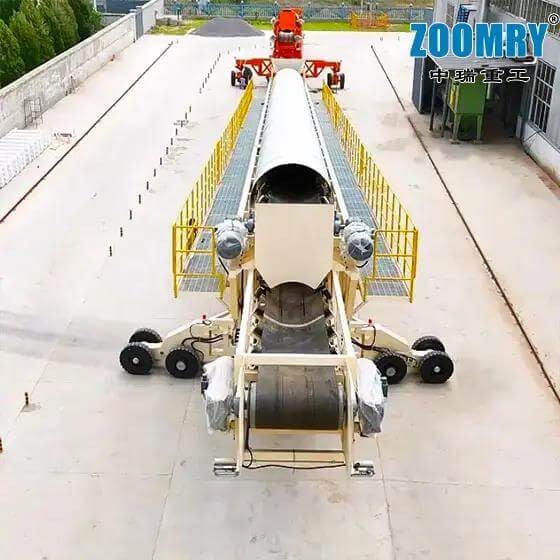

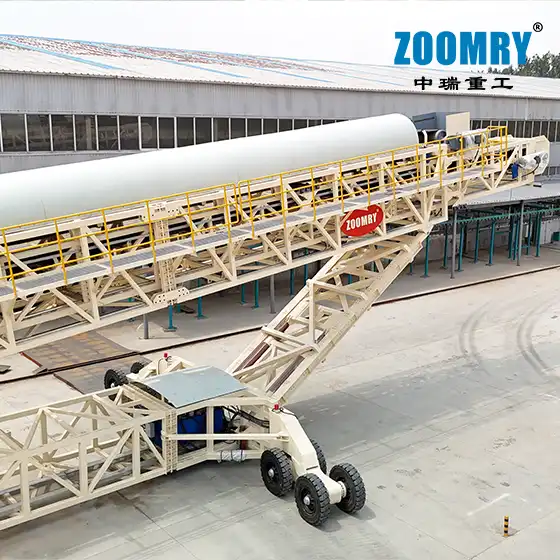
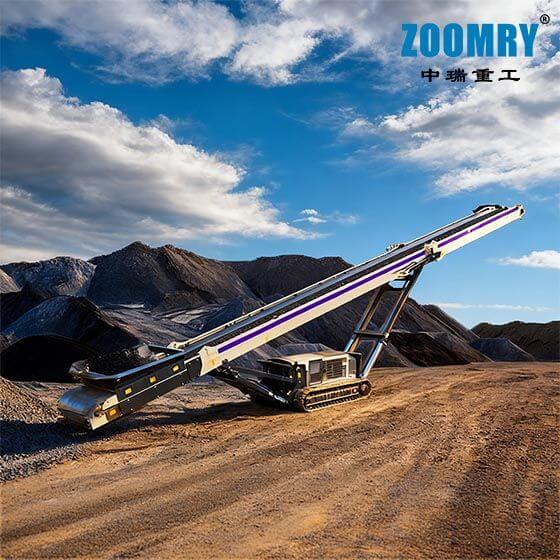
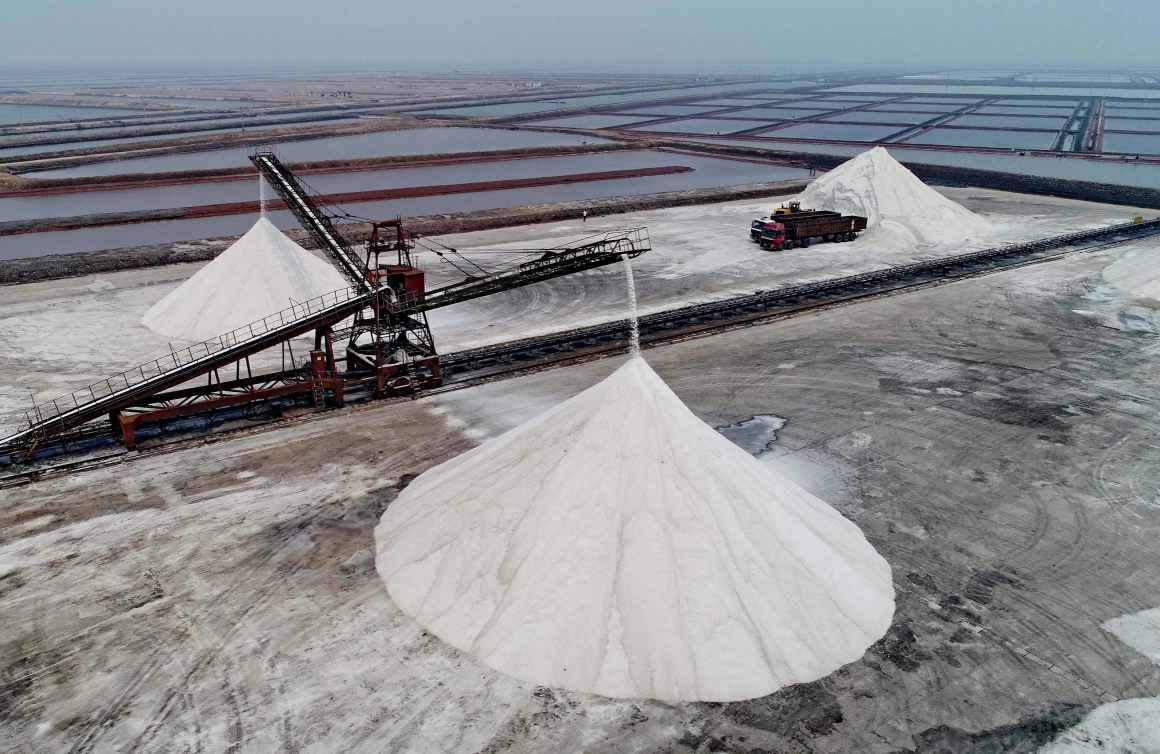
The telescopic radial stacker is one of the most cost-effective and efficient ways to stack bulk materials on the market. By combining telescopic boom extension with 360° radial slewing, it builds wide扇形 stockpiles from a single feed point — eliminating the need to reposition the entire machine. Reducing segregation, degradation, contamination, and compaction during storage ensures "in-spec" material for any application across mining, quarry, and port operations.
Unlike a fixed-direction belt conveyor that discharges at a single point, the telescopic radial stacker provides up to 30% more stacking capacity in the same footprint when stacked in a trapezoidal configuration. This radial stacking capability is what sets it apart from standard telescopic stackers — making it the preferred choice for operations that need to maximize yard utilization without expanding their site.
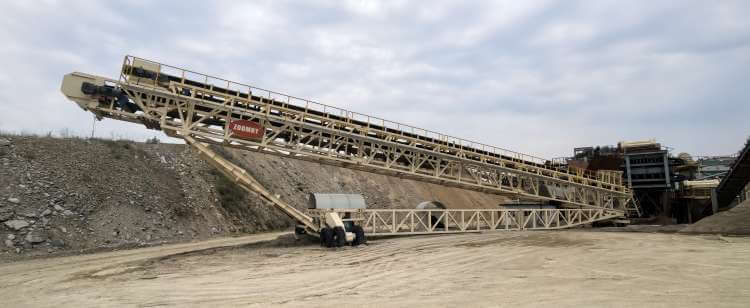
ZOOMRY Telescopic Radial Stacker — 360° Slewing with Telescopic Boom for扇形 Stockpiling
What Makes a Telescopic Radial Stacker Different?
A standard telescopic stacker extends and retracts its boom to adjust discharge height and reach — but it stacks in a straight line. A telescopic radial stacker adds 360° slewing capability around the tail section, creating wide扇形 stockpiles without moving the feed point. This radial movement is the key differentiator:
- Single Feed Point, Multiple Piles: The stacker pivots around its tail section, serving multiple stockpile zones from one position — no need to relocate the entire machine or reconfigure the feeding conveyor system.
- Layered Stacking with Radial Control: The telescopic boom extends and retracts while slewing, depositing material in thin, even layers across the扇形 pile. This minimizes segregation to ≤0.5% — critical for maintaining product quality in aggregate and mineral operations.
- Yard Utilization Maximized: The扇形 stockpile geometry utilizes up to 30% more storage capacity compared to linear stacking — ideal for space-constrained port terminals and cement plants.
Features and Benefits
- Industry recognized as the best inventory method for maintaining material quality.
- Up to 30% more capacity in the same footprint than conventional stackers.
- Significantly reduces separation, degradation, compaction, and contamination during stacking.
- Delivers higher quality products at a lower cost per ton of inventory.
- Eliminates the need for wheel loaders to build inventory — reducing labor and maintenance costs by up to 40%.
- Load rates up to 3,000 TPH with full extension lengths up to 20 meters.
- Eliminates double handling of material — direct feed from crusher or hopper feeder to stockpile.
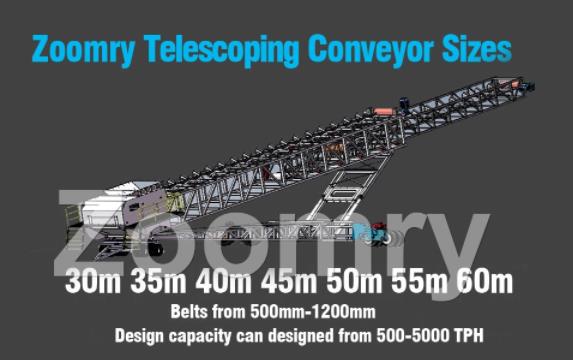
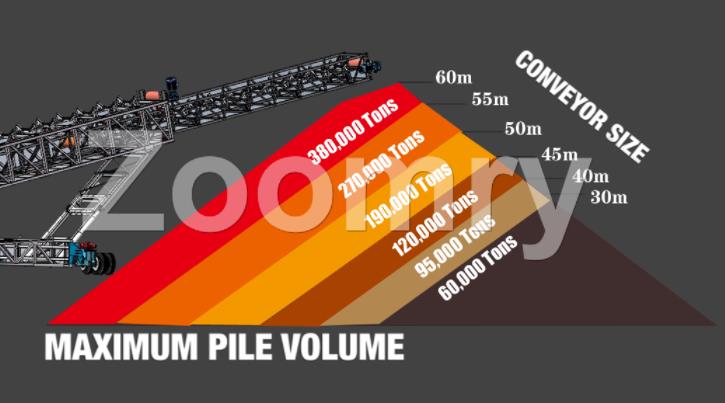
Series Model Parameters
| Model | Width (mm) | Max Capacity (m³/h) | Speed (m/s) | Standard Length (m) | Max Angle | Telescopic Length (m) |
|---|---|---|---|---|---|---|
| ZR80SF | 800 | 500 | 2.5 | 30/40/50 | 20° | 10-20 |
| ZR100SF | 1000 | 850 | 2.5 | 30/40/50 | 20° | 10-20 |
| ZR120SF | 1200 | 1500 | 3.15 | 30/40/50 | 20° | 10-20 |
| ZR140SF | 1400 | 2100 | 3.15 | 30/40/50 | 20° | 10-20 |
| ZR160SF | 1600 | 3500 | 4 | 30/40/50 | 20° | 10-20 |
The above are our standard models — we can customize production according to customer needs. We have a long and solid cooperation with SEW and Flender. Look forward to your inquiry.
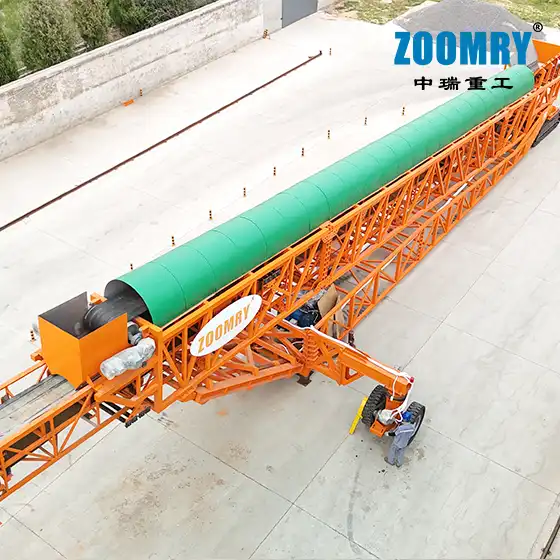
Structural Composition of Stacker
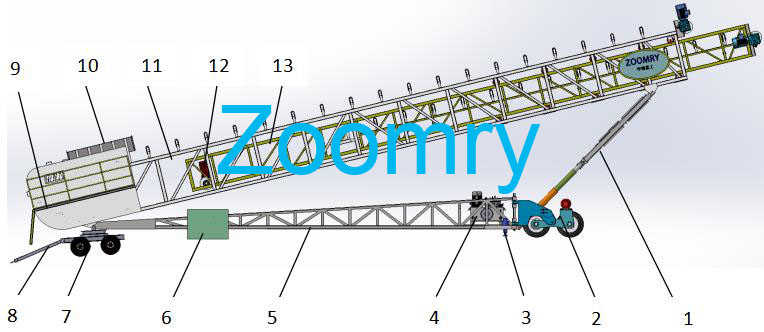
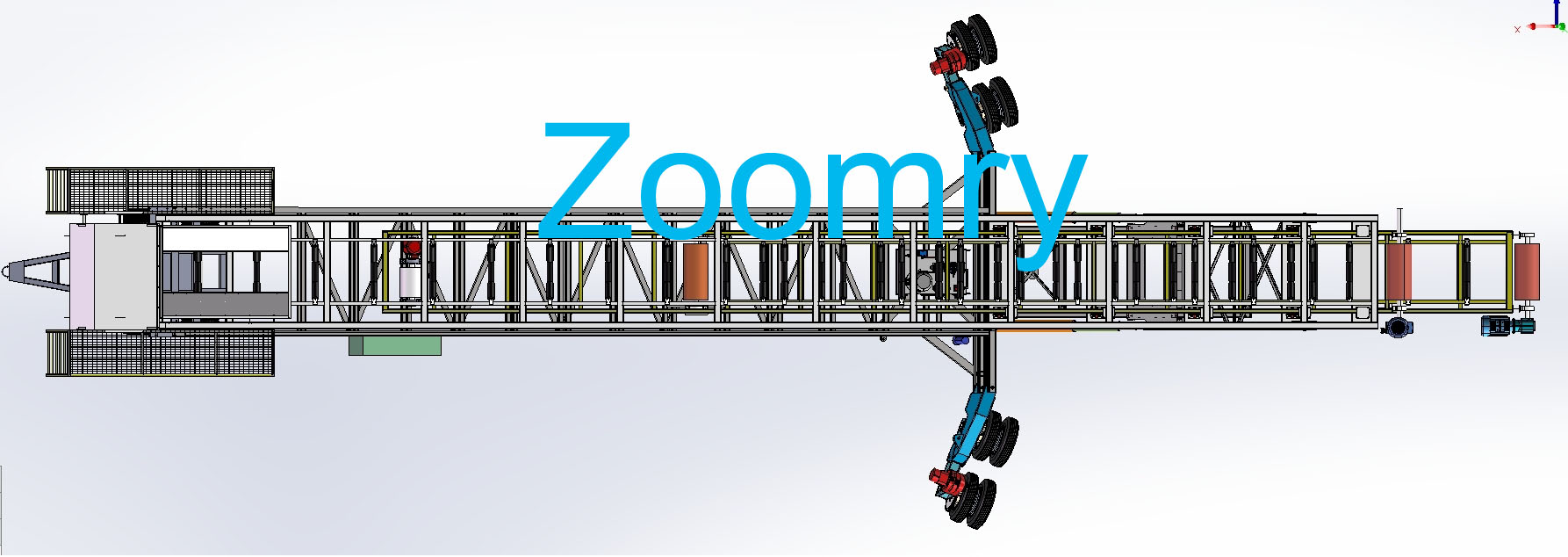
1-Hydraulic lifting system 2-Front wheel walking device 3-Hydraulic outriggers 4-Hydraulic station system 5-Base 6-Electrical control box 7-Tail wheel rotation device 8-Tow bar 9-Maintenance platform 10-Hopper 11-Main Conveyor Belt 12-Wire rope traction device 13-Telescopic conveyor belt
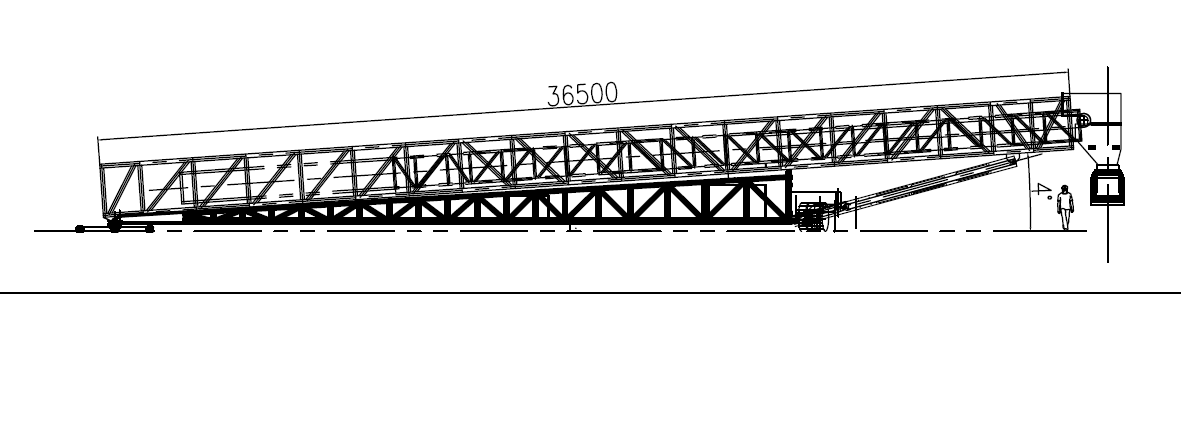
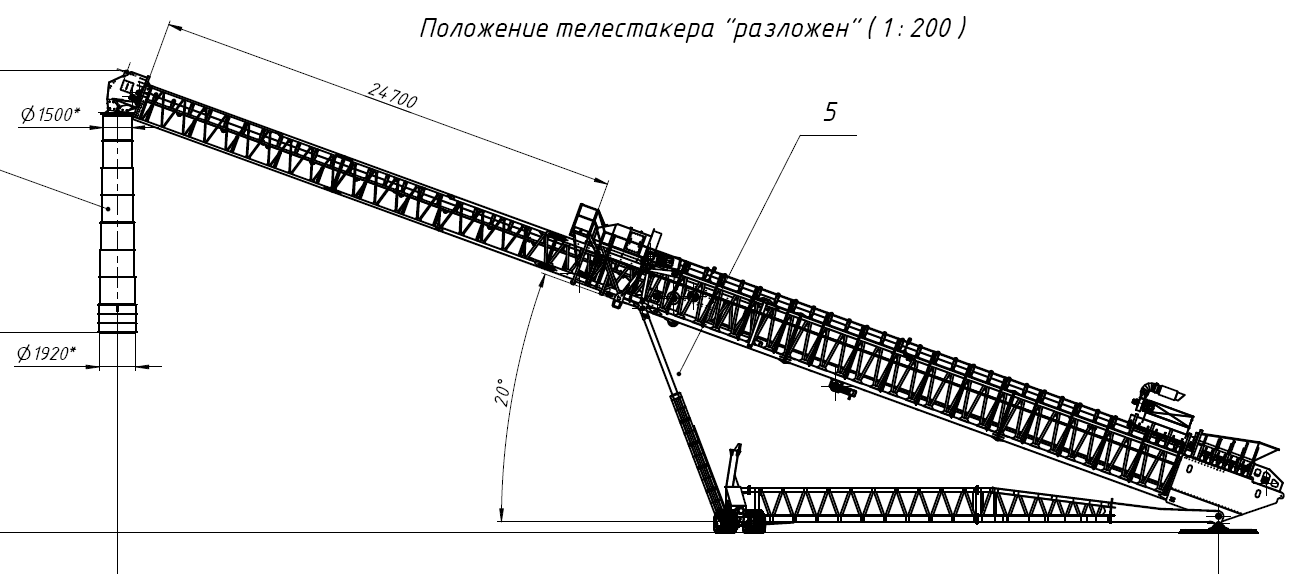
The included angle of the stacker can be controlled between 4 degrees and 20 degrees.
Front Wheel Walking Device: Mainly composed of a traveling frame, hydraulic motor, traveling tire, chain, and chain guard — connected with the base by a pin shaft. In normal use, the hydraulic outrigger fully lifts the front of the base. After the tire is off the ground, the front wheel running device is manually rotated to expand to the working position. After reaching position, use the pull rods on both sides of the base to connect with the pin shaft. Then the hydraulic outriggers can be retracted and the tires are all on the ground for normal work or rotation. When the mobile stacker needs to leave the work site, the outriggers are lifted again. Tire pressure: 11-12 MPa, maximum cannot exceed 12 MPa.
Electrical Control Box: Bolted and installed on the base, the electrical control box is the operation center of the entire stacker — all operations are completed from this central control point.
Tail Wheel Rotating Device: Mainly composed of a tire, turntable, and bracket. The base and the fixed frame of the belt conveyor are all installed on the bracket of the tail wheel rotating device — enabling 360° rotation for radial stacking.
Related Industry Solutions

Need a Custom Telescopic Radial Stacker?
Contact ZOOMRY for a radial stacker engineered to your specific material, capacity, and yard layout — backed by 20+ years of bulk material handling expertise.
Contact Us Today