 ZOOMRY

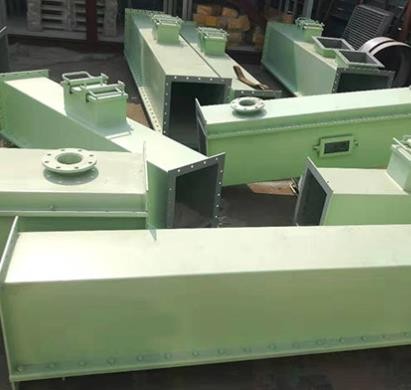
ZOOMRY air conveying chute is a pneumatic gravity-flow system for dry powdery materials with moisture content ≤1% and temperature ≤150°C. Compared to the standard air chute conveyor, this model is optimized for modular plant layouts — supporting multi-point feeding and discharge with convenient direction changes in cement and power applications. No rotating parts, good sealing, and low power consumption.
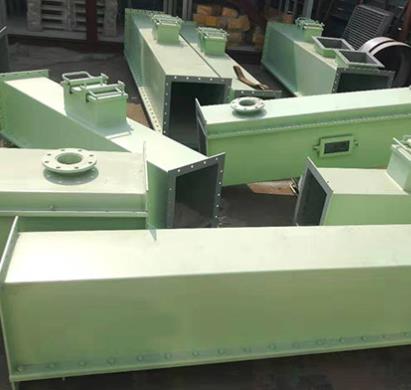
ZOOMRY Air Conveying Chute — Pneumatic Gravity Flow for Cement and Raw Meal Powder
How Does an Air Conveying Chute Work?
The air conveying chute operates on fluidization principle. Dry powder is fed into the upper chamber while compressed air enters the lower chamber through a dedicated blower. The air passes upward through a breathable synthetic fiber layer, suspending material particles in a fluidized state. This gasification reduces internal friction, allowing the powder to flow down a slight incline (4°–12°) under gravity — achieving continuous transport without any mechanical moving parts in the material stream.
This principle makes air conveying chutes fundamentally different from belt conveyors or screw conveyors: there is no belt to wear out, no screw to jam, and no bearings to fail in the material contact zone. The only consumable is the breathable fabric layer, which can be replaced during scheduled maintenance.
How to Select the Right Air Conveying Chute Model?
Choosing the correct air conveying chute depends on three key factors:
- Trough Width: Available from XZ200 (200mm) to XZ800 (800mm). Wider troughs deliver higher capacity — an XZ800 at 12° slope handles up to 1,295 t/h of cement versus 70 t/h for an XZ200 at the same angle.
- Slope Angle (α): Standard installation slopes range from 4° to 12°. Each 2° increase roughly doubles throughput — but steeper slopes require more headroom. For most cement plant layouts, 6°–8° provides the optimal balance.
- Material Density: The specification table shows capacities for both cement (denser) and raw meal (lighter). Heavier materials achieve higher throughput at the same trough width and slope.
Specifications
| Specification | XZ200 | XZ250 | XZ315 | XZ400 | XZ500 | XZ630 | XZ800 | ||
|---|---|---|---|---|---|---|---|---|---|
| Trough Width (mm) | 200 | 250 | 315 | 400 | 500 | 630 | 800 | ||
|
Conveying Capacity (t/h) |
α=4° | Cement | 22 | 40 | 70 | 130 | 220 | 320 | 400 |
| Raw Meal | 16 | 30 | 55 | 100 | 165 | 245 | 310 | ||
| α=6° | Cement | 40 | 65 | 120 | 250 | 400 | 610 | 765 | |
| Raw Meal | 30 | 55 | 90 | 185 | 300 | 455 | 565 | ||
| α=8° | Cement | 50 | 80 | 140 | 300 | 470 | 720 | 900 | |
| Raw Meal | 35 | 65 | 110 | 225 | 355 | 540 | 670 | ||
| α=10° | Cement | 60 | 100 | 170 | 380 | 570 | 900 | 1080 | |
| Raw Meal | 45 | 80 | 140 | 285 | 425 | 670 | 800 | ||
| α=12° | Cement | 70 | 120 | 205 | 455 | 685 | 1080 | 1295 | |
| Raw Meal | 50 | 95 | 165 | 340 | 510 | 805 | 960 | ||
| Trough Section Length (mm) | Standard | 2,000 | |||||||
| Non-standard | 250 | ||||||||
| Required Air Pressure (kPa) | 4 – 5.5 | ||||||||
| Required Air Volume (m³/m²·min) | 1.5 – 2 | ||||||||
| Air Permeable Layer | Material | Synthetic Fiber | |||||||
| Thickness (mm) | 4 – 6 | ||||||||
| Temperature Resistance (℃) | 150 | ||||||||
| Radial Breaking Strength (N/cm width) | 4,700 | ||||||||
| Resistance (Pa) | 800 – 1,200 (at 2m³/m²·min) | ||||||||
Key Advantages vs Mechanical Conveyors
- No rotating parts in material flow — eliminating wear points and reducing maintenance costs.
- Dust-tight sealing — fully enclosed design prevents material loss and meets environmental standards.
- Low power consumption — only requires compressed air from a dedicated blower, consuming less energy than mechanical alternatives.
- Multi-point feeding and discharge — modular trough sections adapt to complex cement plant layouts with multiple material sources.
- Quiet operation — no mechanical noise compared to belt conveyors or screw conveyors, improving workplace safety.
Typical Applications
- Cement Plants: Transporting cement from silos to packing stations, and raw meal from mills to homogenization silos.
- Power Plants: Handling fly ash from electrostatic precipitators to storage silos — fully enclosed to prevent fugitive dust.
- Chemical Plants: Conveying lime powder, talc, and other dry chemicals between process stages.
- Steel Mills: Transporting desulfurization powders and baghouse dust in integrated steelmaking.
Related Products
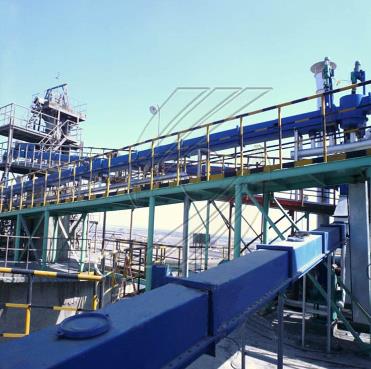
Related Industry Solutions
Need an Air Conveying Chute for Your Plant?
Contact ZOOMRY for an air conveying chute engineered to your material, slope, and capacity — backed by ISO 9001 certified manufacturing.
Contact Us Today