 ZOOMRY

1. Product Overview
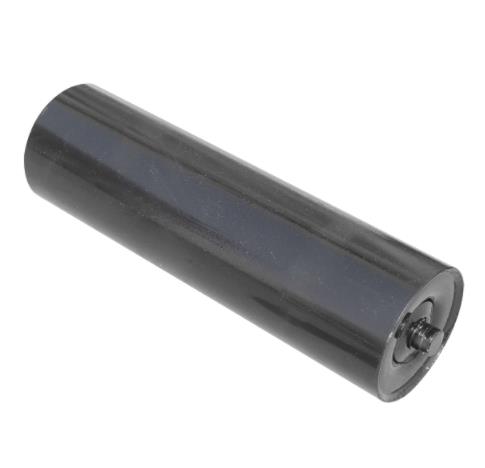
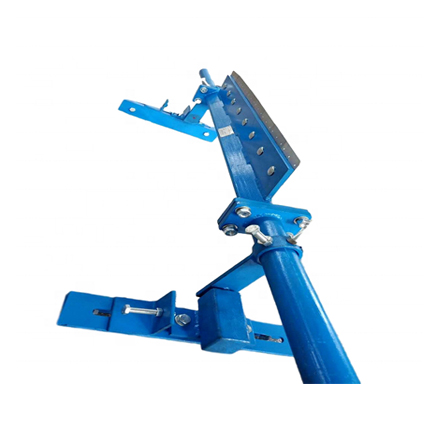
ZOOMRY CEMA C self-aligning return idlers automatically correct return side belt misalignment with a pivot-mounted frame and side guide rollers. Engineered to CEMA C standards for mining and industrial conveyors up to 42-inch belt width, these return idlers reduce return-side edge wear by up to 50%. When the belt drifts to one side, the guide rollers engage the belt edge and pivot the entire frame — steering the belt back to center with no external power or control system required. Available with 4-inch and 5-inch diameter flat rollers.
Self-aligning return idlers are critical for long overland conveyors and coal handling systems where return belt mistracking causes edge fraying, roller end cap damage, and increased maintenance costs. The passive pivot mechanism operates continuously — no sensors, no actuators, no operator intervention.
2. How Pivot-Mounted Self-Alignment Works
On the return side of a belt conveyor, the belt travels with its clean side facing the rollers — but without active tracking, frame misalignment, uneven loading, or wind load can cause the belt to drift laterally. Over time, belt edge contact with fixed roller brackets causes progressive fraying and delamination.
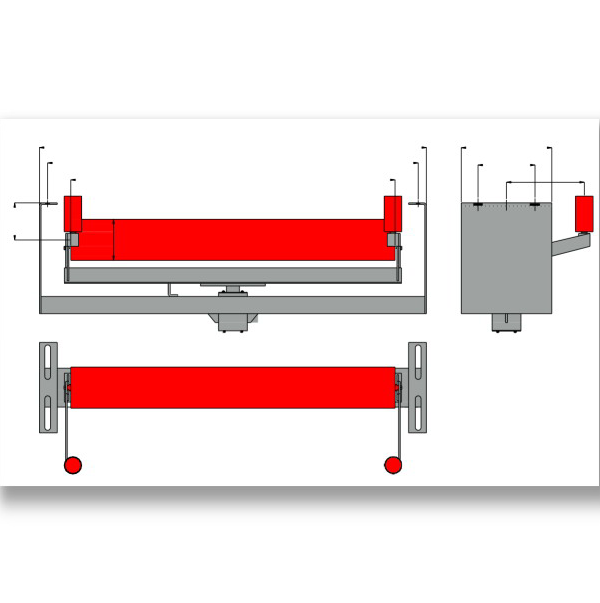
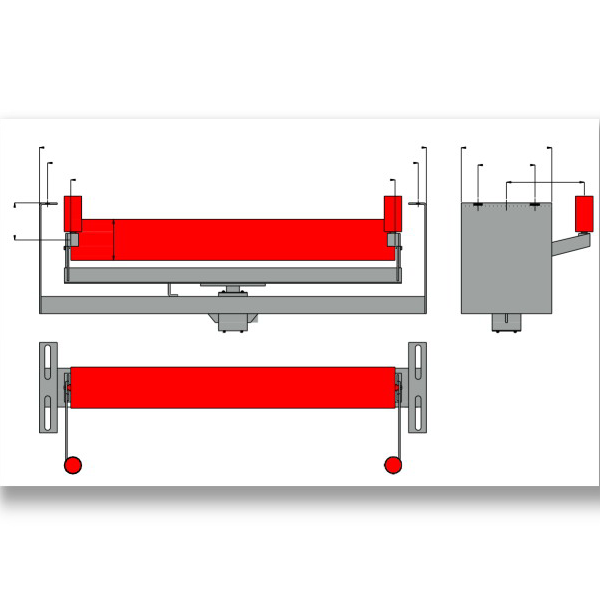
The CEMA C self-aligning return idler solves this with a center-pivot frame and two side-mounted guide rollers. When the belt drifts to the left, the left guide roller contacts the belt edge and rotates the frame counterclockwise — steering the belt back to center. When the belt drifts right, the right guide roller pivots the frame clockwise. The mechanism is entirely mechanical, requiring zero power and zero maintenance beyond standard roller bearing lubrication.
3. Key Features
Pivot-Mounted Frame — Center-pivot mechanism allows the entire roller assembly to rotate up to ±10°, steering the belt back to center when guide rollers detect edge drift.
Side Guide Rollers — Vertical guide rollers on both sides sense belt edge movement and trigger corrective pivot action — reducing return-side edge wear by up to 50% in cement and aggregate conveyor applications.
CEMA C Medium-Duty Rating — 4-inch and 5-inch diameter flat rollers engineered for belt widths up to 42 inches — the standard solution for medium-duty return tracking correction.
Fully Passive Operation — No sensors, no actuators, no control wiring — the purely mechanical pivot design operates continuously without external power or operator attention.
Advanced Labyrinth Sealing — Multi-stage seals on both main roller and guide rollers protect bearings from dust and moisture, delivering 50,000+ hour service life.
4. Self-Aligning Return vs Standard Return
| Feature | CEMA C Self-Aligning Return (C3) | CEMA C Standard Return (C7) |
|---|---|---|
| Tracking Mechanism | Pivot frame + side guide rollers | Fixed frame — no active tracking |
| Belt Edge Protection | Up to 50% edge wear reduction | Baseline — no corrective action |
| Power Required | Zero — fully mechanical | Zero |
| Installation Spacing | Every 30–50 m on long conveyors | Standard 3–4 m spacing |
| Best For | Long overland, reversible, and high-speed conveyors | Short conveyors, well-aligned frames |
5. Dimensions – CEMA C Self-Aligning Return Idlers
ZOOMRY CEMA C self-aligning return idlers are manufactured with 4-inch and 5-inch diameter flat rollers for belt widths from 18 to 42 inches. The pivot frame adds approximately 2–3 inches to overall mounting dimensions compared to standard fixed return idlers:
| BW | A | B | L | 4" H | 5" H |
|---|---|---|---|---|---|
| 18 | 27 | 33 | 21 | 5 1/4 | 6 1/4 |
| 24 | 33 | 39 | 27 | 5 1/4 | 6 1/4 |
| 30 | 39 | 45 | 33 | 5 1/4 | 6 1/4 |
| 36 | 45 | 51 | 39 | 5 1/4 | 6 1/4 |
| 42 | 51 | 57 | 45 | 5 1/4 | 6 1/4 |
Dimensions per CEMA C industry standards. BW=Belt width, A=Frame width, B=Overall width (including guide rollers), L=Flat roller length, H=Center height above mounting base. All dimensions in inches. Recommended installation spacing: every 30–50 meters on long conveyors.
Related Solutions


Need Help with Return Belt Tracking Issues?
Tell us your conveyor length, belt width, and tracking problem — our engineers will recommend the optimal self-aligning idler placement and configuration.
Self-Aligning Idler Selection Guide →