 ZOOMRY

1. How to Match a Coal Mobile Ship Loader to Your Vessel?
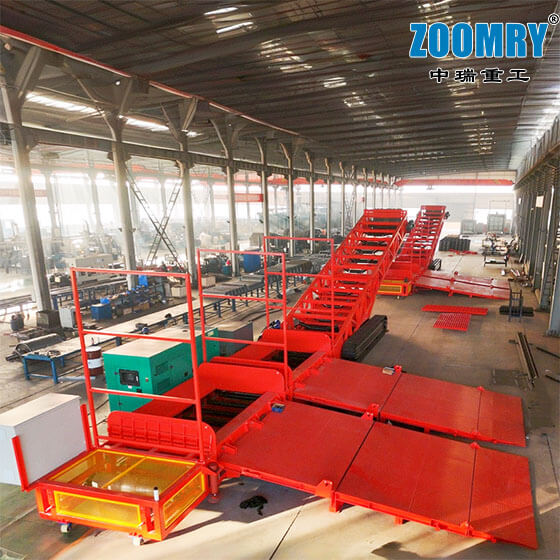
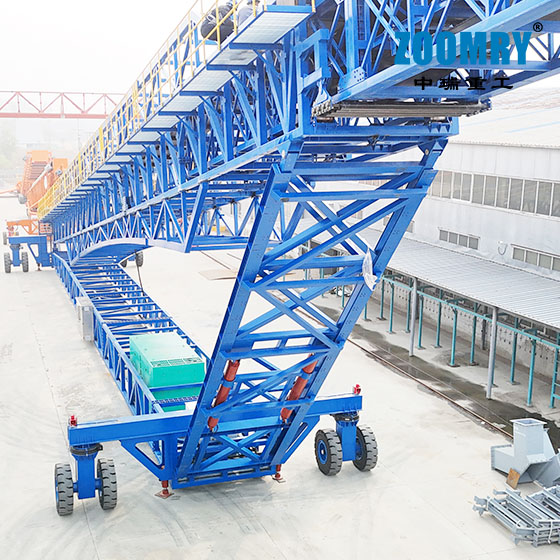
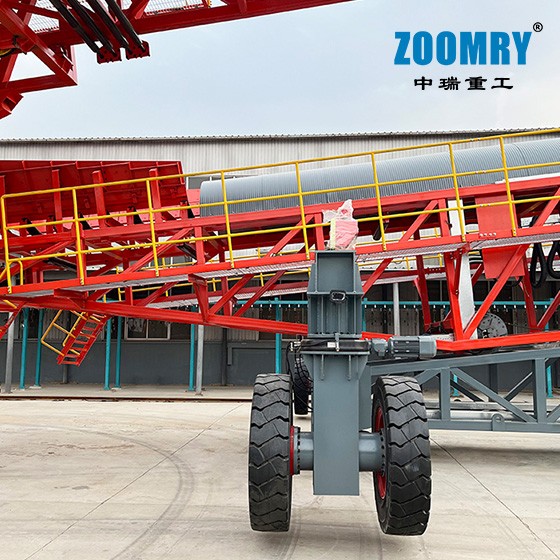
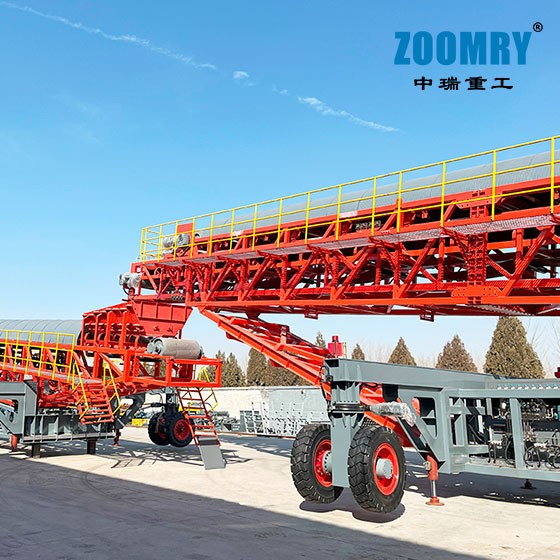
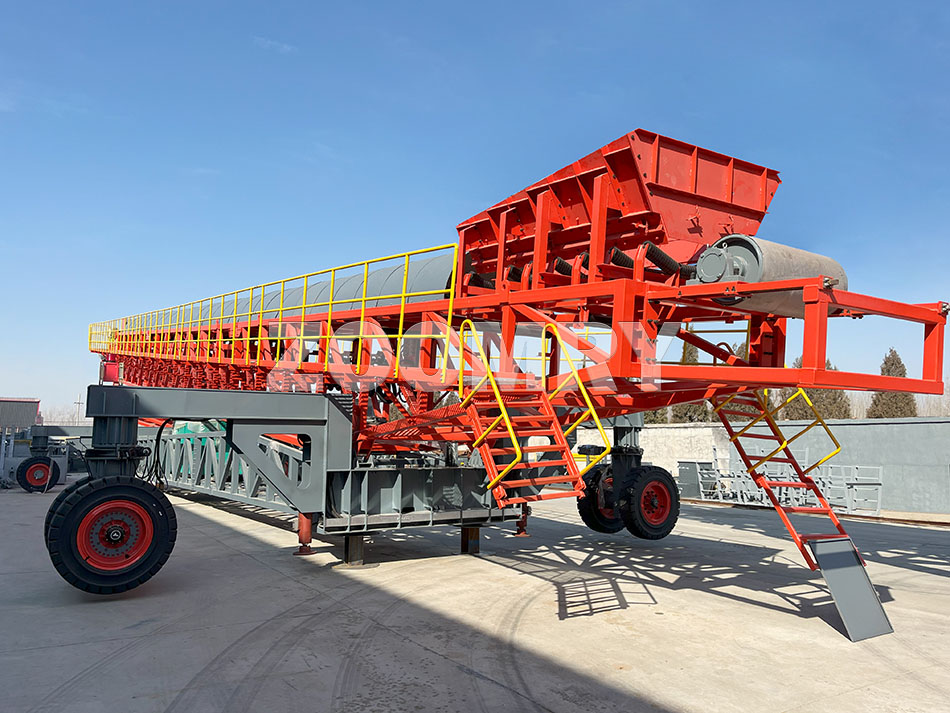
Selecting the right coal mobile ship loader starts with vessel type identification and dock dimension measurement. The all-travel mobile shiploader configuration offers maximum flexibility, allowing the equipment to move freely along the quay on wheels without rail dependency — ideal for coal handling terminals serving multiple berths.
Step One: Measure Your Dock and Vessel Parameters — Confirm available dock width, vessel beam, hatch dimensions, and height above dock level using the diagram below:
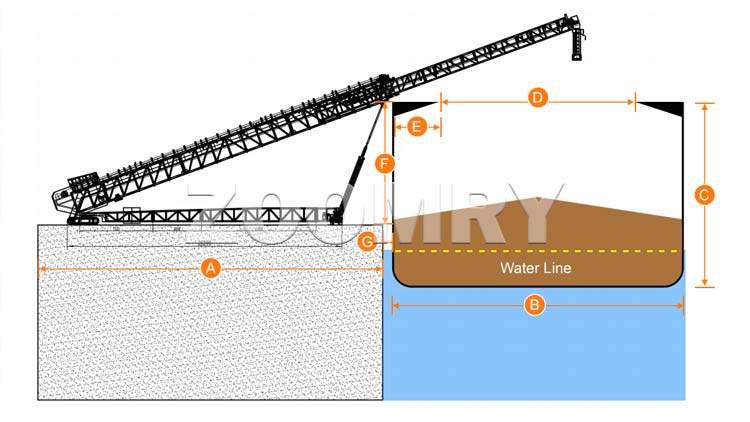
| Parameter | Symbol | Why It Matters |
|---|---|---|
| Available Dock Width | A | Determines undercarriage width and travel mode selection |
| Beam Width | B | Affects conveyor length needed to reach far-side hatches |
| Vessel Height | C | Sets minimum discharge height requirement |
| Hatch Width | D | Determines telescopic chute extension range needed |
| Height Above Dock | F | Critical for luffing angle and boom reach calculation |
Step Two: Select the Right ZRSL Model — Match your vessel class to the appropriate ship loader configuration. Available vessel types include Barge, Handysize, Handymax, Panamax, and Capesize. The tracked ship loader variant offers additional ground adaptability for unpaved quaysides.
2. Vessel Type and Ship Loader Model Matching Guide
| Vessel Type | DWT (ton) | Clearance (m) | ZRSL-33 | ZRSL-46 | ZRSL-52 | ZRSL-58 |
|---|---|---|---|---|---|---|
| Barge | 100–5,000 | 0–3 | ✓ | ✓ | ✓ | ✓ |
| Handysize | 10,000–35,000 | 4–8 | ✓ | ✓ | ✓ | ✓ |
| Handymax | 35,000–50,000 | 6–10 | — | ✓ | ✓ | ✓ |
| Panamax | 60,000–80,000 | 10–14 | — | — | ✓ | ✓ |
| Capesize | 80,000–120,000 | 16 | — | — | — | ✓ |
3. What Are the Uses for Mobile Ship Loaders in Coal Operations?
The primary purpose of a coal mobile ship loader is to load bulk coal onto vessels ranging from barges to Capesize carriers. The all-travel design allows the equipment to move freely on wheels along the dock, serving multiple vessel holds without repositioning the ship — a critical advantage for port and terminal operations where berth time is at a premium.
Beyond coal, ZOOMRY mobile ship loaders handle a wide range of bulk materials including fertilizer, aggregate, sand, wood chips, wood pellets, crushed rocks, grains, iron ore, copper ore, and bauxite. The equipment loads vessels directly from trucks, stockpiles, or downstream conveyor systems, eliminating double handling.
4. What Kinds of Conveyors Are There for Ship Loading?
| Type | Description | Best For |
|---|---|---|
| Rail-mounted Shiploader | Fixed-rail system for dedicated berths | High-volume single-berth terminals |
| All Wheel Travel Shiploaders | Full wheel mobility, no rail dependency | Multi-berth coal terminals, flexible port operations |
| Tracked Radial Telescopic Shiploaders | Crawler-mounted with radial slewing | Soft ground, unpaved quaysides |
| Direct Feed Barge Shiploaders | Truck-to-barge direct feeding | River and coastal barge operations |
| Conveyor with Chute | Integrated telescopic chute for dust-free loading | Powders, granules, dust-sensitive environments |
5. Why Choose a Mobile Coal Ship Loader Over Fixed Systems?
Compared to fixed loading systems, a coal mobile ship loader offers significant advantages for coal terminals:
Lower Capital Investment — Mobile equipment eliminates the need for extensive civil works, rail foundations, and fixed infrastructure, reducing upfront costs by up to 40-60% compared to stationary shiploaders.
Multi-Berth Flexibility — One all-travel mobile unit can serve multiple berths, moving freely along the quay. This is ideal for coal terminals handling varied vessel schedules and cargo types.
Rapid Deployment — Installation takes hours or days rather than weeks or months, minimizing port disruption during commissioning.
Full Mobility — Diesel or electric drive with radio remote control allows single-operator movement along the dock without towing vehicles or rail switching.
Quality Preservation — Layered trimming and controlled discharge minimize coal degradation and dust generation during loading, maintaining product quality from stockpile to vessel.
6. ZOOMRY Ship Loader Features
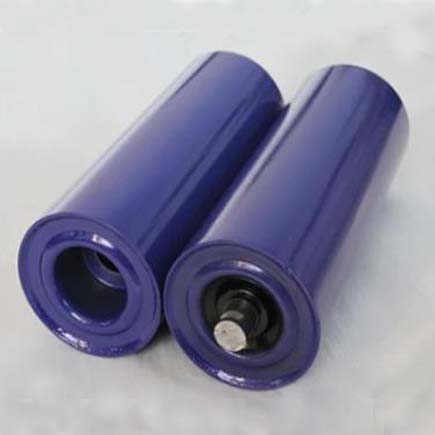
Excellent Conveyor Parts — ZOOMRY designs and produces CEMA standard Conveyor idlers, Conveyor Pulleys, and discharge chutes in-house. Ship loaders use FLENDER/SEW motors with premium bearings and DIN standard Conveyor Belts.
Galvanized Rain Cover — Available in galvanized steel, aluminum, or stainless steel. Rain covers shield the return belt and protect coal from moisture. Sliding canvas covers retract and extend with the conveyor.
Telescoping Discharge Chute — Allows 30% extension and retraction for fully trimmed hatches. Integrated dust suppression minimizes coal dust emissions during loading.
Onboard Diesel Power-gen Group — Independent power supply enables unrestricted movement along the dock, eliminating dependency on shore power infrastructure.
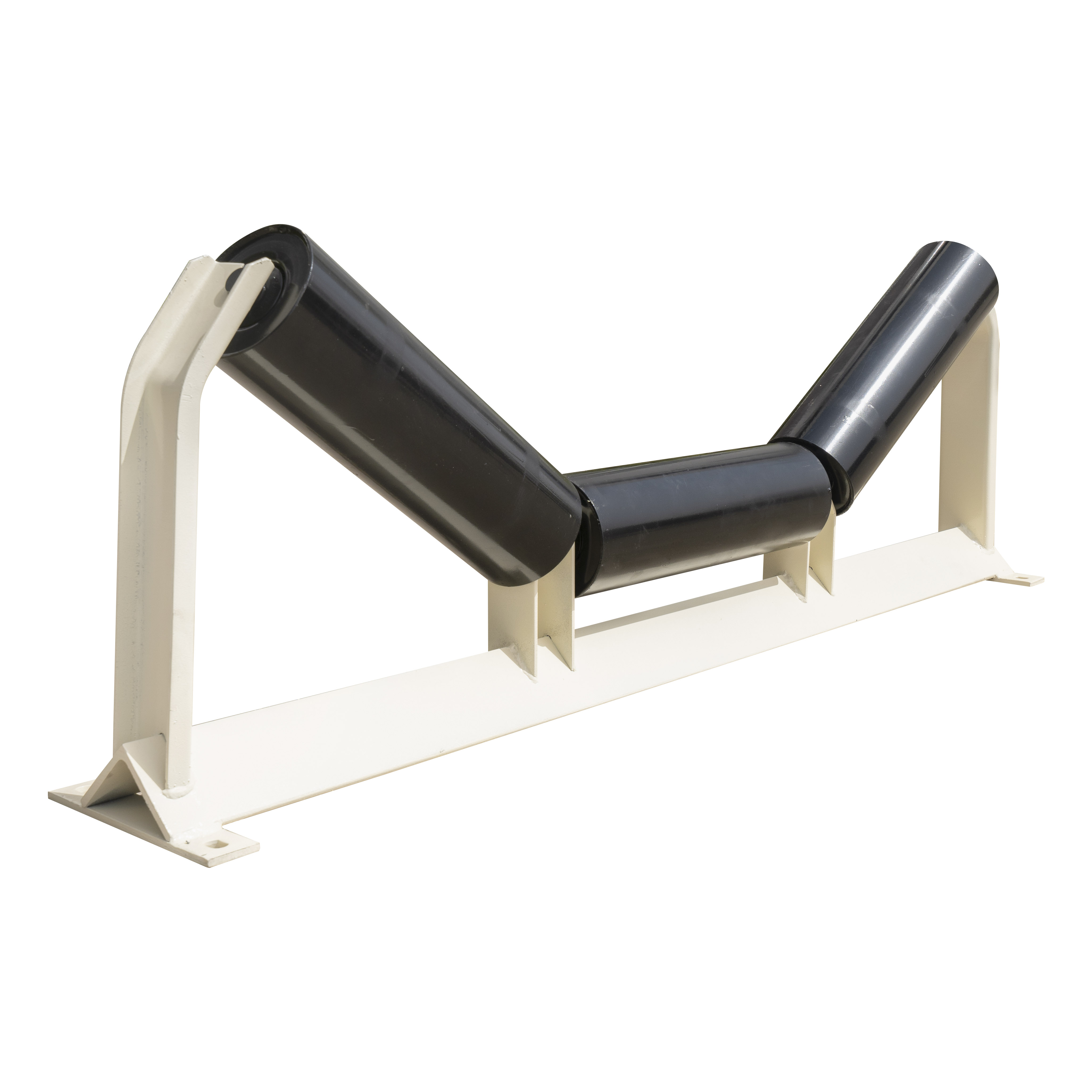
Heavy-Duty Load Idlers — Center pivot design guarantees equal weight distribution. ZOOMRY super idlers suit belt speeds up to 6.9 m/s with 50,000-60,000 hour service life.
7. Ship Loader Operating Dimensions
To choose a proper coal mobile ship loader model for your vessel, refer to the ZRSL series operating dimensions:
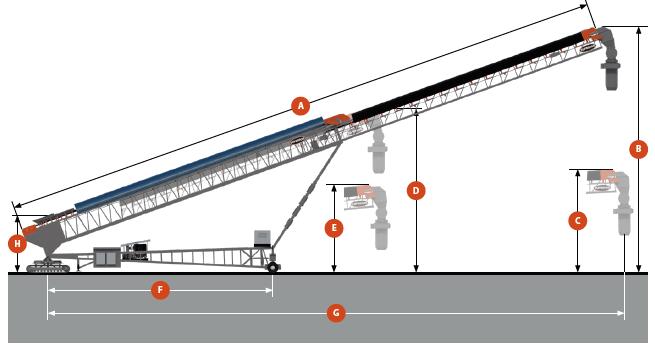
| Operating Dimensions | Sym. | ZRSL-46 (m) | ZRSL-52 (m) | ZRSL-58 (m) |
|---|---|---|---|---|
| Conveyor Length | A | 46 | 52 | 58 |
| Highest Extended Discharge Height | B | 16.9 | 19.1 | 21.1 |
| Lowest Extended Discharge Height | C | 4.6 | 4.9 | 5.9 |
| Feed Height | H | 3.5 | 3.6 | 3.8 |
| Operating Width | — | 9.8 | 9.8 | 10 |
Related Solutions
How to Choose the Right Coal Mobile Ship Loader Configuration?
Share your vessel type, dock dimensions, and throughput requirements — our engineers will recommend the optimal ZRSL series solution.
Coal Mobile Ship Loader Selection Help →