 ZOOMRY

1. Product Overview
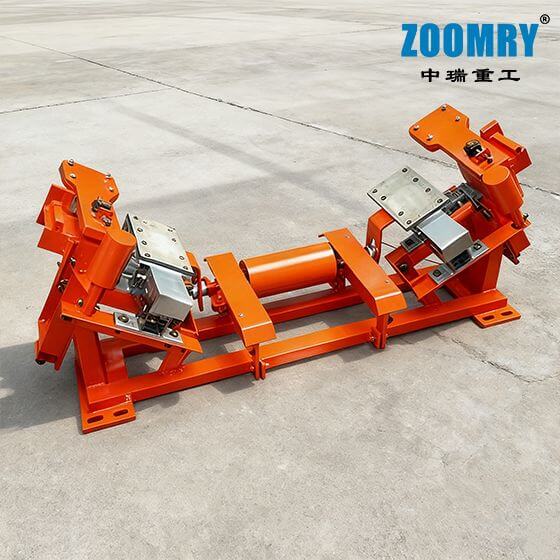
ZOOMRY CEMA E self-aligning return idlers are extra heavy-duty conveyor components that automatically correct belt misalignment on the return side. Built to CEMA E standards for mining and bulk material handling, these Conveyor idlers use a pivot-mounted frame with guide rollers to detect return belt drift and steer the belt back to center — preventing edge wear, belt contact with conveyor structure, and carryback spillage on the return side of long overland conveyors.
Unlike fixed return idlers that passively support the empty belt, self-aligning return idlers actively respond to return-side misalignment — where the belt is lighter, faster-moving, and more prone to drift than on the loaded carrying side. This makes them essential for protecting Conveyor Belts and structure from progressive return-side damage.
2. Why Return Side Belt Tracking Matters
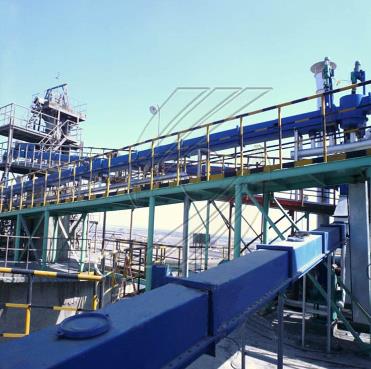
The return side of a conveyor presents unique tracking challenges. The empty belt travels faster and with lower tension than the loaded carrying side, making it more susceptible to drift from wind, idler misalignment, and uneven tension distribution. When the return belt contacts the conveyor stringer structure, it causes edge fraying, belt cover damage, and — in extreme cases — belt flipping.
CEMA E self-aligning return idlers address this with the same pivot-and-guide-roller mechanism as troughing training idlers, but optimized for the return side's lower belt tension and faster belt speed. The pivot frame detects lateral drift through side guide rollers and angles the idler to redirect the belt back to center — a fully mechanical, zero-energy correction that reduces return-side edge wear by up to 50% compared to fixed return idlers.
3. Troughing vs Return Self-Aligning: Key Differences
| Feature | Self-Aligning Troughing (E4) | Self-Aligning Return (E5) |
|---|---|---|
| Conveyor Side | Carrying side (loaded belt, higher tension) | Return side (empty belt, lower tension) |
| Belt Speed Sensitivity | Standard — loaded belt is stable | Higher — empty belt drifts faster |
| Main Correction Target | Loaded belt drift, material spillage | Empty belt drift, structure contact, carryback |
| Roller Configuration | 3-roller trough (20°/35°/45°) | 2-roller flat or low-angle return |
| Best For | Carrying side tracking on long overland conveyors | Return side tracking, reversible conveyors, high-speed returns |
4. Key Features
Automatic Return Belt Tracking — Pivot-mounted frame with side guide rollers continuously corrects return belt misalignment without power or sensors — particularly valuable for unmanned conveyor stations in cement and mining operations.
CEMA E Extra Heavy-Duty Rating — Designed for the highest load classification with reinforced pivot bearings that withstand continuous corrective motion on high-speed return belts.
Reversible Conveyor Compatible — Guide rollers function in both belt directions, making these idlers suitable for reversible conveyors where return-side tracking direction reverses with each cycle.
Advanced Labyrinth Sealing — Multi-stage seals protect pivot bearings and roller bearings from dust and carryback debris, maintaining rotational resistance ≤2N and pivot freedom.
Structure Protection — Prevents return belt contact with conveyor stringers and cross-members, eliminating structural wear and reducing fire risk from friction heating in coal handling environments.
5. Application Scenarios
Long Overland Conveyors — Return side tracking over several kilometers in mining operations where wind and thermal expansion cause return belt drift. Self-aligning return idlers at regular intervals prevent progressive misalignment.
Reversible Conveyors — Stacker and port terminal conveyors where belt direction changes cause tracking instability on both sides. Self-aligning return idlers maintain alignment regardless of belt direction.
High-Speed Return Belts — Conveyors running above 4 m/s where return belt flutter and drift can cause rapid edge damage. Self-aligning idlers provide immediate correction.
Coal & Combustible Material Handling — Return belt contact with structure creates friction heating — a fire risk in coal handling systems. Self-aligning return idlers prevent belt-to-structure contact, reducing this critical safety hazard.
6. Dimensions & Specifications
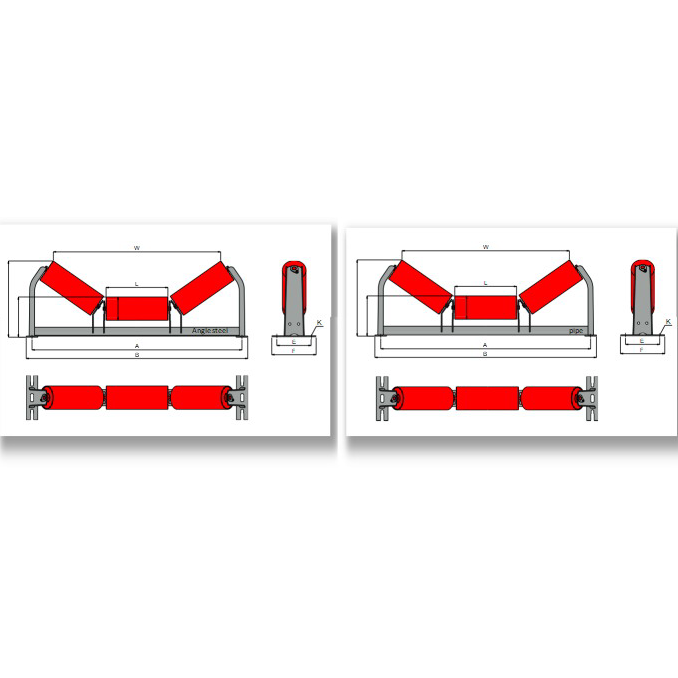
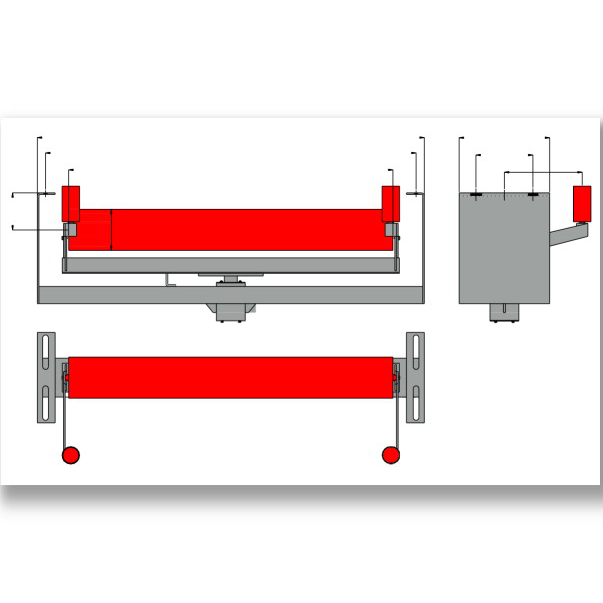
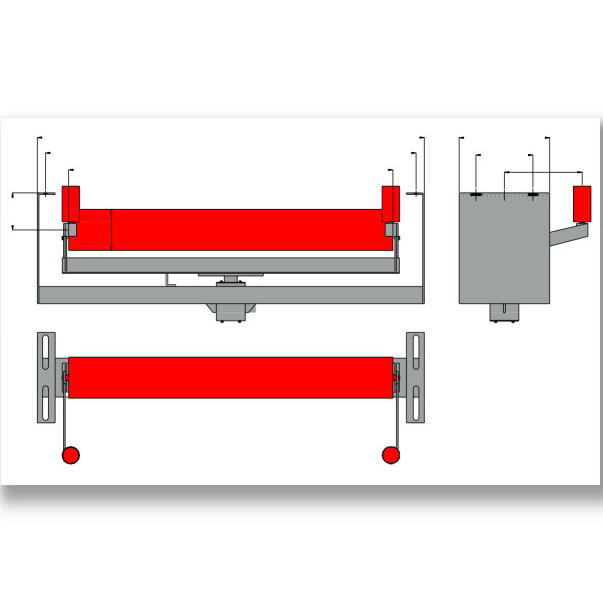
ZOOMRY CEMA E self-aligning return idlers feature a simplified flat return roller design — without the H1/H2/W/E/F/K parameters required for troughing idlers. Available in 6-inch and 7-inch roller diameters. Below are the standard dimensions for belt widths from 36 to 96 inches:
| BW | 6" Roller | 7" Roller | ||||
|---|---|---|---|---|---|---|
| A | B | L | A | B | L | |
| 36 | 45 | 47 | 39 | 45 | 47 | 39 |
| 42 | 51 | 53 | 45 | 51 | 53 | 45 |
| 48 | 57 | 59 | 51 | 57 | 59 | 51 |
| 54 | 63 | 65 | 57 | 63 | 65 | 57 |
| 60 | 69 | 71 1/2 | 63 | 69 | 71 1/2 | 63 |
| 72 | 81 | 83 1/2 | 75 | 81 | 83 1/2 | 75 |
| 84 | 93 | 95 1/2 | 87 | 93 | 95 1/2 | 87 |
| 96 | 105 | 107 1/2 | 99 | 105 | 107 1/2 | 99 |
Related Solutions
How to Configure Return Side Self-Aligning Idler Spacing?
Tell us your conveyor length, belt speed, and return side conditions — our engineers will recommend the optimal self-aligning return idler layout.
Return Idler Configuration Guide →